 免费领取教师福利

若您为此资料的原创作者,认为该资料内容侵犯了您的知识产权,请扫码添加我们的相关工作人员,我们尽可能的保护您的合法权益。


这是一份小学外研版(三起)2024Unit 1 What's on your plate?导学案,文件包含成都石室中学高2026届适应性考试一物理pdf、成都石室中学高2026届适应性考试一物理答案pdf等2份试卷配套教学资源,其中试卷共13页, 欢迎下载使用。
考
点
速
记
考点 01
Eat sme vegetables. 吃一些蔬菜。
Dn't take t much candy. 不要吃太多糖果。
祈使句的用法(肯定形式:动词原形 + 其他;否定形式:Dn't + 动词原形 + 其他)
我们通常用祈使句用于表达命令、请求、建议或劝告,通常省略主语(yu)。★★★
肯定形式:直接以动词原形开头,后跟其他成分,表达 “做某事”。
例:Open the windw. 打开窗户。(命令)
Have a gd breakfast. 好好吃早餐。(建议)
否定形式:在动词原形前加 “Dn't”(=D nt),表达 “不要做某事”。
例:Dn't tuch the ht water. 不要碰热水。(警告)
Dn't eat quickly. 不要吃得太快。(劝告)
注意:表示禁止或劝阻时使用,语气较强。可加 please 使语气更委婉。
如:Please dn't talk with yur muth full.
[拓展]
Let's + 动词原形:提出共同行动的建议。
例:Let's share the cake.(我们一起分蛋糕吧。)
N + 动名词:简短禁止(常见于标语)。
例:N smking.(禁止吸烟。)
提分练
一、单项选择。
( )1. ______ run in the dining rm!
A. Dn't B. Nt C. N
( )2. —I’m thirsty.
—______ sme juice.
A. Drink B. Yu drink C. Dn’t drink
( ) 3. ______ yur hands befre eating!
A. Washing B. Wash C. Dn’t wash
二、按要求改写句子。
1. Yu shuld clse the fridge.(改为肯定祈使句)
→ _____________________.
Dn’t leave the milk utside.(改为肯定建议)
→ _____________________.
Thrw the rubbish.(改为否定祈使句)
→ _____________________.
补全对话。
A: I’m hungry!
B: ______ an apple. (建议吃苹果)
A: OK. ______ t much! (提醒别吃太多)
B: Gd idea!
考点 02
“shuld” 表示建议的用法(Yu shuld + 动词原形 + 其他)
Yu shuld eat mre vegetables. 你应该多吃些蔬菜。
Yu shuld drink enugh water every day. 你每天应该喝足够的水。
我们常用 “Yu shuld + 动词原形 + 其他” 来向他人提出建议,意为 “你应该……”,表达一种合理的、积极的建议或劝告。★★★
shuld” 是情态动词,本身没有人称和数的变化,后面必须接动词原形。
例:Yu shuld d yur hmewrk first. 你应该先做家庭作业。
He shuld get up early. 他应该早起。(主语换为第三人称时,“shuld” 形式不变,仍接动词原形)
其否定形式为 “Yu shuldn’t + 动词原形 + 其他”(shuldn’t = shuld nt),表示 “你不应该……”。
例:Yu shuldn’t eat t much chclate. 你不应该吃太多巧克力。
Yu shuldn’t watch TV fr a lng time. 你不应该长时间看电视。
[拓展]
对 “Yu shuld...” 提出的建议进行回应时,常用 “OK, I will.”(好的,我会的)表示接受,用 “I’m afraid I can’t.”(恐怕我不能)表示拒绝。
例:—Yu shuld g t bed early. — 你应该早点睡觉。
—OK, I will. — 好的,我会的。
提分练
一、单项选择。
( ) 1. Yu ________ eat mre fruit. It’s gd fr yur health.
A. shuld B. shuldn’t C. are
( ) 2. —Yu ________ play ftball in the street. It’s dangerus.
—Srry, I wn’t.
A. Shuld B. shuldn’t C. d
( ) 3. She ________ study hard fr the exam.
A. shuld B. shulds C. is shuld
( ) 4. —What shuld I d? —Yu ________ drink sme ht tea.
A. are B. shuld C. will
二、按要求改写句子。
Yu shuld exercise every day.(改为否定句)
Yu ________ ________ exercise every day.
He shuld eat t much candy.(改为否定句)
He ________ ________ t much candy.
考点 03
描述饮食习惯的特殊疑问句及用法
—What d yu eat fr breakfast? — 你早餐吃什么?
—I eat eggs and milk. — 我吃鸡蛋和牛奶。
—What d yu eat fr dinner? — 你晚餐吃什么?—I eat rice and fish. — 我吃米饭和鱼。
我们常用特殊疑问句 “What d yu eat + 时间状语?” 来询问对方在特定时间的饮食习惯,意为 “你(在…… 时间)吃什么?”。
句中 “What” 是特殊疑问词,用于询问 “什么”;“d” 是助动词,因为主语是第二人称 “yu”;“eat” 是实义动词,意为 “吃”;“时间状语” 通常为 “fr breakfast/lunch/dinner”(作为早 / 午 / 晚餐)等。
例:What d yu eat fr lunch? 你午餐吃什么?
答句常用 “I eat + 食物” 来回应,直接说明自己在该时间吃的食物。
例:—What d yu eat fr snacks? 你零食吃什么?
—I eat apples and biscuits. 我吃苹果和饼干。
[拓展] 若主语为第三人称单数(如 he, she, it, 人名等),疑问句结构变为 “What des + 主语 + eat + 时间状语?”,答句相应变为 “He/She/It eats + 食物.”。
例:—What des Tm eat fr breakfast? 汤姆早餐吃什么?
—He eats bread and milk. 他吃面包和牛奶。
提分练
一、单项选择。
( )1. —________ d yu eat fr dinner? — I eat ndles.
A. Where B. What C. Hw
( )2. —What ________ yur mther eat fr lunch? —She eats vegetables.
d B. des C. is
( )3. —What d yu eat ________ breakfast? —Eggs and ats.
A. fr B. t C. with
( )4. —What des Lily eat fr snacks? —________ eats nuts.
A. She B. He C. They
二、按要求完成句子。
1. I eat fruit fr breakfast.(改为一般疑问句)
________ ________ ________ eat fr breakfast?
He eats a burger fr lunch.(对划线部分提问)
________ ________ he eat fr lunch?
参考答案
(1) 祈使句的用法
一、 1. A 2. A 3. B
二、 1. Clse the fridge. 2. Put the milk in the fridge. 3. Dn’t thrw the rubbish.
三、 Eat Dn’t eat
(2)“shuld” 表示建议的用法
一、1.A 2.B 3. A 4. B
二、1. shuldn’t; d 2. shuldn’t; eat
(3)描述饮食习惯的特殊疑问句及用法
一、1.B 2.B 3.A 4.A
二、1.What; d; yu 2. What; des语音语调
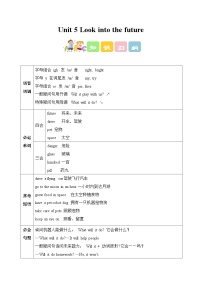
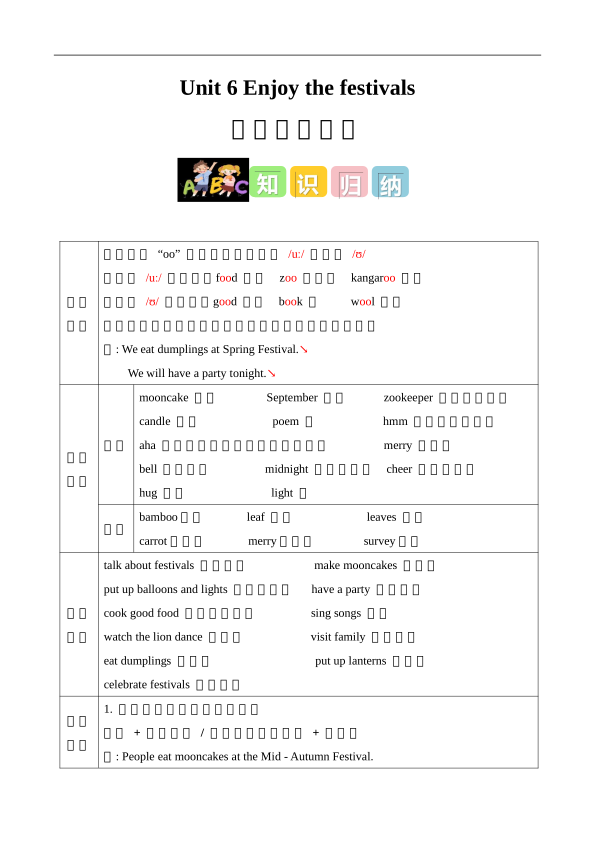
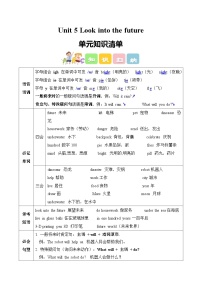
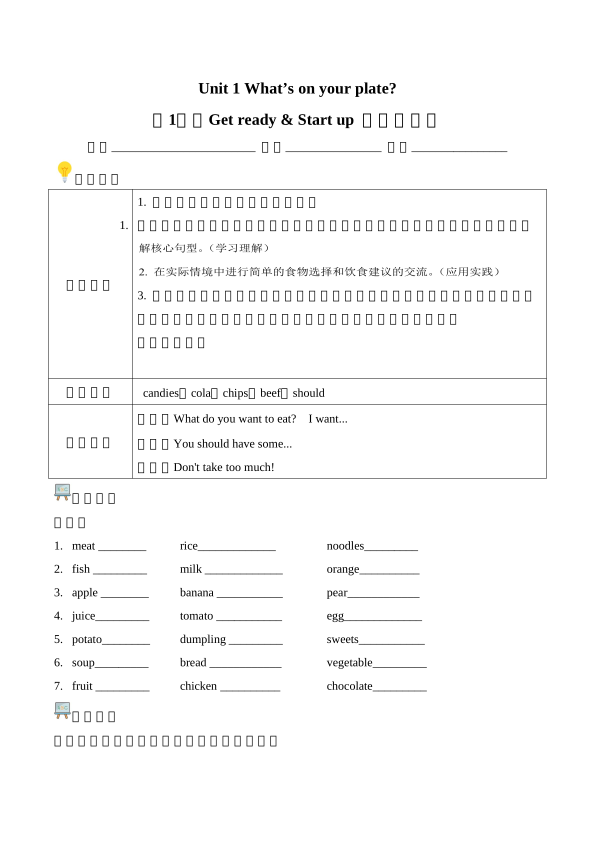
字母组合w ,a在单词中可发/əʊ/ 音: slw blw grw knw wha bat cat
祈使句句的语调是降调。例:Dn't take t much! ↘
Yu shuld have sme vegetables! ↘
必记单词
四会
candy 糖果 sup 汤 ptat 马铃薯,土豆
bread 面包 heavy 沉重 always 总是,一直,每次都
healthy 健康的;有益健康的slw 慢下来 lng 长的
pencil case 铅笔盒, 铅笔袋
三会
plate 盘,碟 grup 组 chclate 巧克力
cla 可乐 chip 炸马铃薯条 chse 挑选,选择
stmach 胃 anther (同类的)另一,又一 biscuit 饼干
usually 通常地;惯常地;平常地 sleepy 困倦的,瞌睡的 quickly 快速地
change 变化,改变 habit 习惯 wha 冷静,慢些
ats 燕麦 nut 坚果 burger 牛肉饼,牛肉,汉堡包
sund 声,声音 jelly 果冻 bar 块,条,棒,根
teaspn 一茶匙之量 sugar 糖 bttle 瓶子
il 植物园,动物油 snack (正餐以外的)小吃,点心
常考短语
healthy fd 健康食品 unhealthy fd 不健康食品 t much 太多
a lt f 许多 gd eating habits 良好的饮食习惯 a bar f chclate 一块巧克力
a bag f chips 一袋薯条 n yur plate 在你的盘子里
必会句型
1.给予建议的否定祈使句:Dn't + 动词原形 + 其他:
例:Dn't take t much! 不要拿太多!
2.给予建议的肯定句型:Yu shuld + 动词原形 + 其他.
例: Yu shuld have sme vegetables. 你应该吃一些蔬菜。
3.询问某人吃什么的特殊疑问句:
—What d yu eat + 时间状语?”。
—I eat + 食物。
例:—What d yu eat fr lunch? 你午餐吃什么?
—I eat ndles and meat.我吃面条和肉。
4.描述某物是给某人 / 某物的句型:This/That + 物品 + is fr + 人 / 物.
例:This apple is fr yu. 这个苹果是给你的。
核心语法
祈使句的用法 肯定形式:动词原形 + 其他;
否定形式:Dn't + 动词原形 + 其他
2. “shuld” 表示建议的用法(Yu shuld + 动词原形 + 其他)
3. 描述饮食习惯的句型及用法
这是一份小学外研版(三起)2024Unit 1 What's on your plate?导学案,共7页。
这是一份外研版(三起)2024五年级上册(2024)Unit 1 What's on your plate?优秀导学案,共5页。
这是一份小学外研版(三起)2024Unit 5 Look into the future导学案及答案,文件包含成都石室中学高2026届适应性考试一物理pdf、成都石室中学高2026届适应性考试一物理答案pdf等2份试卷配套教学资源,其中试卷共13页, 欢迎下载使用。
注册成功

在线客服
添加在线客服
获取1对1服务
官方微信
关注“教习网”公众号
打开微信就能找资料
赛课定制
添加在线客服
获取1对1定制服务
职称咨询
添加在线客服
获取1V1专业指导服务

免费福利

.png)
.png)
