免费领取教师福利
若您为此资料的原创作者,认为该资料内容侵犯了您的知识产权,请扫码添加我们的相关工作人员,我们尽可能的保护您的合法权益。

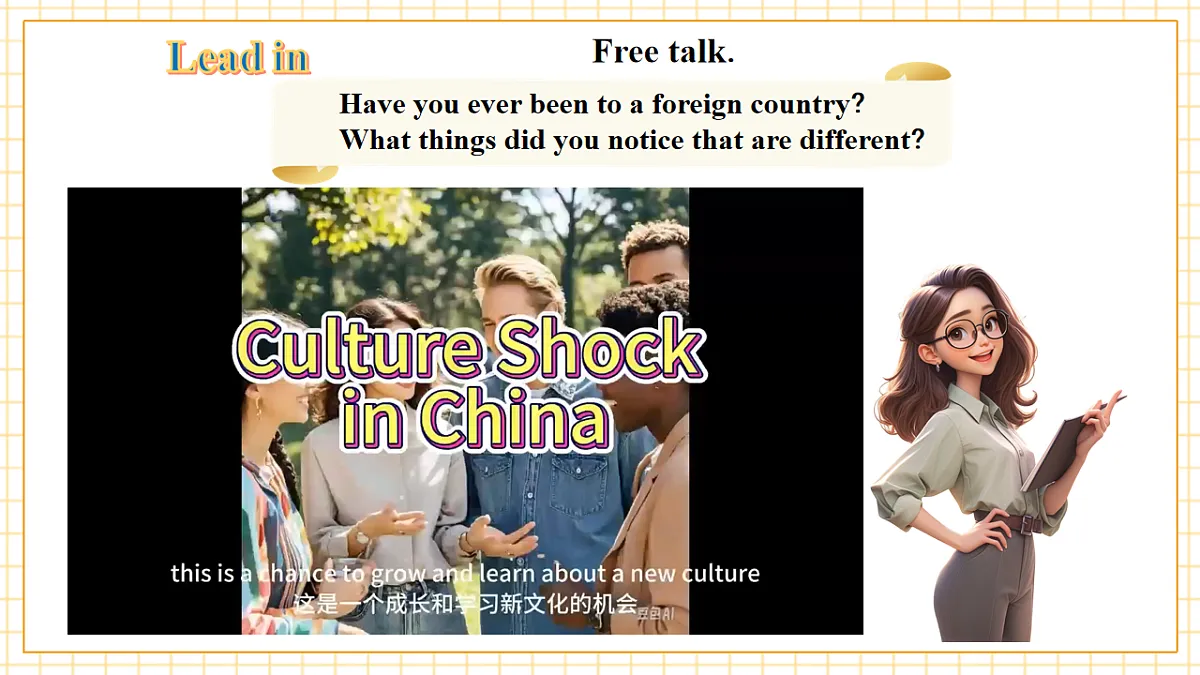
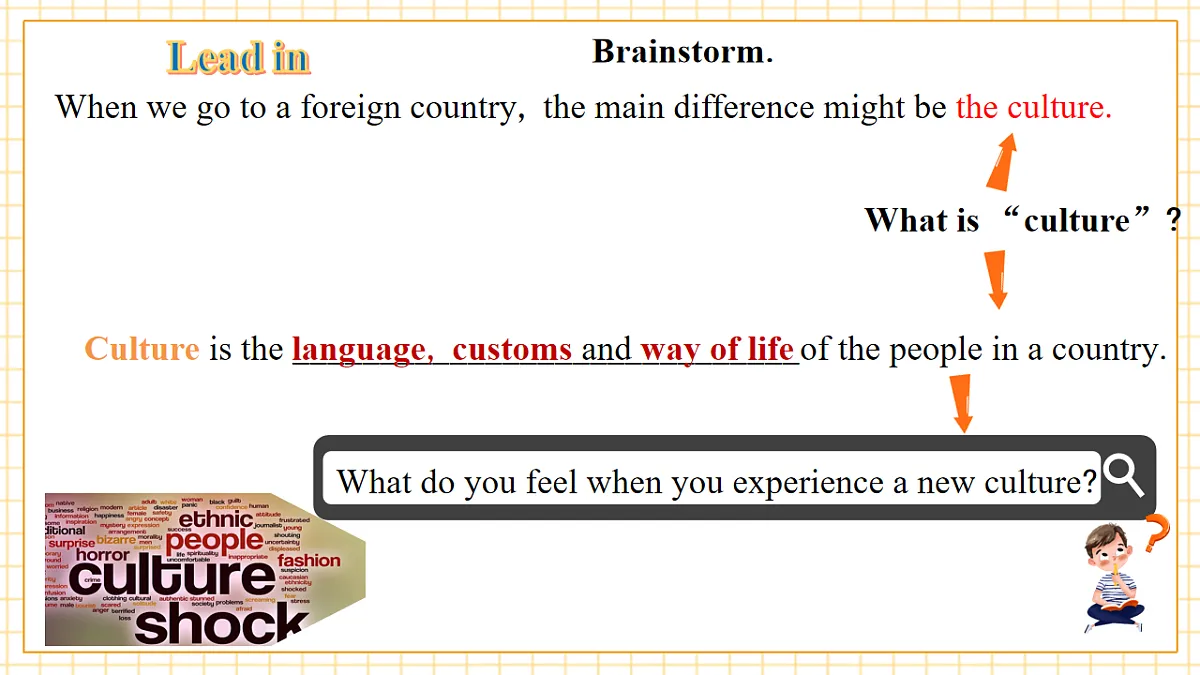
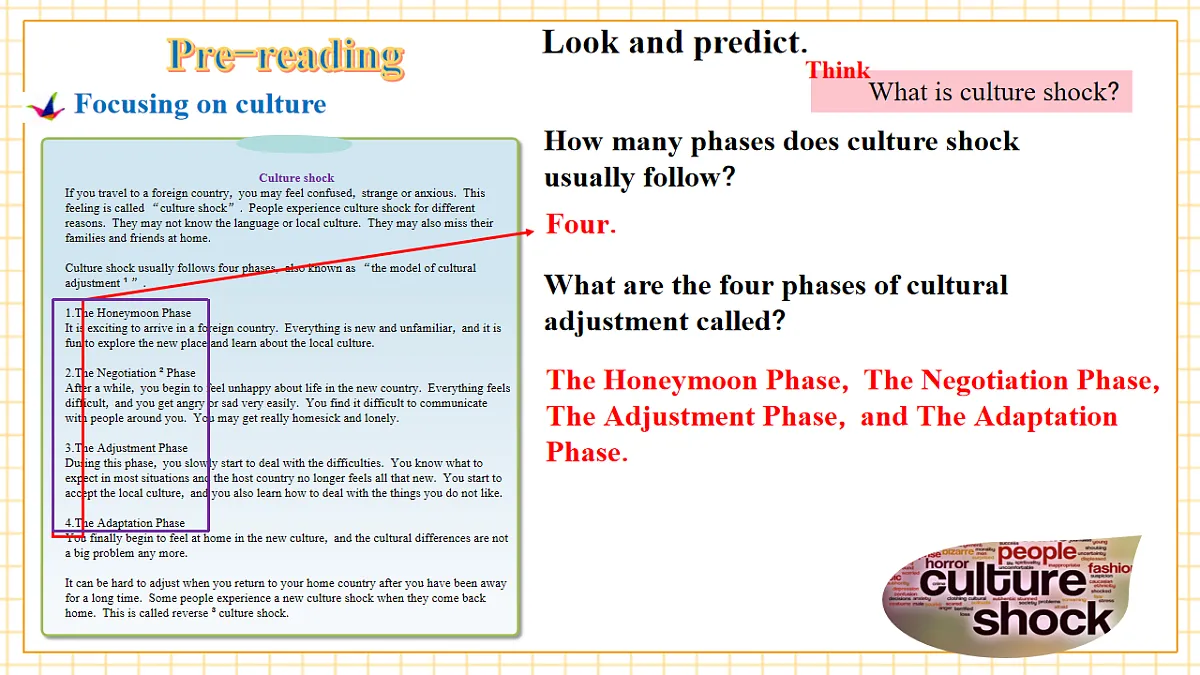
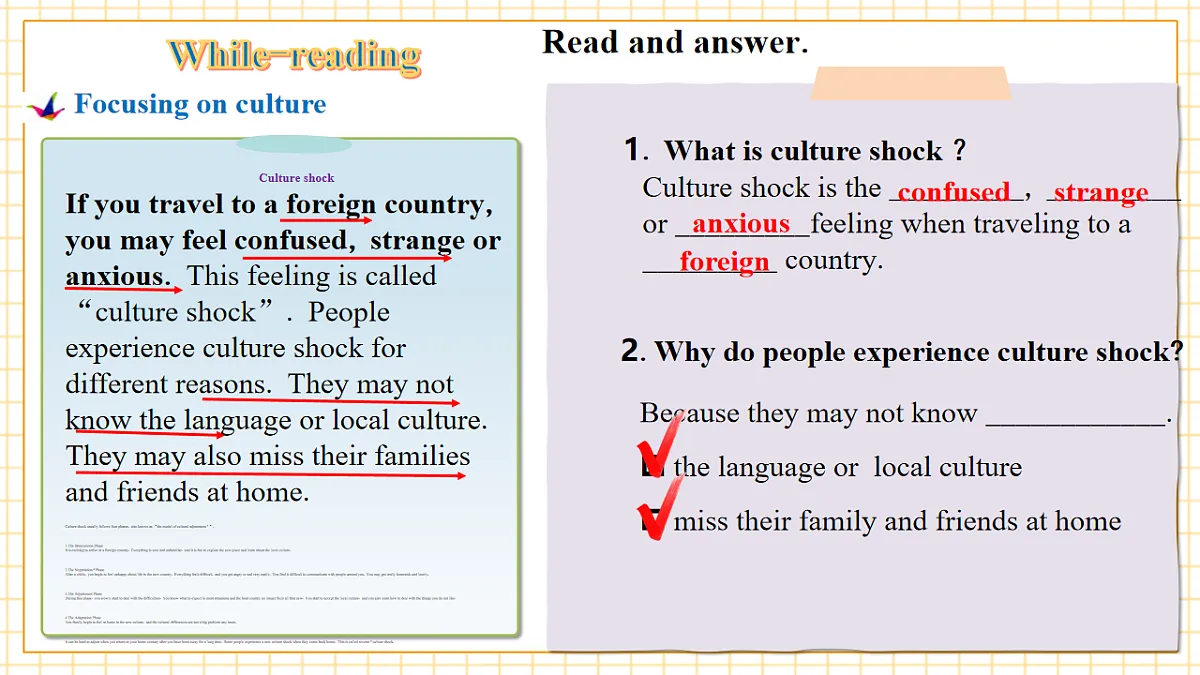
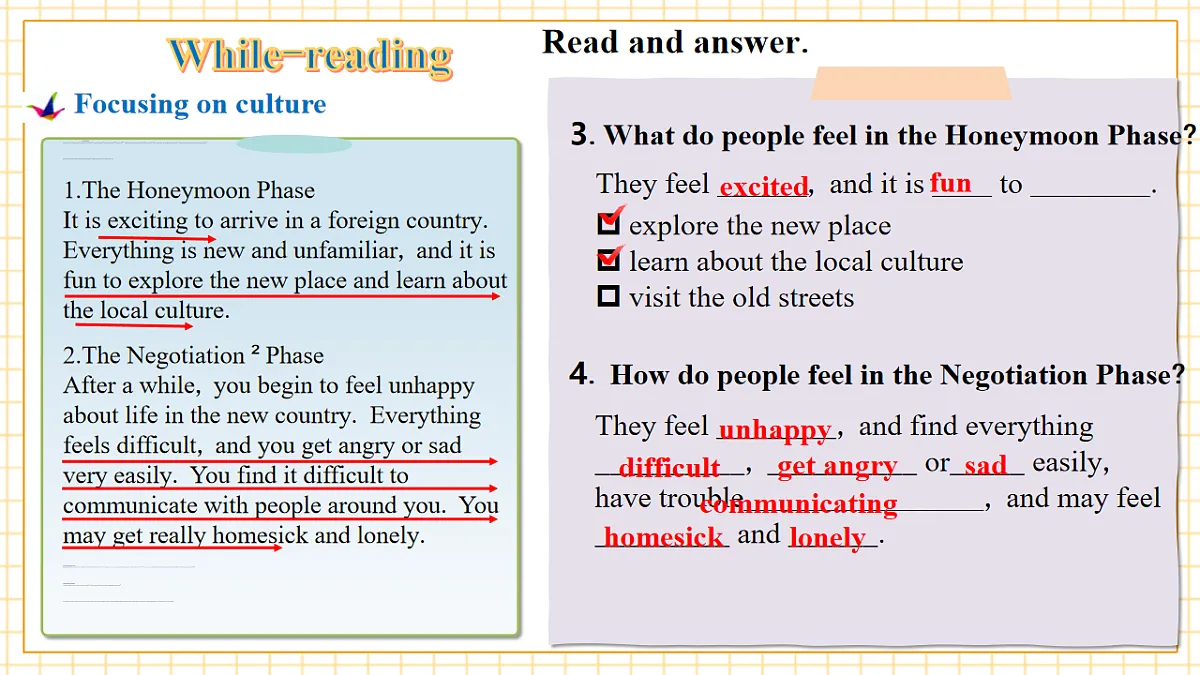
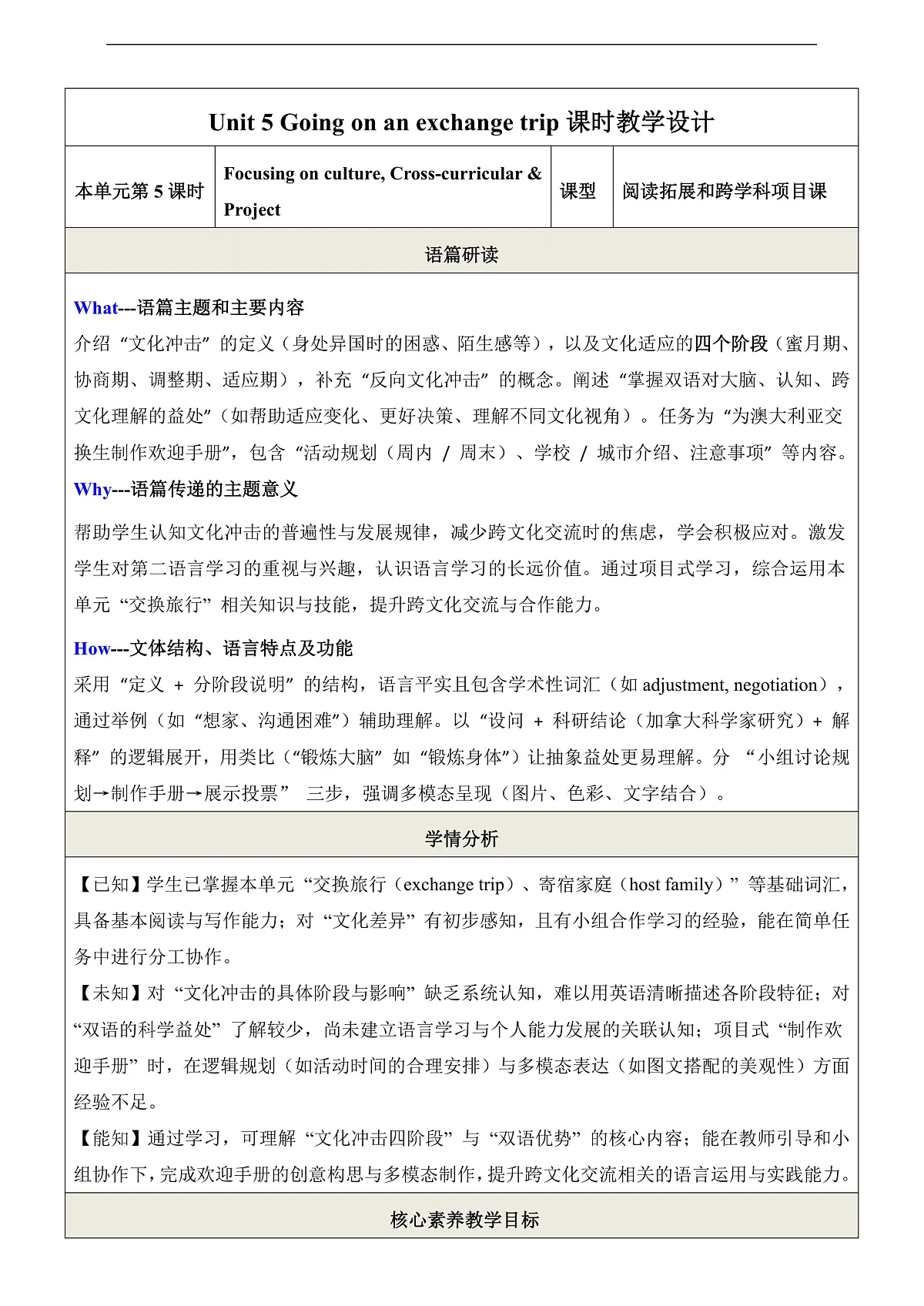
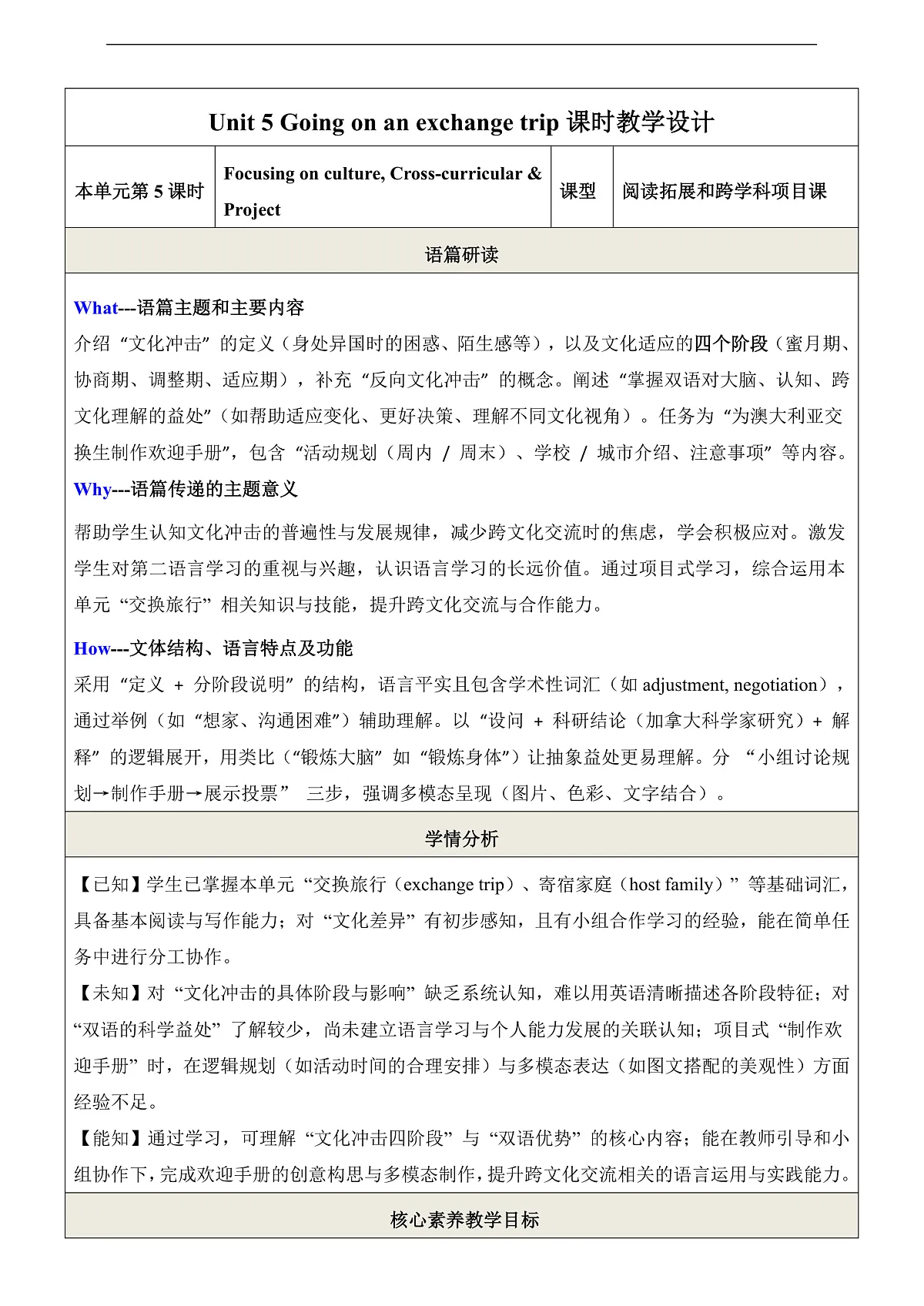
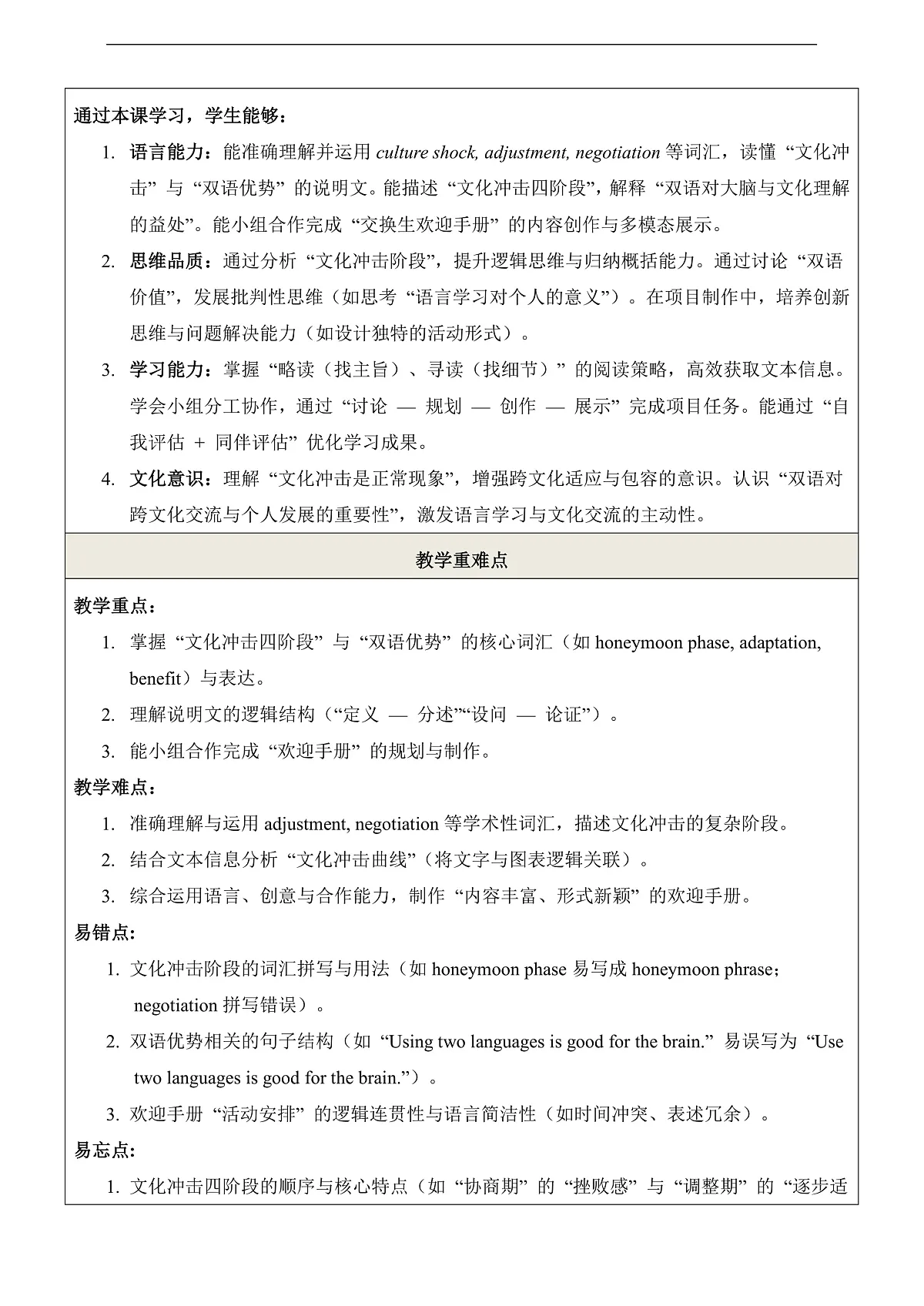
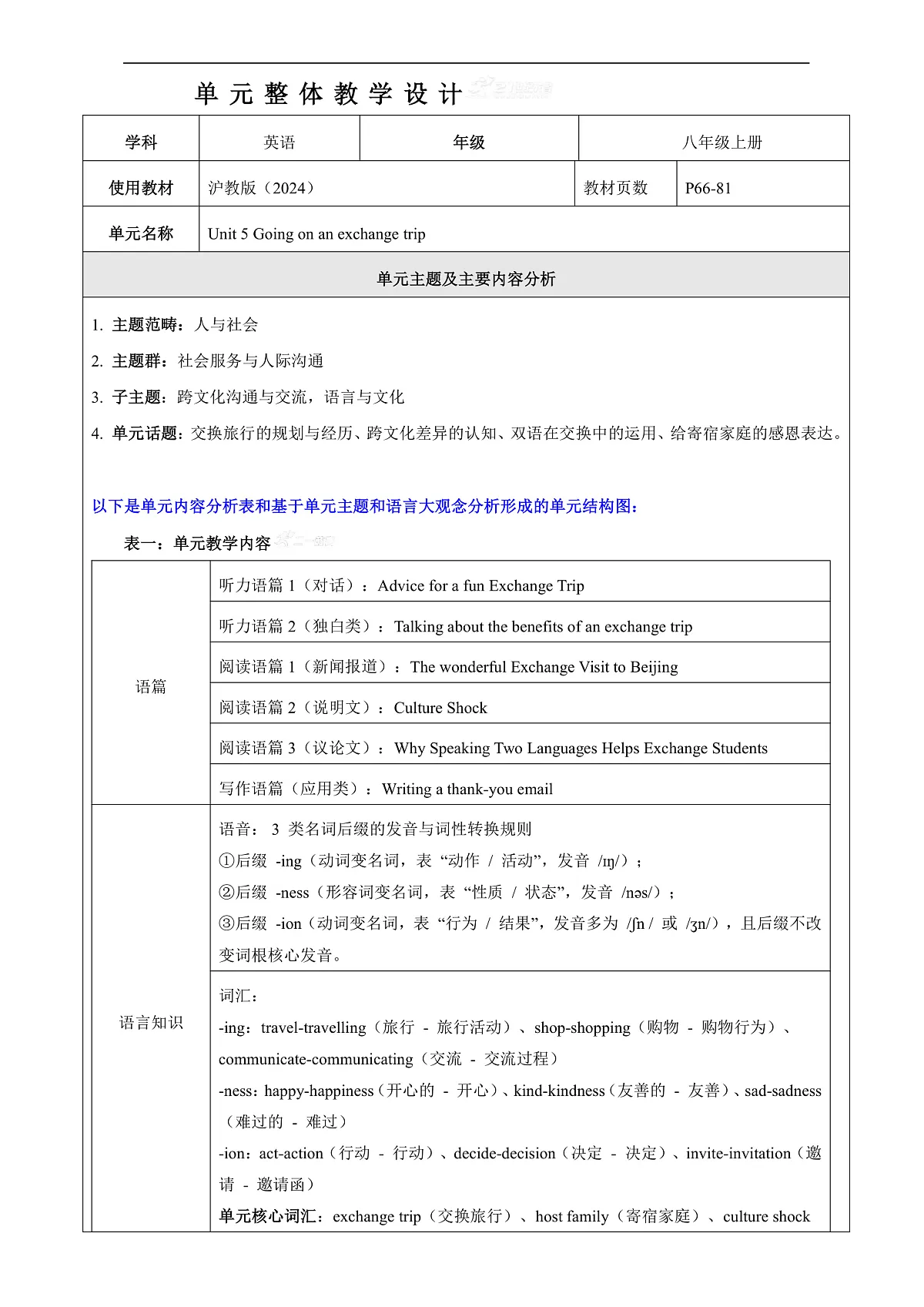
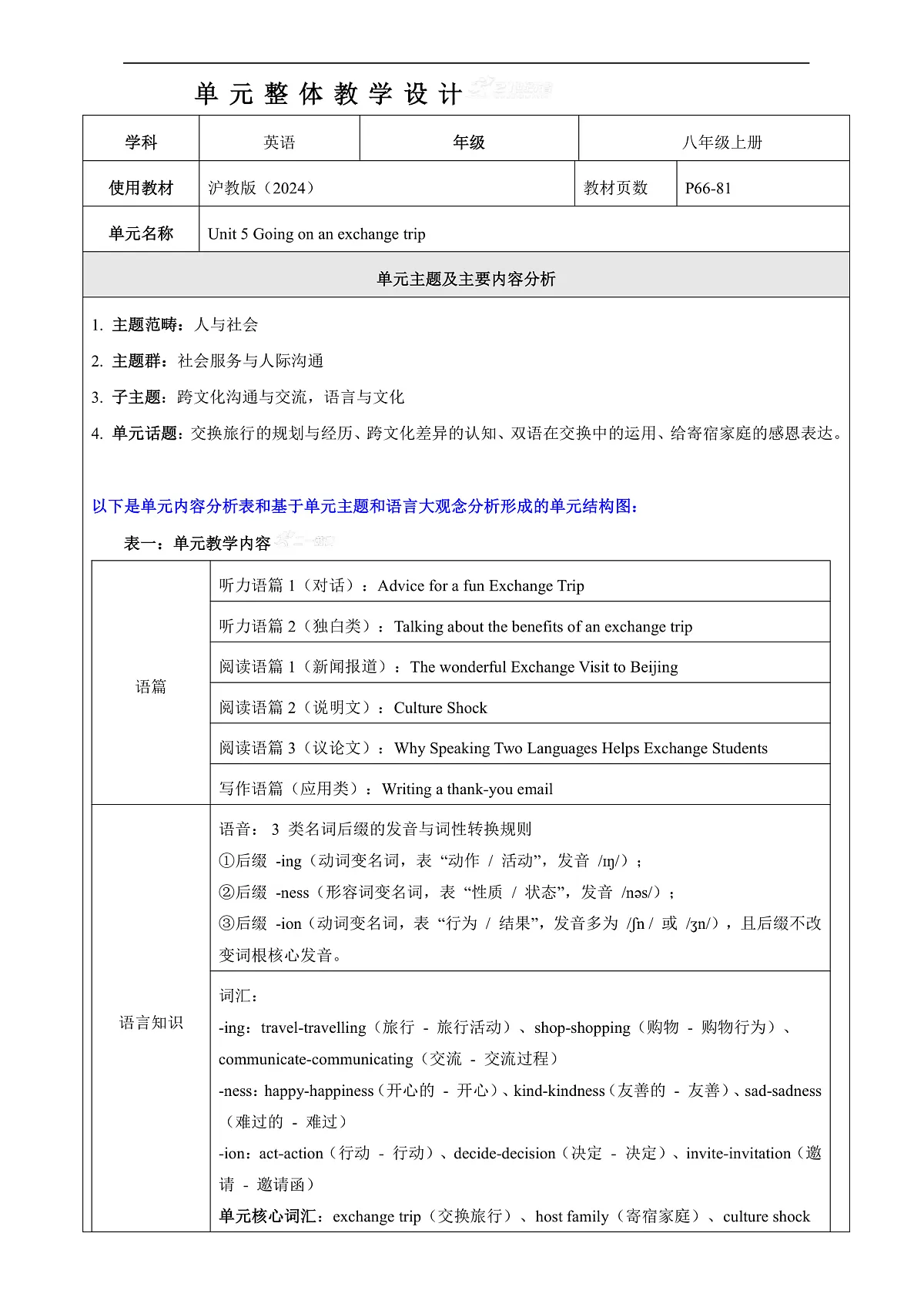
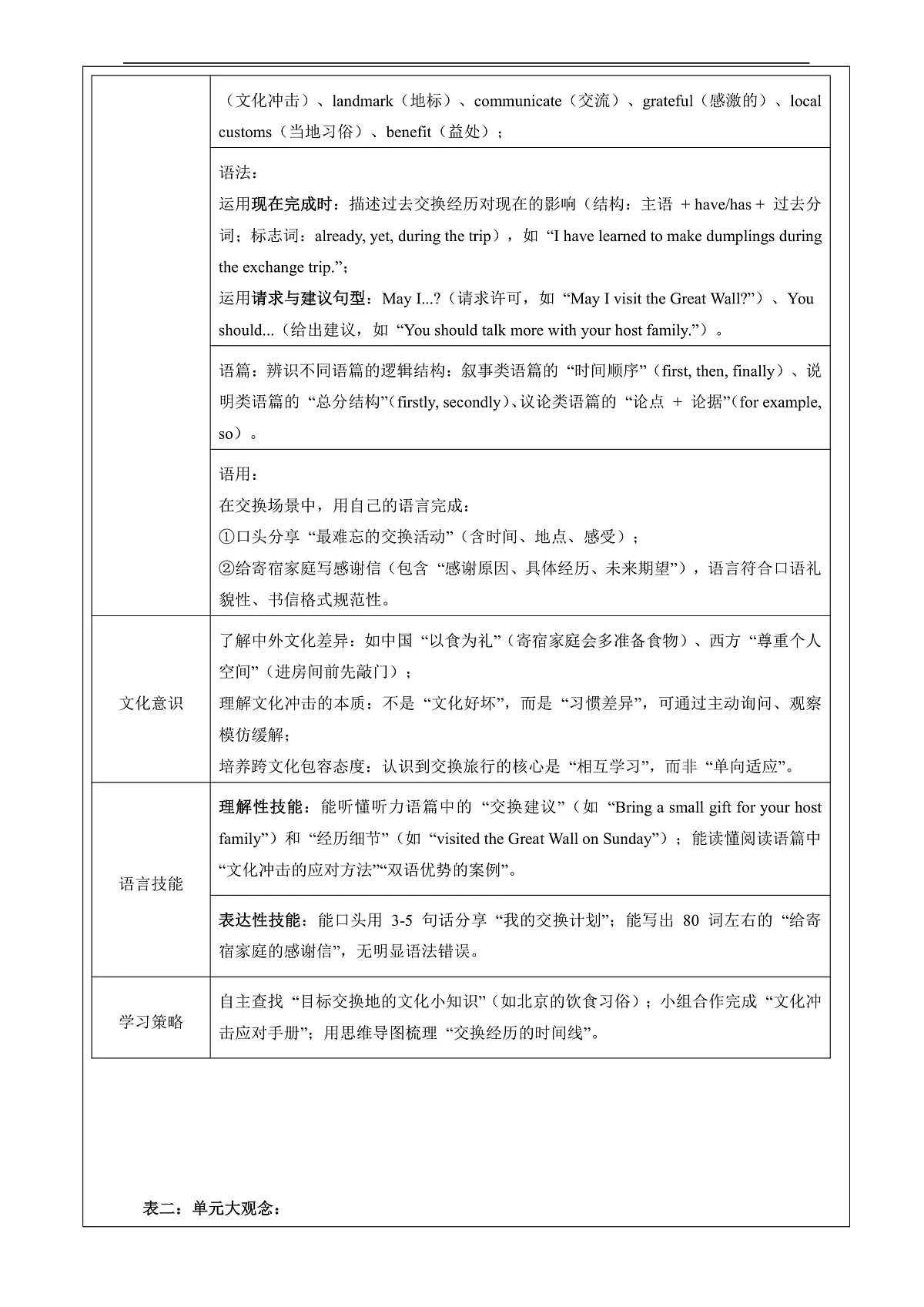
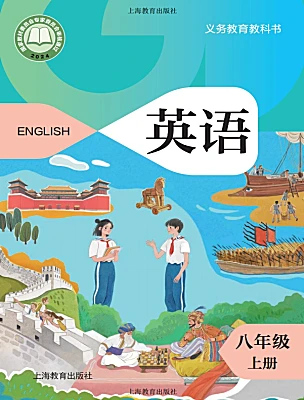
Unit 5 Going on an exchange tripFocusing on culture, Cross-curricular & Project目录CONTENTBy the end of the lesson, I will be able to...123understand the stages of culture shock;learn the benefits of speaking two languages;know how to make a welcome brochure for exchange students.Learning objectivesLead inFree talk.Have you ever been to a foreign country?What things did you notice that are different?When we go to a foreign country, the main difference might be the culture.Culture is the _____________________________of the people in a country. What is “culture”?Lead inBrainstorm.language, customs and way of life Culture shock If you travel to a foreign country, you may feel confused, strange or anxious. This feeling is called “culture shock”. People experience culture shock for different reasons. They may not know the language or local culture. They may also miss their families and friends at home.Culture shock usually follows four phases, also known as “the model of cultural adjustment ¹ ”.The Honeymoon Phase It is exciting to arrive in a foreign country. Everything is new and unfamiliar, and it is fun to explore the new place and learn about the local culture.The Negotiation ² Phase After a while, you begin to feel unhappy about life in the new country. Everything feels difficult, and you get angry or sad very easily. You find it difficult to communicate with people around you. You may get really homesick and lonely.The Adjustment Phase During this phase, you slowly start to deal with the difficulties. You know what to expect in most situations and the host country no longer feels all that new. You start to accept the local culture, and you also learn how to deal with the things you do not like.The Adaptation Phase You finally begin to feel at home in the new culture, and the cultural differences are not a big problem any more.It can be hard to adjust when you return to your home country after you have been away for a long time. Some people experience a new culture shock when they come back home. This is called reverse ³ culture shock.Focusing on culturePre-readingLook and predict.How many phases does culture shock usually follow?What are the four phases of cultural adjustment called?Four.The Honeymoon Phase, The Negotiation Phase, The Adjustment Phase, and The Adaptation Phase. Culture shock If you travel to a foreign country, you may feel confused, strange or anxious. This feeling is called “culture shock”. People experience culture shock for different reasons. They may not know the language or local culture. They may also miss their families and friends at home.Culture shock usually follows four phases, also known as “the model of cultural adjustment ¹ ”.The Honeymoon Phase It is exciting to arrive in a foreign country. Everything is new and unfamiliar, and it is fun to explore the new place and learn about the local culture.The Negotiation ² Phase After a while, you begin to feel unhappy about life in the new country. Everything feels difficult, and you get angry or sad very easily. You find it difficult to communicate with people around you. You may get really homesick and lonely.The Adjustment Phase During this phase, you slowly start to deal with the difficulties. You know what to expect in most situations and the host country no longer feels all that new. You start to accept the local culture, and you also learn how to deal with the things you do not like.The Adaptation Phase You finally begin to feel at home in the new culture, and the cultural differences are not a big problem any more.It can be hard to adjust when you return to your home country after you have been away for a long time. Some people experience a new culture shock when they come back home. This is called reverse ³ culture shock.While-reading1.Where does the word “encyclopaedia” come from and what does it mean? It comes from_____________.and means ________________.2. How do most people use encyclopaedias nowadays?Most people use ____________________________________________.Read and answer.a Greek wordFocusing on culture1. What is culture shock ?2.Why do people experience culture shock?Culture shock is the _________, _________ or _________feeling when traveling to a _________ country.confusedstrangeanxiousforeignBecause they may not know ____________.the language or local culturemiss their family and friends at home Culture shock If you travel to a foreign country, you may feel confused, strange or anxious. This feeling is called “culture shock”. People experience culture shock for different reasons. They may not know the language or local culture. They may also miss their families and friends at home.Culture shock usually follows four phases, also known as “the model of cultural adjustment ¹ ”.The Honeymoon Phase It is exciting to arrive in a foreign country. Everything is new and unfamiliar, and it is fun to explore the new place and learn about the local culture.The Negotiation ² Phase After a while, you begin to feel unhappy about life in the new country. Everything feels difficult, and you get angry or sad very easily. You find it difficult to communicate with people around you. You may get really homesick and lonely.The Adjustment Phase During this phase, you slowly start to deal with the difficulties. You know what to expect in most situations and the host country no longer feels all that new. You start to accept the local culture, and you also learn how to deal with the things you do not like.The Adaptation Phase You finally begin to feel at home in the new culture, and the cultural differences are not a big problem any more.It can be hard to adjust when you return to your home country after you have been away for a long time. Some people experience a new culture shock when they come back home. This is called reverse ³ culture shock.While-reading1.Where does the word “encyclopaedia” come from and what does it mean? It comes from_____________.and means ________________.2. How do most people use encyclopaedias nowadays?Most people use ____________________________________________.Read and answer.Focusing on culture3.What do people feel in the Honeymoon Phase?They feel ______, and it is ____ to ________.explore the new place learn about the local culturevisit the old streetsexcitedfun4. How do people feel in the Negotiation Phase?They feel ________, and find everything__________, __________ or_____ easily, have trouble________________, and may feel _________ and ______.unhappydifficultget angrysadcommunicatinghomesicklonely5.What happens in the Adaptation Phase?People begin to feel_______________________, and cultural differences are_________________ ___________.6.What is reverse culture shock?It is the new culture shock some people experience when they ____________________________ after being away for ____________. Culture shock If you travel to a foreign country, you may feel confused, strange or anxious. This feeling is called “culture shock”. People experience culture shock for different reasons. They may not know the language or local culture. They may also miss their families and friends at home.Culture shock usually follows four phases, also known as “the model of cultural adjustment ¹ ”.The Honeymoon Phase It is exciting to arrive in a foreign country. Everything is new and unfamiliar, and it is fun to explore the new place and learn about the local culture.The Negotiation ² Phase After a while, you begin to feel unhappy about life in the new country. Everything feels difficult, and you get angry or sad very easily. You find it difficult to communicate with people around you. You may get really homesick and lonely.The Adjustment Phase During this phase, you slowly start to deal with the difficulties. You know what to expect in most situations and the host country no longer feels all that new. You start to accept the local culture, and you also learn how to deal with the things you do not like.The Adaptation Phase You finally begin to feel at home in the new culture, and the cultural differences are not a big problem any more.It can be hard to adjust when you return to your home country after you have been away for a long time. Some people experience a new culture shock when they come back home. This is called reverse ³ culture shock.While-readingRead and answer.Focusing on cultureat home in the new cultureno longer a bigproblemreturn to their homea long timecountry7. How do we deal with culture shock?While-readingRead and think.Focusing on culturedeal with difficultiesaccept the local culturelearn about local culturestay patient…reduce homesicknessadjust to new environmentcommunicate with localsPost-readingRead and take notes. Culture shock If you travel to a foreign country, you may feel confused, strange or anxious. This feeling is called “culture shock”. People experience culture shock for different reasons. They may not know the language or local culture. They may also miss their families and friends at home.Culture shock usually follows four phases, also known as “the model of cultural adjustment”.The Honeymoon Phase It is exciting to arrive in a foreign country. Everything is new and unfamiliar, and it is fun to explore the new place and learn about the local culture.The Negotiation Phase After a while, you begin to feel unhappy about life in the new country. Everything feels difficult, and you get angry or sad very easily. You find it difficult to communicate with people around you. You may get really homesick and lonely.The Adjustment Phase During this phase, you slowly start to deal with the difficulties. You know what to expect in most situations and the host country no longer feels all that new. You start to accept the local culture, and you also learn how to deal with the things you do not like.The Adaptation Phase You finally begin to feel at home in the new culture, and the cultural differences are not a big problem any more.It can be hard to adjust when you return to your home country after you have been away for a long time. Some people experience a new culture shock when they come back home. This is called reverse ³ culture shock.culture shock - 文化冲击the model of cultural adjustment文化适应模式蜜月期协商期想家;思乡Post-readingRead and take notes. Culture shock If you travel to a foreign country, you may feel confused, strange or anxious. This feeling is called “culture shock”. People experience culture shock for different reasons. They may not know the language or local culture. They may also miss their families and friends at home.Culture shock usually follows four phases, also known as “the model of cultural adjustment ¹ ”.The Honeymoon Phase It is exciting to arrive in a foreign country. Everything is new and unfamiliar, and it is fun to explore the new place and learn about the local culture.The Negotiation ² Phase After a while, you begin to feel unhappy about life in the new country. Everything feels difficult, and you get angry or sad very easily. You find it difficult to communicate with people around you. You may get really homesick and lonely.The Adjustment Phase During this phase, you slowly start to deal with the difficulties. You know what to expect in most situations and the host country no longer feels all that new. You start to accept the local culture, and you also learn how to deal with the things you do not like.The Adaptation Phase You finally begin to feel at home in the new culture, and the cultural differences are not a big problem any more.It can be hard to adjust when you return to your home country after you have been away for a long time. Some people experience a new culture shock when they come back home. This is called reverse ³ culture shock.调整期应对困难接受当地文化适应期感觉自在;感觉像在家一样逆向文化冲击2. Below is a line graph describing the changes of feeling when one experiences culture shock. Can you explain it with the information from the article on page 78?In the Honeymoon Phase (during... months), the level of happiness is... because...Then comes the Negotiation Phase, when... So the level of happiness...During the Adjustment Phase, ... so the happiness level starts to...Finally, in the Adaptation Phase, ... leading to...Post-readingLet’s talk!3 Complete the sentences with the words below. Change the form if necessary.Kate felt _________ when she started high school, but she soon made lots of friends.(2) Patrick experienced ______________when he studied in Argentina. He felt really homesick.(3) It takes some time for people to __________ a new idea.(4) You will have to find a way to___________ those difficult feelings.(5) We can’t ___________ others to solve the problems for us.editor order organize record volumePost-reading3 Complete the sentences. lonelyculture shock acceptdeal with expect......Your ideas4 Imagine that you read a post by Wang Mei, who is on an exchange trip in New Zealand. She doesn't feel good and misses her family. Write a message to cheer her up.Do you think children around the world do the same things? Find more information online and compare children’s lives in different countries.Post-readingFind and share.Exploring more......Your ideas4 Imagine that you read a post by Wang Mei, who is on an exchange trip in New Zealand. She doesn't feel good and misses her family. Write a message to cheer her up.Post-readingFind and share.Hi Wang Mei, I know you’re feeling down and missing your family, but...Remember that feeling homesick is normal when you’re in a new place, and...You’re so brave to be on this exchange trip, and think about all the amazing things you can experience, like...When I felt lonely abroad, I found that [doing sth, e.g., talking to friends/exploring local spots] helped me a lot. Maybe you can...Your family is proud of you for this adventure, and...Just give yourself time to adjust—soon you’ll start to feel more comfortable, just like...Sentence Structure.Cross-curricular connectionWhy is it good to speak more than just one language? A growing number of studies show that learning a second language has huge benefits.According to a group of scientists in Canada, using two languages is good for the brain. The scientists studied people who grew up speaking two languages. They discovered that these people were better at understanding new information and adapting to change.Just as we exercise our bodies to make them stronger, we may also exercise our minds to make them work better. People who speak more than one language do this brain exercise every day. They jump from one language to another, depending on who they are talking to. Therefore, they generally make better decisions and are able to solve problems more easily.They are also better at understanding different cultures. When people grow up speaking two languages, they learn to see things from different points of view. Because of this, they find it easier to get along with all kinds of people whenever they visit a new part of the world.Read and answer.Cross-curricular connectionWhy is it good to speak more than just one language? A growing number of studies show that learning a second language has huge benefits.According to a group of scientists in Canada, using two languages is good for the brain. The scientists studied people who grew up speaking two languages. They discovered that these people were better at understanding new information and adapting to change.Just as we exercise our bodies to make them stronger, we may also exercise our minds to make them work better. People who speak more than one language do this brain exercise every day. They jump from one language to another, depending on who they are talking to. Therefore, they generally make better decisions and are able to solve problems more easily.They are also better at understanding different cultures. When people grow up speaking two languages, they learn to see things from different points of view. Because of this, they find it easier to get along with all kinds of people whenever they visit a new part of the world.Read and answer.A growing number of studies show that learning a second language has huge benefits.① Using two languages is good for the brain. People who speak two languages are better at understanding new information, adapting to change, making better decisions and solving problems more easily.② They are better at understanding different cultures and find it easier to get along with all kinds of people.Cross-curricular connection2 Imagine that your school principal plans to introduce an additional foreign language (e.g. Russian, German, French) into the curriculum. Do you think it is a good idea?Express your opinion and explain why.Cross-curricular connectionRead and think.观点表达I think it's good because...Yes, it's a good idea. Because...原因说明...it helps know other cultures....it makes our brain better....it gives more opportunities....it makes us more competitive.简单分层First, ... Second, ...Also, ... Besides, ...Making a welcome brochure for the exchange students.Imagine that a group of exchange students from Australia are going to visit your school for two weeks. Help your teacher make a welcome brochure for them.Step 1 Discuss in groups and plan activities for the exchange students. Use the questions to help you.• Weekday plan: What would you like the exchange students to learn about your school or Chinese culture? What activities are you going to organize?• Weekend plan: What would you like them to learn about your city? What activities are you going to organize?ProjectMaking a welcome brochure.Step 2 Make a welcome brochure for the exchange students.The brochure may include:• some welcoming words• a schedule of activities for their stay• transport information, famous places of interest, local food, etc.• a list of dos and don'tsProjectMaking a welcome brochure.欢迎类: welcome words, greetings, welcome to... 活动安排类: schedule of activities, activity plan, daily routine, trips, cultural events 交通类: transport information, transportation, bus routes, subway directions, taxi tips 景点类: famous places of interest, scenic spots, historical sites, landmarks 美食类: local food, traditional dishes, snacks, desserts 注意事项类: dos and don'ts, rules, tips for living, etiquetteStep 2 Make a welcome brochure for the exchange students.The brochure may include:• some welcoming words• a schedule of activities for their stay• transport information, famous places of interest, local food, etc.• a list of dos and don'tsProjectMaking a welcome brochure.欢迎类: welcome words, greetings, welcome to... 活动安排类: schedule of activities, activity plan, daily routine, trips, cultural events 交通类: transport information, transportation, bus routes, subway directions, taxi tips 景点类: famous places of interest, scenic spots, historical sites, landmarks 美食类: local food, traditional dishes, snacks, desserts 注意事项类: dos and don'ts, rules, tips for living, etiquetteExample:Welcome message:Welcome to Yangguang Junior High! Get ready for fun, learning, and new friends!Activity schedule:Transport:School buses provided for all activities.Public transport cards available.Dos & don’ts:✅ Please be on time and respect traditions.❌ Don’t run in halls or speak loudly in public.Show timeStep 3 Present your welcome brochure to your class and vote for the best one.一、根据首字母完成单词1.She felt a______ before the exam because she didn’t study hard.2.He couldn’t hide his happy f______ when he heard the good news.3.We met a lot of f______ visitors at the international festival last week.4.The old man lives alone and often feels l______ on rainy days.5.We need to d______ with this problem before it gets worse.6.I e______ to get a new bike for my birthday this year.7.Can you tell me about the s_______ in your class? Is everything okay?8.She was happy to a______ the gift from her best friend.9.The difficult math problem made me feel c________. I couldn’t solve it.10.The little boy made a m______ of a ship with paper and glue. nxiouseeling oreign onely eal xpect ituation ccept onfused odelSummary二、用词的适当形式填空1.Children need to learn ______________(independent) so they can take care of themselves.2.Walking alone in an ___________ (familiar)street made her a little nervous.3. I feel happy, and this good _______(feel) makes me want to sing.4. I was __________ by the _________ problem this weekend.(confuse)6. She felt __________ before the competition and waited ________ for the result. (anxious)5.She felt very homesick and lonely, she expected __________(come) home immediately.7. We learned about the local _________and enjoyed many _________ activities during the trip.(culture)independence unfamiliar feeling confused confusing anxious anxiously culture cultural to comeSummary三、翻译句子。当你去国外旅行时,可能会经历文化冲击。_______________________________________________________________他花了一段时间才适应北京的生活。_______________________________________________________________学习第二语言对大脑有很大好处。_______________________________________________________________她很高兴收到寄宿家庭送的礼物。_______________________________________________________________SummaryWhen you travel to a foreign country, you might experience culture shock.It took him some time to adjust to life in Beijing.Learning a second language has huge benefits for the brain.She was very happy to receive the gift from her host family.在文化冲击的协商阶段,你可能会感到不开心。_______________________________________________________________我们应该学会如何应对生活中的困难。_______________________________________________________________掌握双语的人通常能更好地做决定。_______________________________________________________________为交换生制作欢迎手册是很有意义的事情。_______________________________________________________________SummaryDuring the negotiation phase of culture shock, you may feel unhappy.We should learn how to deal with difficulties in life.People who speak two languages usually make better decisions.Making a welcome brochure for exchange students is a meaningful thing.AssessmentHomework
 新教材
新教材
注册成功

在线客服
添加在线客服
获取1对1服务
官方微信
关注“教习网”公众号
打开微信就能找资料
赛课定制
添加在线客服
获取1对1定制服务
职称咨询
添加在线客服
获取1V1专业指导服务

免费福利

.png)