 免费领取教师福利


若您为此资料的原创作者,认为该资料内容侵犯了您的知识产权,请扫码添加我们的相关工作人员,我们尽可能的保护您的合法权益。


这是一份初中Tai chi教学设计,共11页。教案主要包含了教学目标,教学重难点,教学方法,教学过程,教学反思等内容,欢迎下载使用。
(一)知识目标
学生能够掌握与太极拳相关的重点词汇和短语,如 “Tai chi”(太极拳)、“martial art”(武术)、“philsphy”(哲学)、“mvement”(动作)、“psture”(姿势)、“balance”(平衡)、“flexibility”(灵活性)、“breathing”(呼吸)、“mind - bdy cnnectin”(身心连接)、“health benefits”(健康益处)等,能准确理解词义、正确发音并熟练拼写,在实际情境中灵活运用。
学会使用描述太极拳特点、练习方法及健康益处的常用句型,如 “Tai chi is a traditinal Chinese martial art.”(太极拳是一种中国传统武术。)“It cmbines slw, gentle mvements with deep breathing.”(它将缓慢、柔和的动作与深呼吸相结合。)“T practice Tai chi, ne shuld fcus n the psture and mvement.”(练习太极拳时,应该专注于姿势和动作。)“Tai chi is gd fr imprving balance and flexibility.”(太极拳有助于提高平衡能力和灵活性。)“The mind - bdy cnnectin in Tai chi can reduce stress.”(太极拳中的身心连接可以减轻压力。),并能运用这些句型进行简单的对话交流和介绍。
(二)能力目标
全面提升学生的英语语言技能,使其能够听懂关于太极拳的介绍和讨论,精准获取关键信息,如太极拳的历史渊源、动作要领、健康功效等;能用英语清晰、自然且自信地描述太极拳的特点和练习体验,分享自己对太极拳的理解和感受,与他人进行关于太极拳的交流讨论;能读懂与太极拳相关的简单短文、练习指南等文本,理解文章主旨、细节及文化内涵;能运用所学词汇和句型,以书面形式写几句对太极拳的认识或自己练习太极拳的收获,内容完整、表达准确且富有情感。
通过课堂活动,培养学生的自主学习能力、合作交流能力和文化体验能力。学生能够自主查阅资料深入了解太极拳,在小组合作中共同探讨太极拳的奥秘,学会用英语有条理地表达自己对太极拳的认知和感悟,提升综合学习能力和实际运用英语的能力。
(三)情感目标
激发学生对中国传统武术文化的兴趣和热爱,培养学生的民族自豪感和文化自信,让学生意识到中国传统文化的独特魅力和深厚底蕴。
营造积极活跃、充满文化氛围的课堂环境,让学生在轻松愉快的学习氛围中感受学习英语的多元乐趣,增强学生学习英语的自信心和积极性,培养学生耐心专注、坚韧不拔的良好品质。
二、教学重难点
(一)教学重点
帮助学生掌握与太极拳相关的重点词汇、短语以及常用句型,确保学生能够熟练运用这些知识进行交流表达。
引导学生学会用英语描述太极拳的特点、练习方法和健康益处,培养学生的口语交际能力和文化传播能力。
(二)教学难点
引导学生深入理解太极拳所蕴含的哲学思想和文化内涵,并用英语准确、生动地表达自己的感悟,培养学生的文化理解和情感表达能力,提升学生的英语综合素养。
让学生在亲身体验太极拳练习的过程中,用英语准确描述自己的感受和体会,将动作体验与语言表达有机结合,提高学生的语言运用能力和跨文化交流能力。
三、教学方法
情境教学法:创设 “国际传统武术文化交流节” 情境,将教室布置成武术展示场地,张贴太极拳动作图片、太极八卦图等,播放舒缓的古典音乐,如《渔舟唱晚》。学生以参加交流节的中外武术爱好者身份参与课堂,在模拟的文化交流情境中学习和体验太极拳,增强学习的趣味性与代入感。
小组合作法:组织学生分组进行太极拳动作学习、文化讨论、练习分享等活动。在小组中,学生相互交流、相互帮助,共同完成学习任务,培养团队协作精神和沟通能力。
直观演示法:邀请专业太极拳教练或教师亲自示范太极拳动作,播放太极拳教学视频,展示太极拳相关的图片、书籍等资料,让学生直观感受太极拳的魅力和特点,加深对知识的理解和记忆。
体验式教学法:安排学生亲身参与太极拳的练习,在实践中感受太极拳的动作要领、呼吸节奏和身心连接,通过亲身体验强化对太极拳的认知,提升语言表达的真实性和准确性。
四、教学过程
(一)Warming - up
播放一段时长约 1 分钟的视频,内容为太极拳高手在风景优美的公园中进行精彩的太极拳表演,动作行云流水、刚柔并济,同时播放悠扬的古典音乐,如《高山流水》,迅速吸引学生注意力,营造浓厚的传统文化氛围。
视频结束后,提问学生:“What amazing perfrmance did yu see in the vide? Hw did yu feel when watching it? Briefly share yur thughts with yur classmates.” 引导学生用英语分享感受,如 “I saw a wnderful Tai chi perfrmance. It lked s smth and beautiful. I felt very calm and relaxed while watching it.” ,活跃课堂气氛,引入 “国际传统武术文化交流节” 情境。
(二)Presentatin
创设 “国际传统武术文化交流节” 情境,向学生描述:“各位中外武术爱好者们,欢迎来到盛大的国际传统武术文化交流节!今天,我们齐聚一堂,共同探索中国古老而神秘的太极拳。作为交流节的参与者,大家要用英语来分享对太极拳的了解,感受这一传统武术的魅力。现在,让我们一起走进太极拳的奇妙世界!”
词汇教学:通过图片展示和动作演示进行词汇教学。展示一张太极拳姿势的图片,说:“Lk at this picture. This is a typical Tai chi psture. A crrect psture is very imprtant in Tai chi. Fr example, Keep yur back straight and yur knees slightly bent in this psture.” 发音为 /ˈpɒstʃə(r)/ ,带领学生跟读。做出一个太极拳的动作,教授 “mvement”,发音为 /ˈmuːvmənt/ ,举例 “The mvements in Tai chi are slw and gentle. Each mvement has its wn meaning.” 。用同样方式教授 “Tai chi”(太极拳)、“martial art”(武术)、“philsphy”(哲学)、“balance”(平衡)、“flexibility”(灵活性)、“breathing”(呼吸)、“mind - bdy cnnectin”(身心连接)、“health benefits”(健康益处)等词汇和短语。每个词汇讲解后,让学生模仿造句,如 “Tai chi is a famus martial art in the wrld.”“The philsphy f Tai chi is very prfund.”“Practicing Tai chi can imprve ur balance.”“Flexibility is required t perfrm Tai chi mvements well.”“Prper breathing is essential in Tai chi practice.”“The mind - bdy cnnectin in Tai chi makes it mre than just a physical exercise.”“Tai chi has many health benefits, such as reducing stress and imprving cardivascular functin.” 。
句型教学:教师以武术文化专家的身份,与学生互动,引入句型教学。说:“Let's talk abut Tai chi. Tai chi is a traditinal Chinese martial art. What d yu knw abut its histry?” 讲解介绍太极拳身份的句型。接着,演示太极拳动作,说:“It cmbines slw, gentle mvements with deep breathing. This cmbinatin is very unique. Hw d yu feel when yu try t d this?” 展示描述太极拳特点的句型。通过多个例句,如 “T practice Tai chi, ne shuld fcus n the psture and mvement. Cncentratin is key.”“Tai chi is gd fr imprving balance and flexibility. Many ld peple practice it every day.”“The mind - bdy cnnectin in Tai chi can reduce stress and make us feel mre relaxed.” ,让学生理解并模仿运用这些句型进行对话练习,如学生 A 说:“What is Tai chi?” 学生 B 回应:“Tai chi is a traditinal Chinese martial art. It's very ppular. D yu knw hw t practice it?” 学生 A 说:“I knw that it cmbines slw mvements and deep breathing. What are the benefits f practicing Tai chi?” 学生 B 说:“Tai chi is gd fr ur health. It can imprve ur flexibility and als help with stress management.” 。
(三)Listening Activity
听力任务布置:告诉学生将听到一段关于太极拳健康益处的介绍,要求第一遍听整体了解介绍的主题,第二遍仔细听并记录关键信息,如太极拳对身体各方面的具体好处。
播放听力材料:播放一段约 1 分半钟的介绍:
Tai chi is nt nly a martial art but als a great frm f exercise fr health. It has many health benefits. First, it can imprve balance. The slw and cntrlled mvements in Tai chi help strengthen the muscles arund the jints, which is very imprtant fr preventing falls, especially fr the elderly.
Secnd, Tai chi is excellent fr flexibility. The stretching and turning mvements in Tai chi can increase the range f mtin f ur jints.
Mrever, it is gd fr the cardivascular system. Regular Tai chi practice can lwer bld pressure and imprve bld circulatin.
Finally, the mind - bdy cnnectin in Tai chi helps reduce stress. When we fcus n the mvements and breathing in Tai chi, we can relax ur mind and relieve anxiety.
检查听力理解:提问学生听力中的关键信息,如 “What are the main health benefits f Tai chi mentined in the intrductin?”“Hw des Tai chi imprve balance?”“What effect des Tai chi have n flexibility?”“Hw des Tai chi help with the cardivascular system?”“Hw can Tai chi reduce stress?” 等,让学生回答,检查学生对听力内容的理解情况。对于回答正确的学生给予肯定和表扬,对于回答错误的学生,再次播放相关部分的听力,帮助其理解。
(四)Grup Wrk: Learning Tai chi Mvements and Discussing Culture
任务布置:将学生分成 4 - 5 人的小组,每个小组在专业太极拳教练或教师的指导下,学习几个简单的太极拳动作,如起势、野马分鬃、白鹤亮翅等。学习过程中,运用所学词汇和句型,交流动作的感受和理解。学习结束后,共同讨论太极拳所蕴含的哲学思想和文化内涵,如阴阳平衡、以柔克刚等。每个小组推选一名代表,向全班展示小组学习的太极拳动作,并分享小组对太极拳文化的讨论结果。教师提供一些太极拳动作分解图和文化解读资料,帮助学生开展工作。
小组动作学习与讨论:小组成员在教练或教师的带领下,认真学习太极拳动作。一边练习,一边用英语交流,“This mvement is called ‘Wild Hrse Parts the Mane’. It feels s smth when I d it.”“I think I need t pay mre attentin t my breathing. It's a bit difficult t crdinate with the mvement.” 在讨论文化内涵时,成员们各抒己见,“I think the idea f yin - yang balance in Tai chi is very interesting. The slw and fast mvements seem t represent yin and yang.”“The cncept f using sftness t vercme hardness is really reflected in Tai chi. Even thugh the mvements are gentle, they can be very pwerful.” 教师巡视各小组,适时提供词汇、语法帮助,引导小组深入体会动作与文化的联系,突出对太极拳文化内涵的理解,使学习和讨论更具深度。
小组展示与交流:每个小组的代表站在讲台上,展示小组学习的太极拳动作,动作规范、流畅。展示结束后,分享小组对太极拳文化的讨论结果,用英语清晰、有条理地阐述,其他小组成员认真倾听,可从动作的准确性、文化理解的深度、语言表达的准确性等方面提问或提出建议,如 “Yur explanatin f the yin - yang cncept is very clear, but yu culd give mre examples frm the Tai chi mvements.”“There is a grammar mistake in the sentence abut the breathing. It shuld be ‘We shuld crdinate ur breathing with the mvements’ instead f ‘We shuld crdinate ur breath with the mvements’.” 展示结束后,教师总结评价,肯定小组努力与创意,指出问题与改进方向,强调语言表达的准确性和对太极拳文化理解的深度,促进小组间的学习和交流。
(五)Reading Activity
阅读材料分发:给学生发放一篇关于太极拳历史和发展的短文,内容涵盖太极拳的起源传说、不同流派的特点以及在全球的传播情况,文字简单易懂,配有一些古代太极拳传承场景和现代国际太极拳比赛的图片。例如:
The Histry and Develpment f Tai chi
Tai chi has a lng histry in China. It is said t have riginated frm the Chen family in Henan Prvince. The funder, Chen Wangting, cmbined martial arts skills with traditinal Chinese philsphy.
There are several main schls f Tai chi, such as the Chen style, Yang style, and Wu style. Each style has its wn characteristics. The Chen style is knwn fr its fast and slw mvements, while the Yang style is mre gentle and flwing.
In mdern times, Tai chi has spread arund the wrld. Peple in many cuntries practice Tai chi fr health and fitness. It has becme a symbl f Chinese culture, representing the wisdm and harmny f the Chinese peple.
阅读指导:引导学生先快速浏览文章,了解整体框架和主要内容,圈出与太极拳历史、流派、传播相关的关键信息。再逐句细读,理解每段含义,遇到生词先尝试猜测词义,若无法理解,再查阅词典。教师巡视解答学生疑问,如词汇理解、句子结构分析等,帮助学生把握文章细节。
阅读理解问题:提出问题,如 “Where did Tai chi riginate?”“Wh was the funder f Tai chi?”“What are the main characteristics f different Tai chi styles?”“Hw has Tai chi spread in mdern times?”“Why has Tai chi becme s ppular arund the wrld?” 等,让学生思考回答,检查对文章理解。组织学生讨论文章中关于太极拳历史发展的内容,以及太极拳在全球传播所体现的文化价值,培养学生分析问题和表达个人观点的能力。
(六)Summary
与学生回顾本节课重点词汇,如 “Tai chi”“martial art”“mind - bdy cnnectin”“health benefits” 等,以及描述太极拳的常用句型,通过 PPT 再次展示词汇图片和句型示例,强化记忆。引导学生总结太极拳的特点、文化内涵和健康益处,加深学生对知识的理解。
总结学生在课堂活动中的表现,表扬小组合作学习太极拳动作和讨论文化时的积极参与、创新思维和团队协作精神,鼓励学生课后继续用英语交流关于太极拳的知识和体验,巩固课堂所学,提升英语运用能力,培养学生对中国传统武术文化的热爱和传承意识。
五、教学反思
通过创设 “国际传统武术文化交流节” 情境,采用多种教学方法,学生在本节课中积极参与课堂活动,对太极拳相关的词汇、短语和句型掌握较好,能够运用所学知识学习太极拳动作、讨论文化内涵、进行交流分享,小组合作能力得到锻炼。多数学生在活动中感受到了太极拳的魅力,且在交流中相互学习,有所收获。部分学生在描述太极拳动作和文化内涵时,语言表达较为简单,缺乏对细腻感受和深刻理解的表达。在小组合作学习太极拳动作时,个别小组存在学习进度不一致、交流不够充分的情况。另外,在阅读理解环节,部分学生对文章中一些关于太极拳历史和哲学的抽象表述理解不够准确,分析问题的能力还有待提高。后续教学中,要加强对学生语言表达的引导,通过范文展示、小组讨论等方式,鼓励学生丰富描述内容,深入挖掘太极拳的文化内涵。对于小组合作,要进一步优化学习流程,确保每个成员充分参与,加强过程监督,提高小组学习效果。同时,在阅读教学中,增加对文章细节和抽象内容分析的练习,培养学生的文化理解能力和批判性思维能力,持续提升学生的英语综合运用能力与传统文化素养,让学生在学习太极拳的过程中,不仅提升语言水平,还能切实传承和弘扬中国传统武术文化 。
这是一份初中Tai chi教学设计,共11页。教案主要包含了教学目标,教学重难点,教学方法,教学过程,教学反思等内容,欢迎下载使用。
这是一份初中英语冀教版(2024)七年级下册(2024)Tai chi教案设计,共4页。教案主要包含了教学内容分析,语篇分析,学情分析,教学目标,教学重难点,教学活动设计等内容,欢迎下载使用。
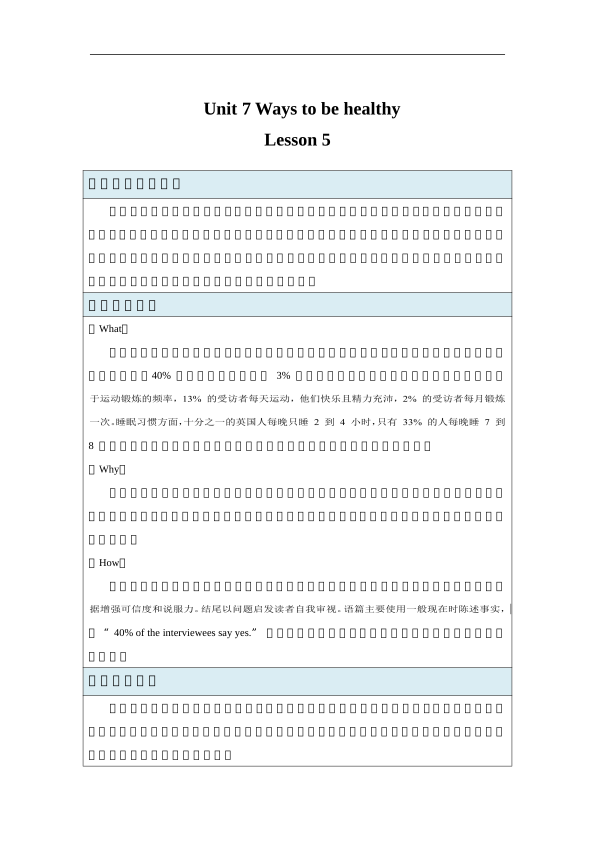
这是一份冀教版(2024)七年级下册(2024)Lesson 5 A lifestyle survey教学设计,共11页。教案主要包含了教学目标,教学重难点,教学方法,教学过程,教学反思等内容,欢迎下载使用。
注册成功

在线客服
添加在线客服
获取1对1服务
官方微信
关注“教习网”公众号
打开微信就能找资料
赛课定制
添加在线客服
获取1对1定制服务
职称咨询
添加在线客服
获取1V1专业指导服务

免费福利

.png)
.png)
.png)
