免费领取教师福利


若您为此资料的原创作者,认为该资料内容侵犯了您的知识产权,请扫码添加我们的相关工作人员,我们尽可能的保护您的合法权益。

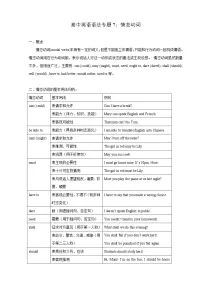
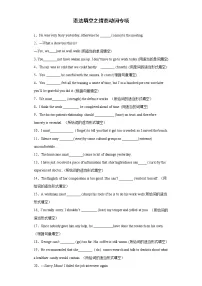
这是一份2022年高三英语复习与训练二十一情态动词,共5页。试卷主要包含了 情态动词等内容,欢迎下载使用。
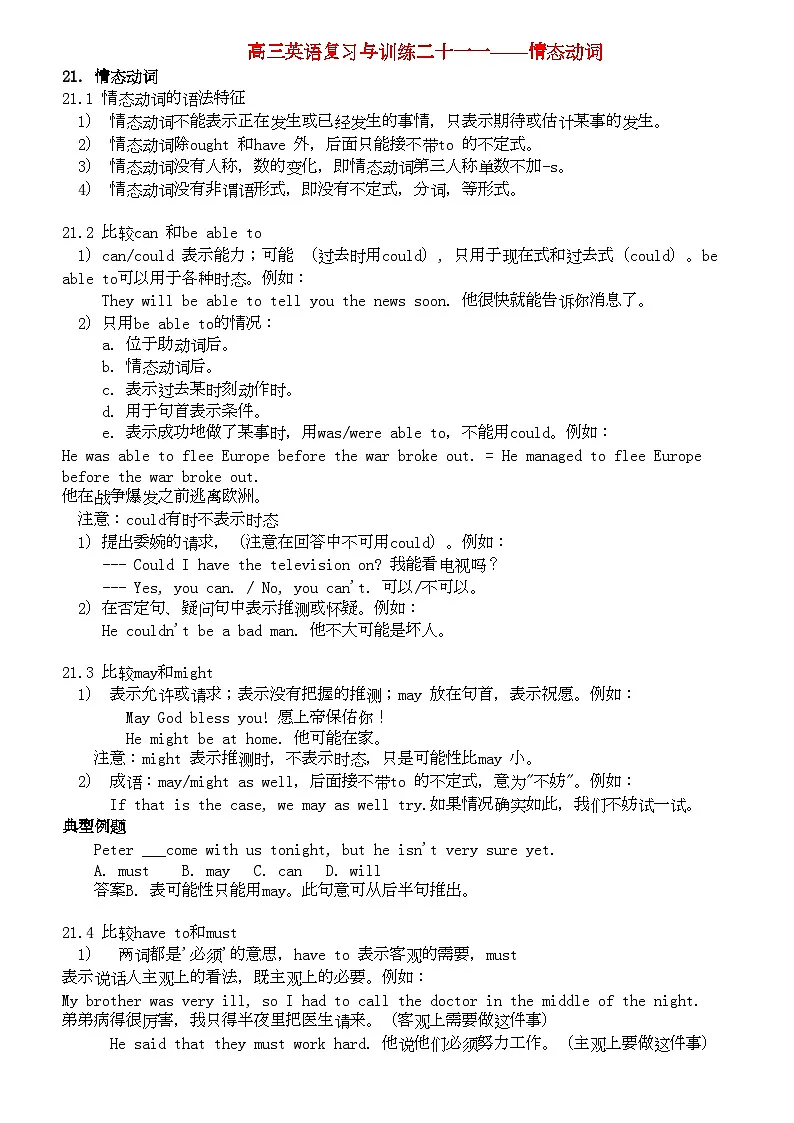
21.1 情态动词的语法特征
1) 情态动词不能表示正在发生或已经发生的事情,只表示期待或估计某事的发生。
2) 情态动词除ught 和have 外,后面只能接不带t 的不定式。
3) 情态动词没有人称,数的变化,即情态动词第三人称单数不加-s。
4) 情态动词没有非谓语形式,即没有不定式,分词,等形式。
21.2 比较can 和be able t
1)can/culd 表示能力;可能 (过去时用culd), 只用于现在式和过去式(culd)。be able t可以用于各种时态。例如:
They will be able t tell yu the news sn. 他很快就能告诉你消息了。
2)只用be able t的情况:
a. 位于助动词后。
b. 情态动词后。
c. 表示过去某时刻动作时。
d. 用于句首表示条件。
e. 表示成功地做了某事时,用was/were able t,不能用culd。例如:
He was able t flee Eurpe befre the war brke ut. = He managed t flee Eurpe befre the war brke ut.
他在战争爆发之前逃离欧洲。
注意:culd有时不表示时态
1)提出委婉的请求,(注意在回答中不可用culd)。例如:
--- Culd I have the televisin n? 我能看电视吗?
--- Yes, yu can. / N, yu can't. 可以/不可以。
2)在否定句、疑问句中表示推测或怀疑。例如:
He culdn't be a bad man. 他不大可能是坏人。
21.3 比较may和might
1) 表示允许或请求;表示没有把握的推测;may 放在句首,表示祝愿。例如:
May Gd bless yu! 愿上帝保佑你!
He might be at hme. 他可能在家。
注意:might 表示推测时,不表示时态,只是可能性比may 小。
2) 成语:may/might as well,后面接不带t 的不定式,意为"不妨"。例如:
If that is the case, we may as well try.如果情况确实如此,我们不妨试一试。
典型例题
Peter ___cme with us tnight, but he isn't very sure yet.
A. must B. may C. can D. will
答案B. 表可能性只能用may。此句意可从后半句推出。
21.4 比较have t和must
1) 两词都是'必须'的意思,have t 表示客观的需要,must 表示说话人主观上的看法,既主观上的必要。例如:
My brther was very ill, s I had t call the dctr in the middle f the night.
弟弟病得很厉害,我只得半夜里把医生请来。(客观上需要做这件事)
He said that they must wrk hard. 他说他们必须努力工作。(主观上要做这件事)
2) have t有人称、数、时态的变化,而must只有一种形式。但must 可用于间接引语中表示过去的必要或义务。例如:
He had t lk after his sister yesterday. 他昨晚只得照顾他姐姐。
3) 否定结构中:dn't have t表示"不必",mustn't表示"禁止"。例如:
Yu dn't have t tell him abut it. 你不一定要把此事告诉他。
Yu mustn't tell him abut it. 你不得把这件事告诉他。
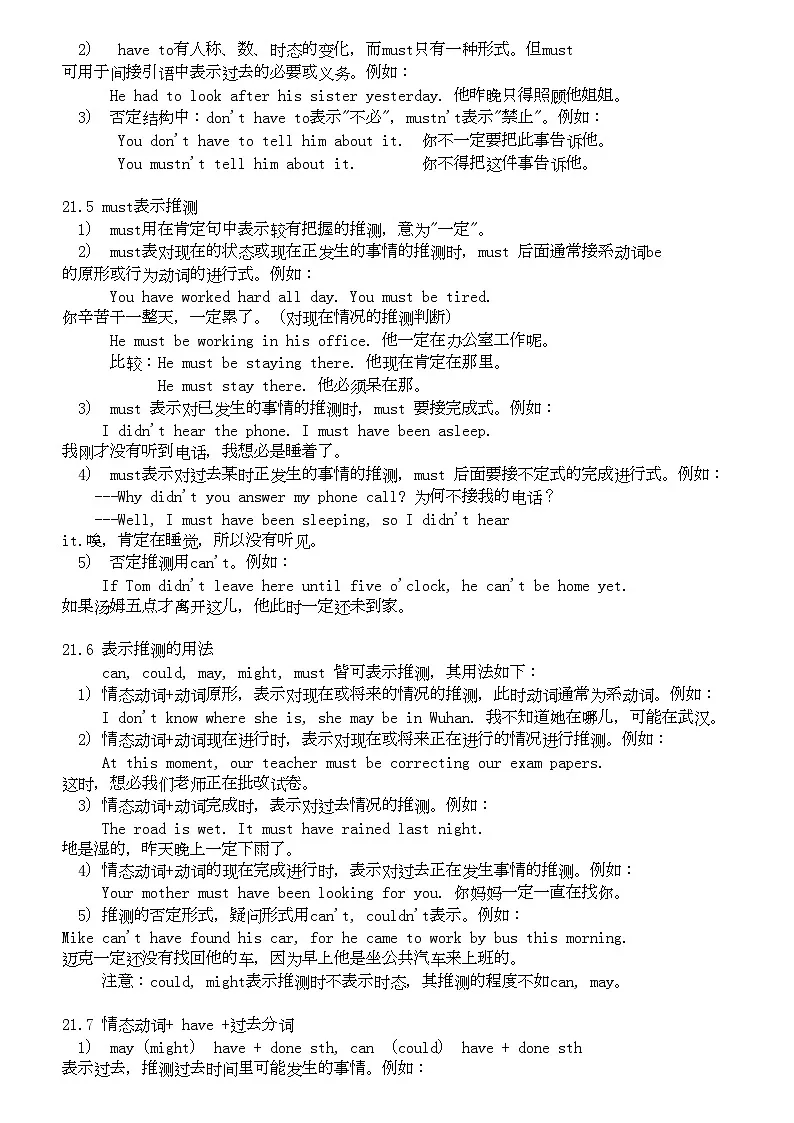
21.5 must表示推测
1) must用在肯定句中表示较有把握的推测,意为"一定"。
2) must表对现在的状态或现在正发生的事情的推测时,must 后面通常接系动词be 的原形或行为动词的进行式。例如:
Yu have wrked hard all day. Yu must be tired. 你辛苦干一整天,一定累了。(对现在情况的推测判断)
He must be wrking in his ffice. 他一定在办公室工作呢。
比较:He must be staying there. 他现在肯定在那里。
He must stay there. 他必须呆在那。
3) must 表示对已发生的事情的推测时,must 要接完成式。例如:
I didn't hear the phne. I must have been asleep. 我刚才没有听到电话,我想必是睡着了。
4) must表示对过去某时正发生的事情的推测,must 后面要接不定式的完成进行式。例如:
---Why didn't yu answer my phne call? 为何不接我的电话?
---Well, I must have been sleeping, s I didn't hear it.唉,肯定在睡觉,所以没有听见。
5) 否定推测用can't。例如:
If Tm didn't leave here until five 'clck, he can't be hme yet. 如果汤姆五点才离开这儿,他此时一定还未到家。
21.6 表示推测的用法
can, culd, may, might, must 皆可表示推测,其用法如下:
1)情态动词+动词原形,表示对现在或将来的情况的推测,此时动词通常为系动词。例如:
I dn't knw where she is, she may be in Wuhan. 我不知道她在哪儿,可能在武汉。
2)情态动词+动词现在进行时,表示对现在或将来正在进行的情况进行推测。例如:
At this mment, ur teacher must be crrecting ur exam papers. 这时,想必我们老师正在批改试卷。
3)情态动词+动词完成时,表示对过去情况的推测。例如:
The rad is wet. It must have rained last night. 地是湿的,昨天晚上一定下雨了。
4)情态动词+动词的现在完成进行时,表示对过去正在发生事情的推测。例如:
Yur mther must have been lking fr yu. 你妈妈一定一直在找你。
5)推测的否定形式,疑问形式用can't, culdn't表示。例如:
Mike can't have fund his car, fr he came t wrk by bus this mrning.
迈克一定还没有找回他的车,因为早上他是坐公共汽车来上班的。
注意:culd, might表示推测时不表示时态,其推测的程度不如can, may。
21.7 情态动词+ have +过去分词
1) may(might) have + dne sth, can (culd) have + dne sth 表示过去,推测过去时间里可能发生的事情。例如:
Philip may (might) have been hurt seriusly in the car accident. 菲力浦可能在车祸中受了重伤。
Philip can (culd) have been hurt seriusly in the car accident.
2) must have +dne sth,对过去时间里可能发生的事情的推测,语气较强,具有"肯定","谅必"的意思。例如:
---Linda has gne t wrk, but her bicycle is still here. 琳达已经去上班了,但她的单车还在这儿。
---She must have gne by bus.肯定乘巴士去的。
3) ught t have dne sth, shuld have dne sth表示本应该做某事,而事实上并没有做。否定句表示"不该做某事而做了"。例如:
Yu ught t (shuld) have been mre careful in this experiment. 你当时在做试验时应该更仔细点。
He ught nt t have thrwn the ld clthes away.他不该把旧衣服扔了。(事实上已扔了。)
ught t 在语气上比shuld 要强。
4) needn't have dne sth表示本没必要做某事,但做了。例如:
I dressed very warmly fr the trip, but I needn't have dne s. The weather was ht.
旅行时,我衣服穿得较多,其实没有必要。那时天很热。
5) wuld like t have dne sth表示本打算做某事,但没做。例如:
I wuld like t have read the article, but I was very busy then. 我想读这篇文章,但太忙了一直没读。
shuld 和ught t
除了上述的用法,两者还可表示"想必一定,按理应该"的意思。例如:
I ught t be able t live n my salary. 靠我的薪水,想必也能维持了。
It ught t be ready nw. 想必现在准备好了吧。
They shuld be there by nw, I think. 现在他们该到那儿了。
The pems shuld be ut in a mnth at mst. 诗集估计最多还有一个月就要出版了。
21.9 had better表示"最好",相当于一个助动词,它只有一种形式,它后面要跟动词原形。例如:
It is pretty cld. Yu'd better put n my cat. 天相当冷。你最好穿上我的外套。
She'd better nt play with the dg. 她最好不要玩耍那条狗。
had better have dne sth表示与事实相反的结果,意为"本来最好"。例如:
Yu had better have cme earlier. 你本该来得早一点。
21.10 wuld rather表示"宁愿"
wuld rather d
wuld rather nt d
wuld rather… than… 宁愿…而不愿。
还有wuld sner, had rather, had sner都表示"宁愿"、"宁可"的意思。例如:
If I have a chice, I had sner nt cntinue my studies at this schl. 如果有选择的余地,我宁可辍学离开这个学校。
I wuld rather stay here than g hme. = I wuld stay here rather than g hme. 我宁愿呆在这儿,而不愿回家。
典型例题
----Shall we g skating r stay at hme?
----Which ___ d?
A. d yu rather B. wuld yu rather C. will yu rather D. shuld yu rather
答案B。本题考查情态动词rather的用法,wuld rather +d sth 意为"宁愿",本题为疑问句,wuld 提前,所以选B。
21.11 will和wuld
注意:1)wuld like;wuld like t d = want t 想要,为固定搭配。例如:
Wuld yu like t g with me? 想和我一块去吗?
2)Will yu…? Wuld yu like…? 表示肯定含义的请求劝说时,疑问句中一般用sme, 而不是any。例如:
Wuld yu like sme cake? 吃点蛋糕吧。
3)否定结构中用will,一般不用wuld, wn't yu是一种委婉语气。
Wn't yu sit dwn? 你不坐下吗?
21.12 情态动词的回答方式
典型例题
1)---Culd I brrw yur dictinary?
---Yes, f curse, yu____.
A. might B. will C. can D. shuld
答案C. culd表示委婉的语气,并不为时态。答语中f curse,表示肯定的语气,允许某人做某事时,用can和 may来表达,不能用culd或might。will 与yu连用,用来提出要求或下命令。shuld与yu 连用,用来提出劝告。
2)---Shall I tell Jhn abut it?
---N, yu ___. I've tld him already.
A. needn't B. wuldn't C. mustn't D. shuldn't
答案A。needn't 不必,不用。 wuldn't 将不, 不会的。 mustn't 禁止、不能。 shuldn't 不应该。本题为不需要,不必的意思,应用needn't。
3)---Dn't frget t cme t my birthday party tmrrw.
---______.
A. I dn't B. I wn't C. I can't D. I haven't
答案B. will既可当作情态动词,表请求、建议、也可作为实义动词表"意愿、意志、决心",本题表示决心,选B。
21.13 带t 的情态动词
带t 的情态动词有四个:ught t, have t, used t, be t, 如加上have gt t (=must), be able t,为六个。它们的疑问、否定形式应予以注意:
D they have t pay their bill befre the end f the mnth?
She didn't use t play tennis befre she was furteen.
Yu ught nt t have tld her all abut it.
Ought he t see a heart specialist at nce.?
ught t 本身作为情态动词使用。其他的词作为实义动词使用,变疑问,否定时,须有d 等助动词协助。
典型例题
Tm ught nt t ___ me yur secret, but he meant n harm.
A. have tld B. tell C. be telling D. having tld
答案A。由于后句为过去时,告诉秘密的动作又发生在其前因,此地应用过去完成时,但它在情态动词 ught t 后,所以用have tld。
21.14 比较need和dare
这两词既可做实义动词用,又可做情态动词用。作为情态动词,两者都只能用于疑问句,否定句和条件句。need 作实义动词时后面的不定式必须带t,而dare作实义动词用时, 后面的t 时常可以被省略。
1) 实义动词:need(需要, 要求) need + n. / t d sth
2) 情态动词:need,只用原形need后加d,否定形式为need nt。例如:
Need yu g yet? 你要走了吗?
Yes, I must. / N, I needn't.是的,我要走了/不,不急着走。
问句
肯定回答
否定回答
Need yu…?
Yes, I must.
N, I needn't
Must yu…?
N, I dn't have t.
这是一份2022年高三英语复习与训练二十一情态动词,共5页。试卷主要包含了 情态动词等内容,欢迎下载使用。
这是一份2022年高三英语复习与训练十二动词的语态,共4页。试卷主要包含了 动词的语态等内容,欢迎下载使用。
这是一份2022年高三英语复习与训练五动词,共12页。试卷主要包含了 动词等内容,欢迎下载使用。
注册成功

在线客服
添加在线客服
获取1对1服务
官方微信
关注“教习网”公众号
打开微信就能找资料
赛课定制
添加在线客服
获取1对1定制服务
职称咨询
添加在线客服
获取1V1专业指导服务

免费福利

.png)