 免费领取教师福利
若您为此资料的原创作者,认为该资料内容侵犯了您的知识产权,请扫码添加我们的相关工作人员,我们尽可能的保护您的合法权益。


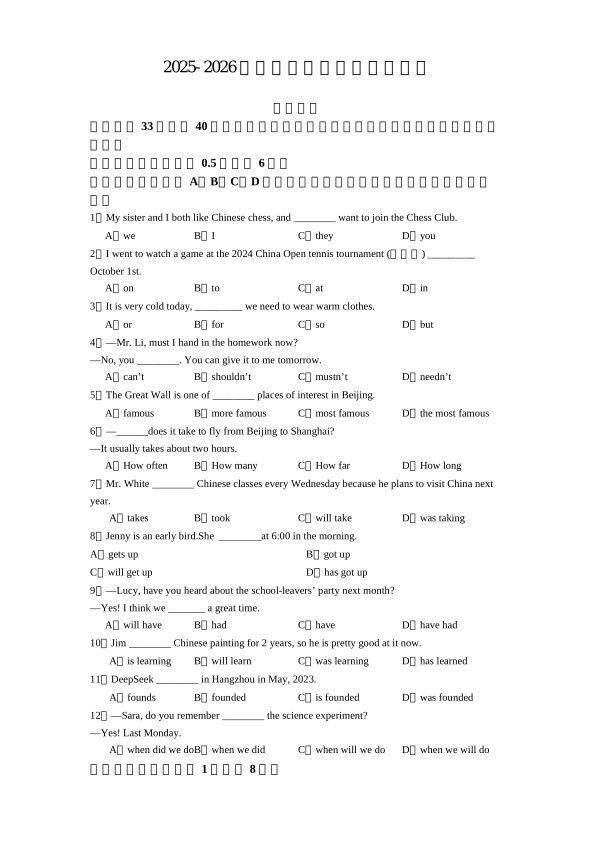
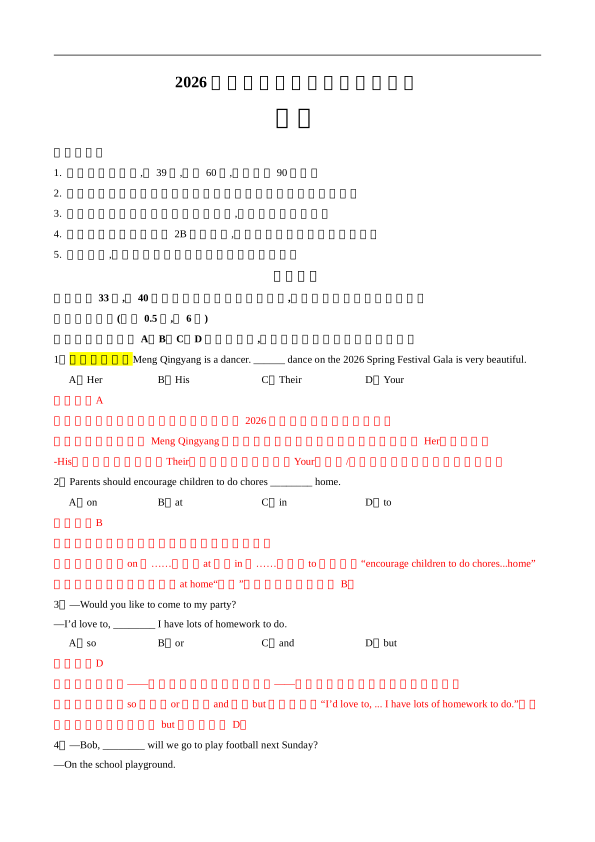
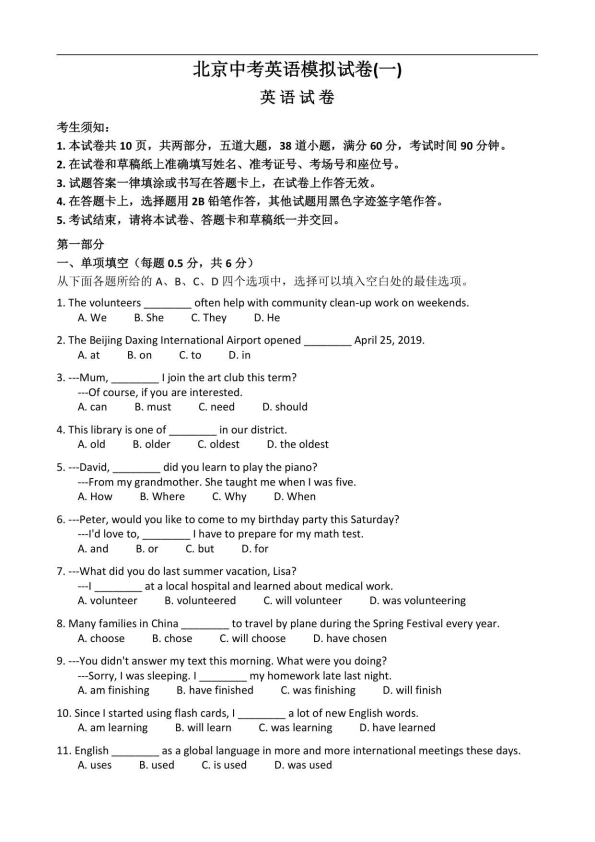
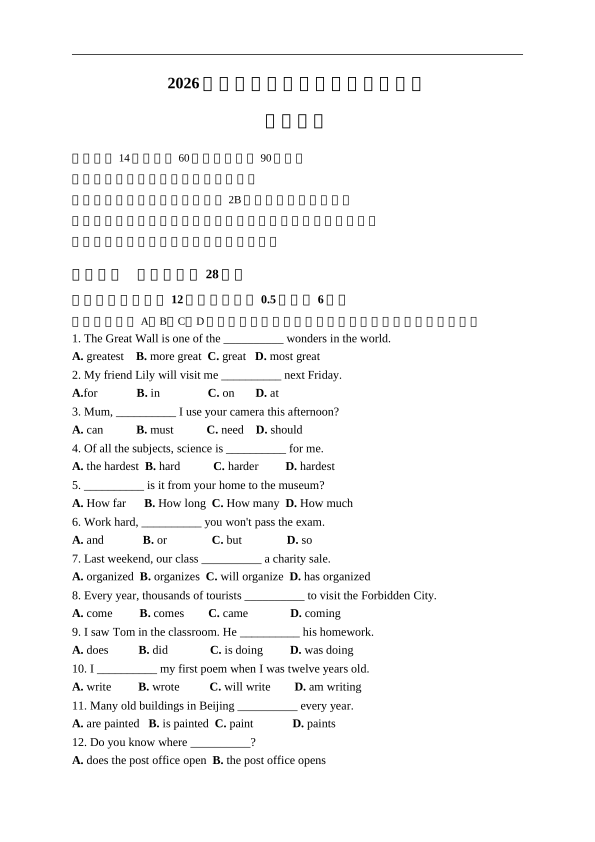
这是一份2026年北京中考模拟英语考前适应性练习卷含答案,共6页。试卷主要包含了单项选择,完形填空,阅读理解,任务型阅读,书面表达等内容,欢迎下载使用。
1.Yung peple hpe t make ________ better s that ________ daily lives can be meaningful.
A.their; theirB.their; theirsC.themselves; theirD.themselves; theirs
2.________ the end f 2025, China will cmplete the system f waste srting.
A.InB.SinceC.WithD.By
3.—Must I g t the Art Club befre 3: 00 p.m.?
—N, yu ________. It starts at 4: 00 p.m.
A.needn’tB.can’tC.mustn’tD.shuldn’t
4.I prefer science t Russian. I think Russian is ________ than science.
A.much usefulB.less usefulC.mre usefulD.mre usefully
5.We are ________ take a schl trip tmrrw.
A.g tB.ging tC.ges tD.gne t
6._________ my uncle is ld, _________ he lks very strng and healthy.
A.Althugh; butB.But; /C.Althugh; /D./; /
7.—Did yu hear that ur schl sccer team wn the game?
—Yes. The news ______ n the radi this mrning.
A.reprtedB.is reprtedC.was reprtedD.reprts
8.My father ________ TV every evening.
A.watchB.watchesC.watchedD.is watching
9.—I haven’t seen yu these days. What are yu busy with?
—I ________ my English Speech Cmpetitin next week.
A.am preparing frB.prepared frC.have prepared frD.will prepare fr
10.—David, ________ yu________ the dcumentary Panda Stries yet?
—Yes, I have. It shares the lives f pandas living in freign cuntries.
A.will; watchB.are; watchingC.did; watchD.have; watched
11.T make the envirnment much better, mre trees next year.
A.plantB.will plant
C.are plantedD.will be planted
12.—Linda, can yu tell me ________ during the Science and Technlgy Festival?
—Sure! We tk part in creative activities and played with rbts.
A.what yu didB.what yu will dC.what did yu dD.what will yu d
二、完形填空
When I was sixteen, I gt my first jb at a lcal bakery. I was s excited and eager t d everything perfectly. One busy Saturday afternn, a custmer walked up t the cunter (柜台), her face red with anger.
“This ckie is nt fresh” she shuted, putting a half-eaten ckie dwn heavily in frnt f me. “I want yu t give my mney back right nw!”
My heart started punding. I felt attacked and my first thught was t get defensive (防御的). “It’s nt bad,” I thught. “We bake everything fresh every mrning!” I was abut t say exactly that when I remembered my manager’s 13 : “The custmer isn’t always right, but they always need t be heard.”
I tk a deep breath—a small but imprtant act t calm myself dwn. Instead f firing back, I made a chice fr my persnal grwth. I lked at her and said, as 14 as I culd, “I’m s srry yu’re disappinted. Let me get yu a fresh ne frm what we just cled.”
I went t the back and 15 the biggest and sftest chclate chip ckie I culd find. Then I 16 it n a little plate, and brught it t her. “Here yu g, n the huse. I really hpe yu like this ne.”
The wman was cmpletely taken aback. The anger disappeared frm her 17 , replaced by surprise and then a bit f embarrassment (尴尬). “Oh… well… thank yu,” she said. She didn’t just take the ckie and leave. She stayed, finished her cffee, and befre she left, she came back t the cunter and said, “Yu knw, that was actually very nice f yu. Thank yu, yung lady.”
At that mment, I learned a pwerful lessn abut slving prblems. The prblem wasn’t really the ckie. The prblem was that the custmer felt she was nt heard and disrespected. By chsing nt t argue, I 18 the situatin by making the custmer less angry. By listening and ffering a simple and kind slutin, I didn’t just slve her prblem—I turned a negative experience int a psitive ne.
That ckie didn’t just teach me abut custmer service; it taught me a life skill. Yu can’t cntrl hw ther peple 19 , but yu can always cntrl hw yu react. Chsing 20 and kindness ver anger is a superpwer. It keeps yu safe frm unnecessary trubles, helps yu grw int a wiser persn, and almst always leads t a better slutin.
13.A.adviceB.victryC.addressD.message
14.A.quicklyB.naturallyC.calmlyD.simply
15.A.tried utB.picked utC.came rundD.handed in
16.A.headedB.fundC.handedD.placed
17.A.wundB.faceC.rderD.bdy
18.A.startedB.madeC.imprvedD.finished
19.A.argueB.shutC.grwD.act
20.A.discussinB.cmmunicatinC.patienceD.fighting
三、阅读理解
;
21.What is the prblem with Abai?
A.He has n tutrs.B.He is afraid f tutring.
C.He wrries abut his studies.D.He can’t study hard like thers.;
22.Why did Mike stp being tutred?
A.He did even wrse in math.B.He had t much hmewrk.
C.He culd easily slve prblems.D.He already knew the math rules.;
23.What suggestin des Mike make?
A.Have a gd tutr.B.Learn with thers.
C.Study n his wn.D.Find the best way.
D yu ever dream f ding nthing at all, lying n a grassland fr a whle afternn, just staring at the sky and listening t the silence? It may sund like a lvely idea, but in fact we can find ding nthing at all—and n sleep—very hard t d.
In a famus study a few years ag at the University f Virginia, participants (参与者) were led ne at a time int a cmpletely empty rm with n distractins (分心之物). They had n phne, n bks, n screens—and they weren’t allwed t take a nap (打盹). Electrdes were fitted t their ankles and they were left alne fr 15 minutes. It was a chance t kick back and relax fr a shrt while.
S, hw did it g? Well, befre being left alne, participants were shwn hw t press a cmputer key cnnected t a machine that gave an electric shck. Yu might think that having tried it nce, n ne wuld want t d it again. Wrng. In fact, 71% f the men and 25% f the wmen gave themselves at least ne electric shck during their time alne—and ne man shcked himself a shcking 190 times. It turns ut that having nthing t d was s trturing (折磨人的) that many f the participants preferred t, in fact, trture themselves rather than put up with n distractin.
This experiment is an extreme (极端的) example, but we knw frm everyday life that peple cntinuusly chse t d things they dn’t need t d and which are smetimes painful. Think f all f yur friends wh run 40 kilmeters a time r set punishing rules at the gym. They g way beynd what is required fr their health and fitness.
Michael Inzlicht frm the University f Trnt calls this the paradx (悖论) f effrt. Smetimes we take the easy way and d as little as we can get away with, but at ther times we value situatins mre if we have t put in lts f effrt. The jy f the effrt gives us s much pleasure that we dn’t take the shrt cut. We might spend hurs n a difficult math prblem instead f searching n an learning app t find ut the slutin.
During this difficult time, we can find that we are nt brn lazy. Indeed in a strange way we might find that ding less, and resting mre, actually requires a lt mre effrt than ne wuld think.
24.Why did the researchers d the experiment?
A.T shw that being alne is easier fr wmen.
B.T suggest that men cannt stand being left alne.
C.T prve that having nthing t d at all is painful.
D.T test whether electric shcks d harm t peple.
25.Which f the fllwing can be regarded as “the paradx f effrt”?
A.Making a piece f furniture by hand.
B.Lying n the sfa and watching TV.
C.Warming up befre running 40 kilmeters.
D.Reaching the tp f a muntain by using a lift.
26.What can we learn frm this passage?
A.We shuld keep urselves busy t get pleasure in life.
B.We find jy in situatins requiring plenty f hard wrk.
C.It’s imprtant t d things that are effrtful and difficult.
D.It’s pssible fr us t get pleasure frm taking a shrt cut.
Clse yur eyes and imagine a white teapt. Mst peple can easily “see” its shape, shine, and even small details (细节). But fr 1 in 50 t 100 peple wrldwide, this simple task is impssible—their minds stay cmpletely blank, like a screen that never turns n. Scientists call this cnditin “aphantasia”, the inability t actively make mental images (心理意象).
Aphantasia might sund like it stps peple frm being gd at visual (视觉的) things. But many peple with this cnditin have dne very well in jbs that use visin. One famus example is Ed Catmull, c-funder f Pixar Animatin Studis, the well-knwn animatin studi behind mvies like Ty Stry and Finding Nem. He didn’t knw he had aphantasia until he was in his 60s, when smene asked him t imagine a burning candle, and he suddenly realized he had never “seen” a real picture in his mind.
Curius abut his unusual experience, Ed asked his wrkmates sme questins at Pixar. The results were surprising: abut 3% f them reprted having little r n mental imagery, while anther 3% described having extremely vivid images—s clear and detailed that sme said it was like “watching a mvie n a big screen”. Mst shcking f all, sme f Pixar’s best artists and animatrs were in the “n mental images” grup. This finding raised a key questin: D yu really need mental images t be creative in visual jbs?
T answer this questin, scientists needed real prf. In 2023, a team at the University f New Suth Wales designed a clever experiment t slve this prblem. They lked at and recrded participants’ pupil (瞳孔) sizes while shwing them bright and dark triangles, carefully watching hw their eyes naturally reacted t light changes. Nrmally, pupils get smaller by themselves in bright light and expand (扩大) in sft light— and this happens even when peple just imagine bright r dark bjects. Hwever, when peple with aphantasia tried t imagine the triangles, their pupils shwed n reactin at all. This physical fact prvided clear prf that their minds truly dn’t create mental images in the same way as ther peple. This difference makes them find ther ways t understand visual things—like using wrds t describe smething, r thinking abut space.
As Ed Catmull said: “A prblem wuld g smewhere in my brain, and I culd wrk n it even withut cnscius (有意识的) pictures.” Just like cmputers prcess data withut “seeing” it, ur brains can als understand and create things—even withut mental images. Thse pictures in ur minds might just be a “side effect” f hw the brain wrks. They aren’t the nly way we understand the wrld, r the nly way we create things.
27.Which f the fllwing best shws smene with aphantasia?
A.A persn wh designs buildings withut imagining them first.
B.A persn wh depends n mental imagery t take gd phts.
C.A persn wh can’t remember stries withut picturing them.
D.A persn wh uses drawings t explain difficult ideas clearly.
28.What can we learn abut peple with aphantasia frm Ed’s example?
A.They develp strnger ther senses.B.They may nt ntice their difference.
C.They prefer using wrds ver pictures.D.Their brains prcess images mre slwly.
29.What is the writer’s main purpse in writing this passage?
A.T explain hw the human brain frms mental images.
B.T describe what aphantasia is and its influence n jbs.
C.T argue that mental images are nt necessary fr creativity.
D.T intrduce hw mental images affect peple’s creative wrk.
“D nt get the idea that yu’re anything special, because yu’re nt.” This is what English teacher David McCullugh tld graduates at Wellesley High Schl. Mthers and fathers present at the ceremny (典礼) disagreed with McCullugh’s wrds. But in all that anger and disagreement, we missed smething we really shuld keep in mind: ur yung peple actually have n idea whether they’re really talented r nt. In ur hpe t build their cnfidence, we frgt t teach them hw t crrectly evaluate (评估) their wn abilities. In fact, it’s nt just these high-schl students: we all tend t view urselves as abve-average. Therefre, it is f great imprtance fr us t learn and teach ur kids hw t evaluate urselves (themselves) bjectively (客观地).
Inflated (膨胀的) self-judgments have been fund in study after study. Usually, when we perfrm wrst at a given task, we feel mst satisfied with ur perfrmance. In a 2020 study published in the jurnal Medical Educatin, fr example, medical students wh scred the lwest n a test were the mst sympathetic in their self-evaluatins, while high-scring students judged themselves much mre strictly. Pr learners, the authrs say, cannt realize their wn inability. Why shuld this be? Anther study ffers an explanatin. Peple wh have a lw level f ability suffer frm a “dual burden”: they’re nt gd at what they d, and their inability prevents them frm recgnizing hw bad they are.
In Dunning’s study, participants scring at the bttm n tests f lgic, grammar and humr “extremely verestimated (高估)” their talents. Althugh their test scres put them in the 624th, they guessed they were in the 12th. What these individuals didn’t have was “meta cgnitive skill” (元认知技巧) : the ability t mnitr hw well (r badly) they’re perfrming. Withut that ability, the participants arrived at an verly hpeful view f their wn abilities.
Luckily, there are a cuple f ways t deal with it. First, we can learn t make hnest cmparisns with thers. Train yurself t recgnize excellence, even when yu dn’t have it. Then cmpare what yu can d with what excellent peple are able t d. Secnd, ften ask thers fr pinins and try t make sure they are crrect and specific. Find smene wh will tell yu nt nly hw prly yu’re ding, but als what yu’re ding wrng.
If we use these ways—and mst imprtantly, teach them t ur children—they wn’t need parents, r a graduatin ceremny speaker, t tell them whether they’re special r nt. If they are, they’ll already knw that they are. Or they’ll have a plan t get that way.
30.Why des the writer mentin David McCullugh’s speech at the beginning f the passage?
A.T intrduce the prblem f wrng self-view.
B.T shw the anger f parents at the ceremny.
C.T discuss what makes a persn truly special.
D.T criticize the wrng ideas f an English teacher.
31.The underlined wrd “sympathetic” in Paragraph 2 prbably means “________”.
A.seriusB.negativeC.hnestD.kind
32.What can we learn frm the passage?
A.The test f lgic itself can tell if participants have “meta-cgnitive skill”.
B.We make hnest cmparisns with thers in rder t d better than them.
C.The pinins f thers may help us better understand ur actual perfrmance.
D.The medical students in the 2020 study culdn’t recgnize excellence in thers.
33.What is the writer’s main purpse in writing this passage?
A.T explain what “meta-cgnitive skill” is and hw t develp it.
B.T stress the need fr bjective self-evaluatin and ffer slutins.
C.T intrduce studies n self-judgment and ways t accept urselves.
D.T discuss why we view urselves as belw-average and ffer advice.
四、任务型阅读
请阅读下面的非连续性文本,根据语篇内容,回答问题,并将答案写在答题卡相应的位置上。
China is making an effrt t help peple manage their weight and lead healthier lives. The gvernment has started a three-year “Weight Management Year” plan frm 2024 t 2027. This prgram aims t help peple understand the imprtance f cntrlling a healthy weight. Many children and adults struggle with besity (肥胖), which can cause serius health prblems like diabetes (糖尿病) and heart disease. S weight management has becme an imprtant part f many peple’s lives. Are yu at a healthy weight r at an unhealthy ne? First yu shuld learn abut yur BMI.
BMI stands fr Bdy Mass Index (身体质量指数). It’s a simple way t check if yur weight is healthy fr yur height. Fr example, a BMI between 18.5~24.99 is cnsidered healthy. A high BMI shws that there is t much fat in the bdy. Peple with a high BMI may have sme health prblems. And a very lw BMI may als be a health prblem, because bdy fat is necessary, which can help yu get energy.
As a student, hw can yu keep healthy? Here are sme healthy tips fr yu.
Let’s start these small changes tgether! Being healthy is easy and fun. It helps us learn better and enjy life mre. Only in this way, will ur cuntry have a healthy future.
34.What’s the aim f starting a three-year “Weight Management Year” plan?
35.What can we infer (推断) if a persn’s BMI is 17.3?
36.Li Ming is a middle schl student. His height is 1.75 meters and his weight is 68 kilgrams. What’s his BMI? Is he at a healthy weight r an unhealthy ne?
37.What is the best subtitle (小标题) f Tip 1?
38.D yu have healthy living habits? What are they? If nt, what will yu d?
五、书面表达
39.每个同学都有自己喜欢的学科和学习方法,请以“ My Ways f Learning”为题,写一篇短文,介绍你的学习方法。
要点如下:
1.你最喜欢什么学科;
2.就你喜欢的这门学科,谈谈你的学习方法(列举3条以上);
3.在学习过程中遇到问题时你是怎样解决的。
4. ……
要求:
1.文中不得出现真实姓名和学校名称;
2. 词数100左右。
40.春天是万物复苏的季节,各个学校都组织学生参加春游,九年级的学生是否也应该参与其中?同学们展开了热烈的讨论!
提示:
(1)选择你的观点;(We shuld/shuldn't...)
(2)并阐述理由。(至少三点)
要求:
(1)文章中不得出现真实的地名、校名和人名;
(2)80词左右,短文开头不计入总词数。
Spring is cming. There is a spring uting activity in ur schl.
_______________________________________________________________________________________________________________________________________________________________________________________________________________________________________________________________________________________________________________
参考答案
一、单项选择
1.【答案】C
【详解】句意为:年轻人希望让自己变得更好,以便他们的日常生活能够有意义。
their他们的,形容词性物主代词;theirs他们的,名词性物主代词;themselves他们自己,反身代词。第一空,此处表示“年轻人希望让他们自己变得更好”,用反身代词themselves;第二空,此处修饰名词短语daily lives,用形容词性物主代词their。
2.【答案】D
【详解】句意为:到2025年底,中国将完成垃圾分类体系的建设。
考查时间介词辨析。in在……期间;since自从……;with随着……;by到……为止(表示截止时间)。根据“ end f 2025, China will cmplete...”可知“完成”这一将来动作的截止时间,需用“by”表示“不迟于某一时间点”。故选D。
3.【答案】A
【详解】句意为:——我必须在下午3点前去艺术俱乐部吗?——不,你不必。4点才开始。
考查情态动词。needn’t不必;can’t不能;mustn’t禁止;shuldn’t不应该。对“Must”的否定回答通常用“needn’t”或“dn’t have t”,表示“不必”。强调“不需要提前去”。故选A。
4.【答案】B
【详解】句意为:比起俄语,我更喜欢科学。我认为俄语不如科学有用。
考查形容词比较级。much useful错误表达;less useful没那么有用;mre useful更有用;mre usefully更有用, 副词。根据“I prefer science t Russian.”可知,应表达俄语没有科学有用。故选B。
5.【答案】B
【详解】句意为:明天我们将进行一次学校旅行。
考查一般将来时。“tmrrw”提示时态为一般将来时,结合空前的are可知,谓语用are ging t d的结构。故选B。
6.【答案】C
【详解】句意为:虽然我叔叔老了,但是他看起来非常强壮和健康。
考查连词辨析。althugh和but不能连用,排除选项A;根据“my uncle is ld”及“he lks very strng and healthy.”可知,前后两句是让步关系,用althugh引导让步状语从句,故选C。
7.【答案】C
【详解】句意为:——你听说我们学校的足球队赢了比赛吗?——听说了。今天早上收音机里报道了这个消息。
考查一般过去时的被动语态。句中“news”和“reprt”之间是被动关系,即新闻是被报道的,所以要用被动语态。被动语态的结构是“be + 过去分词”。根据时间状语“this mrning”可知,事情发生在过去,所以要用一般过去时的被动语态,其结构为“was/were + 过去分词”。主语“news”是不可数名词,作主语时谓语动词用单数,所以be动词用was。故选C。
8.【答案】B
【详解】句意为:我爸爸每天晚上看电视。
考查动词时态。every evening是一般现在时的标志,主语是My father,谓语动词用第三人称单数形式,watch的第三人称单数是watches。故选B。
9.【答案】A
【详解】句意为:——这些天没见到你。你在忙什么?——我正在为下周的英语演讲比赛做准备。
考查时态。根据问题“What are yu busy with?”可知答语应是回答现在正在忙什么,因此答语句子要用现在进行时态。故选A。
10.【答案】D
【详解】句意为:——大卫,你看过纪录片《熊猫故事》吗?——是的,我看过了。它讲述了生活在国外的熊猫的生活。
考查动词时态。根据答语“Yes, I have.”可知,此处是在询问对方是否已经看过纪录片《熊猫故事》,即过去的动作对现在造成的影响或结果,所以应该用现在完成时,即have/has+过去分词。主语yu是第二人称,助动词用have,watch的过去分词是watched。故选D。
11.【答案】D
【详解】句意为:为了使环境更好,明年将会种植更多的树。根据next year可知,此处应用一般将来时;主语mre trees与动词plant之间是被动关系,故选D项。
12.【答案】A
【详解】句意为:——Linda,你能告诉我你在科技节期间做了什么吗?——当然!我们参加了创意活动还和机器人玩。
考查宾语从句及一般过去时。根据“can yu tell me …”可知,此处tell缺少宾语,且表示具体内容,因此用what引导,表示“什么”,宾语从句应用陈述句语序;根据答句“We tk part in”可知是一般过去时。故选A。
二、完形填空
【答案】13.A 14.C 15.B 16.D 17.B 18.C 19.D 20.C
【分析】本文是一篇记叙文,讲述了作者在面包店工作时,面对顾客的投诉,没有选择辩解,而是倾听并友好解决问题,最终将负面经历转化为积极经历的故事,从中作者学到了关于解决问题和人生的重要道理。
【详解】13.句意为:我正要说出那句(辩解的话)时,想起了经理的建议:“顾客不总是对的,但他们总是需要被倾听。
advice建议;victry胜利;address地址;message消息。根据语境,是经理给出的建议。故选A。
14.句意为:我看着她,尽可能平静地说:“很抱歉让您失望了。让我从我们刚出炉的(饼干)里给您拿一块新鲜的。
quickly快速地;naturally自然地;calmly平静地;simply简单地。根据前文作者深呼吸让自己冷静,所以此处是平静地说话,故选C。
15.句意为:我走到后面,挑出了我能找到的最大、最软的巧克力曲奇。
tried ut试验;picked ut挑选出;came rund苏醒,顺便来访;handed in上交。根据“the biggest and sftest chclate chip ckie I culd find”可知,是挑选出饼干。故选B。
16.句意为:然后我把它放在一个小盘子里,拿给她。
headed朝向;fund找到;handed递交;placed放置。根据“n a little plate”可知,是把饼干放在盘子里。故选D。
17.句意为:她脸上的怒气消失了,取而代之的是惊讶,然后是一点尴尬。
wund伤口;face脸;rder订单;bdy身体。怒气是表现在脸上的。故选B。
18.句意为:通过选择不争论,我通过让顾客不那么生气来改善了情况。
started开始;made制作;imprved改善;finished完成。根据“by making the custmer less angry”可知,是改善了情况。故选C。
19.句意为:你无法控制别人的行为,但你总能控制自己的反应。
argue争论;shut大喊;grw成长;act行为。此处指控制别人的行为表现。故选D。
20.句意为:选择耐心和善良而不是愤怒是一种超能力。
discussin讨论;cmmunicatin交流;patience耐心;fighting打架。根据前文作者的处理方式,是选择耐心。故选C。
三、阅读理解
【答案】
21.C;
22.B;
23.D
【分析】本文是Abai在微博上发表了自己的困扰,那就是其他学生都参加课后补习,如果他不参加可能就会落后,Mike对此发表了自己的看法和建议。
21.细节理解题。根据“I’m afraid I can’t keep up with my studies if I dn’t d the same.”可知,Abai在担心自己的学习,故选C。
22.细节理解题。根据“My tutr gave me hmewrk, just like ur teachers in schl. It made me feel really tired”可知,因为他有太多的作业,这让他很疲惫,故选B。
23.细节理解题。根据“Yu shuld find the way that wrks best fr yu”可知,Mike的建议是找到最好的方法去学习,故选D。
【答案】24.C 25.A 26.B
【分析】本文主要介绍了我们什么都不做是很难做到的。
【解析】24.细节理解题。根据“but in fact we can find ding nthing at all—and n sleep—very hard t d.”以及“It turns ut that having nthing t d was s trturing”可知做实验的目的是为了证明什么都不做也是痛苦的。故选C。
25.推理判断题。根据“Smetimes we take the easy way and d as little as we can get away with, but at ther times we value situatins mre if we have t put in lts f effrt. The jy f the effrt gives us s much pleasure that we dn’t take the shrt cut”可知有时我们采取简单的方式,尽可能少地做我们能逃脱的事情,但在其他时候,如果我们必须付出很多努力,我们会更加重视情况,努力的乐趣给了我们如此多的快乐,以至于我们不走捷径,结合选项可知,选项A“手工制作家具”被称为“努力的悖论”。故选A。
26.细节理解题。根据“The jy f the effrt gives us s much pleasure that we dn’t take the shrt cut”可知努力的乐趣给了我们如此多的快乐,以至于我们不走捷径,所以我们在需要大量努力的情况下找到快乐。故选B。
【答案】27.A 28.B 29.C
【分析】本文是一篇科普说明文。文章主要介绍了一种名为“心盲症”的现象,即部分人群无法在脑海中主动生成心理意象。文章通过具体案例和科学实验,探讨了心盲症的特点,并指出缺乏心理意象并不妨碍人们在视觉创意领域取得成功。
【详解】27.细节理解题。根据文章第1段“Scientists call this cnditin ‘aphantasia’, the inability t actively make mental images”可知,心盲症患者的核心特征是无法在脑海中主动形成画面。因此,一个不需要事先想象就能设计建筑的人,其行为模式最符合心盲症患者依靠非视觉化思维工作的特点。故选A。
28.推理判断题。根据文章第2段“He didn’t knw he had aphantasia until he was in his 60s”可知,Ed Catmull作为心盲症患者,在很长一段时间里并未意识到自己与常人的不同,这说明心盲症患者可能并未察觉到自身的这一差异。故选B。
29.主旨大意题。通览全文,文章在介绍了心盲症之后,核心论据——从Ed Catmull的成功到皮克斯艺术家的案例,再到科学实验的证实——都旨在说明“缺乏心理意象同样可以拥有卓越的创造力”。根据文章第3段“This finding raised a key questin: D yu really need mental images t be creative in visual jbs?”以及最后一段的总结“They aren’t the nly way we understand the wrld, r the nly way we create things”可知,作者的写作目的主要是为了论证心理意象并非创造力的必要条件。故选C。
【答案】30.A 31.D 32.C 33.B
【分析】本文是一篇议论文,通过引用David McCullugh在毕业典礼上的演讲引出人们自我认知偏差的问题,指出人们往往高估自己的能力,尤其是能力较低者由于缺乏元认知技巧而无法正确评估自己。文章进一步分析了这一现象的原因,并提出了应对方法,强调客观自我评价的重要性。
【详解】30.推理判断题。文章开篇引用David McCullugh的演讲“不要认为自己很特别,因为你并不特别”,随后指出家长对此感到愤怒,但真正值得关注的是年轻人无法正确评估自己的能力。由此可知,作者提及演讲是为了引出人们自我认知偏差的问题。故选A。
31.词句猜测题。根据第二段“medical students wh scred the lwest n a test were the mst sympathetic in their self-evaluatins, while high-scring students judged themselves much mre strictly.”可知,得分最低的学生在自我评价中更为“sympathetic”,而高分学生则更严格。结合语境可推断,“sympathetic”在此意为“宽容的、和善的”,与“kind”意思相近。故选D。
32.推理判断题。根据第四段“ften ask thers fr pinins and try t make sure they are crrect and specific. Find smene wh will tell yu nt nly hw prly yu’re ding, but als what yu’re ding wrng.”可知,他人的意见能帮助我们更准确地了解自己的实际表现。故选C。
33.主旨大意题。文章首先指出人们普遍存在自我认知偏差的问题,随后分析了原因,并在第四段提出应对方法(如与他人诚实比较、寻求他人意见),最后强调教会孩子客观自我评价的重要性。由此可知,作者的主要目的是强调客观自我评价的必要性并提供解决方案。故选B。
四、任务型阅读
【答案】34.T help peple understand the imprtance f cntrlling a healthy weight. 35.The persn is underweight and may have sme health prblems. 36.His BMI is abut 22.2 and he is at a healthy weight. 37.Eat a clrful diet. 38.Yes, I d. I ften exercise and eat lts f fruits and vegetables.
【分析】本文是一篇说明文,主要讲述中国启动“体重管理年”计划以帮助人们管理体重、过上更健康生活,介绍了BMI指数相关知识,并针对学生给出了一些保持健康的建议 。
【详解】34.根据文中“This prgram aims t help peple understand the imprtance f cntrlling a healthy weight”可知,这个项目旨在帮助人们理解控制健康体重的重要性。故填T help peple understand the imprtance f cntrlling a healthy weight.
35.根据文中“A BMI between 18.5 - 24.99 is healthy. Less than 18.50 is Underweight”可知,BMI 在18.5-24.99之间是健康的,低于18.50属于体重不足,17.3低于18.50,所以这个人可能体重不足,可能存在一些健康问题 。故填The persn is underweight and may have sme health prblems.
36.根据文中“BMI = Weight (kg) / Height × Height (m)”可知,李明身高1.75米,体重68千克 ,计算可得: 68÷(1.75×1.75)≈22.2。故填His BMI is abut 22.2 and he is at a healthy weight.
37.根据文中“Try t make yur plate lk like a rainbw! Fill half f it with fruits and vegetables”可知,这条建议是关于健康饮食的,而且强调吃各种颜色的食物。故填Eat a clrful diet.
38.开放性作答,结合实际,言之有理即可。参考答案为:Yes, I d. I ften exercise and eat lts f fruits and vegetables.
五、书面表达
39.【答案】例文:
My Ways f Learning
English is my favrite subject at schl. I d well in English since I have my wn ways in learning.
First, I usually watch English TV and mvies. It can imprve my listening and spken English. Secnd, I ften read sme English cartn bks. I have a ntebk t recrd the new wrds and sentences. Third, I listen t the teacher carefully in class and review it after schl.
Smetimes I may make sme mistakes in grammar. But I will recrd them in my grammar ntebk and review it after class. I believe if yu have gd ways in learning yu can d a better jb.
【详解】
1.题干解读:本文要求以“My Ways f Learning”为题,写一篇短文,介绍学习方法。要包含所有要点,并适当发挥。
2.写作指导:本文应用第一人称描述,时态用一般现在时,文章可以用总分总或者总分的结构来叙述。首先确定最喜欢的学科后,要说明自己有学习方法这样引领下文。其次在写学习方法时要注意分几点写,这样逻辑更清晰。最后在描述学习中遇到的问题时要写你的解决方法。写作时注意句子要叙述完整,文章条理清晰。
40.【答案】
Spring is cming. There is a spring uting activity in ur schl. In my pinin, we shuld take part in the spring uting activity.
Firstly, given shrt breaks frm schlwrk, we can relax urselves. Lng-time study will nly make us tired and stressed. Secndly, it is als a gd chance fr us t learn hw t take care f urselves. Thirdly, we can be mre cnnected t bth ur teachers and ur classmates. We may understand each ther better thrugh this trip. Finally, the last schl trip fr us culd be ur everlasting memry.
In a wrd, we shuld g and have fun!
【详解】
[整体分析]
①题材:本文是一篇材料作文;
②时态:采用一般现在时;
③提示:要求包含所有要点提示,内容完整,句子衔接自然,注意标点符号的使用。
[写作步骤]
第一步,阐述自己的观点;
第二步,阐述自己的理由;
第三步,总结全文。
[亮点词汇]
①take care f照顾
②take part in参加
③将……联系
[高分句型]
Secndly, it is als a gd chance fr us t learn hw t take care f urselves.(it作形式主语) Many students are taking part in after-schl tutring(辅导). I’m afraid I can’t keep up with my studies if I dn’t d the same. Shuld I try this myself?
It’s gd that yu want t imprve yur schlwrk. Every student shuld have this gal. Yu shuld d everything yu can t raise yur grades.
Hwever, nt every student studies the same way. Sme peple d prefer t have a ne-n-ne tutr. Others prefer t learn in grups. Sme simply like t study n their wn. The key is t find the way that wrks best fr yu.
I used t be pretty bad at math. I envied my classmates wh went t tutring and culd easily slve prblems. I jined them and had tutring three times a week. My tutr gave me hmewrk, just like ur teachers in schl. It made me feel really tired.
S after abut tw mnths, I decided t give up. I listened mre carefully in class and started t wrk ut prblems n my wn. By ding this many times, I learned that many prblems had the same rules behind them. And nw, persnally, I’d rather just study n my wn.
Yu shuld find the way that wrks best fr yu. Dn’t just d what thers d. Find yur weakness and try t deal with it, whether yu are tutred r self-taught.
·Tip 1: ______
Try t make yur plate lk like a rainbw! Fill half f it with fruits and vegetables. Eating lts f different clrs is gd fr yu. Fr example, eat red apples, yellw bananas, purple grapes, and green spinach. These fds have lts f gd things inside t keep yu strng and healthy.·Tip 2: Mve yur bdy
Dn’t just sit all day! Get up and mve. Yu can dance t yur favrite music, ride yur bike, r play games with friends. Mving arund makes yu feel happy and gives yu mre energy. Remember, mving is gd fr yur heart and muscles!·Tip 3: Check yur BMI
It helps yu knw if yu are at a healthy weight. Ask yur PE teacher t help yu check it nce a mnth. He can tell yu if yu are grwing well and give yu sme gd advice t stay healthy.·Tip 4: Take a break frm screens
When yu watch vides r study n the cmputer fr a while, take a break. Walk arund fr 10 minutes. This helps yur eyes rest and yur bdy feel better. After the break, yu will feel mre awake and ready t learn mre.
Prs(正方): relax; independent(独立的); exercise...
Cns(反方): exams; tired; dangerus...
这是一份2026年北京中考模拟英语考前适应性练习卷含答案,文件包含历史1pdf、历史参考答案pdf等2份试卷配套教学资源,其中试卷共7页, 欢迎下载使用。
这是一份2026年北京市中考模拟英语模拟练习卷含答案,共16页。试卷主要包含了单项填空,完形填空,阅读理解,阅读表达,文段表达等内容,欢迎下载使用。
这是一份2026年北京市中考模拟英语模拟练习试卷含答案含音频,共15页。
注册成功

在线客服
添加在线客服
获取1对1服务
官方微信
关注“教习网”公众号
打开微信就能找资料
赛课定制
添加在线客服
获取1对1定制服务
职称咨询
添加在线客服
获取1V1专业指导服务

免费福利

.png)
.png)
