 免费领取教师福利
若您为此资料的原创作者,认为该资料内容侵犯了您的知识产权,请扫码添加我们的相关工作人员,我们尽可能的保护您的合法权益。


这是一份2026年广东省卷 中考模拟英语考场仿真密卷含答案(解析版+考试版+听力音频),文件包含2026年广东省初中学业水平考试英语精品模拟试题二docx、2026年广东省初中学业水平考试英语精品模拟试题二mp3等2份试卷配套教学资源,其中试卷共7页, 欢迎下载使用。
(考试时间:90分钟 试卷满分:120分)
注意事项:
1.本试卷分第Ⅰ卷(选择题)和第Ⅱ卷(非选择题)两部分。答卷前,考生务必将自己的姓名、准考证号填写在答题卡上。
2.回答第Ⅰ卷时,选出每小题答案后,用2B铅笔把答题卡上对应题目的答案标号涂黑。如需改动,用橡皮擦干净后,再选涂其他答案标号。写在本试卷上无效。
3.回答第Ⅱ卷时,将答案写在答题卡上。写在本试卷上无效。
4.考试结束后,将本试卷和答题卡一并交回。
一、听说应用(本大题共30小题,每小题1分,共30分,A、B、C、D部分为听力理解,
E 部分为情景对话)
A.听句子(本题共5小题,每小题1分,共5分)
请根据所听内容,选择符合题意的图画回答问题。每个句子听两遍。
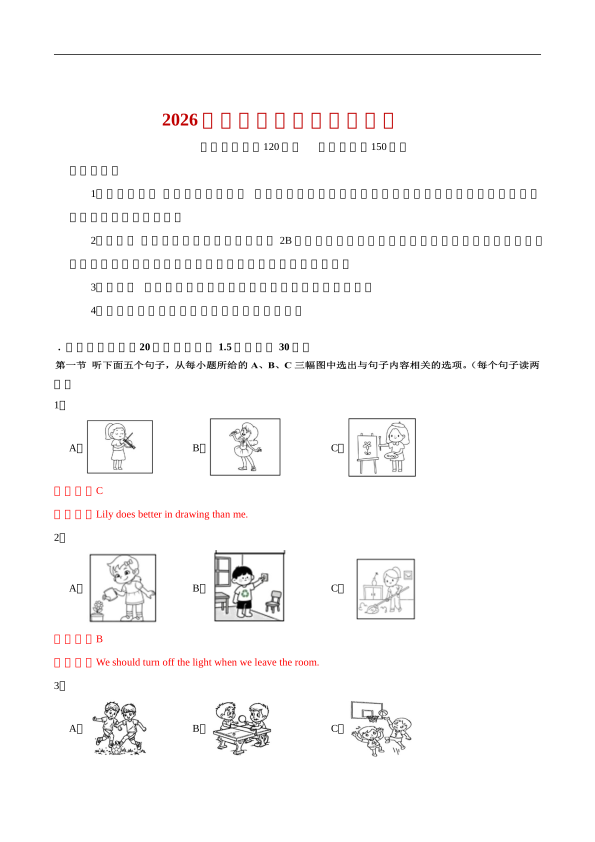
1.Which fruit des Ted like t eat?
A. B.C.
【答案】C
【原文】Ted likes t eat pears instead f strawberries.
2.Why was the schl art festival put ff?
A. B.C.
【答案】C
【原文】The schl art festival was put ff because f a heavy rain.
3.Hw d the speaker’s parents usually g t wrk?
A.B.C.
【答案】C
【原文】My parents usually g t wrk by bike.
4.What des Ted usually d at weekends?
A.B.C.
【答案】B
【原文】Ted usually ges t the cinema n weekends.
5.Where did the speaker g yesterday?
A.B.C.
【答案】B
【原文】It was Sunday yesterday, s I went t the cinema while my sister went t a museum.
B.听对话(本题共10小题,每小题1分,共10分)
请根据每段对话的内容回答问题,从每小题所给的三个选项中选出一个最佳答案。每段对话听两遍。
听第一段对话,回答第6小题。
6.Hw did Jenny feel?
A.Mved.B.Excited.C.Tired
【答案】B
【原文】A: Did yu g t the night market last night?
B: Yes, I was excited t try all the delicius snacks.
听第二段对话,回答第7小题。
7.Which hmewrk is Jhn ging t d next?
A.Chinese.B.English.C.Math.
【答案】C
【原文】A: What are yu ding, Jhn?
B: I’m ding my Chinese hmewrk, and I will finish my math hmewrk next.
听第三段对话,回答第8小题。
8.Why is the man ging t Germany next week?
A.Fr study.B.Fr business.C.Fr vacatin.
【答案】B
【原文】A: I’m ging t Germany n business next mnth, Jenny. Can yu teach me sme German?
B: Of curse. With pleasure.
听第四段对话,回答第9小题。
9.What are the speakers talking abut?
A.Schl subjects.B.Schl rules.C.Favrite clthes.
【答案】B
【原文】A: In ur schl, students must be in schl unifrms n weekdays.
B: That’s because unifrms can shw that we are rganized.
听第五段对话,回答第10小题。
10.Hw did the girl get the purse?
A.She bught it.
B.Her grandma gave it t her.
C.She made it.
【答案】C
【原文】A: Where did yu buy the purse? It lks pretty.
B: I didn’t buy it. I learned t make it frm my grandma. She’s gd at making things ut f ld clthes.
听第六段对话,回答第11-12小题。
11.When will Sandy check in at the htel?
A.On April 19th.B.On May 19th.C.On June 19th.
12.Hw much will Sandy pay?
A.190 yuan.B.250 yuan.C.280 yuan.
【答案】11.B 12.C
【原文】M: Gd mrning, this is Sunshine Htel. Can I help yu?
W: Gd mrning, this is Sandy Green. I’d like t bk a rm fr May 19th.
M: 190 yuan a night fr a single rm, 250 yuan fr a duble rm, and 280 yuan fr a family rm.
W: A family rm, please.
M: OK, see yu n the 19th.
听第七段对话,回答第13-15小题。
13.What did Sally buy last year?
A.A Chinese painting.B.A silk scarf.C.A ppular plant.
14.Where did Sally get it?
A.In Sichuan.B.In Anhui.C.In Beijing.
15.What des Sally learn abut bamb?
A.It can grw very fast.
B.It’s the mst ppular plant in China.
C.It’s mainly fund in Sichuan.
【答案】13.B 14.A 15.A
【原文】M: Oh, what’s that, Sally? It’s s beautiful!
W: Thanks! It’s a silk scarf. I bught it last year.
M: Oh, it has a painting f bamb n it.
W: Yeah. Bamb is ne f the mst ppular subjects in Chinese paintings.
M: I didn’t knw that befre! S where did yu get that scarf?
W: At the bamb sea in Sichuan. I learned lts f interesting things when I was there.
M: Like what?
W: Well, bamb grws really fast. Sme bamb can grw almst ne meter in ne day.
M: Oh, that’s really interesting.
C.听短文(本题共5小题,每小题1分,共5分)
请根据所听内容,从每小题所给的三个选项中选出一个最佳答案。短文听两遍。
16.When did the class visit the Shenzhen Science Museum?
A.Last Mnday.B.Last Tuesday.C.Last Wednesday.
17.Hw did the students g there?
A.By cach.B.By train.C.By undergrund.
18.Wh welcmed the students?
A.A teacher.B.A tur guide.C.A rbt guide.
19.Hw many activities are mentined?
A.Three.B.Fur.C.Six.
20.Hw did the students feel at last?
A.Excited.B.Peaceful.C.Bred.
【答案】16.C 17.A 18.C 19.B 20.A
【原文】
It was sunny last Wednesday. Our class went n a study trip t the Shenzhen Science Museum by cach. When we arrived, a friendly rbt guide gave us a warm welcme. We tk part in many activities. At first, we watched a shw abut AI in life. Later, we watched a 3D film abut space. After that, we experienced a space walk. Finally, we tried AI painting. Befre we left, the rbt guide tk a grup pht f us. We learned a lt frm this trip. It was nt just a nrmal schl day, but a day full f surprises and new discveries.
D.听填信息(本题共5小题,每小题1分,共5分)
你将听到一篇关于一个夏令营的短文。请根据所听内容填写下面的信息卡,并将答案写在答题卡对应题目的答题位置上。短文听两遍。
【答案】21.mrning 22.lvely 23.blue 24.keys 25.10th/tenth
【原文】
Hell everyne. I am Fang Wei frm Class Tw Grade One in N.1 Middle Schl. I lst my schl bag n the way t schl this mrning. The schl bag is red and yellw with a picture f a lvely cat n it. There is a blue pencil bx in the schl bag. And tw pens, tw pencils and a ruler are in the pencil bx. Besides there is a set f keys and a bk in the schl bag. The bk is named The Little Mermaid and it’s very imprtant t me. My mm sent it t me during my tenth birthday. I wish t have my schl bag returned t me very sn. If yu find it please call me. My telephne number is tw tw three five fur three zer. Thank yu s much.
E. 情景对话(本题共5小题,每小题1分,共5分)
请通读下面对话,根据对话内容,从方框内的选项中选出能填入空白处的最佳选项,选项中有一项为多余选项。
Alice: What’s wrng, Li Hua?
Li Hua: 26 But English table manners are s cnfusing that I’m a little wrried.
Alice: Well, I am frm Lndn. 27
Li Hua: Thanks! 28
Alice: Yes, bring a small gift. But dn’t bring fd unless yu’re asked.
Li Hua: Gd t knw. 29
Alice: Just hld the knife in yur right hand, and the frk in yur left.
Li Hua: OK. Anything else?
Alice: After the meal, thank the hst and say everything was delicius. 30
Li Hua: Thanks, I will.
Alice: Yu’re welcme.
【答案】26.F 27.B 28.C 29.E 30.D
【导语】这是一则关于英国餐桌礼仪的对话补全题,需根据上下文逻辑选择合适选项,其中有一项为多余选项。
26.Alice询问Li Hua怎么了,Li Hua表示英国餐桌礼仪让她很困惑,F项“I’m having dinner at my English friend’s huse tnight.”说明了她担忧的原因——今晚要去英国朋友家吃饭,承接上文的“What’s wrng”,符合语境。
27.Alice说自己来自伦敦,B项“Yu can ask me anything.”表示Li Hua可以向她询问任何问题,承接下文Li Hua的提问,符合语境。
28.Alice回答“Yes, bring a small gift.”,C项“First, shuld I bring smething?”是Li Hua询问是否需要带礼物,与下文的回答对应,符合语境。
29.Alice讲解了刀叉的使用方法,E项“Culd yu tell me hw t use a knife and frk t?”是Li Hua询问如何使用刀叉,与下文的讲解对应,符合语境。
30.Alice给出了餐后的建议,D项“And mst imprtantly, enjy yurself.”补充提醒最重要的是玩得开心,作为对话中礼仪建议的收尾,符合语境。
二、语法选择(本大题共10小题,每小题1分,共10分)
请通读下面短文,掌握其大意,根据语法和上下文连贯的要求,从每小题3个选项中选出一个最佳的答案。
Ben Cheng is ver 60 years ld. She cmes frm Changchun, Jilin Prvince. In 31 past, she was a teacher. She has cycled mre than 100,000 kilmeters ver the past nine years.
“I have kept up all kinds f sprts, such as swimming and muntain climbing, 32 many years,” she said. “After retirement (退休), I had mre time fr my interests, and I fund 33 is a gd way.” She began riding a bike in the Changchun suburbs (郊区) in 2013, after her retirement frm Jilin Plice Cllege. In May 2015, she started 34 first lng jurney — a trip arund Bhai Bay. It tk her 24 days t cmplete the 2,655-kilmeter trip. That was a big 35 fr her and it encuraged her t d mre.
In recent years, she 36 several lng-distance (距离) jurneys acrss China, including a ride arund Qinghai Lake in Qinghai Prvince and 37 trips in Hainan Prvince.
Tgether with several cycling lvers, Ben started the ancient Silk Rad jurney frm Xi’an, Shaanxi Prvince n May 21. She crssed the cities f Lanzhu, Wuwei and Jiuquan in Gansu Prvince. 38 they finally arrived in Xinjiang n June 18, they all felt excited.
“During the jurney, I enjyed the beautiful views,” she said. “Hwever, I als met with many difficulties.”
“Luckily, I kept n and finally reached my jurney’s end,” she said. “I hpe mre peple 39 take up cycling as their daily exercise. Then ur envirnment will be much 40 . Let’s take actin nw!”
31.A.aB.anC.the
32.A.atB.frC.with
33.A.cycleB.cycledC.cycling
34.A.sheB.herC.hers
35.A.successB.successfulC.successfully
36.A.will finishB.has finishedC.finishes
37.A.antherB.therC.thers
38.A.WhenB.IfC.Unless
39.A.canB.shuldC.need
40.A.gdB.betterC.best
【答案】
31.C 32.B 33.C 34.B 35.A 36.B 37.B 38.A 39.A 40.B
【导语】本文讲述了60多岁的退休教师Ben Cheng坚持骑行运动,多年来骑行超10万公里,完成环渤海湾、环青海湖等多次长途骑行,并呼吁更多人选择骑行,践行绿色环保生活方式的故事。
31.句意:她过去是一名教师。
结合“In”和“past”,此处为in the past固定搭配,意为“在过去”,符合语法和语义,应用the。
32.句意:“我多年来一直坚持各种运动,比如游泳和爬山,”她说。
结合“I have kept up all kinds f sprts”以及“many years”,此处表示“坚持各种运动”持续了“多年”,时态为现在完成时,需用介词fr表示持续一段时间。
33.句意:退休后,我有更多时间做自己的爱好,而且我发现骑行是一种好方式。
结合“is a gd way”,空处为从句的主语,需用动词的动名词形式,应用cycling。
34.句意:2015年5月,她开始了她的第一次长途旅行——环渤海湾之旅。
结合空后“first lng jurney”,空处需用形容词性物主代词修饰空后的名词短语,应用her。
35.句意:那对她来说是一次巨大的成功,也鼓励她做得更多。
结合空前“a big”,空处需要名词单数,应用success。
36.句意:近年来,她完成了几次穿越中国的长途旅行,包括在青海的环青海湖骑行和海南的其他旅行。
结合时间状语“In recent years”可知,句子时态为现在完成时,结构为have/has+动词的过去分词,应用has finished。
37.句意:近年来,她完成了几次穿越中国的长途旅行,包括在青海的环青海湖骑行和海南的其他旅行。
结合空后复数名词“trips”可知,应用ther,表示“其他的”。anther后接名词单数,thers后不能接名词。
38.句意:当他们最终在6月18日抵达新疆时,所有人都感到很兴奋。
结合“they finally arrived in Xinjiang n June 18, they all felt excited”,空处引导时间状语从句,应用When,表示“当……时候”。
39.句意:我希望更多的人能够把骑行作为日常锻炼方式。
结合“mre peple”以及“take up cycling as their daily exercise”,此处表达“能够,可以”的可能性与建议语气,应用can,表示人们有能力将骑行作为日常锻炼方式。
40.句意:这样我们的环境会变得更好。
结合选项,空前的“much”修饰形容词比较级,应用better,表示“更好的”。
三、完形填空 (本大题有10小题,每小题1分,共10分)
通读下面短文,掌握其大意,然后在每小题所给的四个选项中, 选出一个最佳答案。
Luise is a cllege student and she studies mechanical engineering (机械工程). She is the nly girl in her class. It is 41 that mst engineering students are bys, but this des nt mean that girls cannt study engineering. Mst peple think it’s nt a gd idea fr a girl like Luise t study engineering and they dn’t 42 her grades t be as high as thse f the bys.
The final exam was cming up. Luise, Ry and Benjamin frmed a study grup. Ry asked Michael 43 he wanted t jin their grup. He knew that Michael was the 44 student in the class. He always gt gd grades. “Why wuld I be a (n) 45 f yur grup? Dn’t yu have grades like Cs?” Michael said. “ 46 , I have a B+ mst f the time,” Ry said. “If it isn’t an A, it’s nt gd. What’s mre, I dn’t want t study with Luise, a girl,” said Michael.
“I may nt be the smartest student in the class, but I think I’m ding well,” Luise said when she heard this. “I 47 ,” Michael said. His wrds made Luise study harder. Fr the next tw weeks, she did nthing but study. When it came t the final exam day, Luise was 48 . She thught the test was very easy! Luise gt the highest grade in the class!
In yur life, yur 49 cannt always be recgnized by all peple. Hwever, yu shuld never let that discurage yu. Never 50 and believe yu can d it! Just have a try.
41.A.necessaryB.trueC.funnyD.strange
42.A.expectB.allwC.encurageD.frce
43.A.befreB.becauseC.untilD.if
44.A.smartestB.laziestC.shrtestD.yungest
45.A.engineerB.teacherC.memberD.reprter
46.A.ActuallyB.LuckilyC.EasilyD.Prudly
47.A.guessB.frgetC.dubtD.understand
48.A.readyB.tiredC.afraidD.hnest
49.A.hbbyB.planC.adviceD.ability
50.A.put ffB.give upC.stay upD.wake up
【答案】
41.B 42.A 43.D 44.A 45.C 46.A 47.C 48.A 49.D 50.B
【导语】本文讲述了机械工程专业学生Luise作为班级唯一女生,在面临多数人认为女生不适合学工程且不看好她成绩的偏见时,通过自身努力在期末考试中取得班级最高分的故事,以此鼓励人们不要因他人不认可而气馁,要相信自己并勇于尝试。
41.句意:大多数工科学生是男生这是事实,但这并不意味着女生不能学习工程。
后文提到“but this des nt mean that girls cannt study engineering”,说明前面说的是一个客观情况,true“真实的,符合事实的”符合语境。necessary“必要的”、funny“有趣的”、strange“奇怪的”均不符合此处表达客观事实的语境。
42.句意:大多数人认为像Luise这样的女生学习工程不是一个好主意,并且他们不期望她的成绩能和男生一样高。
根据语境,因为不看好女生学工程,所以不期望她成绩和男生一样好,expect“期望”符合。allw“允许”、encurage“鼓励”、frce“强迫”均不符合此处人们对她成绩的预期语境。
43.句意:Ry问Michael是否想加入他们的小组。
Ry是在询问Michael有没有加入小组的意愿,if“是否”符合语境。befre“在……之前”、because“因为”、until“直到”均不符合此处询问意愿的语境。
44.句意:他知道Michael是班上最聪明的学生。
后文提到“He always gt gd grades”,说明Michael成绩好,是很聪明的学生,smartest“最聪明的”符合。laziest“最懒的”、shrtest“最矮的”、yungest“最年轻的”均与成绩好无关。
45.句意:为什么我会成为你们小组的一员?
这里说的是加入小组成为其中一员,member“成员”符合。engineer“工程师”、teacher“老师”、reprter“记者”均与加入小组成为成员的语境不符。
46.句意:实际上,我大部分时间都是B +。
Ry在解释自己的成绩情况,actually“实际上”符合语境,用于引出实际情况。luckily“幸运地”、easily“容易地”、prudly“骄傲地”均不符合此处解释成绩的语境。
47.句意:我怀疑。
前文Luise说自己做得不错,Michael不认同,所以这里说“我怀疑”,dubt“怀疑”符合。guess“猜测”、frget“忘记”、understand“理解”均不符合此处对Luise说法不认同的语境。
48.句意:到了期末考试那天,Luise准备好了。
后文说“She thught the test was very easy”,说明她准备充分,ready“准备好的”符合。tired“累的”、afraid“害怕的”、hnest“诚实的”均不符合此处准备考试的状态语境。
49.句意:在你的生活中,你的能力并不总是能被所有人认可。
Luise通过努力取得好成绩,说明能力有时不被认可,ability“能力”符合。hbby“爱好”、plan“计划”、advice“建议”均与不被认可的语境不相关。
50.句意:永远不要放弃,相信你能做到!
文章鼓励人们不要因他人不认可而气馁,要相信自己,所以这里说不要放弃,give up“放弃”符合。put ff“推迟”、stay up“熬夜”、wake up“醒来”均不符合此处鼓励坚持的语境。
四、阅读理解(本大题共15小题,每小题2分,共30分)
请阅读A、B两篇短文,从每小题所给的四个选项中选出能回答所提问题或完成所给句子的最佳答案。
A
51.Which seasns are the mst cmfrtable and beautiful t travel t China?
A.Spring and summer.B.Spring and autumn.C.Summer and winter.D.Autumn and winter.
52.Hw lng shuld a phtgrapher stay in China fr the best pictures f the scenery?
A.1 mnth.B.2 mnths.C.3 mnths.D.6 mnths.
53.What is a traveller advised t d t avid busy times?
A.Start arund 6 a.m.
B.Jin tur grups.
C.Visit between 10 a.m. and 3 p.m.
D.Bk tickets nline nly.
54.Which f the fllwing is a special place t visit in winter accrding t the text?
A.B.C.D.
55.What is the text?
A.A stry bk.B.A schl pster.C.A news reprt.D.A travel guide.
【答案】51.B 52.C 53.A 54.A 55.D
【导语】本文是一篇旅游指南,介绍了游览中国的最佳时间,以及旺季、淡季出行的实用建议。
51.根据第一段中“Hwever, spring and autumn are widely regarded as the tp chices.”以及第二段中“Spring (March-May) and autumn (September-Nvember) are the ideal times t enjy pleasant weather and beautiful natural scenery.”可知,春季和秋季是公认的最佳旅行季节。
52.根据第二段中“Autumn is a great seasn fr nature lvers, phtgraphers and anyne wh enjys being utdrs.”可知,秋季(September-Nvember,共3个月)是摄影的最佳时节,因此摄影师至少需要停留3个月来拍摄。
53.根据原文“Beat the Crwds”部分中“Get an early start arund 6 a.m. fr a peaceful mrning visit.”可知,建议早上6点左右出发,避开10点到下午3点的高峰时段。
54.根据原文“Winter Travel Tips”部分中“Yu can als enjy winter festivals, such as the Harbin Ice and Snw Festival.”可知,哈尔滨冰雪节是冬季特色活动。
55.文章围绕“游览中国的最佳时间”、“错峰出行建议”、“冬季特色活动”等内容展开,为旅行者提供实用建议,属于旅游指南。
B
D dgs understand us?
Be careful abut what yu say arund yur dg. It might understand mre than yu think. “A brder cllie(边牧) named Ric recgnizes the names f abut 200 bjects,” said researchers in Germany. ▲ . Its wrd-learning skills are as gd as thse f a parrt r a chimpanzee (黑猩猩). In ne experiment (实验), the researchers prepared all 200 items that Ric was suppsed t knw. They divided them int 20 grups f 10 bjects. Then the wner tld the dg t g and get ne f the items. In fur tests, Ric gt 37 ut f 40 cmmands (命令) right. As the dg culdn’t see anyne t get clues, the scientists believed Ric must understand the meanings f certain wrds.
In anther experiment, the scientists used ne ty that Ric had never seen befre. They put it with seven tys whse names the dg already knew. The wner then tld Ric t get the new ty, using a wrd the dg had never heard befre. The crrect bject was chsen in 7 ut f 10 similar tests, suggesting that the dg had wrked ut the answer by prcess f eliminatin (排除法). A mnth later, Ric remembered half f the new names, which was even mre amazing.
Ric is thught t be smarter than mst dgs. Fr ne thing, Ric is a brder cllie, which is knwn fr its mental abilities. In additin, the 9-year-ld dg has been trained t fetch tys by their names since the age f nine mnths.
It’s hard t knw if all dgs understand at least sme f the wrds we say. Even if they d, they can’t talk back. Still, it wuldn’t hurt t sweet-talk yur dg every nw and then. Yu might just get a big, wet kiss in return!
56.Which f the fllwing can be put in “ ▲ ” in Paragraph 2?
A.The dg prefers playing with tys t learn new wrds.
B.The dg can learn new wrds as easily as a yung child.
C.The dg needs a lt f practice t remember new wrds.
D.The dg can understand every wrd its wner says.
57.Frm Paragraph 3 we knw that ________.
A.Ric was asked t fetch a ty that he already knew.
B.Ric culd remember all the new names a mnth later.
C.Ric chse the crrect ty in mst f the tests.
D.Ric gt help frm the wner t find the new ty.
58.Bth experiments shw that ________.
A.Ric is smart enugh t get all cmmands right
B.Ric can recgnize different things including tys
C.Ric has develped the ability f learning maths
D.Ric wn’t frget the names f bjects nce recgnizing them
59.Which f the fllwing statements is TRUE?
A.The experiments prve that all dgs understand human wrds.
B.Ric has a gd memry because f its prper early training.
C.Ric managed t get 37 ut f 40 cmmands right in a single test.
D.Brder cllies are brn t understand their wner’s cmmands.
60.The best title fr the passage is ________
A.Can Dgs Really Understand What We Say?
B.Ric: A Dg that Learned Hundreds f Wrds.
C.The Secret t Raising a Smart Brder Cllie.
D.Why Shuld Yu be Careful abut Yur Dg?
【答案】56.B 57.C 58.B 59.B 60.A
【导语】本文以边牧Ric为研究对象,通过两组实验证明狗狗具备识物、听懂指令、推理记忆的能力,分析它聪明的原因,并引发思考:狗狗究竟能否听懂人类的语言。
56. 根据前后原文“Ric recgnizes the names f abut 200 bjects. Its wrd-learning skills are as gd as thse f a parrt r a chimpanzee.”可知,前后都在夸赞这只狗的词汇学习能力很强,和幼儿学新词的能力相近,B选项“The dg can learn new wrds as easily as a yung child.”符合语境。
57. 根据第三段“The crrect bject was chsen in 7 ut f 10 similar tests.”可知,十次测试里有七次选对新玩具,说明Ric在大部分测试中都能选出正确玩具。C选项“Ric chse the crrect ty in mst f the tests.”符合语境。
58.根据实验内容,第一组实验让它按指令取已知物品;第二组实验让它辨认、记住陌生玩具名称。可知,两次实验都证明Ric能够识别包括玩具在内的不同物品。B选项“Ric can recgnize different things including tys.”符合语境。
59. 根据第四段“…the 9-year-ld dg has been trained t fetch tys by their names since the age f nine mnths.”可知,Ric记忆力好,得益于从小就接受正规训练,B选项“Ric has a gd memry because f its prper early training.”表述正确;其余选项均和原文不符。
60. 根据全文首句和内容可知,文章围绕 “狗狗是否能听懂人类话语”展开,用Ric的实验来论证观点。因此全文中心话题是狗狗是否真的能听懂我们说的话,适合做文章标题。A选项“Can Dgs Really Understand What We Say?”符合题意。
C
配对阅读。左栏是五名外国人的信息,右栏是广州七个city walk景点的简介。请为每名外国人匹配合适的city walk景点。选项中有两项为多余项。
【答案】61.C 62.G 63.A 64.E 65.D
【导语】本文主要是五名外国人的信息和广州七个city walk景点的简介。
61.根据“wh is fnd f phtgraphy and twer climbing”可知,Alice喜欢拍照和高塔。选项C“view f the whle city frm the tp and take sme amazing phts”与之匹配。
62.根据“wh enjys reading bks abut histry and shws great interest in Chinese family culture”可知,David对历史和中国的家族文化感兴趣。选项G“full f histry and culture”和“It was built a lng time ag by the Chen family as a place t hnr their ancestrs”与之匹配。
63.根据“lves Chinese painting and drawing”可知,Emily喜欢中国画。选项A“enjy all kinds f Chinese artwrks and discver new artistic ideas”与之匹配。
64.根据“wh lves nature and hiking up the muntains”可知,Mark喜欢大自然和山里徒步,选项E“It is a ppular hiking spt”和“enjy the fresh air and the challenge f climbing t the tp”与之匹配。
65.根据“wh is interested in shpping and tasting delicius fd frm all ver the wrld”可知,Lily喜欢购物和品尝世界美食。选项D“Turists can spend all day ding shpping and trying different kinds f fd there”与之匹配。
五、短文填空(本大题共10小题,每小题1. 5分,共15分)
请从方框内选择适当的词并用其正确形式填空,使文章完整连贯,注意每空一词,每词仅用一次,有两词为多余项。
D yu knw hw t imprve yur physical and mental (精神的) health at the same time?There is a kind f 66 . It has n bad influences and is easy t use. Best f all, it is ttally 67 . It is called laughter.
Whether yu just smile r yu laugh ut lud,laughter des 68 gd t yur bdy. It gives ff endrphins (内啡肽). They can make yur daily life much better and less 69 . Als, laughing can help reduce the risk f a heart prblem. After a gd laugh, yur bdy will feel mre 70 fr as lng as 45 minutes.
Laughter is als really gd fr yur mind and having a gd sense f humr helps, t. 71 yu hear a jke, it makes yu laugh r simply smile, and yu relax a bit. It’s relaxatin that helps yu think better abut yur 72 , and then yu can deal with them better.
What’s mre, laughter helps yu have a gd relatinship with thers. When yu hear smene laughing, yu’re prbably ging t laugh 73 . Studies shw that ur clsest relatinships with parents, brthers, sisters, r partners are 74 with shared laughter. As the ld saying ges, “The cuple that laughs tgether stays tgether.”
S, all yu have t d is laugh! Try t 75 things t laugh abut. It’s als imprtant t be with the peple wh make yu laugh, and laugh fr n reasn at all as ften as yu can.
【答案】
66.medicine 67.free 68.smething 69.painful 70.relaxed 71.When 72.prblems 73.alng 74.imprved 75.find
【导语】本文是一篇说明文,主要介绍了笑对人们身心健康的诸多好处,如改善情绪、缓解疼痛、促进人际关系等。
66.句意:有一种药,它没有任何不良影响,而且使用起来很方便。根据不定冠词a可知,此处需填单数名词;结合后文“It is called laughter”,语境表示“笑就像一种药”,备选词medicine符合,用原形即可。
67.句意:最重要的是,它是完全免费的。根据前文“无不良影响、使用方便”的语境,结合常识,笑是免费的,备选词free(免费的)符合,用原形即可。
68.句意:无论你只是微笑还是开怀大笑,笑都会对你的身体有一些好处。固定搭配d smething gd t...表示“对……有好处”,备选词smething符合语境,用原形即可。
69.句意:它们(内啡肽)能让你的日常生活变得更好,也能减少痛苦。前文提到内啡肽让生活更美好,因此此处表示“减少痛苦”,备选词pain(痛苦)符合语境,此处应与and前better的词性保持一致,应用pain的形容词形式painful。
70.句意:开怀大笑之后,你的身体会在长达45分钟的时间里感到更加放松。根据语境 “大笑后身体的感受”,此处需用形容词表示“放松的”,修饰人,备选词relax的形容词形式relaxed符合要求。
71.句意:当你听到一个笑话的时候,它会让你大笑或只是微笑,你也会随之放松一点。此处引导时间状语从句,表示“当……的时候”,备选词when符合语境,句首首字母大写。
72.句意:正是这种放松能帮助你更好地思考你的问题,然后你就能更好地处理它们。后文的them指代空格内容,结合“处理它们”的语境,应填复数名词“问题”,备选词prblem需变为复数prblems。
73.句意:当你听到别人笑时,你很可能也会跟着一起笑。固定搭配laugh alng表示“跟着一起笑”,备选词alng符合语境,用原形即可。
74.句意:研究表明,我们与父母、兄弟姐妹或伴侣之间最亲密的关系,会因共同的笑声而得到改善。语境表示“共同的笑声改善亲密关系”,句子为被动语态(be 动词+过去分词),备选词imprve需变为过去分词imprved。
75.句意:试着找到一些能让你发笑的事情。结合后文“和能让你笑的人在一起”,此处表示“找到笑料”,固定搭配try t d sth.后接动词原形,备选词find符合语境。
六、读写综合(本大题分为A、B两部分,共25分)
A. 回答问题(共5小题,每小题2分,共10分)
请阅读下面短文,根据所提供的信息,回答5个问题。要求所写答案语法正确、语义完整切题。
76.What d traditinal etiquette halls and museums help peple d?
_________________________________________________________________________________________________________________________
77.Where is the Cnfucius Temple?
_________________________________________________________________________________________________________________________
78.Which museum fcuses n flk etiquette?
_________________________________________________________________________________________________________________________
79.What des the Nanjing Imperial Examinatin Museum present?
_________________________________________________________________________________________________________________________
80.Why are these places really meaningful?
________________________________________________________________________________________________________________________
B.书面表达(共15分)
请根据要求完成短文写作,并将短文写在答题卡对应题目的答题位置上。
81.假设你是李明,你的英国笔友Peter要来中国做交换生,他对网上关于中国传统礼仪馆的介绍很感兴趣,想提前了解来中国后如何更好地与人相处。请根据以下思维导图的提示,写一封电子邮件给他。
注意:
(1)可在思维导图内容提示的基础上适当拓展信息。
(2)不能照抄原文,不得在作文中出现真实的校名和考生的真实姓名。
(3)语句连贯,词数80左右。作文开头和结尾已给出,不计入总词数。
Dear Peter,
I’m glad t hear that yu will cme t China as an exchange student.
______________________________________________________________________________________________________________________________________________________________________________________________________________________________________________________________________________________________________________________________________________________________________________________________________________________________________________________________________
Best wishes,
Li Ming
【答案】76.They help peple learn abut ancient manners and pass n fine traditins. 77.It is in Qufu, Shandng. 78.Luyang Flk Museum. 79.It presents ancient examinatin etiquette. 80.Because they guide peple t be plite in mdern life.
81.范文参考
Dear Peter,
I’m glad t hear that yu will cme t China as an exchange student. Let me tell yu hw t get n well with thers here.
It’s gd t speak plitely, because it makes peple feel warm and friendly. We shuld als respect the ld and care fr the yung, since it’s a great traditin in China. Besides, being hnest and keeping prmises is very imprtant, s that thers will trust yu easily.
I hpe yu will have a gd time in China, and I sincerely invite yu t visit the Traditinal Chinese Etiquette Halls and experience the beauty f traditinal Chinese culture.
Best wishes,
Li Ming
【导语】本文介绍了曲阜孔庙、洛阳民俗博物馆和南京科举博物馆这三处中国传统礼仪场馆,分别展示了儒家礼仪、民间习俗和科举礼仪,强调了它们在传播中华礼仪文化、引导现代人文明礼貌方面的重要意义。
76.原文提到“They help peple learn abut ancient manners and pass n fine traditins.”,说明传统礼仪场馆帮助人们了解古代礼仪并传承优秀传统。
77.原文提到“The Cnfucius Temple in Qufu, Shandng”,说明孔庙位于山东曲阜。
78.原文提到“Luyang Flk Museum in Henan fcuses n lively flk etiquette.”,说明洛阳民俗博物馆专注于民间礼仪。
79.原文提到“Nanjing Imperial Examinatin Museum presents ancient examinatin etiquette.”,说明南京科举博物馆展示的是古代科举礼仪。
80.最后一段提到“They guide peple t be plite in mdern life.”,说明这些场馆的意义在于引导人们在现代生活中做到礼貌待人。
81.写作步骤
[第一步:审题立意]
确定文体:邮件,以一般现在时为主
明确要点:包含的方面——写信意图、如何相处及原因、邀请体验中国传统礼仪馆
确定人称:第一人称(I)和第二人称(yu)
注意事项:不得出现真实校名和考生真实姓名;开头结尾已给出;要点齐全;可适当发挥
[第二步:构思布局]
三段式结构:
第一段:承接已给开头,说明意图
第二段:分点介绍如何与人相处
第三段:表达祝愿并邀请参观中国传统礼仪馆
[第三步:要点展开]
要点一:写信意图
意图:Let me tell yu hw t get n well with thers here./teach yu the methds f getting alng with thers等
要点二:如何相处及原因
做法:speak plitely/respect the ld and care fr the yung/be hnest and keep prmises/use plite wrds like “please” and “thank yu”/ffer seats t the elderly n buses/dn’t lie r break prmises等
原因:makes peple feel warm and friendly/a great traditin in China/thers will trust yu easily/build gd relatinships等
要点三:结尾
祝愿:I hpe yu will have a gd time in China/wish yu a great time in China等
邀请:sincerely invite yu t visit the Traditinal Chinese Etiquette Halls/I’d lve t take yu t the Chinese Traditinal Etiquette Museum when yu cme.等
LOST & FOUND
Name:Fang Wei
Lst time & Place:n the way t schl this 21
Lst thing:a red and yellw schlbag with a picture f a 22 cat n it
Things inside: •a 23 pencil bx
•a set f 24
•a bk named The Little Mermaid, sent by her mther
n her 25 birthday Telephne number:223-5430
A.Thanks fr yur advice.
B.Yu can ask me anything.
C.First, shuld I bring smething?
D.And mst imprtantly, enjy yurself.
E.Culd yu tell me hw t use a knife and frk t?
F.I’m having dinner at my English friend’s huse tnight.
The Best Time t Visit China
Yu may think the best time t travel in China is almst all year rund. China is such a large cuntry that yu can always find a nice place t travel t each mnth. Hwever, spring and autumn are widely regarded as the tp chices.
When Is China at Its Best?
Spring (March-May) and autumn (September-Nvember) are the ideal times t enjy pleasant weather and beautiful natural scenery. Autumn is a great seasn fr nature lvers, phtgraphers (摄影师) and anyne wh enjys being utdrs.
What If Yu Can Only Travel in Summer r Winter?
☆ Chse the Lesser-knwn Rutes (路线)
Mst famus places have mre than ne way t visit. Instead f visiting the mst crwded places, pick a less ppular sectin r rute nearby.
☆ Beat the Crwds
Famus places are usually busiest between 10 a.m. and 3 p.m. Get an early start arund 6 a.m. fr a peaceful mrning visit. Or g later in the afternn after 4 p.m., when tur grups start t leave.
☆ Avid the High Seasn
Try nt t travel frm August 1st t 15th, as it is the busiest travel seasn. If yu prefer a less crwded trip, late June is a gd chice. Hwever, avid suthern cities like Guilin and Guangzhu during this time, as they ften experience heavy rain.
☆ Winter Travel Tips
If yu chse t travel in winter, yu’ll enjy fewer crwds and lwer prices in mst places. Yu can als enjy winter festivals, such as the Harbin Ice and Snw Festival.
☆ Cnsider Wrking with a Lcal Travel Agency (旅行社)
A thughtfully planned rute can turn a busy day int a surprisingly smth experience. Yu can cnsider chsing a lcal travel agency, which can make travel plans just fr yu and yur family. Yu just need t tell the agency yur travel gals, time and ther needs.
61 Alice is frm the United States. She is an utging and adventurus girl wh is fnd f phtgraphy and twer climbing.
62 David, an Australian, is a quiet and shy by wh enjys reading bks abut histry and shws great interest in Chinese family culture.
63 Emily cmes frm the UK. She wants t be an artist and lves Chinese painting and drawing.
64 Mark is frm Canada. He is an active and sprty by wh lves nature and hiking up the muntains.
65 Lily is frm France. She is a warm and lively girl wh is interested in shpping and tasting delicius fd frm all ver the wrld.
A.Guangzhu Art Museum
It is a gd place fr peple t enjy all kinds f Chinese artwrks and discver new artistic ideas.
B.Sun Yatsen Memrial Hall
It is a great building used t hnr Mr Sun Yatsen, a great leader f China. Many peple cme here t learn abut his life and his great effrts fr China.
C. Cantn Twer
It is knwn as the tallest twer in Guangzhu. Yu are able t get a bird’seye view f the whle city frm the tp and take sme amazing phts.
D.Beijing Rad
Lcated in the center f Guangzhu, Beijing Rad is famus fr its diverse (多样的) shpping and dining chices. Turists can spend all day ding shpping and trying different kinds f fd there.
E. Baiyun Muntain
It is a ppular hiking spt in Guangzhu with beautiful scenery. It prvides a chance fr peple t enjy the fresh air and the challenge f climbing t the tp.
F. Guangzhu Z
It was funded in 1958 and huses abut 400 kinds f animals. It is a wnderful place where peple can get clse t nature and meet different animals.
G. Chen Clan Ancestral Hall
It is a very ld and beautiful building full f histry and culture. It was built a lng time ag by the Chen family as a place t hnr their ancestrs.
alng befre find free imprve medicine nthing pain prblem relax smething when
Traditinal Chinese Etiquette (礼仪) Halls
Traditinal etiquette halls and museums are imprtant carriers f Chinese culture. They help peple learn abut ancient manners and pass n fine traditins. Different places have develped their wn special halls with rich and interesting displays.
The Cnfucius Temple in Qufu, Shandng is well-knwn fr shwing Cnfucian etiquette. It intrduces the traditins f respecting teachers and caring fr the elderly. It als hlds meaningful ceremnies such as pening rites fr yung students. Visitrs can fully feel the lng histry f educatinal and family etiquette here.
Luyang Flk Museum in Henan fcuses n lively flk etiquette. It shws ld wedding and birthday custms, and restres real scenes f plite behavir in daily life. Peple can learn clearly hw peple gt alng plitely and kindly in ancient times.
Nanjing Imperial Examinatin Museum presents ancient examinatin etiquette. It tells abut the strict rules in ld schls and hw students shwed respect t teachers. It helps visitrs understand the special etiquette cnnected with study and talent selectin.
These places are really meaningful. They guide peple t be plite in mdern life. It’s gd t visit these etiquette halls because it is a wnderful way t experience the beauty f traditinal Chinese culture.
这是一份2026年广东省卷 中考模拟英语考场仿真密卷含答案(解析版+考试版+听力音频),文件包含2026年广东省初中学业水平考试英语精品模拟试题二docx、2026年广东省初中学业水平考试英语精品模拟试题二mp3等2份试卷配套教学资源,其中试卷共7页, 欢迎下载使用。
这是一份【广州卷】2026年中考模拟英语考场仿真密卷(解析版+考试版),共15页。试卷主要包含了语法选择,完形填空,阅读,写作等内容,欢迎下载使用。
这是一份【深圳卷】2026年中考模拟英语考场仿真密卷(解析版+考试版),共15页。
注册成功

在线客服
添加在线客服
获取1对1服务
官方微信
关注“教习网”公众号
打开微信就能找资料
赛课定制
添加在线客服
获取1对1定制服务
职称咨询
添加在线客服
获取1V1专业指导服务

免费福利

.png)
.png)
.png)
