免费领取教师福利


若您为此资料的原创作者,认为该资料内容侵犯了您的知识产权,请扫码添加我们的相关工作人员,我们尽可能的保护您的合法权益。

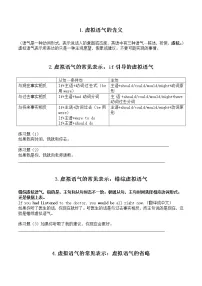
![高考英语一轮复习讲义练习专题13 虚拟语气与特殊句式[8年1考,课标不做要求,选用]第1页](http://img-preview.51jiaoxi.com/3/4/17499785/0-1762086208461/0.jpg?x-oss-process=image/resize,w_1200,m_lfit,g_center/format,webp/sharpen,100)
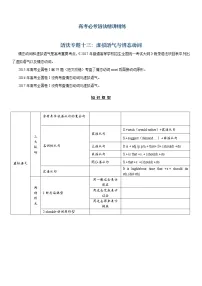
![高考英语一轮复习讲义练习专题13 虚拟语气与特殊句式[8年1考,课标不做要求,选用]第2页](http://img-preview.51jiaoxi.com/3/4/17499785/0-1762086208480/1.jpg?x-oss-process=image/resize,w_1200,m_lfit,g_center/format,webp/sharpen,100)
![高考英语一轮复习讲义练习专题13 虚拟语气与特殊句式[8年1考,课标不做要求,选用]第3页](http://img-preview.51jiaoxi.com/3/4/17499785/0-1762086208506/2.jpg?x-oss-process=image/resize,w_1200,m_lfit,g_center/format,webp/sharpen,100)
这是一份高考英语一轮复习讲义练习专题13 虚拟语气与特殊句式[8年1考,课标不做要求,选用],共10页。
考点一 虚拟语气(《新课标》不作要求,选用
虚拟语气是谓语动词的一种形式,表示说的话不是事实,而是不可能发生的情况,或是一种愿望、建议或与事实相反的假设。
1. 与现在事实相反的假设
虚拟条件句中的谓语用一般过去时(be的过去式常用were),主句谓语用“wuld/shuld/culd/might+动词原形”。
If we had time nw, we shuld read it again.
要是现在有空,我们就把它再看一遍。
If it weren't fr their supprt, we wuld be in a difficult situatin.
要不是他们的支持,我们的处境会很困难。
2. 与过去事实相反的假设
虚拟条件句中的谓语用过去完成时(had+过去分词),主句谓语用“wuld/shuld/culd/might+have+过去分词”。
If he had fllwed my advice, he wuldn't have lst his jb.
如果他当时听从我的建议,他就不会失去工作。
If it hadn't been fr yur help, I wuldn't have finished the wrk s easily.
要不是你的帮助,我不会那么容易完成这项工作的。
3. 与将来事实相反的假设
虚拟条件句中的谓语用“一般过去时(be的过去式常用were)/shuld+动词原形/were t+动词原形”,主句谓语用“wuld/shuld/culd/might+动词原形”。
If it rained, the crps wuld be saved.
If it shuld rain, the crps wuld be saved.
If it were t rain, the crps wuld be saved.
如果下雨的话,庄稼就有救了。
4. 错综条件句
当条件状语从句表示的行为和主句表示的行为发生的时间不一致时,被称为“错综条件句”,动词的形式要根据它所表示的时间做出相应的调整。
If she had studied hard, she wuld be a cllege student nw. (从句虚拟过去,主句虚拟现在)
如果她努力学习了,她现在就是一名大学生了。
5. 含蓄条件句
虚拟条件隐含在上下文中或通过withut、but fr、r、but、therwise等表示,这时可根据语境及具体意义采用虚拟形式。
Withut/But fr yur help, I culdn't have wn the prize.
要是没有你的帮助,我不可能获得这个奖项。
He was very busy yesterday, therwise he wuld have cme t the party.
他昨天太忙了,否则他就会来参加聚会了。
Given the pprtunity, she might have becme a famus singer.
如果给她提供机会,她可能已经成为著名的歌手了。
6. if省略句
虚拟条件句中有were、had(助动词)、shuld时,可以省略if,把were、had、shuld放在主语前,用倒装结构,这种结构主要用于书面语中。
Were yu in my psitin, what wuld yu d?
如果你处在我的位置,你会怎么做?
Had he caught the mrning train, he wuld nt have been late fr the meeting.
要是他赶上早班火车的话,就不会开会迟到了。
Shuld it rain tmrrw, the meeting wuld be pstpned. 如果明天下雨,会议就会延期。
1. 在“It is+imprtant/necessary/natural/strange/essential/vital+that从句”结构中,主语从句用虚拟语气,谓语动词用“(shuld+)动词原形”,表示惊奇、不相信、理应如此等。
It's vital that we (shuld) take ur safe driving alng the rad seriusly.
在这条路上我们安全驾驶是很重要的。
2. 在表示建议、要求、命令等动词后的宾语从句中,谓语动词用“(shuld+)动词原形”,shuld可以省略。常见的动词有suggest、advise、demand、require、insist、request、cmmand、rder等。
He insisted that he (shuld) be sent there.
他坚决要求被派去那里。
注意:当insist表示“坚持认为,坚持说”,suggest表示“表明,暗示”时,后面的宾语从句不用虚拟语气。
He insisted that he had dne nthing wrng.
他坚持说他没有做错。
The smile n his face suggested that he was satisfied with ur wrk.
他脸上的笑容表明他对我们的工作很满意。
3. wish后的宾语从句用虚拟语气,表示不能实现的愿望。
He wishes he culd becme a scientist sme day. (对将来情况虚拟)
他希望将来的某一天能成为科学家。
注意:有时用“Hw I wish...”形式,意为“我多么希望……”。
Hw I wish I were as yung as yu! But I am ld.
我多么希望和你一样年轻啊!可是我已经老了。
4. wuld rather后接that从句,用一般过去时表示对现在或将来的假设,用过去完成时表示对过去的假设。
We wuld rather yu were nt in that business nw. (对现在的假设)
我们宁愿你们现在不做这个业务。
I wuld rather I had passed the examinatin last week. (对过去的假设)
我真希望通过上星期的考试。
5. 表示建议、要求、命令等的名词如advice、rder、demand、prpsal、suggestin、request等后跟表语从句或同位语从句,从句中的谓语动词用“(shuld+)动词原形”。
My suggestin is that we (shuld) tell him the news.
我的建议是我们应该告诉他这个消息。
He gave the advice that we (shuld) d the wrk carefully.
他建议我们认真做这项工作。
6. if nly引导的感叹句中,谓语用一般过去时(be通常用were)、“had+过去分词”、“wuld/culd/might+动词原形”表示对现在、过去、将来的假设。
If nly I were as clever as yu! (对现在的虚拟)
要是我像你一样聪明该多好啊!
7. It's (high/abut) time that从句中用虚拟语气,从句谓语动词常用过去时,也可用“shuld+动词原形”,但shuld不省略。
It is high time that yu did/shuld d yur hmewrk.
该是你做家庭作业的时候了。
【真题感悟】 单句语法填空
1. (2020江苏卷)If I hadn't been faced with s many barriers, I (be) where I am.
2. (2019江苏卷)What a pity! Yu missed the sightseeing, r we (have) a gd time tgether.
3. (2018江苏卷)There is a gd scial life in the village, and I wish I (have) a secnd chance t becme mre invlved.
4. (2017江苏卷) (be) it nt fr the supprt f the teachers, the student culd nt vercme her difficulty.
5. (2016北京卷)Why didn't yu tell me abut yur truble last week? If yu (tell) me, I culd have helped.
考点二 倒装句(《新课标》不作要求,选用)
1. 完全倒装
谓语动词完全置于主语之前的句子为完全倒装句,这类句型主要有四种:
(1) 表示方式或方位的副词或介词短语置于句首,这类词(组)有here、there、nw、then、up、dwn、in、away、ff、ut、at the ft f、in frnt f、n the wall等。
Then came the chairman. 那时总裁来了。
In a crner f the rm sat a little girl.
房间的角落里坐着一个小女孩。
当句子的主语为人称代词时,句子不倒装。
Here it is. 给你。
Away they went. 他们走了。
(2) such置于句首
Such was Albert Einstein, a simple man and the 20th century's greatest scientist. 这就是爱因斯坦,一个纯朴的人,也是20世纪最伟大的科学家。
(3) “There be”句型
be动词可用stand、live、exist、lie、remain、seem、appear等来代替,其形式为“There+谓语+主语”。
There stands a twer n the tp f the muntain.
山顶有座塔。
(4) 表语置于句首时
为了保持句子平衡或强调表语部分,可将作表语的形容词、分词、介词短语等置于句首,构成完全倒装形式,即“形容词/现在分词/过去分词/介词短语+be+主语”。
Present at the meeting were experts frm Eurpe.
(形容词短语) 出席会议的是来自欧洲的专家。
Seated n the grund are a grup f yung peple. (过去分词短语)
席地而坐的是一群年轻人。
Lying n the flr was a by aged abut ten.
(现在分词短语) 躺在地上的是一个大约十岁的男孩。
2. 部分倒装
只把谓语的一部分(多为助动词、系动词be或情态动词)置于主语之前的句子是部分倒装句。这类句型主要有:
(1) 将含有否定意义的副词或连词置于句首时引起部分倒装结构。这类词(组)有never、seldm、rarely、little、at n time、by n means、、n 、nt als、nt until、nwhere、等。
Never befre have I seen such a mving film.
我以前从未看过这么感人的电影。
We laugh at jkes, but seldm d we think abut hw they wrk.
我们对笑话感到好笑,但很少思考它们是如何好笑的。
N sner had the game started than it began t rain heavily.
比赛刚一开始,天就下起了大雨。
(2) “nly+状语”置于句首时,主句要进行部分倒装。
Only when fd and clthing are enugh can ne behave prperly. 衣食足而知礼节。
注意:nly修饰主语时,句子不可以倒装。
Only he can answer the questin.
只有他能回答此题。
(3) 五个重要的固定句型:
① “s/neither/nr+be/have/助动词/情态动词+主语”表示前面所说的情况也适合于后者。s用于肯定句,neither/nr用于否定句。
He came last night, s did I.
他昨晚来了,我也来了。
Lily can't ride, neither/nr can Lucy.
莉莉不会骑车,露西也不会。
② 在“s+adj.”和“such(+a/an)+adj.+”句型中,如果“s+adj./adv.”“such(+a/an)+adj.+n.”置于句首,主句用部分倒装,that从句不倒装。
S clearly des he speak English that he can always make himself understd.
他的英语说得如此清楚,以至于他总能让别人听懂。
Such a fine day is it that we'd like t play utside.
天气如此好以至于我们想去外面玩。
③ 在“nt nly..., but (als)...”句型中,如果nt nly置于句首,需将nt nly引导的句子倒装,但but (als)引导的句子不倒装。
Nt nly is he a teacher, but he is als a pet.
他不仅是一位教师,而且是一位诗人。
④ 当“nt until...”置于句首时,until从句的主谓不可倒装,而只是主句需要倒装。
Nt until he returned did we have supper.
直到他回来,我们才吃晚饭。
⑤ 在as/thugh引导的让步状语从句中,通常使用倒装语序(表语/状语/动词原形+as+主语)。
Tired as he was, he still went n with his wrk.
尽管很累,他还是继续工作。
Try as he might, he didn't pass the exam.
尽管尽力了,但他考试还是不及格。
【真题感悟】 单句语法填空
1. (2019天津卷)The prfessr warned the students that n n accunt they use mbile phnes in his class.
2. (2016江苏卷)Nt until recently they encurage the develpment f turist-related activities in the rural areas.
3. (2010重庆卷)At the meeting place f the Yangtze River and the Jialing River (lie) Chngqing, ne f the ten largest cities in China.
4. (2009福建卷)Fr a mment nthing happened, then (cme) vices all shuting tgether.
考点三 强调句(《新课标》不作要求,选用)
1. 强调句型的结构与基本用法
(1) “It is/was+被强调部分+that/wh+其他部分”为强调句型的结构。被强调的成分可以是主语、宾语和状语,但不能是定语或谓语。被强调的部分指人时,用wh或that皆可;指事物或情况时,通常用that。
It was my sister wh/that first had the idea t cycle alng the entire Mekng River. (强调主语) 首先想到要沿湄公河骑行的是我姐姐。
It was in the park that Tm lst his watch.
(强调状语) 汤姆是在公园里丢了他的手表的。
(2) 强调句型的问句形式
① 强调句型的一般疑问句只需把is/was提前。
Is it Prfessr Wang wh/that teaches yu English?
是王教授教你们英语的吗?
② 强调句型的特殊疑问句,只需在一般疑问句前加上疑问词。
Wh was it that brke the windw?
打破窗子的是谁?
(3) 含有的强调句型,其强调句式为“It is/was nt until+被强调的部分+that+其他部分”。
It was nt until she tk ff her dark glasses that I recgnized her.
直到她摘下墨镜,我才认出她。
1. 在强调句型中只用until不用till。
2. 强调句型的判断:
将句子中的it is/was和that/wh部分去掉,若句子结构完整,则是强调句型。
3. 强调句子的主语时,that/wh之后的谓语动词的人称和数要与被强调的主语一致。
It is Mary and Tm wh ften d gd deeds.
是玛丽和汤姆经常做好事。
2. 谓语动词的强调
如果需要强调谓语时,要采用“d/des/did+动词原形”结构,意为“的确,千万,务必”。
We're very pleased that she des intend t cme.
她的确打算来,我们非常高兴。
注意:这种强调句只有一般现在时和一般过去时,且只对肯定的谓语动词进行强调,不用于否定式和疑问式。
【真题感悟】 单句语法填空
1. (2018天津卷)It was nly when the car pulled up in frnt f ur huse we saw Lily in the passenger seat.
2. (2017天津卷)It was when I gt back t my apartment I first came acrss my new neighburs.
3. (2015湖南卷)It's nt ding the things we like, but liking the things we have t d makes life happy.
考点四 省略句★(8年1考)
1. 并列句中的省略
两个并列句中,后一个分句省略与前一个分句相同的部分。
This cmputer wrks well, but that ne desn't (wrk well).
这台电脑工作正常,但那台就不行。
2. 复合句中的省略
(1) 主从复合句中,主句有一些成分省略,或省略从句的部分,用s或nt代替。
—Can Emily d this wrk?
—I think s/I dn't think s.
——埃米莉能做这份工作吗?
——我想她行/我想她不行。
(2) 宾语从句中常常省略连词that,但是及物动词后跟两个或以上宾语从句时,只有第一个that可以省略。
He said (that) English was very imprtant and that we shuld try t learn it well.
他说英语很重要,我们要努力学好它。
(3) 状语从句中的省略
① 当状语从句的主语和主句的主语一致,从句谓语动词中又含有系动词be时,可以省略状语从句的主语和系动词be。
The exhibitin is mre interesting than (it was) expected. 展览比预期的更有趣。
② 当从句的主语是it,谓语动词中又含有系动词be时,可以把it和系动词一起省略。此时构成“连词(if、unless、when、whenever)+形容词”结构。
Unless (it is) necessary, yu'd better nt refer t the dictinary.
除非有必要,你最好不要查词典。
③ 可以用s或nt代替上文内容,此时可用“if+s/nt”省略句式。
Get up early tmrrw. If nt(yu dn't get up early), yu will miss the first bus.
明天早点起。否则(如果不早起),你就赶不上首班公共汽车。
3. 动词不定式的省略现象
在一定的上下文中,为了避免重复,有时动词不定式可以省略,但通常保留不定式符号t。
(1) 代替动词不定式后被省略掉的动词,常在be afraid、expect、frget、hpe、intend、like、lve、mean等后面加t。
I asked him t see the film, but he didn't want t.
我叫他去看电影,但他不想去。
(2) 否定形式的省略用nt t。
—Shall I g instead f him?
—I prefer nt t.
——我要代替他去吗?
——我宁愿不。
(3) 如果省略的动词不定式结构中含有be、have、have been,则要保留这些词。
—Are yu mnitr f ur class?
—N, but I'd like t be.
——你是我们的班长吗?
——不,但是我想当。
(4) 动词不定式符号t的省略
动词不定式作感官动词feel/see/ntice/watch/find/hear/listen t/bserve和使役动词have/make/let等的宾语补足语时,动词不定式符号t省略。
We ften hear him sing the sng at hme.
我们经常听见他在家里唱这首歌曲。
注意:如果这些动词用于被动语态,其后的动词不定式符号t不能省略(但let除外)。
He is ften heard t sing the sng at hme.
我们经常听见他在家里唱这首歌曲。
【真题感悟】 单句语法填空
1. (2018全国Ⅱ卷)“China's apprach t prtecting its envirnment while (feed) its citizens ffers useful lessns fr agriculture and fd plicymakers wrldwide,” says the bank's Juergen Vegele.
2. (2011江苏卷)It sunds like smething is wrng with the car's engine. If , we'd better take it t the garage immediately.
考点五 祈使句、感叹句(《新课标》不作要求,选用)
1. 祈使句的用法
祈使句+and/r+陈述句,表示“如果……就/否则……”。前一分句表示一种条件或假设,相当于if条件状语从句,后一分句表示一种结果或推论。陈述句的谓语常用一般将来时。
Try sme f this juice and perhaps yu'll like it.
尝尝这种果汁,也许你会喜欢的。
注意:r表示“否则,要不然的话”,r可用r else/therwise替换。
Watch yur step, r (else) yu might fall int the water.留神脚下,不然你会掉进水里的。
2. 感叹句
基本构成形式:
(1) What (a/an)+形容词+名词+主语+谓语!
What a clever by he is!
=Hw clever the by is!
多聪明的男孩啊!
What beautiful flwers these are!
=Hw beautiful these flwers are!
这些花多美丽啊!
What great prgress he has made!
他取得了多么大的进步呀!
(2) Hw+形容词+a/an+可数名词单数+主语+谓语!
(3) Hw+形容词/副词+主语+谓语!
Hw high the muntain is! 这山真高啊!
注意:
(1) 感叹句常用陈述语序。
(2) Hw+many/much/few/little+名词+主语+谓语!
Hw little fd they have!
他们的食物多么少啊!
=类别
if从句谓语动词形式
主句谓语动词形式
与现在
事实相反
过去式
(be动词用were)
wuld/shuld/culd/might+动词原形
与过去
事实相反
had+过去分词
wuld/shuld/culd/might+have+过去分词
与将来
事实相反
过去式
(be动词用were)
wuld/shuld/culd/might+动词原形
shuld+动词原形
were t+动词原形
虚拟语气
从句谓语动词形式
与现在事实相反
过去式(be动词一般用were)
与过去事实相反
had+过去分词
与将来事实相反
wuld/culd/might+动词原形
这是一份高考英语一轮复习讲义练习专题13 虚拟语气与特殊句式[8年1考,课标不做要求,选用],共10页。
这是一份高考英语【一轮复习】讲义练习专题13 虚拟语气与特殊句式,共2页。
这是一份微专题--虚拟语气 讲义 (考点清单+精讲+好题回顾) 2022届高考英语语法精讲精练 (教师版+学生版),文件包含2022届英语语法精讲精练微专题---虚拟语气教师版docx、2022届英语语法精讲精练微专题---虚拟语气学生版docx等2份试卷配套教学资源,其中试卷共14页, 欢迎下载使用。
注册成功

在线客服
添加在线客服
获取1对1服务
官方微信
关注“教习网”公众号
打开微信就能找资料
赛课定制
添加在线客服
获取1对1定制服务
职称咨询
添加在线客服
获取1V1专业指导服务

免费福利

.png)