 免费领取教师福利

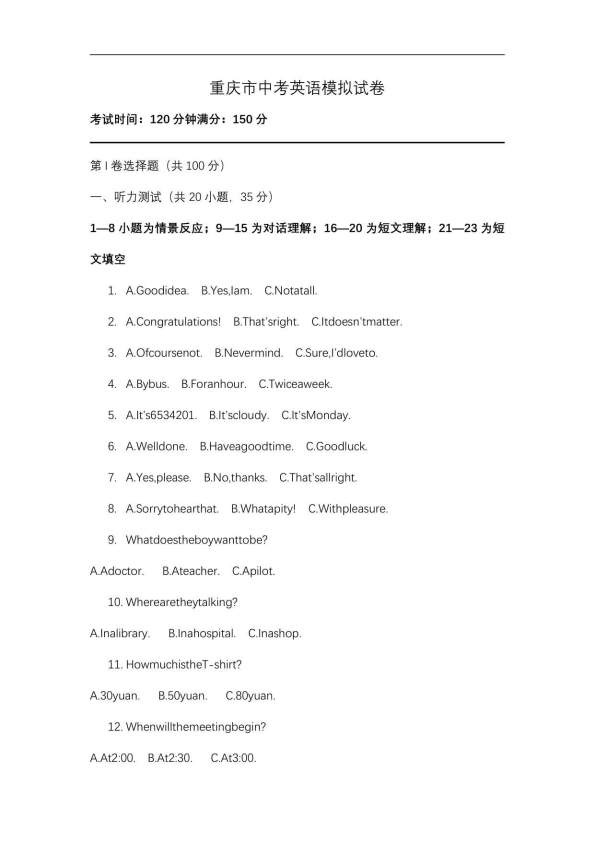
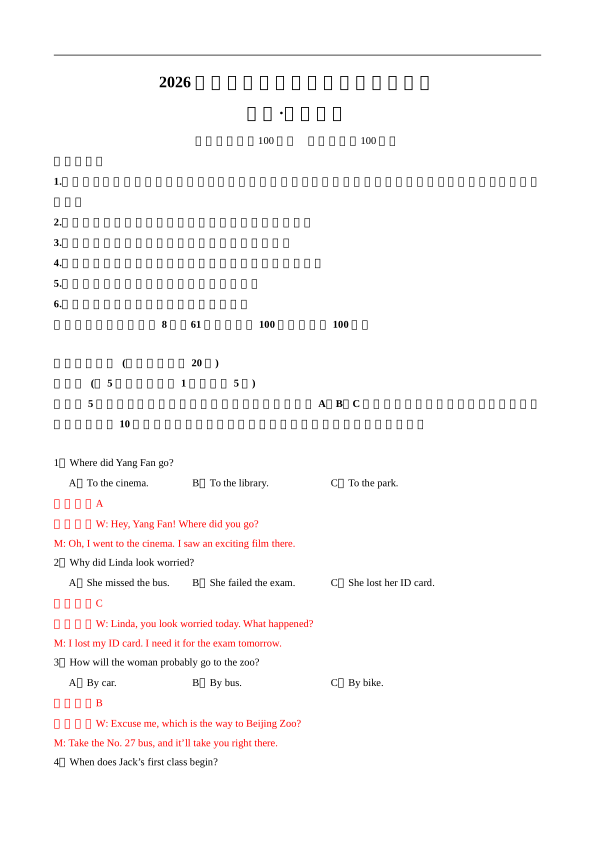
若您为此资料的原创作者,认为该资料内容侵犯了您的知识产权,请扫码添加我们的相关工作人员,我们尽可能的保护您的合法权益。


这是一份英语(重庆卷)2026年中考模拟考前最后一卷含答案含音频,文件包含英语重庆卷全解全析docx、英语重庆卷考试版docx、英语重庆卷考试版A3docx、英语重庆卷参考答案docx、英语重庆卷答题卡docx、英语重庆卷答题卡pdf、英语重庆卷听力音频mp3等7份试卷配套教学资源,其中试卷共41页, 欢迎下载使用。
注意事项:
1.本试卷分第Ⅰ卷(选择题)和第Ⅱ卷(非选择题)两部分。答卷前,考生务必将自己的姓名、准考证号填写在答题卡上。
2.回答第Ⅰ卷时,选出每小题答案后,用2B铅笔把答题卡上对应题目的答案标号涂黑。如需改动,用橡皮擦干净后,再选涂其他答案标号。
3.回答第Ⅱ卷时,将答案写在答题卡上。写在本试卷上无效。
4.难度系数:0.65。
5.考试结束后,将本试卷和答题卡一并交回。
第Ⅰ卷(共100分)
Ⅰ.听力测试.(共35分)
第一节(每小题1分,共6分)
听两遍。根据你所听到的句子,从A、B、C三个选项中选出最恰当的答语,并把答题卡上对应题目的答案标号涂黑。
1.A.Wh knws?B.That’s right.C.Gd idea.
【答案】B
【原文】I think that beautiful lady is yur sister.
2.A.Yes, we are.B.N, they aren’t.C.Yes, they did.
【答案】B
【原文】Are yur umbrellas made f paper?
3.A.By ding sprts.B.By reading English nvels.C.By helping thers.
【答案】B
【原文】Yur English is s gd. Hw d yu learn it?
4.A.Everything ges well.B.It’s beautiful.C.It has a lng histry.
【答案】C
【原文】What d yu think abut Chinese medicine?
5.A.It was expensive.B.It must be mine.C.It cst me 20 yuan.
【答案】C
【原文】Hw much did yu pay fr the ticket?
6.A.Cartns.B.Vegetables.C.Vlleyball.
【答案】A
【原文】What kind f mvies des yur brther like?
第二节(每小题1.5分,共9分)
听两遍。根据你所听到的对话和问题,从A、B、C三个选项中选出正确的答案,并把答题卡上对应题目的答案标号涂黑。
7.A./kəmˈpjuːtə/B./kemˈpetitə/C./kemˈpeə/
【答案】A
【原文】W: Excuse me, can I use yur cmputer t finish my hmewrk? There’s smething wrng with mine.
M: Srry, I am wrking n it.
Q: What des the wman have t get repaired?
8.A.Truthful.B.Helpful.C.Successful.
【答案】B
【原文】M: What d yu think f the yung man?
W: He is really helpful. He always helps me in my garden.
Q: Hw des the wman feel abut the yung man?
9.A.He can’t watch TV.B.He can’t eat ut.C.He can’t hang ut.
【答案】C
【原文】M: Are yu allwed t watch TV at hme n weekends?
W: Sure, but I can’t hang ut with friends.
Q: What can’t the by d n weekends?
10.A.Last year.B.Last mnth.C.Last week.
【答案】A
【原文】M: Mary, yu used t be afraid f speaking in public, but nw yu’re much better. Hw did yu make it?
W: I jined the English club last year and practiced speaking a lt.
Q: When did Mary jin the English club?
11.A.15 yuan.B.30 yuan.C.60 yuan.
【答案】A
【原文】M: Can I help yu?
W: Yes, please. I'd like sme scks. Hw much are they?
M: Let me see. They're $30 a pair, but nw they’re n sale and yu can get them at half price.
Q: Hw much shuld the wman pay fr a pair f scks nw?
12.A.B.C.
【答案】A
【原文】M: What bad weather!
W: Yeah, rainy days always make me sad.
Q: What’s the weather like?
第三节(每小题1.5分,共6分)
听两遍。根据你所听到的长对话,从A、B 、C三个选项中选出正确答案,并把答题卡上对应题目的答案标号涂黑。
听第 1段材料,回答第13和14小题。
13.Where d they want t g?
A.T the library.B.T the z.C.T the stre.
14.Hw will they g there?
A.By bus.B.By bike.C.By car.
【答案】13.B 14.B
【原文】M: Hi, Peter. What abut ging t the z with me?
W: That’s a gd idea. I like animals, but I have t get hme befre 6 ’clck.
M: Let me see. We still have 2 hurs. That’s enugh. The z is nt far frm here.
W: Hw can we get there?
M: We can ride ur bikes r take the bus.
W: Let’s ride ur bikes.
听第 2段材料,回答第15和16小题。
15.Wh tld Kevin the stry?
A.His Chinese teacher.B.His English teacher.C.His histry teacher.
16.What lessn has Kevin learned frm the stry?
A.We can’t buy happiness with mney.
B.The mre we wn, the happier we are.
C.We shuld be happy with what we have.
【答案】15.A 16.C
【原文】M: Hi, Kevin.
W: Srry, Maria. I didn’t hear yu because I was lst in this wnderful stry.
M: What stry is it?
W: The Shirt f a Happy Man. We read the stry in ur Chinese class tday. It’s abut a rich but unhappy king lking fr true happiness. I find it s interesting that I decided t read the whle stry after class.
M: Why d yu like this stry?
W: Well, because it is nt nly a great stry with a surprising ending, but it’s als quite meaningful.
M: S what have yu learned frm the stry?
W: It has taught me that we are nt suppsed t wrry abut what we dn’t have. Instead, we shuld be happy with what we have.
第四节(每小题1.5分,共6分)
听两遍,根据你所听到的短文内容,从A、B、C三个选项中选出正确答案,并把答题卡上对应题目的答案标号涂黑。
17.Hw did the writer spend Children’s Day?
A.He went t the muntains.B.He visited the museum.C.He went t the z.
18.Hw was the weather last Saturday?
A.It was fine.B.It was cludy.C.It was windy.
19.Hw many kinds f animals did the writer talk abut?
A.4.B.5.C.6.
20.What kind f animals did the writer like best?
A.The elephants.B.The giraffes.C.The mnkeys.
【答案】17.C 18.A 19.B 20.C
【原文】Last Saturday was Children’s Day. I went t the nature z with my mther. The sun shne brightly. There were many peple there and everyne was happy. I saw many animals in the z, like elephants, tigers, lins, giraffes, mnkeys, and sme ther animals. My mther and I liked the elephants very much because they were very friendly. We gave them sme bananas t eat and they liked them. The giraffes were very tall and they were a little bit quiet. The lins and the tigers were kind f scary, but they were beautiful. I think the mnkeys were cute and clever. Peple always gave them sme fruit t eat. They were very happy. They are my favrite. In fact, all the animals are ur friends. We must lve and help them.
第五节(每小题2分,共8分)
听两遍。根据你所听到的演讲内容,在横线处补全笔记。每空1词。
听两遍。根据你所听到的讲座内容,在空格处补全笔记,每空1-2词。
【答案】21.sme flwers 22.are late/arrive late 23.early 24.have fun/enjy yurself/enjy yurselves
【原文】If yu are invited t cme t an American family, dn’t wrry t much. Let me tell yu smething abut the manners yu shuld remember. First, yu are suppsed t buy a little gift such as sme flwers fr the hst. He will be very happy t see that. Secnd, yu shuld be n time. Dn’t be late, r the hst will be unhappy. When yu have dinner, yu’d better shw that yu enjy the fd. After dinner, it’s time t g hme. Remember nt t stay there fr a lng time and yu are suppsed t say “Thanks” t yur hst. All in all, stay friendly and plite, and yu will have a great time!
Ⅱ.语法选择。(每小题1分,共10分)
根据短文内容,从A 、B 、C三个选项中选出一个语法正确的答案,并把答题卡上对应题目的答案标号涂黑。
In the muntains, a small stream (小溪) ran dwn the valley. It dreamed f reaching the sea ne day, 25 a big rck std in its way. The rck had sharp edges (棱角) and a hard surface. It laughed and said, “Yu are t small 26 me. Just give up!”
The stream did nt get angry. It smiled and kept mving frward 27 . It mved arund the rck, finding its way thrugh its small cracks (裂缝), day after day, year after year. Smetimes it carried sand and small 28 t rub against the rck’s surface. It never tried t fight the rck, yet it 29 stpped.
Years passed. One mrning, sme peple walked by the valley. They were surprised t see the rck was rund and smth, and 30 was like a big pebble (鹅卵石). Meanwhile, the little stream 31 int a wide river, running happily t the sea.
The rck lked at the river and smiled. It learned that sftness can win ver 32 , and patience can change everything. 33 that day n, they traveled tgether. This stry teaches us 34 imprtant lessn in patience and the pwer f sftness.
25.A.sB.butC.r
26.A.beatB.beatingC.t beat
27.A.slwB.slwerC.slwly
28.A.stneB.stnesC.stne’s
29.A.neverB.alwaysC.ften
30.A.itB.itsC.it’s
31.A.grwsB.grewC.will grw
32.A.hardB.hardlyC.hardness
33.A.FrmB.AfterC.During
34.A.aB.anC.the
【答案】25—29 BCCBA 30—34 ABCAB
【解析】本文讲述了一条小溪梦想流向大海,途中遇到一块大石头阻挡,小溪没有放弃,通过日复一日地携带沙石磨擦石头,最终使石头变得圆润光滑,自己也成长为一条宽阔的河流,顺利流向大海的故事。故事传达了柔和能战胜坚硬、耐心能改变一切的道理。
25.句意:它梦想着有一天能到达大海,但是一块大石头挡住了它的去路。
上文提到小溪梦想流向大海,下文说大石头挡住了它的去路,前后是转折关系,but“但是”符合。s“所以”表因果;r“或者”表选择,均不符合语境。
26.句意:你太弱小了,打不败我。
“”是固定结构,表示“太……而不能……”,这里用t beat符合语境,表示小溪太小而不能打败石头。beat“打败”是动词原形;beating是现在分词形式,均不符合该结构。
27.句意:它微笑着,慢慢地继续向前移动。
此处修饰动词短语“kept mving frward”,要用副词形式,slwly“慢慢地”符合。slw“慢的”是形容词;slwer“更慢的”是比较级形式,均不能修饰动词短语。
28.句意:有时它会携带沙子和小石子来磨擦石头的表面。
sand和stne是并列关系,stne是可数名词,这里表示泛指,要用复数形式stnes。stne“石头”是单数形式;stne’s“石头的”是名词所有格形式,均不符合语境。
29.句意:它从未试图与石头抗争,然而它从未停止。
上文说小溪从未试图与石头抗争,下文用“yet”转折,说明小溪从未停止前进,never“从未”符合。always“总是”;ften“经常”,均与语境不符。
30.句意:他们惊讶地发现石头又圆又光滑,它就像一颗大鹅卵石。
此处指代前面提到的“the rck”,在句中作主语,要用主格形式it。its“它的”是形容词性物主代词;it’s是“it is”的缩写,意为“它是”,均不符合语境。
31.句意:与此同时,小溪长成了一条宽阔的河流,快乐地流向大海。
根据“Years passed.”可知,故事发生在过去,要用一般过去时,grew“成长”是grw的过去式,符合。grws是一般现在时第三人称单数形式;will grw是一般将来时形式,均不符合时态要求。
32.句意:它明白了柔软可以战胜坚硬,耐心可以改变一切。
此处与“sftness”相对应,要用名词形式,表示“柔软可以战胜坚硬”,空处在句中作宾语,所以用名词hardness。hard“坚硬的”,形容词;hardly“几乎不”,副词,均不符合语境。
33.句意:从那天起,它们一起旅行。
“”是固定短语,表示“从……起”,这里用Frm符合。After“在……之后”;During“在……期间”,均不符合该短语搭配。
34.句意:这个故事给我们上了一堂关于耐心和柔和力量的重要课。
此处表示“一堂重要的课”,imprtant是以元音音素开头的单词,要用不定冠词an。a用于以辅音音素开头的单词前;the是定冠词,表特指,均不符合语境。
Ⅲ .完形填空。(每小题1.5分,共15分)
请根据短文内容,从A、B、C、D四个选项中选出一个能填入相应空格内的最佳答案,并把答题卡上对应题目的答案标号涂黑。
What are the cultural differences between China and the West? Yu might be able t find the 35 in Ca Siyu’s cmics.
Ca, brn in Beijing, 36 hme at 20 and has studied and lived in the US, the UK, and France ver several years. Having seen s many cultures, Ca wanted t use her skills t present the differences she has 37 . S she created the cartn series Tiny Eyes Cmics.
“My experience shws that 38 travel is much easier and faster tday, the distance between cultures hasn’t shrtened,” Ca said. She hpes t build bridges and 39 misunderstandings between different cultures.
Fr example, ne f her cartns shws 40 preferences in different cuntries. Three glasses f water are shwn: The glass f water frm the US has ice; the ne frm France is full f sparkling water; the ne frm China is ht and steaming (冒热气的).
Ca als uses her cartns t shw different 41 f thinking and scial custms. During the COVID-19 pandemic, fr example, she used her cmics t 42 why Chinese peple preferred t wear masks, while Western peple dn’t. “Her simple drawings have played a big part in [uncvering] Chinese culture,” Italian magazine Grazia reprted.
Many freign readers say that Ca’s cmics help them 43 China, while Chinese immigrants have felt that they are seen and understd. She said that being 44 t them has been her biggest mtivatin t keep creating.
35. A. prblem B. jke C. reasn D. answer
36. A. left B. stayed C. returned D. missed
37. A. imagined B. made C. experienced D. cmpared
38. A. if B. althugh C. because D. when
39. A. depend n B. drp ff C. turn ver D. break dwn
40. A. drinking B. eating C. living D. tasting
41. A. parts B. senses C. ways D. wrlds
42. A. discuss B. explain C. discver D. questin
43. A. understand B. visit C. change D. remember
44. A. pen B. thankful C. friendly D. helpful
【答案】35—39 DACBD 40—44 ACBAD
【解析】35 D. answer 前一句提出问题“What are the cultural differences between China and the West?”(中西方的文化差异是什么?),这里表示“你或许能在曹思予的漫画里找到答案”,find the answer 是固定搭配,因此选 answer。
36 A. left 后文提到她在美国、英国、法国学习和生活,说明她20岁时“离开”了家,left hme 意为“离开家”,符合语境。
37 C. experienced 句意为:见过这么多文化后,曹思予想用自己的技能呈现她所“经历”的差异。experienced 意为“经历、体验”,与她在多国生活的背景呼应。
38 B. althugh 句意为:“我的经历表明,虽然如今旅行变得更容易快捷,但文化间的距离并没有缩短。” 前后是转折关系,因此用 althugh(虽然/尽管)。
39 D. break dwn 前文提到她希望“搭建桥梁”,这里并列的动作是“打破/消除不同文化间的误解”。break dwn misunderstandings 意为“消除误解”,是固定搭配。
40 A. drinking 后文举的例子是美国的冰饮、法国的气泡水、中国的热水,这些都是“饮水”偏好,因此选 drinking。
41 C. ways 句意为:她还用漫画展现不同的“思维方式”和社会习俗。ways f thinking 是固定搭配,意为“思维方式”。
42 B. explain 句意为:疫情期间,她用漫画来“解释”为什么中国人喜欢戴口罩,而西方人不喜欢。explain why... 意为“解释……的原因”,符合语境。
43 A. understand 句意为:许多外国读者说,曹思予的漫画帮助他们“理解”中国。help sb. understand sth. 意为“帮助某人理解某事”,符合后文“移民感到被看见和理解”的呼应。
44 D. helpful 句意为:她说,对他们“有帮助”一直是她继续创作的最大动力。前文提到她的漫画帮助外国读者理解中国、让移民感到被理解,因此 helpful(有帮助的)最贴合语境。
IV. 阅读理解。(45-59每小题2分,共30分)
阅读下列材料,从A、B、C、D四个选项中选出最佳答案,并把答题卡上对应题目的答案标号涂黑。
A
What d yu think f being 80 years ld? Fr Cai Ga, it is still the perfect age t explre new pssibilities!
80-year-ld Cai wn the 2026 Hans Christian Andersen Award. She was the first Chinese picture bk artist t win this tp children’s bk award.
T many peple’s surprise, Cai never went t art schl and didn’t start drawing picture bks until her 30s. Hwever, her jurney as an artist began lng befre.
Brn in Changsha in 1946, Cai grew up listening t her grandmther’s flktales and nursery rhymes (童谣). They became her earliest inspiratin t draw. Paintings n the walls marked the start f her creative freedm.
In her 20s, Cai wrked as a teacher in a village schl and als wrked in fields with lcal peple. In her free time, she recrded the peple and scenery she saw by drawing n paper. Frm the quiet, simple life in the cuntryside, she felt the beauty f life itself.
At the age f 36, Cai became an art editr. And then, her lng-term lve fr painting finally turned int frmal wrks. Nw, in her bks, yu can still feel the pure beauty, just like the wrld in the eyes f kids.
“I never aim t high. I just let everything happen step by step naturally,” Cai nce said in a 2019 speech. See? There’s n need t rush. As lng as yu keep lving what yu d, yur dream will blm in its wn time–even at 80.
45. What makes Cai Ga special as a painter, accrding t Paragraph 3?
A. She never went t art schl.B. She nce wrked as a village teacher.
C. She mainly created bks fr yung children.D. She began drawing at a very yung age.
46. What is the main idea f Paragraphs 4 and 5?
A. Cai Ga’s difficult life in the cuntryside.B. The early inspiratin fr Cai Ga’s wrk.
C. The secret behind Cai Ga’s success.D. The flk art f Cai Ga’s hmetwn.
47. Accrding t the passage, Cai Ga’s wrks can be described as ______.
A. traditinalB. educatinalC. mdern and creativeD. simple and natural
【答案】45—47 ABD
【答案】45. A解析:• 定位原文第3段:“T many peple’s surprise, Cai never went t art schl and didn’t start drawing picture bks until her 30s.”这句话直接点明了蔡皋作为画家的特殊之处:她从未上过艺术学校,且30多岁才开始画绘本。
46. B解析:第4段讲述她从小听民间传说、童谣长大,这些是她绘画的早期灵感;第5段讲述她在乡村教书、劳动时,记录身边的人和风景,从乡村生活中感受到生活的美。两段内容都围绕“她的创作灵感来源”展开,因此核心主旨是“蔡皋作品的早期灵感”。
47. D解析:原文第5段提到:“Frm the quiet, simple life in the cuntryside, she felt the beauty f life itself.”第6段提到:“Nw, in her bks, yu can still feel the pure beauty, just like the wrld in the eyes f kids.”两处内容都体现了她的作品风格:源自简单纯粹的乡村生活,充满自然的美感,因此可以用“simple and natural(简单自然)”来描述。
B
Fifty minutes and 26 secnds–this was the time it tk the humanid rbt “Flash” t win the 2026 Beijing E-Twn Half Marathn and Humanid Rbt Half Marathn n April 19. It brke the human recrd f 57 minutes and 20 secnds set by Uganda’s Jacb Kiplim. Hnr, the Chinese smartphne maker, created Flash. Hw did this rbt achieve such speed?
Standing at 1.69 meters, Flash’s legs are 0.95 meters in length. “When we first designed ur rbt, we gave it lng legs, inspired by tp human athletes,” engineer Du Xiadi frm Hnr tld Beijing Daily.
This design imprves hw the rbt mves.
Rbts can easily get verheated while running. T slve the prblem, the team develped a strng liquid cling system (液冷系统). It uses thin channels (管道) inside the rbt’s mtr (马达) t mve ver fur liters f cling liquid each minute, keeping its temperature at 31.5°C.
Meanwhile, since Hnr is gd at making smartphnes, it has used related technlgies such as energy-saving methds and battery technlgy t make rbts. These make Flash bth light and strng. When it runs, it’s mre pwerful than a family car.
Flash als finished the race n its wn thanks t the Beidu Navigatin Satellite System (北斗卫星导航系统). By cllecting infrmatin frm many sensrs (传感器) and using real-time decisin-making algrithms (算法), it can sense the envirnment, plan its path and cntrl its mvements all by itself.
The humanid rbt half-marathn is nt just a running race. The technlgy will be turned int resurces fr emergency rescues, elderly care and mre. This wuld help prvide a better service t peple.
48. Jacb Kiplim is mentined in Paragraph 1 t ______.
A. shw hw fast Flash wasB. shw humans’ talent in sprts
C. intrduce a half- marathnD. intrduce the rbt‘s creatr
49. What helped Flash run fr nearly an hur?
A. Its large feet.B. Its human-like height.
C. Its liquid cling system.D. Its training with tp athletes.
50. Hw did the Beidu system help Flash finish the race?
A. It allwed Flash t run by itself.B. It helped Flash run faster than humans.
C. It helped Flash save energy.D. It was used by peple t cntrl Flash.
51. What is the purpse f hlding the race?
A. T break human running recrds.B. T add sme fun t human life.
C. T test and imprve rbt technlgy.D. T chse rbts fr emergency rescues.
【答案】48—51 ACAC
【解析】48 A. 原文提到Flash的成绩(50分26秒)打破了Jacb Kiplim创造的人类半马纪录(57分20秒)。文中提到这位人类选手,是为了通过对比突出Flash的速度之快,因此选A。
49 C. Its liquid cling system. 原文明确说明:“Rbts can easily get verheated while running. T slve the prblem, the team develped a strng liquid cling system.” 液冷系统解决了机器人长时间跑步的过热问题,让它能连续跑近1小时,因此选C。
50 A. It allwed Flash t run by itself. 原文提到:“Flash als finished the race n its wn thanks t the Beidu Navigatin Satellite System... it can sense the envirnment, plan its path and cntrl its mvements all by itself.” 北斗系统帮助机器人实现了自主导航和控制,因此选A。
51 C. T test and imprve rbt technlgy. 文章结尾指出:“The humanid rbt half-marathn is nt just a running race. The technlgy will be turned int resurces fr emergency rescues, elderly care and mre.” 举办比赛的核心目的是测试、优化机器人技术,为后续应用铺路,因此选C。
C
“The hund (猎狗)!” Hlmes cried suddenly. “Cme, Watsn! Cme!”
We ran quickly acrss the dark wild land. A final, scary scream brke the quiet, and then came a dull, heavy sund. The night fell deathly silent. Hlmes pressed his hands t his frehead and stamped his feet in frustratin.
“We are t late,” he said in a lw vice, angrily.
Suddenly, we heard a lw man (呻吟). A man was lying n the rcks. As we walked clser, we saw the dead bdy f Sir Henry Baskerville. He was wearing his brwn tweed suit. “Oh n!” I cried ut, feeling my bld run cld. Hlmes bent dwn quickly beside the bdy, and then suddenly he began laughing. “A beard!” he said. “This isn’t Sir Henry—it’s Selden, the escaped prisner!”
The truth hit me at nce. Sir Henry had given his ld clthes t Barrymre, wh had secretly passed them t Selden. “The suit killed him,” Hlmes said quietly. “Smene gave the hund Sir Henry’s scent—prbably the stlen bt frm the Lndn htel—and it hunted the wrng man.”
Suddenly, we saw smene walking twards us. It was Stapletn. Hlmes whispered: “Dn’t let him knw yu suspect him.”
“Dr. Watsn!” Stapletn asked, in surprise. “What brings yu ut here at this hur? I heard a strange nise and came t check n Sir Henry.” He saw the bdy and frze. “Is that him?”
“It’s Selden,” I said. “He’s dead.”
Stapletn tried t vercme his amazement and disappintment, “Terrible,” he murmured. “I feared the wrst fr Sir Henry.”
“Sir Henry is safe,” Hlmes said cldly. Stapletn then recgnized him and smiled nervusly. “Mr. Hlmes! I didn’t knw yu were here. Can yu slve the mystery f the Hund f the Baskervilles?”
Hlmes shrugged. “We cannt slve every mystery. Anyway, I’ll return t Lndn tmrrw.”
With that, we left fr Baskerville Hall, leaving Stapletn t walk hme alne. Pr Selden lay still n the rcks.
—Adapted frm The Hund f the Baskervilles
52.Hw des the writer create the atmsphere in Paragraphs 1-2?
A.By describing the characters’ warm feelings.
B.By describing the quiet and safe envirnment.
C.By using shrt, quick actins and sudden sunds.
D.By shwing lng cnversatins between the characters.
53.Which f the fllwing is the crrect rder f the stry?
a. Stapletn acted as if he cared abut Sir Henry.
b. The hund gt Sir Henry’s scent frm his bt.
c. Watsn realized why the hund hunted the wrng man.
d. Hlmes laughed after bending dwn beside the dead bdy.
e. Hlmes whispered t Watsn nt t let Stapletn see their dubts.
A.b-d-c-e-aB.b-d-c-a-eC.c-b-e-d-aD.c-d-b-a-e
54.Which f the fllwing best describes hw Hlmes’ feelings change?
A.happy-guilty-hpelessB.angry-excited-calm
C.angry-happy-amazedD.calm-excited-hpeless
55.What wuld mst likely happen next in the stry?
A.The hund wuld attack Stapletn.B.Hlmes wuld secretly watch Stapletn.
C.Hlmes wuld give up slving the case.D.Hlmes wuld return t Lndn at nce.
【答案】52—55 CABB
【解析】本文节选自《巴斯克维尔的猎犬》,讲述了福尔摩斯与华生追踪猎犬时,误将逃犯塞尔登当作亨利爵士,后发现他因穿着亨利爵士的衣服而被猎犬误杀的故事,展现了紧张的探案过程与人物的心理变化。
52.前两段中,作者用“Hlmes cried suddenly”、“We ran quickly”、“A final, scary scream brke the quiet, and then came a dull, heavy sund” 等短促、快速的动作描写和突然的声响,营造出紧张惊悚的氛围,因此选项C符合原文信息。
53.故事顺序为:b. 猎犬通过亨利爵士的靴子获得了他的气味→d. 福尔摩斯俯身查看尸体后笑了起来→c. 华生意识到猎犬为什么会追错人→e. 福尔摩斯小声告诉华生不要让斯特普尔顿看出他们的怀疑→a. 斯特普尔顿假装关心亨利爵士,因此选项A符合原文信息。
54.福尔摩斯的情绪变化为:一开始因来晚而“angrily”,后发现死者不是亨利爵士而笑起来 (excited),最后面对斯特普尔顿时保持冷静 (calm),因此选项B符合原文信息。
55.文中福尔摩斯已怀疑斯特普尔顿,且他说“Anyway, I’ll return t Lndn tmrrw.”是迷惑对方的说法,后续他大概率会暗中监视斯特普尔顿,继续调查案件,因此选项B符合原文信息。
D
①Can gld shw clrs ther than glden yellw? Can water reach 0°C withut turning int ice? Yes and yes. Welcme t the wrld f nangechemistry (纳米地球化学). Prfessr Wan Quan, wh wrks at the Institute f Gechemistry f the Chinese Academy f Sciences in Guizhu, is a leading scientist in this area.
②“Nangechemistry is a field that bridges nantechnlgy and gechemistry,” said Wan. Nantechnlgy lks at things as tiny as ne-billinth (十亿分之一) f a meter, while gechemistry studies Earth frm a chemical pint f view. Yu might think it seems strange t mix these tw fields. But Chinese scientists have thught abut it since the 1990s, Wan nted. One reasn is that tech prducts, especially cmputer and smartphne chips (芯片), keep getting smaller but mre pwerful.
③“Nangechemistry tries t understand hw tiny things, like particles (粒子) that are ne t 100 nanmeters in size, frm and spread n Earth,” Wan said. That is much smaller than a human hair, which is usually 80,000 t 100,000 nanmeters wide.
④In the nanwrld, things act in strange ways because f quantum effects (量子效应). Fr example, if a gld bar (金条) is made just a few nanmeters big, it can shine blue, purple r even red. Anther example is water. When placed inside nan-sized hles, water can stay liquid (液态的) even under -40°C.
⑤Nangechemistry is imprtant fr space explratin. Wan’s team is studying the effects f high speed (several kilmeters per secnd) impacts (撞击) n space bdies, smething that ften happens in space. This might help explain hw certain metal nanparticles frmed n the mn, Mars, and s n.
56. Hw des the writer intrduce the tpic f nangechemistry?
A. By explaining what it is.B. By intrducing its funder.
C. By listing famus experiments.D. By asking everyday questins.
57. What can we infer abut nangechemistry frm Paragraph 2?
A. Its gal is t prduce smaller chips.
B. It fllws the latest technlgy trends.
C. Chinese scientists were the first t study it.
D. It ffers an easier way t mix different subjects.
58. What d the examples f a gld bar and water shw?
A. Things act differently in the nanwrld.
B. Things are ut f cntrl in the nanwrld.
C. Things cannt stay still in the nanwrld.
D. Tiny things aren’t affected by quantum effects.
59.. Why des the writer mentin space explratin in the last paragraph?
A. T shw anther use f nangechemistry. B. T explain why space explratin is imprtant.
C. T raise peple’s interest in space explratin.D. T describe hw nanparticles mve in space.
【答案】56—59 DBAA
【解析】56.D解析:文章开头用两个日常问题“Can gld shw clrs ther than glden yellw? Can water reach 0°C withut turning int ice?”引出纳米地球化学的话题,因此选D。
57.B解析:第二段提到“tech prducts, especially cmputer and smartphne chips, keep getting smaller but mre pwerful”,说明纳米地球化学的研究背景和科技产品小型化的趋势相关,它顺应了最新的技术潮流,因此选B。
58.A解析:文中提到“In the nanwrld, things act in strange ways because f quantum effects”,后面用金条变色、水在低温下保持液态的例子,说明纳米世界里物质的行为和常规世界不同,因此选A。
59.A解析:最后一段开头提到“Nangechemistry is imprtant fr space explratin”,接着说明它能帮助解释月球、火星上金属纳米粒子的形成,这是纳米地球化学的另一个应用场景,因此选A。
V. 口语运用。(每小题2分,共10分)
阅读下面对话,从7个选项中选择5个恰当的句子完成此对话,并把答题卡上对应题目的答案标号涂黑。
A: Hi, Lisa! Lng time n see. 60
B: Hi, Tm! I went t Chngqing China Three Grges Museum with my family.
A: Ww, that’s cl! 61
B: It was amazing! We learned a lt abut the histry f Chngqing, especially the stries f the Anti-Japanese War.
A: Sunds educatinal! 62
B: Sure. We als visited the special shw abut Chngqing’s intangible cultural heritage (非物质文化遗产), like Sichuan embridery and ht pt culture.
A: That’s s interesting! I really want t g t Chngqing t.
B: 63 I can shw yu arund during the winter hliday.
A: Great! 64
B: Yu’re welcme. Let’s make it a plan.
A.Hw did yu like it?
B.Where did yu g n vacatin?
C.Culd yu please tell me mre abut it?
D.There are still many wnderful places t visit in Chngqing.
E.Did yu take any phts there?
F.Thank yu fr inviting me.
G.What abut yu?
【答案】60—64 BACDF
【解析】本文是一篇对话,两人讨论去重庆中国三峡博物馆的经历,分享了对历史和非物质文化遗产的见闻,并表达了再次同游的期待。
60.Tm先问Lisa暑期去了哪里,Lisa回答去了重庆中国三峡博物馆。因此Tm的问句应询问度假去向,B项“Where did yu g n vacatin?”引出下文的回答。
61.Lisa回答“It was amazing!”,是对博物馆经历的评价,因此Tm的问句应询问对方对这次旅行的看法,A项“Hw did yu like it?”与下文的评价形成问答逻辑。
62.Lisa回答“Sure. We als visited...”,表示愿意分享更多信息,因此Tm应礼貌地请求对方讲述更多细节,C项“Culd yu please tell me mre abut it?”与下文的肯定答复形成请求与回应的逻辑关系。
63.Tm说“I really want t g t Chngqing t.”,表达了对重庆的兴趣,Lisa随后说“I can shw yu arund...”,表示愿意陪同游览。因此中间应补充说明重庆还有许多值得去的地方,为邀请提供理由,D项“There are still many wnderful places t visit in Chngqing.”既回应了上文的兴趣,又自然引出下文的邀请。
64.Lisa主动提出可以带Tm游览重庆,Tm应表示感谢,F项“Thank yu fr inviting me.”与Lisa的回答“Yu’re welcme.”构成完整的感谢-回应逻辑。
第Ⅱ卷(共50分)
VI.任务型阅读。(65-66每题2分;67-68每题3分;共10分)
阅读下文并回答问题。
In a busy cmmunity hall, a vlunteer sits at a sewing (缝纫) machine, fixing smene’s much-lved dress, while at anther table, husehld tls are fixed. This is the Share and Repair Café, run by a grup called Transitin Crich in a village in the UK.
This effrt began five years ag, when an advertisement in the lcal magazine asked if anyne was interested in cming tgether t make their village greener and better. Once Transitin Crich was set up, it jined the internatinal Transitin Netwrk made up f grups that fcus n lcal and cmmunity-led actins.
Imprtantly, the grup desn’t charge (收费) fr its service. “Yu dn’t have t pay fr yur repairs,” says cmmittee member Linda. “Peple can cme t the café and have the fd and drinks fr free if they want—we just suggest making a dnatin because f ur daily csts.”
Clare vlunteers with her husband. “I’m very wrried abut the climate prblem, and knw that huge amunts f clthes are thrwn away unnecessarily,” Clare explains. “I have skills t avid landfill (填埋).” She’s part f the sewing team, fixing clthes, bags, and anything made f clth.
Clare’s wrries are nt withut reasn. In the U. K., mst f the plastic is still burned, landfilled, r littered. Fast fashin is anther big prblem; accrding t , the wrld prduces 92 millin tns f clthing waste every year. Fixing items like brken tys r trn clthing can help reduce this.
Whether a vlunteer r a visitr, peple in the cmmunity benefit greatly frm being invlved with Transitin Crich. Studies shwed that 7.2% f U. K. adults “ften r always” felt lnely in 2021, with studies shwing that lneliness is related t anxiety and high bld pressure. In this way, the café repairs nt just bjects, but als smething mre imprtant.
65.Is Clare a vlunteer in the sewing team?
66.Hw lng has the grup Transitin Crich been running?
67.What benefits des Transitin Crich bring?
68.D yu think the grup shuld charge fr its repair service? Why r why nt? (Abut 30 wrds)
【答案】65.Yes, she is./ Yes. 66.Fr 5 years./ Since 5 years ag. 67.It helps t prtect the envirnment/ reduce waste/ pllutin and deal with/ reduce lneliness. 68.Yes. Because this grup has sme daily csts and the vlunteers can help it run smthly. Mrever, their effrt is wrth being paid. By ding s, mre peple wuld like t jin them actively. (本题为开放性试题,回答合理即可)
【解析】本文介绍了英国Transitin Crich组织运营的“分享与修复咖啡馆”,该组织通过免费维修服务减少浪费,同时缓解社区居民的孤独感。
65.文中提到“Clare’s part f the sewing team, fixing clthes, bags—anything made f clth.”,说明Clare是缝纫队的志愿者。
66.文中提到“This effrt began five years ag”,说明Transitin Crich已经运营了五年。
67.文中提到“the cafe repairs nt just bjects, but als smething mre imprtant”,结合上下文,说明该组织既减少了浪费、保护环境,也帮助缓解了社区居民的孤独感。
68.本题为开放性试题,答案不唯一,回答合理即可。
Ⅶ.短文填空
• Drnes are nw widely used.
• They can take phts frm the sky.
• The drne shw amazed everyne.
• 黑暗夜空中移动的灯光美得让人难以忘怀。
• cnvenience, drnes, scientists, believe, will, that, bring, mre
阅读短文,根据方框中的内容和各小题对应的提示,完成句子(69-72小题,每空1分;73小题2分,共10分)
Drnes (无人机) are n lnger just tys. They have becme useful tls in many fields.69. ______ ______ widely used nw? (一般疑问句)Yes. Fr example, in farming, they can check the health f crps.But drnes cannt d everything. They 70. ______ ______ phts frm the sky in bad weather. (否定句)Hwever, at night, they can still prvide a shw.Hw did peple feel abut the shw?71. ______ ______ everyne? (对划线部分提问)The drne shw.The lights mving in the dark sky are 72. ______ beautiful ______ n ne culd frget. (完成译句)73. _________. (连词成句)
【答案与解析】
69. Are drnes 陈述句Drnes are nw widely used.变一般疑问句,将be动词are提前,主语drnes跟在后面,句首首字母大写。
70. can't take 原句They can take phts...变否定句,在情态动词can后加nt(缩写为can't),后接动词原形take。
71. What amazed 划线部分The drne shw是主语,提问“什么让所有人惊叹”,用what,原句时态为一般过去时,动词用过去式amazed。
72. s; that 对应中文“美得让人难以忘怀”,用结构,表示“如此……以至于……”,符合题意。
73. Scientists believe that drnes will bring mre cnvenience. 连词成句:主语Scientists + 谓语believe + 宾语从句that drnes will bring mre cnvenience,句首首字母大写,句末加句号。
Ⅷ.概要补全。(74、76每题2分;75、77每题3分;共10分)
阅读文章,用恰当的短语或句子补全概要,补全部分总词数不超过30词,不能照抄原文连续超过3个词。
Almst everyne has experienced the feeling f discmfrt when their actins d nt agree with their inner values. A by, fr example, lves his parents deeply but gets angry at them when stressed ut; r a wman wh hpes t live healthily but gives in t fast fd during mments f weakness.
This disagreement can lead t serius results, such as terrible relatinships and self-dubt. The influence f feeling ut f cntrl and unable t meet ur wn standards can als be harmful. The shame and upset that g alng with these feelings ften frce us int silence. One reasn might be that admitting t these behavirs can feel like shwing a weakness r mistake t the whle wrld. What's mre, recgnizing this disagreement requires facing uncmfrtable truths abut urselves, which is challenging and painful.
Recgnizing these behavirs can prvide a pssibility f change. By lking int the causes f ur behavirs, we can understand ur actins mre easily. It's suggested that recgnizing this disagreement, tgether with mindfulness and pen cmmunicatin, can help. These methds help us slw dwn, reflect, and chse behavirs carefully.
The key t dealing with this disagreement lies in cmpassin fr urselves and thers. Admitting that this disagreement is a shared part f the human experience can enable us t speak penly, find supprt, and take necessary steps tward the agreement between ur inner wrld and ur actins.
While the disagreement between ur inner values and actins may be cmmn, thrugh reflectin, understanding and purpseful practice, we can reach the agreement and set ut n a jurney f self-discvery.
This article discusses the disagreement between ur inner values and actins. First, the writer describes this experience by 74 . Then, the writer mentins what result this disagreement can cause and 75 when we face the shame and upset.
Luckily, we can change. Recgnizing this disagreement, mindfulness and pen cmmunicatin are sme 76 t deal with this disagreement. And the key lies in cmpassin fr urselves and thers. Admitting that this disagreement is cmmn s that 77 , find supprt, and reach the agreement.
【答案】74.giving examples f inner cnflict. 75.why we stay silent in shame.
76.helpful methds t slw dwn and reflect. 77.we can speak penly and find supprt.
【解析】 74.giving examples f inner cnflict 文章第一段用“男孩对父母发脾气、女性吃垃圾食品”两个例子,说明“行为与内心价值观不符”的情况,即内心冲突的例子,因此填giving examples f inner cnflict。
75.why we stay silent in shame 文章第二段提到,这种不一致会带来严重后果,而羞耻和不安会让我们陷入沉默,作者还分析了沉默的原因(害怕暴露弱点、面对自我真相很痛苦),因此填why we stay silent in shame。
76.helpful methds t slw dwn and reflect 文章第三段提到,认识这种不一致、正念和开放沟通是有帮助的方法,这些方法能让我们放慢脚步、反思并谨慎选择行为,因此填helpful methds t slw dwn and reflect。
77.we can speak penly and find supprt文章第四段提到,承认这种不一致是人类共有的经历,能让我们“speak penly, find supprt, and take necessary steps...”,因此填we can speak penly and find supprt。
Ⅸ.书面表达(20分)
78.2026年政府工作报告提出“支持有条件的地方推广中小学春秋假(Spring and Autumn Breaks)”,引发了广泛关注。你校“能说会道”英语社团将举办以“My View n Spring and Autumn Breaks”为主题的演讲比赛。在准备过程中,你看到社团留言板上的一些同学留言。请你根据留言板上的信息,写一篇英语演讲稿,简要阐述春秋假的优点与不足,并针对不足提出2-3条合理建议。要求:
1. 80—120词,开头已给出,不计入总词数;
2. 文中不得出现真实的人名、校名。
参考信息:
Suggestins: make a reasnable plan, balance study and rest, have paid leave days, take part in cmmunity activities, imprve self-discipline (自律)…
…
Gd mrning, everyne! It’s a great hnr t speak here abut the heated tpic—Spring and Autumn Breaks.
____________________________________________________________________________________________________________________________________________________________________________________________________________________________________________________________________________________________________________________________________________________________________________________________________________________________________________________________________________
That’s all. Thanks fr listening!
【例文】Gd mrning, everyne! It’s a great hnr t speak here abut the heated tpic—Spring and Autumn Breaks.
Spring and Autumn Breaks bring us many benefits. They help reduce ur study pressure, allw us t get clse t nature, and even imprve parent-child relatinships. Hwever, they als have sme dwnsides. Sme students may waste t much time n screens, and it affects their studies. Als, sme parents are t busy t lk after their kids during the breaks.
T slve these prblems, I have sme suggestins. First, we shuld make a reasnable plan t balance study and rest. Secnd, we need t imprve self-discipline t cntrl screen time. Third, schls can rganize cmmunity activities t keep us engaged.
That’s all. Thanks fr listening!
【详解】写作步骤
[第一步:审题立意]
确定文体:议论文,用一般现在时为主
明确要点:春秋假的优缺点、建议
确定人称:第一人称(I/we)、第三人称(They)
注意事项:不得透露真实姓名和学校名称
[第二步:构思布局]
开头段:开门见山,点明主题
主体段:分别介绍春秋假的优缺点、并提出具体建议
结尾段:书写结尾,表示感谢
[第三步:要点展开]
要点一:春秋假的优缺点
优点说明:reduce ur study pressure/ease ur tired minds/enjy quality family time…
缺点说明:affects their studies/stay up late/becme lazy and inactive…
要点二:建议
建议说明:make a reasnable plan/set a daily rutine t stay n track/limit screen time t 1-2 hurs a day…Advice n Manners
in America
Yu can buy a little gift like 21 .
The hst will be unhappy if yu 22 .
Yu’d better shw that yu enjy the fd.
Yu shuld remember t leave 23 and say “Thanks”.
Stay friendly and plite, and yu’ll 24 .
Message Bard
Prs (利) Cns (弊)
reduce study pressure waste time n screens
get clse t nature affect ne’s study
imprve parent-child relatinship parents have n time t lk after kids
… …
这是一份英语(重庆卷)2026年中考模拟考前最后一卷含答案含音频,文件包含英语重庆卷全解全析docx、英语重庆卷考试版docx、英语重庆卷考试版A3docx、英语重庆卷参考答案docx、英语重庆卷答题卡docx、英语重庆卷答题卡pdf、英语重庆卷听力音频mp3等7份试卷配套教学资源,其中试卷共41页, 欢迎下载使用。
这是一份2026年中考模拟英语模拟练习试卷含答案含音频(重庆卷),共15页。
这是一份2026年中考模拟英语模拟练习试卷含答案含音频【重庆专版】,共15页。试卷主要包含了 A等内容,欢迎下载使用。
注册成功

在线客服
添加在线客服
获取1对1服务
官方微信
关注“教习网”公众号
打开微信就能找资料
赛课定制
添加在线客服
获取1对1定制服务
职称咨询
添加在线客服
获取1V1专业指导服务

免费福利

.png)
.png)
.png)
