 免费领取教师福利

若您为此资料的原创作者,认为该资料内容侵犯了您的知识产权,请扫码添加我们的相关工作人员,我们尽可能的保护您的合法权益。


这是一份英语(江西专用)2026年中考模拟考前最后一卷含答案,共6页。
2.请按试题序号在答题卡相应位置作答,答在试题卷或其它位置无效。
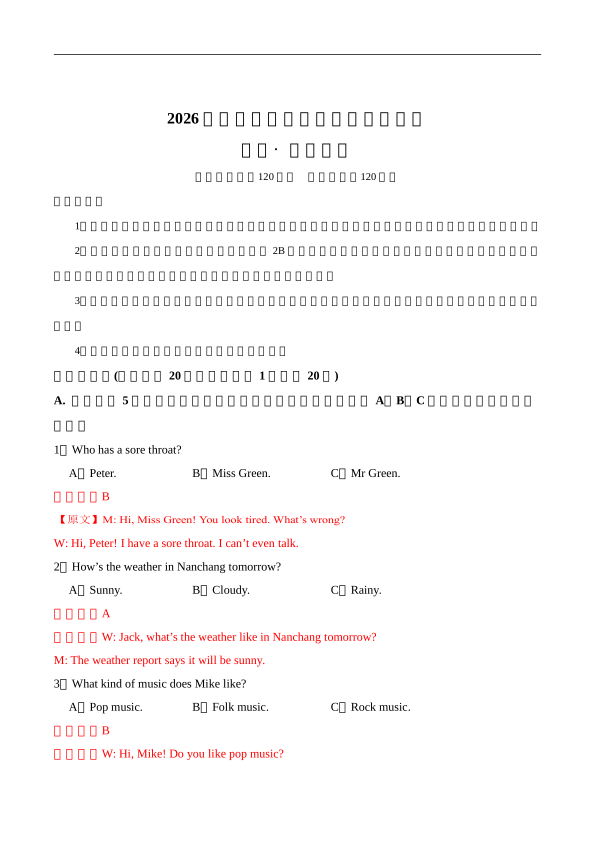
一、听力理解(本大题共20小题,每小题1分,共20分)
A)请听下面5段对话。每段对话后有一小题,从题中所给的A、B、C三个选项中选出最佳选项,并在答题卡上将该项涂黑。听完每段对话后,你都将有10秒钟的时间回答有关小题和阅读下一小题。每段对话读两遍。
1.What des Alice prefer t d n weekends?
A.G shpping.B.Watch TV.C.G swimming.
【答案】A
【原文】A: Des Alice enjy watching TV n weekends?
B: N, she wuld rather g shpping than watch TV, and she likes t g swimming n weekdays.
2.What are the speakers prbably ging t watch this weekend?
A.A cartn.B.A cmedy.C.A dcumentary.
【答案】A
【原文】M: What wuld yu like t watch, cmedies r dcumentaries?
W: Neither. Cartns g better with weekends! Let’s watch The Lin King.
3.What des the wman want t have tnight?
A.Beef and chicken.B.Fish and beef.C.Fruit and vegetables.
【答案】C
【原文】A: Please prepare fish and chicken fr Uncle Daniel.
B: OK, what wuld yu like fr dinner? Beef, chicken r fish?
A: I dn’t want meat fr supper. Just get me sme fruit and vegetables.
4.Hw lng have the speakers been waiting?
A.30 minutes.B.60 minutes.C.90 minutes.
【答案】A
【原文】A: I wnder if Henry is cming.
B: He tld me he wuld be here at eight ’clck, and it’s already half past eight.
A: Perhaps smething is wrng with him.
5. What will they d fr the festival?
A.Make sme Zngzi.B.Buy sme Zngzi.C.Rw the bat.
【答案】A
【原文】M: We need t d smething fr the Dragn Bat Festival. Shall we buy sme Zngzi?
W: Let’s make Zngzi. It’s mre interesting.
Questin: What will they d fr the festival?
B)请听下面4段对话。每段对话后有几个小题,从题中所给的A、B、C三个选项中选出最佳选项,并在答题卡上将该项涂黑。听每段对话前,你将有时间阅读各个小题,每小题5秒钟;听完后,各小题给出5秒钟的作答时间。每段对话读两遍。
请听第1段对话,回答第6、7小题。
6.What’s wrng with Eric?
A.He has a tthache.B.He has the flu.C.He has a sre thrat.
7.When will Eric have an English exam?
A.Next Mnday.B.Next Friday.C.Next Sunday.
【答案】6.B 7.C
【原文】A: Gd mrning, Eric. What’s wrng with yu?
B: I have a headache and I can’t sleep well.
A: I think yu have the flu. I’ll give yu sme pills. Take them 3 times a day.
B: What else shuld I d? I will have an English exam next Sunday and I always stay up t prepare fr it.
A: Take sme medicine and have a rest. Dn’t stay up late.
B: But I am als wrried abut the singing cmpetitin next Friday.
A: Dn’t wrry abut them. Yu shuld lie dwn and rest. Then yu will get better next week.
B: Thank yu fr yur advice.
请听第2段对话,回答第8、9小题。
8.What is Jenny ding?
A.Watching a mvie.B.Having a party.C.Making a vide.
9.Hw des Jenny like the sng and pictures?
A.Wnderful.B.Tuching.C.Interesting.
【答案】8.C 9.B
【原文】M: Hey, Jenny. Are yu watching a mvie?
W: N. I’m wrking n a vide fr ur schl-leavers’ party.
M: Oh, I really lve the party—interesting games, lively music... Everything is s wnderful!
W: Yeah, but I cried at the end f the party. The sng and the pictures—they brught back many sweet memries. All f them were s tuching.
M: Exactly. By the way, is there anything I can help yu with?
W: It’s s kind f yu. Culd yu help me pick the music?
请听第3段对话,回答第10至第12小题。
10.Why is the wman making the call?
A.T ask fr a phne number.
B.T learn hw t use the rm cmputer.
C.T ask fr a wake-up call.
11.What numbers shuld the wman press?
A.600.B.0600.C.4600.
12.What will be sent t the wman’s rm?
A.Sme cups.B.Sme ht water.C.Sme green tea.
【答案】10.C 11.B 12.C
【原文】M: Hell! May I help yu?
W: Yes. This is Sara Brwn in Rm 348. I’d like a wake-up call at 6:00 tmrrw mrning.
M: Well, we have a cmputer wake-up service. Yu can set it yurself.
W: Culd yu tell me hw t use it?
M: Sure! Just dial 4 fr the service, and then enter the time. It’s easy! Since yu want t be wken up at 6:00 a.m., just press 0600. Oh, dn’t frget t add a zer befre the 6.
W: Gt it. Thanks! By the way, can I rder rm service nw?
M: Of curse. What wuld yu like?
W: A cup f green tea, please. There’s n tea in the rm—nly ht water and sme cups.
M: N prblem. We’ll bring it up in abut ten minutes.
W: Great! Thanks!
请听第4段对话,回答第13至第15小题。
13.What are they mainly talking abut?
A.Hliday experience.B.Weekend plan.C.Schl trip.
14.What des Mike think f the lcal culture?
A.Wnderful.B.Interesting.C.Surprising.
15.Why des the wman want t visit the city museum?
A.T learn abut lcal culture.
B.T finish a science class reprt.
C.T take many beautiful phts.
【答案】13.B 14.B 15.A
【原文】A: Hi, Mike. The weekend is cming. D yu have any plans?
B: Nt yet. I want t d smething meaningful instead f staying at hme. D yu have any gd ideas?
A: Hw abut visiting the city museum? I heard there’s a new exhibitin abut ur lcal histry and traditinal culture there.
B: That’s a great idea. I’m really interested in lcal culture. It’s really interesting. When shall we meet?
A: Let’s meet at the schl gate at 8 ’clck n Saturday mrning. Is that OK fr yu?
B: Perfect. But why d yu want t visit the museum s much?
A: Because I want t learn mre abut ur city’s past and culture. It can als help us lve ur hmetwn mre.
B: I agree with yu. See yu n Saturday mrning.
A: See yu.
C)请听下面一段独白,根据独白内容完成下列句子,每个空格不超过3个单词。将答案填写到答题卡的相应位置。听独白前你将有50秒钟的时间阅读句子内容。独白读两遍。
16.The vegetable garden is next t the teaching .
17.Vlunteers frm different classes water the every mrning.
18.The students’ hard wrk paid ff and they picked ver kilgrams f tmates.
19.Mark tk sme tmates hme, and , cked delicius sup with them.
20.The garden cnnects the with nature.
【答案】16.building 17.plants 18.50/fifty 19.with pride 20.classrm
【原文】Hell, I’m Mark. Tday I’ll intrduce a vegetable garden in ur schl t yu. It is next t the teaching building. In the garden, we plant all kinds f clrful vegetables. Every mrning, a grup f vlunteers frm different classes water the plants and check fr new grwth. During the science class, teachers ften take us there t explain hw sil, water, and sunlight wrk tgether t help plants grw. Last mnth, ur hard wrk paid ff—we picked ver 50 kilgrams f tmates. I tk sme tmates hme, and with pride, cked delicius sup with them. My family tried it and lved it. I realized the garden is nt just fr planting vegetables. It als cnnects the classrm with nature, teaches us t value fd, and brings us students clser t each ther.
二、单项填空(本大题共8小题,每小题1分,共8分)
请阅读下面各小题,从题中所给的A、B、C、D四个选项中选出可以填入空白处的最佳选项,并在答题卡上将该项涂黑。
21.In the Luyang District English Vcabulary Cmpetitin, all participants shwed a high level f English ability, and the judges spke highly f their excellent ________ in vcabulary use.
A.perfrmanceB.prgressC.preparatinD.prmise
【答案】A
【详解】句意:在庐阳区英语词汇竞赛中,所有参赛者都展示了高水平的英语能力,评委们高度赞扬了他们在词汇运用方面的出色表现。perfrmance表现;prgress进步;preparatin准备;prmise承诺。根据“In ”及“judges spke highly f”可知,评委赞扬的是参赛者在比赛中的现场表现,perfrmance符合语境。
22.Many students shared their ideas abut study in class. Sme f ________ thught teenagers shuld make better use f free time.
A.theyB.theirC.themD.themselves
【答案】C
【详解】句意:许多学生在课堂上分享了他们对学习的看法。他们中的一些人认为青少年应该更好地利用空闲时间。 they他们(主格);their他们的(形容词性物主代词);them他们(宾格);themselves他们自己(反身代词)。空格前为介词“f”,其后应接宾格代词作宾语,them符合。
23.He Hua Shen was ne f the mst eye-catching prgrams at the 2026 CCTV Spring Festival Gala. ________ the beautiful lk f a gddess in charge f ne mnth’s flwer, the prgram als carried deep cultural meanings.
A.BeyndB.AgainstC.ExceptD.Besides
【答案】D
【详解】句意:在2026年中央电视台春节联欢晚会上,《荷花神》是最引人注目的节目之一。除了有着掌管一月之花的女神般美丽的外表,这个节目还承载着深厚的文化内涵。Beynd超出;Against反对;Except除……之外(不包含);Besides除……之外(还,包含)。根据“the beautiful lk f a gddess in charge f ne mnth’s flwer, the prgram als carried deep cultural meanings.”可知,此处表示除了美丽的外表,这个节目还有文化内涵,包含美丽的外表这一情况,应填Besides。
24.—At first, peple thught Emily was just a ________ girl, but she turned ut t be the winner f the natinal science cmpetitin.
—Ww, she really surprised us.
A.cmmnB.curiusC.humrusD.generus
【答案】A
【详解】句意:起初,人们认为艾米丽只是一个普通的女孩,但她结果赢得了全国科学竞赛。——哇,她真的让我们惊讶了。cmmn普通的;curius好奇的;humrus幽默的;generus慷慨的。根据“but she turned ut t win the natinal science cmpetitin.”及答语“she really surprised us”可知,前后句意存在转折,起初认为她普通,后来获奖令人意外。应填cmmn。
25.The 2026 Hefei Marathn ________ arund Chahu Lake n March 22, attracting ver 30,000 runners frm hme and abrad.
A.tk careB.tk placeC.tk actinD.tk part
【答案】B
【详解】句意:2026年合肥马拉松于3月22日在巢湖周边举行,吸引了3万多名来自国内外的参赛者。
tk care照顾;tk place举行、发生;tk actin采取行动;tk part参加(后常接in)。结合语句“The 2026 Hefei Marathn … arund Chahu Lake n March 22, attracting ver 30,000 runners frm hme and abrad.”可知,这里描述的是马拉松赛事的举办,tk place符合语境。
26.The ftball match between Zhenjiang and Yngzhu ________ n 22nd March, 2026, which brught lcal peple a lt f jy.
A.heldB.was heldC.will be heldD.will hld
【答案】B
【详解】句意:镇江和永州之间的足球比赛于2026年3月22日举行,这给当地人带来了很多欢乐。
主语“The ftball match”与动词“hld”之间是被动关系,需用被动语态,排除主动语态选项;根据时间状语“n 22nd March, 2026”及定语从句谓语“brught”可知,动作发生在过去,需用一般过去时的被动语态,应填was held。
27.—The AI helper MedRAX can read X-ray pictures very well! But I wnder _________.
—It learned frm millins f pictures f sick peple.
A.when we can use itB.wh develped it
C.why is it s smartD.hw it was trained
【答案】D
【详解】句意:——AI助手 MedRAX读X光片非常棒!但我想知道它是如何被训练的。——它是从数百万张病人的图片中学习到的。when we can use it我们什么时候可以使用它;wh develped it谁开发了它;why is it s smart为什么它如此聪明;hw it was trained它是如何被训练的。宾语从句需用陈述语序,C项是疑问语序,排除;根据答语“It learned frm millins f pictures f sick peple.”可知,回答的是学习或训练的方式。应填hw it was trained。
28.—Many peple lve the sprts masct (吉祥物) “Sududu”. D yu think it’s the best?
—________. Sme like its cute lks and funny mves, while thers prefer different nes.
A.N dubtB.It dependsC.Never mindD.N prblem
【答案】B
【详解】句意:——很多人喜欢运动吉祥物“苏嘟嘟”。你认为它是最好的吗?——视情况而定。有些人喜欢它可爱的外表和有趣的动作,而其他人更喜欢别的。
N dubt毫无疑问;It depends视情况而定;Never mind没关系;N prblem没问题。根据“Sme like its cute lks and funny mves, while thers prefer different nes.”可知,不同的人有不同的喜好,观点不一,是否是最好的取决于个人看法,即视情况而定,应填It depends。
三、完形填空(本大题共26小题,每小题1分,共26分)
A)请先阅读下面短文,掌握其大意,然后从各小题所给的A、B、C、D四个选项中选出可以填入相应空白处的最佳选项,并在答题卡上将该项涂黑。
My schl life has changed a lt since I jined the Schl Vlunteer Club last year. I still remember my first vlunteer activity 29 .
It was a cld winter mrning. Our teacher tk us t an ld peple’s hme. When we arrived, the ld peple were sitting in the hall. Many f them seemed a little 30 because their children rarely came t visit them.
Jack and I were tld t help Mr. Li, an 80-year-ld man. At first, I was 31 abut what t say t him. But when I began t talk with him, I fund he was very friendly. “Yung man,” he said with a big smile, “I’m s 32 t have yu here. Yu remind me f my grandsn.” Then he tld us stries abut his 33 . He used t be a teacher and had taught hundreds f students.
Later, Jack played chess with Mr. Li, while I helped clean his rm. Mr. Li was very 34 abut lsing the game, but his eyes were full f happiness.
35 we left, Mr. Li held my hand and said, “Thank yu fr spending time with me. That’s the best 36 yu can give t ld peple.”
That day taught me a 37 lessn: smetimes the smallest act f kindness can 38 a great difference. Nw I g t the ld peple’s hme every mnth. I’ve learned that spending time with ld peple nt nly 39 them but als makes me feel warm inside.
Thrugh vlunteering, I have made many new 40 . We wrk tgether, help each ther, and share ur jy. I’ve als imprved my 41 skills because I need t cmmunicate with different peple. I 42 encurage my classmates t jin vlunteer activities. Remember, n act f kindness is t 43 . It can light up smene’s wrld.
29.A.clearlyB.slwlyC.happilyD.luckily
30.A.excitedB.lnelyC.interestedD.surprised
31.A.sureB.angryC.nervusD.prud
32.A.sadB.wrriedC.afraidD.glad
33.A.futureB.hbbyC.pastD.dream
34.A.carefulB.seriusC.terribleD.srry
35.A.BefreB.AfterC.WhenD.Unless
36.A.adviceB.giftC.chanceD.result
37.A.difficultB.uselessC.valuableD.simple
38.A.makeB.takeC.dD.put
39.A.hurtsB.wrriesC.encuragesD.pleases
40.A.rulesB.friendsC.mistakesD.plans
41.A.writingB.readingC.cmmunicatinD.listening
42.A.hardlyB.strnglyC.certainlyD.widely
43.A.smallB.bigC.helpfulD.imprtant
【答案】
29.A 30.B 31.C 32.D 33.C 34.D 35.A 36.B 37.C 38.A 39.D 40.B 41.C 42.B 43.A
【导语】本文讲述作者加入学校志愿者俱乐部后,第一次去敬老院开展志愿活动的经历,从中懂得善意不分大小、陪伴能温暖老人,同时收获成长与感悟的故事。
29.句意:我仍然清楚地记得我的第一次志愿活动。
根据上下文语境,此处表达对第一次志愿活动记忆深刻,应选用clearly,表示“清楚地”。slwly(缓慢地)、happily(开心地)、luckily(幸运地)均与“记得活动”的语境不符。
30.句意:他们中许多人看起来有点孤单,因为他们的孩子很少来看望他们。
根据后文“their children rarely came t visit them”,可知老人缺少陪伴,应选用lnely,表示“孤单的”。excited(兴奋的)、interested(感兴趣的)、surprised(惊讶的)不符合老人的处境。
31.句意:起初,我对于要和他说些什么感到紧张。
根据上文初次接触陌生老人的语境,应选用nervus,表示“紧张的”。sure(确定的)、angry(生气的)、prud(自豪的)与初次交流的心理状态不符。
32.句意:见到你们来我很高兴。
根据前文老人面带微笑说话,应选用glad,表示“高兴的”。sad(难过的)、wrried(担忧的)、afraid(害怕的)均与微笑的神态矛盾。
33.句意:然后他给我们讲他过去的故事。
根据后文“He used t be a teacher”,讲述从前的经历,应选用past,表示“过去”。future(未来)、hbby(爱好)、dream(梦想)与“曾经是老师”的内容不匹配。
34.句意:李先生对于输掉棋局感到很遗憾,但眼里满是幸福。
根据后文“lsing the game”,应选用srry,表示“遗憾的、惋惜的”。careful(小心的)、serius(严肃的)、terrible(糟糕的)不符合下棋后的心情。
35.句意:在我们离开之前,李先生握住我的手并说道。
根据上下文语境与事件发生顺序,老人在我们动身离开前表达感谢,应选用Befre,表示“在……之前”。When侧重动作同时发生,不符合送别时提前道谢的逻辑;After表示离开之后才握手道别,与原文场景矛盾;Unless引导条件状语从句,意为“除非”,与本句时间逻辑无关。
36.句意:这是你能送给老人最好的礼物。
根据语境陪伴是珍贵的馈赠,应选用gift,表示“礼物”。advice(建议)、chance(机会)、result(结果)不符合句意。
37.句意:那天我学到了宝贵的一课。
根据全文志愿活动带来深刻感悟,应选用valuable,表示“宝贵的”。difficult(困难的)、useless(无用的)、simple(简单的)与感悟的意义不符。
38.句意:有时最微小的善意举动也能带来巨大影响。
根据固定搭配make a great difference,应选用make。take(拿)、d(做)、put(放)均不构成该固定搭配。
39.句意:我了解到花时间陪伴老人不仅让他们开心,也让我内心温暖。
根据后文“makes me feel warm inside”并列情感,应选用pleases,表示“使开心”。hurts(伤害)、wrries(使担忧)、encurages(鼓励)不符合语境。
40.句意:通过志愿活动,我交到了许多新朋友。
根据后文“We wrk tgether, help each ther”,应选用friends,表示“朋友”。rules(规则)、mistakes(错误)、plans(计划)与协作互助的内容不符。
41.句意:我也提升了我的沟通技巧,因为我需要和不同的人交流。
根据后文“cmmunicate with different peple”,应选用cmmunicatin,表示“沟通”。writing(写作)、reading(阅读)、listening(倾听)不贴合交流的语境。
42.句意:我强烈鼓励我的同学们参加志愿活动。
根据作者积极的志愿感悟,应选用strngly,表示“强烈地”。hardly(几乎不)、certainly(当然)、widely(广泛地)语气与鼓励的态度不符。
43.句意:记住,没有善意是渺小的。
根据前文“the smallest act f kindness”呼应主题,应选用small,表示“微小的”。big(大的)、helpful(有帮助的)、imprtant(重要的)与文意相悖。
B)请先阅读下面短文,掌握其大意,然后用方框中所给词的适当形式填空,并将答案填写到答题卡的相应位置。每个词限用一次。
Lng ag, there was a man frm the State f Chu wh wned a beautiful swrd. The man 44 it s much that he tk it everywhere he went.
One day, he tk a bat t g acrss a(n) 45 . As the bat mved, it rcked suddenly, and his swrd fell 46 the river. The fisherman tld him 47 in quickly, but the man had anther idea. He tk ut a knife and made a(n) 48 n the bat. He believed that by marking where the swrd drpped, he culd jump in at the 49 place after reaching the bank and find it easily.
The fisherman tried t tell him that it wuld nt wrk, but the man didn’t 50 . When the bat reached the bank, he jumped int the water right where the mark was. He fund nthing and wndered 51 his swrd had gne.
The fisherman said, “The mark mved with the bat, 52 the swrd stayed in the middle f the river.” The man finally understd. He had lst his swrd because f his flish mistake. The stry tells us that we shuld think 53 befre making decisins. Als, we shuld cnsider the changes arund 54
【答案】
44.lved 45.river 46.int 47.t jump 48.mark 49.same 50.listen 51.where 52.but 53.carefully 54.us
【导语】本文是一篇寓言故事。文章讲述了一个楚人乘船过河时,不慎将他的宝剑掉入河中,他却在船上刻记号,想靠记号找回宝剑,最终一无所获的故事。文章告诉人们做事要根据实际情况灵活变通,不能墨守成规。
44.句意:这个人非常喜爱它,以至于他走到哪里都带着它。此处缺少动词,根据“s much that he tk it everywhere he went”及备选词汇可知,此处应指非常喜爱这把剑,选词lve,文章讲述过去发生的事,应用一般过去时。故填lved。
45.句意:有一天,他乘船渡过一条河。此处缺少名词,根据语境及备选词汇可知,此处指乘船过河,选词river。空前有冠词a(n),此处名词用单数。故填river。
46.句意:船突然摇晃,他的剑掉到河里。此处缺少介词,根据语境及备选词汇可知,此处应指掉进河里,选词int。故填int。
47.句意:渔夫告诉他赶快下去,但是那个人有另外一个主意。此处考查固定搭配tell sb.t d sth.让某人做某事,根据语境及备选词汇可知,此处应指跳下水,选词jump。故填 t jump。
48.句意:他拿出一把刀,在船上做了一个标记。此处缺少名词,根据语境及备选词汇可知,此处应指做了一个记号,选词mark。故填mark。
49.句意:他以为通过标记剑掉落的位置,等船靠岸后,在相同位置跳下去就能轻易找到剑。此处缺少形容词,根据“place”及备选词汇可知,此处应指同一个位置,选词same。故填same。
50.句意:渔夫试图告诉他那个方法没用,但那个人没有听。此处缺少动词,根据“didn’t”后接动词原形及备选词汇可知,此处应指不听劝告,选词listen。故填listen。
51.句意:他什么也没找到,并且想知道他的剑去了哪里。此处缺少宾语从句引导词,根据“his swrd had gne”及备选词汇可知,此处应指去了哪里,选词where。故填where。
52.句意:渔夫说:“记号跟着船走,但剑还在河中央。”此处缺少连词,根据前后表示转折关系及备选词汇可知,选but。故填but。
53.句意:这个故事告诉我们在做决定之前我们应该仔细思考。此处缺少副词修饰动词think,根据原文可知本文主要讲的是在做决定前要仔细思考且不能墨守成规,结合备选词汇可知carefully符合语境。故填carefully。
54.句意:此外,我们应该考虑周围的变化。此处缺少介词arund的宾语,结合本句主语we可知,此处表示的是我们周围的变化,代词us符合语境。故填us。
四、阅读理解(本大题共23小题,每小题2分,共46分)
A)请阅读下面短文,根据短文内容从每小题所给的A、B、C、D四个选项中选出最佳选项,并在答题卡上将该项涂黑。
A
Dear Mm and Dad,
I’m writing this letter t say thank yu frm the bttm f my heart, fr always being my biggest supprters and saving me when I was stuck in a dark place.
A while ag, I was crazy abut my phne. I spent every free minute watching shrt vides, and my grades hit rck bttm. I felt blue all the time when I wasn’t n my phne, and I was s addicted (上瘾的) that I culdn’t pull myself ut f it. When yu fund ut hw much time I was wasting, yu were hpping mad at first, and I ttally get it—yu were wrried sick abut me. Instead f just shuting and taking my phne away, yu tk a step back. Yu even asked Duba fr advice, and spent days finding the best way t help me, nt punish me.
Yu sat dwn with me and talked heart t heart, explaining hw phne addictin had influenced my fcus and my future. Yu set prper screen time rules, and spent mre time ding fun things with me—hiking, cking, and playing bard games. Slwly, I brke the bad habit. When I gt my test reprt, I was ver the mn—my scres jumped s much, and I finally felt prud f myself again. What’s mre, we started talking abut everything, frm my schl stress t my little wrries, and ur relatinship is warmer than befre.
I als want t thank yu fr taking such gd care f me when I was under the weather last mnth. Yu stayed up with me, made me warm sup, and reminded me t take my medicine n time. Yu’re nt just my parents—yu’re my best friends, my safe place, and my frever heres.
Thank yu fr lving me all the time, fr guiding me back n the right path, and fr making ur hme the happiest place in the wrld. I lve yu mre than wrds can say, and I prmise t keep wrking hard and making yu prud.
These are the fresh flwers I made by hand fr yu. Wishing yu bth gd health, endless happiness, and all the best in the wrld. I’ll lve yu frever and always.
With all my lve,
Linger
55.What is the type f this passage?
A.A diary entry. B.A thank-yu letter.C.A news reprt.D.A say-srry letter.
56.If yu make great prgress in this exam, which idim (成语;俚语) frm the passage can best describe yur feeling?
A.Hit rck bttm. B.Hpping mad.C.Over the mn.D.Under the weather.
57.Accrding t the passage, Linger thanked her parents with hand-made flwers. What’s the best way t sincerely (真诚地) thank yur parents r teachers?
A.Say thank yu n special days like birthdays.
B.Buy them an expensive gift t shw hw much yu care.
C.Say nthing because they already knw yu are thankful.
D.D smething small but sincere, like making a gift r ding chres.
【答案】55.B 56.C 57.D
【导语】本文是一封Linger写给父母的感谢信,感谢他们在自己沉迷手机时耐心引导、生病时悉心照顾,表达了深深的爱与感激。
55.信件开头“Dear Mm and Dad”和结尾“With all my lve, Linger”表明这是一封感谢信。
56.根据第三段“…ver the mn—my scres jumped s much, and I finally felt prud f myself again”可知,“ver the mn”意为“欣喜若狂”,形容取得巨大进步后的高兴心情。
57.Linger亲手制作鲜花送给父母,说明真诚的感谢不需要昂贵礼物,做一些真诚的小事(如亲手制作礼物或帮忙做家务)是最佳方式。
B
When 12-year-ld Mia visited the beach with her family, she never expected t find a message in a bttle. The bttle was dirty and cvered with shells. Inside was a piece f paper with handwriting that was hard t read.
“Dear Finder,” the letter began. “My name is Carls. I am 9 years ld and I live in Prtugal. I am sending this bttle int the sea because I want t knw if smene far away will read my wrds. My favrite thing is drawing ships. D yu like the cean t? Please write back if yu find this.”
Mia was excited. She asked her mther fr help and sent an email t the address Carls had left. T her surprise, she received a reply tw weeks later.
It turned ut that Carls had thrwn the bttle five years ag. Nw he was 14 and had almst frgtten abut it. The tw started writing emails regularly. They shared pictures f their drawings — Mia drew sea animals, and Carls drew ships. They learned abut each ther’s cultures and prmised t meet ne day.
Mia’s teacher heard abut the stry and asked her t share it in class. “This shws that small acts can create big cnnectins,” the teacher said.
Mia learned that even in a huge wrld, a simple message can travel acrss the cean and bring tw strangers tgether.
58.Hw ld was Carls when Mia fund his message?
A.9B.12C.14D.5
59.What did Mia d after reading the letter?
A.She threw the bttle back.B.She emailed Carls.
C.She drew a ship.D.She tld her teacher first.
60.Hw did Carls prbably feel when he gt Mia’s email?
A.Angry and sad.B.Surprised and happy.
C.Bred and tired.D.Wrried and afraid.
61.What did Mia and Carls d after they cnnected?
A.They met at the beach.B.They shared their drawings nline.
C.They sent mre bttles.D.They became classmates.
62.What lessn did Mia learn frm the experience?
A.The cean is full f waste.B.It’s hard t find a pen friend.
C.Small actins can cnnect peple far apart.D.Children shuld nt write letters alne.
【答案】58.C 59.B 60.B 61.B 62.C
【导语】本文是一篇记叙文,讲述了12岁的Mia在海滩捡到一个漂流瓶,通过瓶中的信息和漂流瓶的主人Carls取得联系、成为笔友,并领悟到微小举动可以连接远方陌生人的故事。
58.第二段提到:“I am 9 years ld and I live in Prtugal.”第四段提到:“It turned ut that Carls had thrwn the bttle five years ag. Nw he was 14 and had almst frgtten abut it.”由此可知,Mia发现信息时Carls的年龄是14岁。
59.第三段说明:“Mia was excited. She asked her mther fr help and sent an email t the address Carls had left.” 由此可知,Mia读完信后给Carls发了邮件。
60.第四段指出:“It turned ut that Carls had thrwn the bttle five years ag. Nw he was 14 and had almst frgtten abut it.”结合常理,几乎忘记这件事的Carls收到Mia的邮件时,会感到惊讶又开心。
61.第四段说明:“They shared pictures f their drawings nline — Mia drew sea animals, and Carls drew ships.”由此可知,两人取得联系后,在网上分享了自己的画作。
62.第五段指出:“This shws that small acts can create big cnnectins”第六段指出:“Mia learned that even in a huge wrld, a simple message can travel acrss the cean and bring tw strangers tgether.”由此可知,Mia学到的道理是:微小的行动可以连接远方的人。
C
Fast fashin—cheap, mass-prduced clthing that fllws the latest trends—has changed the way we buy clthes. But what seems like a bargain may actually cme with a high price.
Every year, the fashin industry prduces ver 100 billin garments. The prblem is that many f these clthes are wrn nly a few times befre being thrwn away. In the United States alne, abut 11 millin tns f textile waste g int landfills each year. Sme f these clthes are made frm materials that take hundreds f years t break dwn.
The envirnmental impact is huge. Making clthes requires large amunts f water, energy, and chemicals. Fr example, prducing ne cttn shirt needs abut 2,700 liters f water—that’s enugh fr ne persn t drink fr tw and a half years. Factries als release dyes and ther pllutants int rivers, harming wildlife and lcal cmmunities.
Fast fashin als raises scial cncerns. T keep prices lw, many brands use wrkers in develping cuntries wh are paid very little and wrk in unsafe cnditins.
S what can we d? Experts suggest buying fewer but better-quality clthes, chsing secnd-hand items, and recycling ld clthes instead f thrwing them away. Sme cmpanies are als creating clthes frm recycled materials r designing them t be easily repaired.
“We dn’t need t stp buying clthes cmpletely,” says envirnmental scientist Dr. Emma Green. “But we need t think befre we buy. Every piece f clthing has a stry that starts lng befre it reaches the stre.”
63.What is “fast fashin” accrding t the passage?
A.Expensive and high-quality clthing.B.Cheap clthing that fllws the latest trends.
C.Clthes made frm recycled materials.D.Traditinal clthes wrn fr many years.
64.Hw much water is needed t prduce ne cttn shirt?
A.100 liters.B.1,000 liters.C.2,700 liters.D.11 millin liters.
65.What des the underlined wrd “landfills” in Paragraph 2 mst likely mean?
A.Places where waste is buried.B.Factries that make clthes.
C.Shps that sell cheap clthes.D.Rivers plluted by chemicals.
66.Which f the fllwing is NOT mentined as a slutin?
A.Buying secnd-hand clthes. B.Recycling ld clthes.
C.Prducing clthes frm recycled materials.D.Wearing clthes nly nce and thrwing them away.
67.What is Dr. Emma Green’s attitude tward buying clthes?
A.She thinks we shuld stp buying clthes cmpletely.
B.She suggests thinking carefully befre each purchase.
C.She believes fast fashin is gd fr the ecnmy.
D.She advises buying as many cheap clthes as pssible.
【答案】63.B 64.C 65.A 66.D 67.B
【导语】本文介绍了快时尚的定义、环境与社会影响,并给出了应对建议,呼吁理性消费。
63.文中第1段直接定义:“Fast fashin—cheap, mass-prduced clthing that fllws the latest trends—has changed the way we buy clthes.”,说明快时尚是指廉价、大批量生产且紧跟最新潮流的服装。
64.文中第3段提到“prducing ne cttn shirt needs abut 2,700 liters f water”,说明生产一件棉质衬衫需要2700升水。
65.文中第2段提到“abut 11 millin tns f textile waste g int landfills each year”,结合语境,“landfills”指的是处理垃圾的地方,即垃圾填埋场。
66.文中第5段提到的解决方案包括:“buying fewer but better-quality clthes, chsing secnd-hand items, and recycling ld clthes instead f thrwing them away”“creating clthes frm recycled materials”。选项D“穿一次就扔掉”是快时尚的问题所在,不是解决方案。
67.文中最后一段Dr. Emma Green说:“But we need t think befre we buy.”,说明她的态度是建议在每次购买前仔细思考。
D
In April 2026, China started an imprtant plan t bring artificial intelligence (AI) int all schls. It is called the “AI + Educatin Actin Plan”, marking a new step in China’s smart educatin. This plan will make AI a cmmn helper fr students and teachers. And it has changed ur study and teaching in a meaningful way.
In the past, nly a few schls in big cities used AI in educatin. But nw, AI will enter every classrm, bth in cities and cuntryside. Fr students, AI is a “smart study partner”. It makes persnalized hmewrk depending n each student’s level and explains difficult knwledge in simple ways. If yu are slw in math, it will give easier practice t help yu build cnfidence; if yu learn fast, it will prvide mre challenging prblems t help yu make prgress.
Fr teachers, AI is a “super teaching assistant”. It helps make scientific teaching plans and crrect hmewrk quickly t save much time. With mre free time, teachers can fcus mre n each student’s needs. Besides, schls use AI t check campus safety and manage daily wrk efficiently (有效地).
Mst parents als welcme this plan and they believe it will bridge the gap between schl and hme learning. “AI tls at hme help me understand my child’s prgress clearly, s I can guide him better,” said Mrs. Zhang, a parent f a Grade-8 student.
The plan sets clear gals, that is, junir high schls will ffer at least 8 AI lessns yearly t help students use AI wisely. By 2030, China will build a new educatin style with AI and humans wrking tgether. In shrt, this plan shws China’s technlgical prgress and makes educatin fairer, leading us t a smarter learning future.
68.Hw des the writer start the text?
A.By asking a questin.B.By stating a fact.
C.By telling a stry.D.By cmparing different ideas.
69.What can AI d fr students as a “smart study partner”?
① Ck lunch fr students.
② Explain difficult knwledge simply.
③ Play sprts with students.
④ Make persnalized hmewrk.
A.①②B.①④C.②③D.②④
70.What can we infer frm the text?
A.AI will take the place f teachers cmpletely.
B.Only big cities can use AI in schls.
C.AI helps make educatin fairer fr all students.
D.Students dn’t need t study any mre.
71.What wuld be the best structure f the text?
A.B.C.D.
72.What is the best title fr the text?
A.China’s “AI + Educatin” Plan Changes Our Study
B.AI Helps Students D Hmewrk
C.Hw t Use AI Wisely at Schl
D.The Histry f AI in Chinese Schl
【答案】68.B 69.D 70.C 71.B 72.A
【导语】本文介绍了中国“AI+教育行动计划”的背景、AI在教育中的应用(学生、教师、家长视角)及未来目标,展现了人工智能对教育的变革作用。
68.文中第1段直接陈述事实:“In April 2026, China started an imprtant plan t bring artificial intelligence (AI) int all schls.”,说明作者是通过陈述事实的方式开篇的。
69.文中第2段提到AI作为“smart study partner”的作用:“It makes persnalized hmewrk depending n each student’s level and explains difficult knwledge in simple ways.”,因此②和④正确。
70.文中最后一段提到“this plan shws China’s technlgy prgress and makes educatin fairer, leading us t a smarter learning future.”,可以推断AI有助于让所有学生获得更公平的教育。
71.文章结构分析:P1:引出“AI+教育行动计划”这一主题P2-P4:分别介绍AI对学生、教师、家长的影响(分述) P5:总结计划目标与意义 因此结构为“总—分—总”。
72.全文围绕中国“AI+教育行动计划”及其对教与学的改变展开,因此最佳标题应概括这一核心内容。
B)请先阅读下面短文,掌握其大意,然后根据短文内容从下面方框内的七个选项中选择五个还原到文中,使短文意思通顺、结构完整,并在答题卡上将其序号涂黑。一空一句。
Nwadays, many teenagers spend t much time n their phnes. They even ignre (忽略) their friends sitting right next t them. 73 The habit makes peple feel sad because they are nt getting real attentin. We ften use phnes because we are afraid f missing smething nline. We like t get “likes” and gd cmments frm thers. But this makes us feel lnely in real life. 74
◆ Keep phnes away
Make sme rules. D nt use yur phne at the dinner table r in yur bedrm. This helps yu pay attentin t the family in frnt f yu. 75
◆ Ask yurself why
Befre yu pick up yur phne, stp and ask yurself. “Am I bred? Or am I waiting fr an imprtant message? D I really need t use the phne nw?” 76 Fr example, try reading a bk, drawing a picture r just listening t yur favrite music instead.
◆ 77
Yu can play basketball, listen t music, r play chess with friends. These activities need yu t use yur hands and yur brain. They can even make yu happy and help yu make true friends.
Putting dwn yur phne is hard, but it is gd fr yu. Yu will find that talking face-t-face is better than chatting nline.
A.If yu are just bred, find smething else t d.
B.We call this habit “phubbing (低头族)”.
C.Here are three tips t keep away frm “phubbing”.
D.Find ther fun activities
E.Ask yur parents t jin yu
F.Yu shuld turn ff yur phne when yu d yur hmewrk.
G.In this way, yu can talk t yur family and really listen t them.
【答案】73.B 74.C 75.G 76.A 77.D
【导语】本文主要讲述了现在许多青少年沉迷于手机,忽视了身边的朋友和家人,这种被称为“低头族”(phubbing)的习惯让人感到孤独。文章随后给出了三条远离“低头族”的建议:远离手机、自问原因以及寻找其他有趣的活动。
73.空格前一句提到青少年花太多时间在手机上,甚至忽视了坐在旁边的朋友。空格后一句提到“这个习惯让人感到悲伤……”。B项“我们称这种习惯为‘低头族’(phubbing)”承上启下,既总结了前文描述的现象,又引出了后文对这种习惯负面影响的讨论。
74.空格前一句提到我们使用手机是因为害怕错过网上的东西,喜欢获得点赞。空格后一句说“但这让我们在现实生活中感到孤独”。下文给出了三条建议。C项Here are three tips t keep away frm “phubbing”.承上启下,引出建议。
75.本段的小标题是“Keep phnes away”(远离手机),空格前一句建议不要在餐桌或卧室使用手机,这有助于关注面前的家人。本段建议远离手机,吃饭和睡觉时不用手机。G项In this way, yu can talk t yur family and really listen t them.说明这样做的好处,符合逻辑。
76.本段小标题是“Ask yurself why”(问问你自己为什么)。空格前一句是一系列自问的问题(我无聊吗?我在等重要信息吗?)。A项“如果你只是感到无聊,找点别的事情做”是对前文自问“Am I bred?”的直接回应和解决方案,且与后文的举例(读书、画画等)完美衔接。
77.此处是一个小标题。观察剩下的选项,D项“Find ther fun activities”(寻找其他有趣的活动)概括了本段内容。后文列举了打篮球、听音乐、下棋等活动,这些都是除了玩手机以外的有趣活动。
五、补全对话(本大题共5小题,每小题1分,共5分)
请阅读下面对话,根据对话内容从下面的七个选项中选择五个填入空白处,使对话通顺、合理,意思完整,并在答题卡上将其序号涂黑。一空一句。
A: Hi, Daming. Lng time n see.
B: Yes, Linda. 78
A: It’s an ancient and amazing city.
B: Yu can say that again. The culture there is fantastic!
A: 79 It’s ne f the finest and ldest art museums in the wrld.
B: I did! 80 My favurite ne was the famus Sng Dynasty painting Alng the River During the Qingming Festival.
A: Did yu g and watch the flag-raising ceremny (仪式) at Tian’anmen Square?
B: I did. 81 The square was really crwded, thugh.
A: Of curse. Everyne wants t see that ceremny when in Beijing.
B: I als climbed the Great Wall. D yu knw the saying: “He wh has never been t the Great Wall is nt a true man.”?
A: Yes! 82
B: I did. And nw I can prudly say I’m a “true man”!
A.It was very mving.
B.Did yu reach the tp?
C.I can’t wait t g there.
D.I just gt back frm Beijing.
E.Did yu visit the Palace Museum?
F.I saw s many wnderful treasures there.
G.Have yu ever been t the Natinal Stadium?
【答案】78.D 79.E 80.F 81.A 82.B
【导语】本文中Linda和大明久别重逢,大明讲述自己刚从北京游玩归来,聊到故宫珍宝、《清明上河图》、天安门升旗仪式和攀登长城的经历,两人愉快交流游玩感受。
78.下文A评价“这是一座古老又令人惊叹的城市”,结合B的回应“文化很棒”,D项“I just gt back frm Beijing.”说明B刚从北京回来,引出对北京的讨论,符合逻辑衔接。
79.下文B回答“I did!”且提到“世界上最优秀最古老的艺术博物馆之一”,E项“Did yu visit the Palace Museum?”询问是否参观故宫,符合艺术博物馆的描述。
80.下文B提到最喜欢的宋代画作《清明上河图》,F项“I saw s many wnderful treasures there.”描述在故宫看到的珍贵文物,符合逻辑衔接。
81.上文A询问是否看天安门升旗仪式,B回答“I did.”,A项“It was very mving.”描述升旗仪式的感受,符合逻辑衔接。
82.上文B提到长城的谚语“不到长城非好汉”,下文B回应“I did. And nw I can prudly say I’m a ‘true man’!”,B项“Did yu reach the tp?”询问是否登顶长城,符合逻辑衔接。
六、书面表达(15分)
在成长过程中,每个人都会遇到压力与烦恼,也常常会因为觉得自己不够完美而焦虑。学校英语社团以“It’s OK Nt t Be Perfect”为主题开展征文活动。请你写一篇短文投稿。
要点包括:
1.谈谈你曾经因哪个方面的不完美而烦恼(如学习、性格或生活中的某一方面);
2.结合一次具体经历,说明你如何改变看法并逐渐悦纳自己;
3.表达你的感受并对同学们提出建议。
注意:
1.词数100左右(开头已给出,不计入总词数);
2.紧扣要点,内容完整;
3.文中不得出现与考生相关的真实校名和姓名等信息。
It’s OK Nt t Be Perfect
Nbdy in the wrld is perfect, including me.
________________________________________________________________________________________________________________________________________________________________________________________________________________________________________________________________________________________________________________________________________________________________________________________________________________________________________________________________________________________________________________________________________________________________________
【例文】
It’s OK Nt t Be Perfect
Nbdy in the wrld is perfect, including me.
I used t be deeply upset abut my pr English speaking skills and was even afraid t pen my muth in class.Once, my English teacher asked me t give a shrt speech abut my hbby. My hands shk as I spke, and I made several grammar mistakes. But after I finished, my teacher smiled and praised my curage. That warm encuragement made me realize that trying bravely is far mre imprtant than being perfect.Nw, I practice speaking alud every mrning and take every chance t talk in English. I feel much mre cnfident and happy. S dn’t be afraid f yur imperfectins. They make yu human, and the curage t keep imprving will make yu shine.
【详解】写作步骤
[第一步:审题立意]
确定文体:夹叙夹议类短文,以第一人称记叙文为主,结合个人经历与感悟,用一般过去时和一般现在时写作。
明确要点:
1. 描述自己曾因哪方面的不完美而烦恼(如学习、性格、生活)
2. 结合一次具体经历,说明如何改变看法、悦纳自己
3. 表达自身感受并向同学提出建议
确定人称:第一人称(I/my)
[第二步:构思布局]
三段式结构:
开头段:承接题目给出的句子,点明“世界上没有完美的人”,引出自己曾经的烦恼
主体段:叙述一次具体经历,说明自己如何通过这件事改变对“不完美”的看法
结尾段:总结自身感受,升华主题,并向同学们提出建议
[第三步:要点展开]
要点一:描述曾经的烦恼
选择方向:学习(如英语口语、数学成绩)、性格(如内向、不自信)、生活(如体育不好、动手能力差)
烦恼表达:
基础表达:used t be upset abut(曾为……烦恼)、wrried abut(担心)
拓展词汇:felt anxius abut(因……感到焦虑)、was ashamed f(为……感到羞愧)
说明具体表现:
基础表达:pr English speaking skills(英语口语差)
拓展词汇:was afraid t speak in public(害怕当众发言)、was nt gd at taking tests(不擅长考试)
要点二:结合具体经历,说明改变的过程
经历选择:课堂发言、一次比赛、老师/同学的鼓励、一次失败的尝试等
事件描述:
基础表达:gave a shrt speech in class(在课堂上做了一次简短演讲)
拓展词汇:tk part in an English cmpetitin(参加了一场英语比赛)、tried t answer questins bravely(勇敢地尝试回答问题)
关键转折:
基础表达:my teacher praised my curage(老师表扬了我的勇气)
拓展词汇:my classmates cheered fr me(同学们为我鼓掌)、I realized trying is mre imprtant than being perfect(我意识到尝试比完美更重要)
要点三:表达感受并提出建议
自身感受:
基础表达:feel mre cnfident and happy(变得更自信、更快乐)
拓展词汇:learned t accept my weaknesses(学会了接纳自己的不足)、feel relaxed abut my imperfectins(对自己的不完美感到释然)
对同学的建议:
基础表达:dn’t be afraid f imperfectins. Just be brave and keep imprving.(不要害怕不完美,勇敢尝试并不断进步)
拓展词汇:learn t lve yurself as yu are(学会接纳真实的自己)、fcus n prgress, nt perfectin(关注进步,而非完美)
where carefully lve us but same int river listen jump mark
这是一份英语(江西专用)2026年中考模拟考前最后一卷含答案,共40页。
这是一份英语(江西卷)-2026年中考模拟考前预测卷试题(含答案及听力音频),共7页。试卷主要包含了本试卷分选择题和非选择题两部分等内容,欢迎下载使用。
这是一份英语(江西卷)试卷含答案2026年中考考前预测卷+答案,共10页。
注册成功

在线客服
添加在线客服
获取1对1服务
官方微信
关注“教习网”公众号
打开微信就能找资料
赛课定制
添加在线客服
获取1对1定制服务
职称咨询
添加在线客服
获取1V1专业指导服务

免费福利

.png)
.png)
.png)
