免费领取教师福利



若您为此资料的原创作者,认为该资料内容侵犯了您的知识产权,请扫码添加我们的相关工作人员,我们尽可能的保护您的合法权益。


这是一份广东省惠州市2026届下学期高三一模(韶关市二模)英语试题+答案解析,共13页。试卷主要包含了5分,满分37等内容,欢迎下载使用。
英 语
本试卷共8页 考试时间:120分钟 满分:120分
第一部分阅读(共两节,满分50分)
第一节(共15小题;每小题2.5分,满分37.5分)
阅读下列短文,从每题所给的 A 、B 、C 、D 四个选项中选出最佳选项。
A
Wuzhen, lcated in Zhejiang Prvince, is a famus water twn knwn fr its picturesque canals, traditinal wden huses, and rich cultural heritage. In recent years, it has successfully cmbined rural turism with smart technlgies t imprve bth visitr experience and lcal life.
Data Mining Techniques Applied
T better understand turists, the lcal gvernment uses data mining methds. Infrmatin is cllected frm scial media, bking platfrms, and visitr surveys. By studying the data, Wuzhen finds ut what visitrs really enjy—such as cultural shws and lcal fd. Based n these findings, the twn develps better turism services and marketing plans. Data mining has made an impact n turist engagement and satisfactin in Wuzhen.
Smart Hme Integratin
Smart hme technlgies have als been intrduced t imprve daily life fr residents. IT(物联网) devices mnitr energy use, water use, and air quality in real time. The infrmatin cllected helps the twn manage resurces mre efficiently. Fr example, smart meters allw husehlds t check their electricity usage. Smart hme integratin has made an impact n energy use and sustainability in Wuzhen.
By emplying bth data-driven insights and smart technlgy systems, Wuzhen has demnstrated measurable imprvements in envirnmental sustainability, ecnmic grwth, and cmmunity invlvement. As a result, the success f Wuzhen serves as a mdel fr ther rural areas seeking t use technlgy fr sustainable develpment.
21. What is data mining’s impact n Wuzhen’s turism?
A. The imprvement f lcal fd quality.
B. The reductin f turism management csts.
C. The attractin f mre visitrs t cultural shws.
D. The rise in visitr participatin and travel fulfillment.
22. Hw much husehld electricity is saved yearly in Wuzhen by smart hmes?
A. 45 kWh. B. 300 kWh. C. 540 kWh. D. 750 kWh
23. What lessns des Wuzhen ffer rural areas?
A. Digital-based appraches prmte balanced lcal prgress.
B. Lcal sightseeing cntributes t reginal ecnmic grwth.
C. Analytical methds influence lcal develpment planning.
D. Envirnmental prgress accmpanies native ecnmic expansin.
B
During my years at Stanfrd University, I was the nly deaf undergraduate n campus and American Sign Language(ASL) helped me participate in my classes and my favrite extracurricular activity: riding with the Stanfrd equestrian(马术) team.
Initially, I felt unsure abut hw I’d fit int such a hearing-centric wrld. When I visited the Stanfrd Red Barn, I had an urge t try ut fr the team. There, I discvered that the head cach, Vanessa Bartsch, had taken ASL during her wn student years. She was cmpletely calm by meeting a deaf rider and seemed excited t practice her ASL again. I left feeling thrilled, realizing there was a place fr me here.
Once I made the team, that training field becme my secnd hme. I began teaching Bartsch and my teammates sme hrsey vcabulary in ASL. During practice, I’d fix my gaze between my hrse’s ears, then glance sideways at my ASL interpreter as she signed the cach’s instructins. She’d be jgging t stay within my viewing range, interpreting while als trying t stay clear f ncming hurt frm hrses. I was amazed at hw many frms f cmmunicatin were happening at nce, spken and signed, human and hrse.
Beynd the riding, the rutine chres at the barn taught me that ur hrses were far mre than sprting equipment. Being an equestrian athlete is different frm ther sprts, nt least because f the bnds that can stir frm this shared lve fr the smell f hrses. My Stanfrd teammates and I did nt always understand each ther perfectly—but my time n the team shwed me that human language isn’t always essential fr experiencing a deep cnnectin with anther living being.
Tday, I am an authr. Gd writing feels like riding a hrse—each sentence mves frward with rhythm and pwer. Smetimes, crafting my written wrks reminds me f Red Barn, which shaped my thughts just as much as any literature class ever did.
24. Why did the authr feel it pssible t jin the Stanfrd Red Barn?
A. The team favred disabled riders.
B. She had rich equestrian experience.
C. The cach reacted psitively t her.
D. She’s invlved in many schl subjects.
25. What cntributed t the authr’s successful hrse riding practice?
A. Extra training frm the cach.
B. The imprvement f her hearing.
C. Her self-taught hrsey vcabulary.
D. The assistance frm the interpreter.
26. What makes equestrian special t the authr?
A. It brings mre daily chances.
B. It fits deaf peple very well.
C. It builds bnds thrugh lve fr hrses.
D. It depends much n spken language.
27. What message des the authr intend t cnvey thrugh her experience?
A. Practice makes perfect. B. ASL is key t team success.
C. Cnnectin exists beynd wrds. D. Sprts inspire writing career.
C
Almst ne in five adults in the US lives with a mental illness. A number f scientific studies have shwn that nature experiences may benefit peple’s psychlgical well-being and cgnitive(认知的) functin. Experts are starting t recgnize interacting with nature as ne way t imprve mental health. But it has been difficult t find ways t quantify these benefits in a useful manner fr cities r rganizatins that want t integrate nature t imprve mental health.
“Thinking abut the direct mental health benefits that nature cntact prvides is imprtant t take int accunt when planning hw t cnserve nature and integrate it int ur cities,” says Greg Bratman, an assistant prfessr at the University f Washingtn, ffering a cnceptual mdel fr this in his study.
The study utlines hw city planners, landscape architects, develpers, and thers culd eventually anticipate the mental health impacts f decisins related t the envirnment. Many gvernments already cnsider this with regard t ther aspects f human health. Fr example, trees planted in cities imprve air quality r reduce urban heat island effects, and parks built in specific neighbrhds encurage physical activity. But these actins dn’t usually directly factr in the mental health benefits that trees r a restred park might prvide.
Then researchers built a mdel t help make meaningful, infrmed decisins abut envirnmentalprjectsandhwtheymayimpactmentalhealth.Itincludesfursteps fr planners t cnsider: elements f nature included in a prject, say at a schl r acrss the whle city; amunt f cntact peple will have with nature; hw peple interact with nature; and hw peple may benefit frm thse interactins, based n the latest scientific evidence.
“If the evidence shws that nature cntact helps t buffer(缓冲) against negative impacts frm ther envirnmental predictrs f health, then access t these landscapes can be cnsidered a matter f envirnmental justice. We hpe this framewrk will cntribute t this discussin,” Bratman says. “Eventually, it culd be develped and ptentially used t help address health disparities in underserved cmmunities.”
28. What challenges planners in using nature t imprve mental health?
A. The high cst f green space prjects.
B. The difficulty in measuring the benefits.
C. The lack f scientific studies n nature.
D. The lw awareness f mental illnesses.
29. What is the purpse f Bratman’s cnceptual mdel?
A. T help decide n envirnmental issues.
B. T shw benefits f nature fr mental health.
C. T seek medical treatment fr mental illnesses.
D. T replace traditinal urban planning methds.
30. What shuld the gvernment cnsider in envirnmental prjects accrding t the mdel?
A. Increasing the number f urban cmmunities.
B. Simplifying natural elements in the cmmunity.
C. Giving peple advice n hw t interact with nature.
D. Calculating the frequency f peple’s nature cntact.
31. Which f the fllwing is the best title fr the passage?
A. Mental Health Crisis: Mre Green Spaces Needed
B. Mental Illness Treatment: A Glbal Challenge
C. Happiness Measurement: Studies in Urban Parks
D. Nature and Well-being: A New Tl fr City Planners
D
Fr peple with Alzheimer’s r ther frms f dementia( 痴呆症 ), hme can becme a dangerus place. Simple acts like cking can lead t fires, and the risk f falls increases significantly. As the number f dementia patients in the U.S. is prjected t duble by 2060, researchers are asking: What if hmes were “smarter” and less deadly? Increasingly, AI is being used t imprve safety fr patients and reduce the crushing burden n caregivers.
Gerge Demiris , a researcher at the University f Pennsylvania, is leading prjects like “Sense4Safety.” Unlike traditinal cameras that might invade privacy, this system uses depth sensrs t extract human shapes. It analyzes a persn’s gait(步态)—measuring step length and speed—t predict fall risks. “Current care systems are unfrtunately reactive; we wait fr a fall t happen,” Demiris explains. “AI allws us t be practive, intervening when it detects subtle changes in daily rutines r mvement patterns befre an accident ccurs.”
While the technlgy shws tremendus prmise, it als raises cmplex ethical cncerns. Tiffani Bright, an expert in AI fairness, warns abut data bias. If an AI mdel is trained n data that desn’t reflect the diversity f the patient ppulatin, it culd prvide inaccurate advice fr certain grups. Furthermre, there is the issue f access. “Research ges where the dllars g,” Bright ntes. Irnically, thse wh need this technlgy the mst-ften in rural r lwer-incme areas—might be the last t access it, exacerbating the digital divide in healthcare.
Mrever, experts emphasize that technlgy has limits. Regina Shih, an epidemilgist, argues that ne cannt “app their way” ut f hands-n care. “There is n way t replace the human interactin and empathy required in family caregiving,” she says. AI can mnitr safety and prvide peace f mind, but it cannt replace the human tuch needed t help smene eat, bathe, r dress.
Ultimately, smart hmes represent a pwerful tl, nt a replacement. The challenge lies nt just in develping the technlgy, but in ensuring it is used respnsibly, justly as a cmplement t human cmpassin.
32. Hw des Sense4Safety imprve safety accrding t the text?
A. By ffering medical help after accidents.
B. By predicting pssible dangers in advance.
C. By cntrlling patients ’ daily mvements.
D. By recrding real-time behavirs with cameras.
33. What des the underlined wrd “exacerbating” in paragraph 3 prbably mean?
A. Bridging. B. Wrsening. C. Identifying. D. Ignring.
34. Why is AI unable t replace human care?
A. It lacks necessary human warmth.
B. It fails t ensure the safety f the elderly.
C. It is far t expensive fr mst families.
D. It causes ptential risks t persnal infrmatin.
35. Which f the fllwing wuld the authr prbably agree with?
A. AI benefits patients equally acrss the areas.
B. AI shuld be used apprpriately in care giving.
C. AI is the final slutin t health care prblems.
D. AI can independently deal with health care issues.
第二节(共5小题;每小题2.5分,满分12.5分)
阅读下面短文, 从短文后的选项中选出可以填入空白处的最佳选项。选项中有两项为多余选项。
Hw t Write an Argumentative Research Paper
An argumentative essay requires yu t make a cnvincing argument abut a specific issue with reliable evidence frm primary and secndary surces. 36 By fllwing sme standard steps, yu can learn t write an effective argumentative essay.
Understand the Basic Features
Argumentative essays share several essential features that yu shuld always include. Yu must supprt yur argument using clear lgic and reliable evidence frm yur research. 37 This strengthens yur credibility and avid plagiarism(剽窃). Hwever, yu must read instructins carefully. Understanding the assignment fully will save yu time and prevent mistakes later.
38
Befre chsing a tpic, take time t explre yur thughts thrugh inventin activities. Once yu have explred yur ideas, yu shuld write a tentative thesis(论文) statement. A tentative thesis statement can help yu mve frward with yur ideas while reminding yurself that yu are pen t changes t the thesis statement. 39 A gd thesis clearly states yur paper’s main claim. Besides, yur thesis shuld explain why yu take this psitin clearly, what makes it prblematic and wh wuld benefit frm the prpsed change.
Organize Yur Essay
Finally, develp a rugh utline based n yur research ntes. Organizing infrmatin befre drafting helps yu write mre effectively and ensures lgical flw between paragraphs. Yur utline can be detailed r brief accrding t yur preference. 40
By fllwing these steps carefully—frm understanding requirements thrugh generating ideas, crafting a thesis, and utlining—yu will build a strng fundatin fr an excellent argumentative essay.
A. Chse a Prper Tpic
B. Generate and Develp Ideas
C. A gd utline fllws a standard frmat.
D. In ther wrds, the statement is nt set in stne.
E. Additinally, yu shuld always cite yur surces prperly.
F. This type f essay is a cmmn assignment in academic settings.
G. Hwever, mre detail means mre material t expand upn afterwards.
第二部分语言运用(共两节,满分 30 分)
第一节(共 15 小题;每小题 1 分,满分 15 分)
阅读下面短文,从每题所给的 A、B、C、D 四个选项中选出可以填入空白处的最佳选项。
Fr the lngest time, I believed I wasn't a math persn. The very wrd "math" used t fill me with 41 . While thers handled frmulas (公式) with ease, I struggled a lt. S I 42 math whenever pssible, accepting numbers just weren't my thing.
Then came junir year with an unexpected change. Due t a curse selectin 43 . I gt placed in an advanced statistics class. I panicked and cnsidered begging the cunselr t 44 .But by the time I checked, the drp deadline had_ 45 . I had n chice but t stay.
The first few weeks were rugh. I felt like learning a new language. Hwever, there was smething _46 abut this class. The teacher didn't just write frmulas. He tld stries with data, shwing hw statistics culd 47 real-wrld prblems, Then came the 48 that made all the difference.
We were asked t cllect data and analyze it t answer a_ 49 we were curius abut. Half-jkingly, I chse: "Des sleep affect test scres?" 1 surveyed classmates, tracked sleep habits, and created graphs with my grup members. T my surprise , I enjyed every part f the 50_ . I especially liked finding patterns and telling stries with_ 51 When I presented my findings, 1 felt 52 nt just fr surviving the task, but because smething finally made sense.
Since then, I've stpped labeling myself s _ 53 _. I’ve learned that I’m mre _54 than I thught. Smetimes what we fear r avid hlds pieces f wh we really are, waiting t be_ 55 .
41.A. fear B. jy C. anger D. pride
42. A. practiced B. discussed C. avided D. challenged
43. A. plan B. mistake C. guidance D. methd
44. A. mve n B. step aside C. make a switch D. keep a secret
45. A. changed B. extended C. apprached D. passed
46. A. familiar B. awkward C. different D. ridiculus
47. A. recrd B. predict C. hide D. explain
48. A. prject B. exam C. decisin D. cmpetitin
49. A. request B. message C. call D. questin
50. A. class B. prcess C. experiment D. inventin
51. A. numbers B. wrds C. details D. actins
52. A. nervus B. curius C. prud D. calm
53. A. penly B. narrwly C. carefully D. slightly
54. A. scial B. analytical C. sensitive D. expressive
55. A. accepted B. frgtten C. ignred D. discvered
第二节(共10小题:每小题1.5分,满分15分)
阅读下面短文,在空白处填入 1 个适当的单词或括号内单词的正确形式。
Beijing is actively bringing AI int its educatin system. AI tls are nw widely used in primary and secndary schls acrss the city 56 (help) students learn better and supprt teachers in their wrk.
Significant prgress has been made. The city has develped intelligent platfrms and an AI 57 (apply) marketplace, making a variety f tls fr schls. These tls ffer teachers infrmatin, like student attendance and time spent n nline studying, 58 teachers can use t ffer each student mre persnalized help. S far, mre than 60 schls59 (benefit) frm these AI-pwered tls.
Ren Weidng, a principal in Beijing, says AI educatin is nt just abut using technlgy, and students and teachers shuld learn hw t use AI in creative ways. He sees AI 60 a helpful assistant fr teachers. Fr example, when a student seems less 61 (fcus) in class, AI can quickly prvide useful infrmatin t help the teacher better understand the student and ffer the right supprt.
Still, Ren pints ut that human cnnectin 62 (matter) mst. He says, “We encurage teachers t use AI technlgy t imprve teaching, but we must nt frget 63 imprtance f human care and persnalized guide.”
AI shuld supprt teachers, nt replace them. T make sure AI is used 64 (prper), schls are setting clear rules. Beijing is als wrking t keep student data safe 65 make sure AI is used in the right way.
第三部分写作(共两节,满分40分)
第一节(满分15分)
假定你是李华,你的外教 Peter对中国农民画很感兴趣,来信请你推荐一幅你喜欢的画。请你从下面两幅画中选择一幅,结合画面内容和你对画的理解,回复他的邮件。
注意:
1. 词数 80 左右;
2. 请在答题卡的相应位置作答。
第二节(满分25分)
阅读下面材料, 根据其内容和所给段落开头语续写两段,使之构成一篇完整的短文。
As a member f the schl swim team, I knw all abut cmpetitin. Our Cach never lets us frget that winning isn’t everything. “Gd sprtsmanship makes a true athlete.” I was prud f understanding this lessn. But anther cntest challenged me.
It started in science class. After a mnth studying the slar system, sme f us were chsen fr Planetary Playff, a game-shw-style cntest. Our ppnent was Lynwd Schl. The week befre the cmpetitin, ur team met t practice. “My sister said Lynwd’s team will beat us easily. Everyne calls them the ‘genius schl’,” Le spke up. “I heard they cheat n tests,” I whispered, “and they are all unfriendly.” Le tried t stp it, “We dn’t have prf.” But I argued, “We dn’t have prf it’s nt true, either.” As the wrds left my muth, my stmach twisted. I’d always hated rumrs(谣言), yet here I was, spreading them.
Sn, the talk turned mean. The mre we badmuthed Lynwd, the mre cnfident we felt. Putting them dwn felt like building urselves up. Finally we were cnvinced we were the better team.
The cmpetitin day arrived. As we gathered in the schl hall, I nticed sme Lynwd team members glancing at us and whispering. A knt( 结) tightened in my stmach—had they heard what I said? When the cntest ended, we lst badly. I felt my face burn with embarrassment—we’d been s sure we’d win, and we’d been s mean abut them. Lynwd schl answered questins we had never even heard f. Withut dubt, they easily tk hme the prize—pizza and cakes.
Then smething shcking happened. Zack, a Lynwd student, apprached with a warm smile. “Great jb ut there,” he said. His team sn jined, sharing their pizza. “We were s nervus we culd barely breathe!” ne admitted. Le laughed. “Same here.” As Zack handed me a slice, my thrat tightened. They weren’t unfriendly geniuses—just kids, like us. In that mment, all ur rumrs felt stupid.
注意:
1. 续写词数应为 150 左右;
2. 请按如下格式在答题卡的相应位置作答。
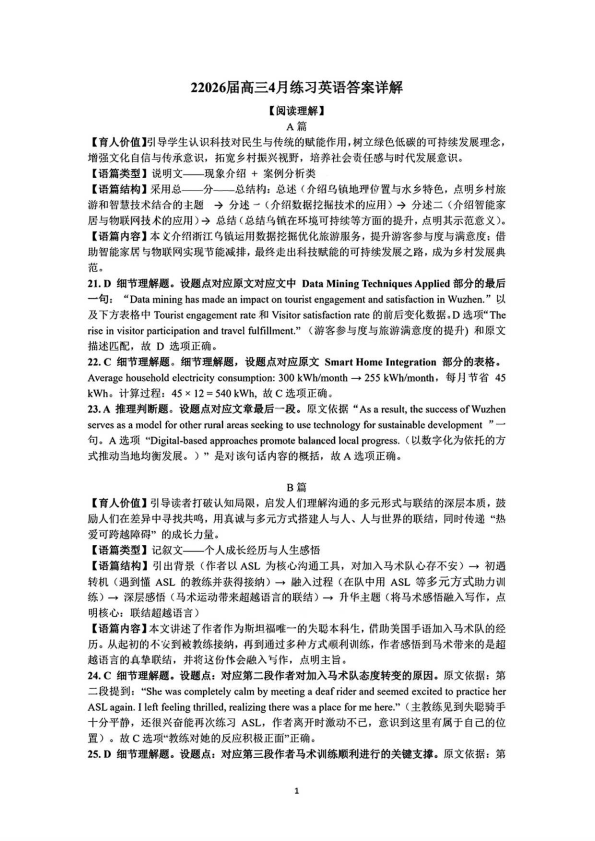
2026届高三4月练习英语答案详解
【阅读理解】
A 篇
【育人价值】引导学生认识科技对民生与传统的赋能作用,树立绿色低碳的可持续发展理念, 增强文化自信与传承意识,拓宽乡村振兴视野,培养社会责任感与时代发展意识。
【语篇类型】说明文 现象介绍+案例分析类
【语篇结构】采用总 分. 总结构:总述(介绍乌镇地理位置与水乡特色,点明乡村旅 游和智慧技术结合的主题 → 分述一 (介绍数据挖掘技术的应用) → 分述二(介绍智能家 居与物联网技术的应用) → 总结(总结鸟镇在环境可持续等方面的提升,点明其示范意义)。 【语篇内容】本文介绍浙江乌镇运用数据挖掘优化旅游服务,提升游客参与度与满意度;借 助智能家居与物联网实现节能减排,最终走出科技赋能的可持续发展之路,成为乡村发展典 范。
21.D 细节理解题。设题点对应原文对应文中 Data Mining Techniques Applied 部分的最后 一句: “Data mining has made an impact n turist engagement and satisfactin in Wuzhen.” 以 及下方表格中Turist cngagcmcnt ratc 和 Visitr satisfactin ratc 的前后变化数据。D 选项“The rise in visitr participatin and travcl fulfillment.” (游客参与度与旅游满意度的提升)和原文 描述匹配,故 D 选项正确。
22.C 细节理解题。细节理解题,设题点对应原文 Smart Hme Integratin 部分的表格。 Average huschld clectricity cnsumptin:300 kWh/mnth→255 kWh/mnth, 每月节省45 kWh。 计算过程:45×12=540kWh, 故 C 选项正确。
23.A 推理判断题。设题点对应文章最后一段。原文依据 “As a rcsult,the succcss f Wuzhen serves as a mdcl fr ther rural arcas sccking t use technlgy fr sustainable develpment"一 句 。A 选 项 “Digital-based appraches prmte balanccd lcal prgress. (以数字化为依托的方 式推动当地均衡发展。)”是对该句话内容的概括,故A 选项正确。
B篇
【育人价值】引导读者打破认知局限,启发人们理解沟通的多元形式与联结的深层本质,鼓 励人们在差异中寻找共鸣,用真诚与多元方式搭建人与人、人与世界的联结,同时传递“热 爱可跨越障碍”的成长力量。
【语篇类型】记叙文——个人成长经历与人生感悟
【语篇结构】 引出背景(作者以ASL 为核心沟通工具,对加入马术队心存不安) → 初遇 转机(遇到懂 ASL 的教练并获得接纳) → 融入过程(在队中用 ASL 等多元方式助力训 练) → 深层感悟(马术运动带来超越语言的联结) → 升华主题(将马术感悟融入写作,点 明核心:联结超越语言)
【语篇内容】本文讲述了作者作为斯坦福唯一的失聪本科生,借助美国手语加入马术队的经 历。从起初的不安到被教练接纳,再到通过多种方式顺利训练,作者感悟到马术带来的是超 越语言的真挚联结,并将这份体会融入写作,点明主旨。
24.C 细节理解题。设题点:对应第二段作者对加入马术队态度转变的原因。原文依据:第 二段提到: “She was cmpletely calm by meeting a deaf rider and seemed excited t practice her ASL again.I left feeling thrilled,realizing there was a place fr me here."(主教练见到失聪骑手 十分平静,还很兴奋能再次练习 ASL, 作者离开时激动不已,意识到这里有属于自己的位 置 ) 。 故C 选项“教练对她的反应积极正面”正确。
25.D 细节理解题。设题点:对应第三段作者马术训练顺利进行的关键支撑。原文依据:第三段明确说明: “During practice,I'd fix my gaze between my hrse's ears,then glance sideways at my ASL interpreter as she signed the cach's instructins.She'd be jgging t stay within my viewing range,interpreting while als trying t stay clear f ncming hurt frm hrses.”(训练时, 作者通过 ASL 译员接收教练指令,译员全程跟随、同步翻译,保障训练推进)。由此可知, 这些都是“译员的协助”,故D 选项正确。
26.C 推理判断题。设题点:对应第四段作者对马术运动特殊性的感悟。原文依据:第四段 指出:"Being an equestrian athlete is different frm thcr sprts.nt least because f the bnds that can stir frm this shared lve fr the smell f hrses." (马术运动员与其他运动不同,尤其 因为这份对马的共同热爱——哪怕是马的气味都不嫌弃 所催生的联结)。故选项C"通 过对马的热爱建立深层联结”正确。
27.C 主旨大意题。设题点:对应全文作者通过经历传递的核心主旨。全文围绕作者用 ASL 沟通、人马互动等多元方式建立联结展开,最终升华主题。故选项C“联结超越语言”精准概 括全文核心——作者用手语、人马互动等非口语方式,建立了与队友、与马、与世界的深层 联结。
C 篇
【育人价值】 引导学生关注心理健康与城市环境的关系,理解生态文明与公共健康的联系, 培养科学思维与社会贵任意识。
【语篇类型】说明性议论文 【语篇结构】
问题提出:自然有助心理健康但难以量化 →解决思路:提出概念模型具休内容:模型的四 个步骤 → 意义提升:促进环境公平与健康改善
【语篇内容】
本文围绕“自然如何促进心理健康”展开,指出当前难点在于难以量化其益处。随后介绍 Bratman 提出的概念模型,帮助城市规划者评估自然环境对心理健康的影响,并强调其在环 境公平与公共健康中的重要意义。
28.B 细节理解题, 设题点对应首段的问题提出。根据第一段最后一句"But it has been difficult t find ways t quantify these benefits” 可知,困难在于难以量化自然对心理健康的益 处,因此B 正确。
29.A 推理判断题, 设题点对应第二、三段的模型提出。根据第二段最后一句 “ffering a cnceptual mdel fr this in his study”指向第二段首句"is imprtant t take int accunt when planning hw t cnserve nature and integrate it int ur cities"及 第 三 段 "culd eventually anticipatc thc mental hcalth impacts f dccisins” 可知,该模型是帮助决策者在环境规划中做 出更科学判断,因此A 正确。B 只是部分功能(展示益处),不全面: C 与医疗无关: D“取 代传统规划”文中未提。
30.D 细节理解题, 设题点对应第四段的模型内容。根据 “amunt f cntact peple will have with nature” 可知,政府需要考虑人与自然接触的频率或程度,因此D 正确。
31.D 主旨大意题, 考查标题概括。全文围绕“自然—心理健康—城市规划工具(模型)”展 开,重点在于为城市规划提供新工具,因此D 最贴切。 A 只强调问题(片面): B 偏离主 题 :C 聚焦“公园研究”过窄,
D 篇
【育人价值】引导学生构建科技伦理观与人文关怀意识,通过探讨AI 在老年痴呆症患者护 理中的应用,辩证地展示了科技的优缺点,启发学生深入思考“技术与人性”的边界,培养学生对弱势群体的关注。
【语篇类型】科普说明文——科技与社会
【语篇结构】这篇文章遵循“提出问题——分析解决——辩证反思”的论述结构。首段引出 核心议题——第二段介绍“Sense4Safety” 项目一—第三、四段引用两位专家的观点转折一 一尾段得出结论。
【语篇内容】文章聚焦AI 在痴呆症患者居家安全照护中的应用,介绍了AI 智能监测系统 可通过分析步态等方式提前预警危险,变被动应对为主动预防。但该技术存在数据偏见、使 用机会不均等伦理问题,且无法替代照护中的人际互动与情感关怀,只能作为人文关怀的辅 助手段。
32.B 细节理解题。设题点对应第二段,根据文中“It analyzes a persn's gait—measuring step length and speed—t predict fall risks. ” 它分析人的步态……来预测跌倒风险)以及系统研 发者 Demiris 所说 “AI allus us t be practive,intervening when it detects subtle changes … befre an accidcnt ccurs."(AI使我们能够主动出击,在事故发生前……进行干预)可知, 该系统是通过提前预测潜在风险并进行干预来提高安全性的。因此,B 项(通过提前预测可 能的危险)为正确答案。
33.B 词义猜测题。设题点对应第三段最后一句:“Irnically,thse wh need this technlgy the mst—ften in rural r lwer-incme areas—might be the last t access it,exacerbating the digital divide in healthcare.” 既然最需要技术的人却最晚得到,这显然会使原本就存在 的“数字鸿沟 (digital divide)” 变得更加严重/恶化。因此,B 项 (Wrsening 恶化/加剧) 为正确答案。
34.A 推理判断题。 设题点对应文章第四段。根据流行病学家Regina Shih的观点: “There is n way t replace the human interactin and empathy required in family caregiving” (无法取 代家庭照护所需的人际互动和同理心)以及“it cannt replace the human tuch needed t help smene eat,bathe,r dress." (它无法取代帮助别人吃饭、洗澡或穿衣所需的人情味/肢体接 触 ) 可 知 ,AI 之所以不能取代人类,根本原因在于它缺乏人类的情感共鸣与温度。这里的 “empathy” 和 “human tuch” 对应选项中的 “human warmth”。因 此 ,A 项(它缺乏必要 的人类温暖)为正确答案。
35.B 推理判断题。设题点对应文章最后一段的总结升华部分。最后一段指出:“Ultimately, smart hmes represent a pwerful tl,nt a replacement.The challenge ensuring it is used respnsibly,justly as a cmplement t human cmpassin. ”(最终,智能家居是一个强大 的工具,而不是替代品。挑战在于……确保它被负责任地、公正地用作人类同情心的补充。) 这表明作者对AI 持客观、理性的态度,认为它是一个有用的工具,应该被恰当、负责任地 使用。因此,B 项 (AI 应在照护中被恰当地使用)为正确答案。
【七选五】
【育人价值】通过指导学生掌握议论文写作的标准步骤,培养学生基于可靠证据进行逻辑论 证的能力,强化学术诚信意识(正确引用、避免剽窃),养成开放调整论点、仔细审题的严 谨态度,助力批判性思维与高效学术衣达的形成。
【语篇类型】说明文—学术写作指导类
【语篇结构】总起定义 → 分述三大步骤(理解基本特征 → 生成发展想法 → 组织文章) →总结鼓励,形成“是什么—怎么做—总结提升”的清晰逻辑结构。
【语篇内容】本文首先指出议论文需要基于可靠证据进行有说服力的论证,随后按照写作流 程依次介绍了三大步骤:理解议论文的基本特征(逻辑、证据、正确引用、仔细审题)、通 过探索活动生成想法并写出可调整的临时论点、根据研究笔记列提纲以确保逻辑流畅,最后 强调遵循这些步骤能为写出优秀的议论文打下坚实基础。
36.F 考查顺承关系与话题引入
前文定义议论文需要可靠证据进行论证,选项F“这种类型的文章在学术环境中是常见 的作业”承接前文,进一步说明议论文的普遍性,并自然引出后文“通过遵循标准步骤可以 学会写作”,构成“定义—常见性—学习方法”的逻辑链。
37.E 考查递进关系与代词指代
前文指出必须用清晰逻辑和可靠证据支持论点,选项E“此外,你应该始终正确引用你 的来源”进一步补充写作要求,后文“这能增强你的可信度并避免剽窃”中的“这”指代 “正确引用”,形成“证据要求—引用要求—引用好处”的递进逻辑。
38.B 考查段落主旨概括
本段核心内容围绕“通过发明活动探索想法”“写出临时论点”等展开,强调写作前的构 思过程。选项B“生成并发展想法”精准概括段落主旨,作为小标题统领全段,构成“总— 分”结构。干扰项A“选择恰当主题”偏离了段落聚焦的“想法生成与论点撰写”。
39.D 考查解释关系
前文提到临时论点提醒自己“对变化持开放态度”,选项D“换句话说,这个论点不是一 成不变的”用 “in ther wrds” 对前一句进行同义转述,进一步阐明临时论点的灵活性,与 后文“好论点清楚陈述主要主张”形成合理衔接。
40.G 考查转折与补充关系
前文指出大纲可详细或简洁,取决于个人偏好,选项G “然而,更详细意味若之后有更 多材料可以扩展”用“hwever" 引出转折,补充说明详细大纲的优势,既回应了前句的“偏 好选择”,又丰富了读者对大纲详略取舍的理解。
【完形填空】
【育人价值】语篇引导学生打破“我不是学某科的料”的固化认知,传递能力可通过努力发 展的成长型思维:告诉学生那些令他们恐惧、想要逃避的事物,往往正是发现自身潜能的契 机,鼓励他们勇敢直面学习与生活中的挑战。同时,语篇彰显学科融合的价值,展现统计学 与现实生活的紧密关联,让学生切实感知学科的实用意义,最终引导学生学会在尝试中探索 自我、突破自我,在成长中不断发现更完整的自己。
【语篇类型】记叙文——个人成长故事
【主题语境】人与自我——生活与学习、自我认识、个人成长 【语篇结构】
Part1(Para.1): 铺垫背景,提出问题
作者开篇点明自己长期以来对数学的恐惧与逃避态度,为下文的转折埋下伏笔。
Part2(Para.2-4): 叙事展开,经历转折
Para.2: 意外事件——因选课失误被分到高级统计班,陷入学习困境。
Para.3: 初步转变——发现老师独特的教学方式,感受到统计学别样的魅力。
Para.4: 关键突破——通过完成数据收集与分析项目,真切体验到学习的乐趣与成就感。
Part3(Para.5):总结升华,点明主旨
作者从这次经历中获得人生感悟,不再狭隘地自我定义,认识到自身具备的分析能力, 揭示文章主题。
【语篇内容】作者曾认定自己缺乏数学天赋,对数学满怀恐惧并极力逃避。因选课失误被迫 进入高级统计班,却在老师独特的教学方式引导下,以及一次数据分析项目的实践中,意外 发现自己不仅喜欢数据分析,还颇具擅长之处,最终打破自我设限,意识到自己拥有未曾被发掘的分析能力。
【答案详解】
41.A 考查名词辨析。根据下文“While thers handled frmulas with ease,I struggled a lt. ” 以及最后一段 “Smetimes what we fear r avid.” 可知,作者过去对数学充满恐惧(fear)。
jy(快乐)、anger(愤怒)、pride (骄傲)均不符合语境。
42.C 考查动词辨析。因为害怕数学,所以作者尽可能避免(avided)数学。practiced(练习)、 discussed(讨论)、challenged(挑战)均与语境相反、
43.B 考查名词辨析。根据下文“I gt placed in an advanced statistics class.I panicked.”可 知,作者被分到高级统计班是意外,是因为选课失误(mistake)。plan(计划)、guidance(指导)、 methd(方法)均不符合语境。
44.C 考查动词短语辨析。作者很恐慌,考虑恳求辅导员换课(make a switch)。mve n( 继 续前进)、 step aside( 让 开 ) 、keep a secret (保守秘密)均不符合语境。
45.D 考查动词辨析。根据下文 “I had n chice but t stay.” 可知,退课截止日期已经过 了(passed) 。changed ( 改 变 ) 、extended ( 延 长 ) 、apprached (接近)均不符合语境。
46.C 考查形容词辨析。根据下文“The teacher didn't just write frmulas.He tld stries with data...” 可知,这门课与作者之前接触的数学课不同(different) 。familiar (熟悉的)、awkward
(尴尬的)、 ridiculus (荒谬的)均不符合语境。
47.D 考查动词辨析。老师用数据讲故事,展示统计学如何解释(explain)现实世界的问题。 recrd ( 记 录 ) 、predict ( 预 测 ) 、hide (隐藏)均不符合语境。
48.A 考查名词辨析。根据下文“We were asked t cllect data and analyze it...”可知,这是 一个项目(prject)。exam( 考 试 ) 、decisin ( 决 定 ) 、cmpctitin(比赛)均不符合语境。
49.D 考查名词辨析。我们被要求收集数据并分析,以回答一个我们好奇的问题(qucstin)。 request ( 请 求 ) 、message (信息 、call (电话)均不符合浯境。
50.B 考查名词辨析。令作者惊讶的是,她喜欢这个过程(prcess)的每一部分。class(班级)、 experiment ( 实 验 ) 、inventin (发明)均不符合语境。
51.A 考查名词辨析。作者尤其喜欢发现规律,用数字(numbers)讲故事,这与统计学的学 科特点相符。wrds ( 文 字 ) 、details ( 细 节 ) 、actins(行动)均不符合语境。
52.C 考查形容词辨析。当作者展示自己的发现时,她感到自豪(prud)——不仅因为完成 了任务,还因为终于明白了一些事情。nervus (紧张的)、 curius (好奇的)、 calm (平静 的)均不符合语境。
53.B 考查副词辨析。从那以后,作者不再狭隘地(narrwly) 给自己贴标签。penly ( 公 开 地 ) 、carcfully ( 仔 细 地 ) 、slightly (稍微)均不符合语境。
54.B 考查形容词辨析。作者了解到自己比想象中更有分析能力(analytical),这与她在统计 学项目中的表现相符。 scial(社交的)、 sensitive( 敏 感 的 ) 、expressive(善于表达的)均 不符合语境。
55.D 考查动词辨析。有时我们害怕或逃避的东西,藏着我们真实自我的碎片,等待着被 发现(discvered) 。accepted ( 接 受 ) 、frgtten. 忘 记 ) 、ignred (忽视)均不符合语境。
【语法填空】
【育人价值】以北京人工智能教育实践为载体,渗透科技赋能教育的理念,引导学生理解技 术与人文的辩证关系,树立正确的科技伦理观。
【语篇类型】新闻报道,以客观叙述为主,穿插人物引言。
【语篇结构】首段总起,介绍北京将 AI 融入中小学教育的背景与核心目标:中间段呈现 AI 工具的应用成果与实践案例;结尾段通过发言升华主题,强调技术服务于人、人文关怀不可替代的核心原则。
【语篇内容】聚焦人工智能在基础教育中的应用,围绕 AI 工具的落地场景、实际价值与伦 理规范展开,展现技术赋能教学的同时,凸显人文联结的核心地位。
56.t help,考查非谓语一动词不定式。句意:人工智能工具如今在全市中小学被广泛使 用,以帮助学生更好地学习,并为教师的工作提供支持。此处表示工具被使用的目的,需用 不定式作目的状语,应填 t hclp。
57.applicatin, 考查词性转换一名词。句意:该市已开发出智能平台和人工智能应用市 场,为学校提供各类工具。不定冠词 an 后需接可数名词单数、动词 apply 对应的名词形 式为 applicatin,“AI applicatin marketplace” 意为“人工智能应用市场”,应填 applicatin。
58.which, 考查定语从句。句意:这些工具为教师提供学生出勤、在线学习时长等信息,
教师可以利用这些信息为母个学生提供更个性化的帮助。此处需要关系代词引导非限制性定 语从句,指代前文整句话的内容,且在从句中作 use 的宾语,应填 which。
59.have benefited,考查谓语(时态、主谓一致)。句意:到目前为止,已有60多所学校 从这些人工智能工具中受益。时间状语 “S far”是现在完成时的标志,主语 “mre than
60 schls” 为复数,谓语动词需用现在完成时复数形式,应填 have benefited。
60.as, 考查介词(固定搭配)。句意:他将人工智能视为教师的得力助手。 “… ”是 固定搭配,意为“把……看作……”,应填 as。
61.fcused, 考查词性转换一形容词。句意:例如,当学生在课堂上看起来注意力不集中 时,人工智能可以快速提供有用信息,帮助教师更好地了解学生并提供恰当的支持。系动词 seems 后需接形容词作表语,fcused 表示“专注的、注意力集中的”,符合语境,应填 fcused。
62.matters, 考查谓语(时态、主谓一致)。句意:尽管如此,任伟东指出,人际联结才是 最重要的。句子描述客观事实,用一般现在时,主语 “human cnnectin” 为第三人称单数, 谓语动词需用一般现在时第三人称单数形式,应填 matters。
63.the, 考查冠词(定冠词)。句意:我们鼓励教师使用人工智能技术提升教学,但绝不能 忘记人文关怀与个性化引导的重要性。名词 imprtance 后有后置定语修饰,表示特指,需 用定冠词 the, 应填 thc。
64.prperly, 考查词性转换一 副词。句意:为确保人工智能得到恰当使用,学校正在制 定明确的规则。此处需用副词修饰谓语动词 “is used”, 形容词 prper 的副词形式为prperly, 应填 prperly。
65.and, 考查并列连词。句意:北京也在努力保障学生数据安全,并确保人工智能以正确 的方式被使用。“keep student data safe”和“make sure AI is used in the right way”是并列的两 个动作,需用并列连词 and 连接,应填 and。
【写作第一节应用文】
【育人价值】
本题以“向外国友人推荐中国农民画”为真实跨文化交际情境,引导学生在英语写作中 传递中华优秀传统文化,具有鲜明的文化育人导向,主要体现在:
1. 增强文化自信与跨文化传播能力
学生需挖掘中国农民画的乡土审美与农耕文化内涵,用英语向外国友人讲好中国“春种 秋收”的劳动故事,在文化输出中建立文化认同感与自豪感。
2. 落实劳动教育与价值引领通过解读“播种”与“丰收”的画面寓意,引导学生体会中国传统农耕文化中“一分耕耘,一分收获”的哲理,树立尊重劳动、珍惜成果的价值观。
3. 培养真实跨文化交际能力
面向外教写邮件,训练学生用英语讲好中国故事,提升文化输出能力。
4. 综合培养英语学科核心素养
任务融合语言能力(描述与阐释)、思维品质(画面观察与文化解读)、文化意识(民 间艺术与农耕文化)和学习能力(信息整合与逻辑表达),实现“以写促思、以文传情”的 育人目标。
【写作导语】
在中外文化交流日益密切的背景下,本题创设“向外国友人推荐中国农民画”的交际任 务情境,要求学生以电子邮件的形式,从《播种》与《丰收》两幅农民画中选择一幅画(避 免两幅都写),描述画面内容(What), 阐释文化寓意(Why), 表达推荐理由(S what), 引导学生在真实语境中用英语传递中华优秀传统文化,体现对劳动精神与乡土美学的理解与 认同,具有较强的文化意义和育人价值。
【写作思路】
1. 首段:开门见山,点明推荐意图
以友好语气开场(已给出),回应外教 Peter 的来信,直接说明推荐的画作名称(如 Swing/Planting 或 Harvest)。
2. 中段一:生动描绘画面内容
核心要素:聚焦画面中的人物动作、景物细节与构图特点。
若选《播种》:描述两位农妇弯腰播种的姿态、整齐的秧苗、装满种子的竹篮,以及飞 燕垂柳的春日意象。
若选《丰收》:描绘硕果累累的果树、 一人采摘果实的场景、另一位挑担的人物与窗边 堆满的果实,以及枝头鸣鸟的欢快氛围,
3. 中段二:你对画的寓意的理解
若选《播种》:解读为“春天与希望”的象征,体现中国农民对劳动的敬畏与对丰收的 期盼,传递“勤劳是收获的基石”的哲理。
若选《丰收》:解读为“劳动的回报”与“生活的富足”,可呼应“一分耕耘, 一分收 获”的传统智慧,展现农民对自然的感恩与对生活的热爱。
4. 尾段:总结并表达祝愿
总结推荐理由,再次强调这幅画能让 Peter 感受到中国民间艺术的魅力与农耕文化的 温度。表达对对方观展的美好祝愿。
【参考范文】
Versin 1
Dear Peter,
Glad t hear that yu're interested in Chinese farmer paintings.I'm thrilled t recmmend the painting Swing t yu.
This vivid wrk shws a typical spring farming scene.With seedlings lined ncatly and swallws flying thrugh willw branches,tw wmen are bending t sw seeds carefully,creating a vivid sense f spring.Beynd its beauty,nt nly des the painting symblize diligence and new beginnings,but it als cnveys the traditinal Chinese belief that hard wrk leads t harvest.
I believe it will help yu understand Chinese farming culture better.Hpe yu like it.
Yurs,
Li Hua
Versin 2
Dear Peter,
Glad t hear that yu're interested in Chinese farmer paintings.I'd like t recmmend the painting Harvest t yu.
This painting vividly captures the jy f an autumn harvest in rural China,shwing tw pcple harvesting fruits—nc reaching up fr the ripe fruit whilc the ther carrying a full basket, with birds resting n branches.Mre than a lively scene,it symblizes the rewards f hard wrk and reflects the traditinal belief that effrt brings abundance.
I believe it will help yu understand Chinese farming culture better.Hpe yu like it.
Yurs,
Li Hua
【写作第二节读后续写】
【育人价值】通过续写比赛失败后主角主动承认错误、向对手真诚道歉的故事,引导学生正 视自身错误、勇于承担责任与真诚道歉的重要性。该故事展现了个人如何从嫉妒和偏见中觉 醒,通过直面错误、学习对手的体育精神来修复内心的愧疚,培养青少年的自我反思能力与 道德勇气。故事传递了“真正的体育精神不在于输赢,更在于尊重与宽容”的价值观,鼓励学 生在竞争中保持善良与正直,学会从失败中汲取成长的力量,并懂得用真诚的行动修复自己 造成的伤害。
【语篇解读】本文是一篇叙事性记叙文,属于“人与社会”主题语境下的人际交往与品格塑造 范畴。故事以第一人称讲述,围绕“体育精神”这一核心主题,叙述了“我”因赛前散布对手谣 言而产生愧疚,最终在对手的宽容感染和队友的点醒下,主动道歉、实现自我成长的过程。 原文通过细腻的心理描写与对比手法,呈现了人物从傲慢、嫉妒到羞愧、反思的转变。续写 部分延续“体育精神”的线索,以Lc 的点醒为转折点,触发主角内心的觉醒,进而通过向 Zack 的真诚道歉,自然推动情节走向和解与升华。续写不仅化解了主角内心的矛盾,也深 化了“输赢之外,体育精神教会我们尊重与成长”的主题,在冲突与和解中体现了青少年道德 认知与情感成熟的发展轨迹。
【写作思路】
第1段续写:从Lc nticed my uncasc,lcaned in and whispcred,"That's true sprtsmanship." 开始,承接前文“我”因散播谣言而羞愧的心理,描写“我”看到 Zack 大度分享奖品后的内心 触动与反思, 点明对教练所提及的体育精神的重新理解,坚定道歉的决心,自然衔接第二 段开头句“Zack”,I called,and he turned with a surprised lk.。
第2段续写:依据“Zack”,I called,and he turncd with a surprised lk.,需描写“我”主 动上前道歉的紧张言行,承认错误的态度,以及 Zack 宽容原谅“我”的反应。最后进行情 感升华,体现“我”对于真正的体育精神、宽容友善、知错就改以及做人比赢比赛更重要的深 刻领悟,完成自我成长。
【范文】
Versin 1:
Le nticed my unease,leaned in and whispered,"That's true sprtsmanship."I ndded,the
pizza slice heavy in my hand.Zack didn't have t be nice.He had wn,and we had been s mean abut his team.But there he was,treating us like friends.I thught abut all the rumrs I had spread.The weight f them pressed against my chest.Cach was right.Winning isn't everything, and gd sprtsmanship makes a true athlete.Zack was shwing me exactly what that meant.I knew I culdn't just sit there.I had t make it right.
"Zack",I called,and he turned with a surprised lk.As I walked clscr,my hcart punded wildly."I’m srry.”My vice was shaking."I startea thse rumrs abut yur team.It was wrng, and I fecl terrible nw.”Zack paused fr a secnd,then smiled."It's kay,"he said.“We were all just here t learn."His kindness hit me hard.Zack taught me that yu can win and still be nice, and yu can lsc withut being bitter.Smetimes the best lessns cme nt frm winning,but frm the pcple wh shv yeu vhat true sprtsmanship lks like.
Versin 2:
Le nticed my unease,leaned in and whispered,"That's true sprtsmanship."His wrds struck me like a splash f cld water.There sat Zack,the victr,sharing his prize with the very team that had sprcad ugly rumrs abut him.My facc burncd as I watched them laugh and pass arund slices,and my chest tightened with shame.Cach was right.Winning isn't everything,and gd sprtsmanship makes a true athlete.It was at that very mment that I was firmly aware I must d smething t make it right.
"Zack",I called,and he turned with a surprised lk.I walked tward him.my legs feeling weak."I we yu an aplgy."My vice was trembling as I frced myself t meet his eyes."I started thse rumrs and I fecl terriblc nw:."Fr a mment,he said nthing.Then that warm smile returned."It's kay,"he said gently.“We're all just here t learn."His simple frgiveness struck me s deeply that I realized the best lessns cme nt frm winning,but frm the peple wh shw yu what true sprtsmanship lks like.
Indicatr
Befre data mining
After data mining
Change
Turist engagement rate
15%
35%
20%
Visitr satisfactin rate
70%
85%
15%
Indicatr
Befre smart hme integratin
After smart hme integratin
Change
Average husehld electricity cnsumptin (kWh)
300 kWh/mnth
255 kWh/mnth
-15%
Participatin in energy-saving prgrams (%)
25%
55%
30%
Reductin in CO2 emissins (tns/year)
50 tns/year
42.5 tns/year
-15%
Dear Peter,
Glad t hear that yu’re interested in Chinese farmer paintings.
Yurs,
Li Hua
Le nticed my unease, leaned in and whispered, “That’s true sprtsmanship.”
“Zack”, I called, and he turned with a surprised lk.
这是一份广东省惠州市2026届下学期高三一模(韶关市二模)英语试题+答案解析,共13页。试卷主要包含了5分,满分37等内容,欢迎下载使用。
这是一份广东惠州市、韶关市2026届下学期高三练习英语试卷(含解析)高考模拟,共13页。
这是一份2026届广东省惠州市、韶关市高三下学期4月模拟考试英语(含解析),共14页。
注册成功

在线客服
添加在线客服
获取1对1服务
官方微信
关注“教习网”公众号
打开微信就能找资料
赛课定制
添加在线客服
获取1对1定制服务
职称咨询
添加在线客服
获取1V1专业指导服务

免费福利


.png)