 免费领取教师福利


若您为此资料的原创作者,认为该资料内容侵犯了您的知识产权,请扫码添加我们的相关工作人员,我们尽可能的保护您的合法权益。


这是一份初中英语人教版(2024)七年级下册(2024)Unit 2 No Rules, No Order综合训练题,共10页。试卷主要包含了 _____________, _____________等内容,欢迎下载使用。
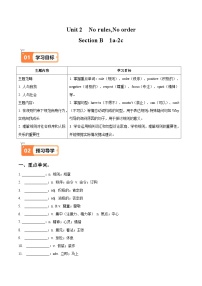
重点单词。
1. _____________:n. 规则;规章
2. _____________:铅笔盒
3. _____________:n. 储物柜
4. _____________:n. 零食
5. _____________:手机
6. _____________:v. 借给;借出
7. _____________:v. 回答;接(电话)
8. _____________:adj. 重读的;受压的
9. _____________:n. 宠物
10. _____________:adj. 准备好的
二、重点短语。
1. ___________________________________:找到某物
2. ___________________________________:借给某人某物
3. ___________________________________:吃零食
4. ___________________________________:喝水
5. ___________________________________:把某物带到……
6. ___________________________________:关掉(电器等)
7. ___________________________________:把某物放在……里面
8. ___________________________________:遵守规则
9. ___________________________________:按时
10. ___________________________________:上课迟到
11. ___________________________________:保持某物干净整洁
12. ___________________________________:举手
13.___________________________________:走路,不要跑
14. ___________________________________:玩得开心
15.___________________________________:注意
三、重点句型。
1. 我们不能在课堂上吃零食。
We ______ eat snacks ______ ______.
2. 我们禁止把手机带到课堂上。
We ______ ______ ur mbile phnes ______ class.
3. 我们不得不关掉手机并把它们放在储物柜里。
We ______ ______ turn them ff and ______ them in ur lckers.
4. 这是汤姆在这所学校的第一天。
It's Tm's ______ day ______ this schl.
5. 安妮借给汤姆一支笔。
Anne ______ a pen ______ Tm.
6. 为什么安妮不接受汤姆的糖果?
______ ______ Anne ______ a sweet frm Tm?
7. 汤姆和安妮在课堂上能用手机吗?
______ Tm and Anne ______ their phnes in class?
8. 他们必须把手机放在哪里?
______ ______ they ______ their phnes?
9. 我们可以喝水。
We ______ ______ water.
10. 不要在走廊里跑。
______ ______ in the hallways.
11. 我们应该按时到校。
We ______ arrive at schl ______ ______.
12. 我们必须尊重老师。
We ______ ______ ur teachers.
13. 你不能在图书馆里大声喧哗。
Yu ______ make ______ in the library.
14. 我们不得不每天穿校服。
We ______ ______ wear the schl unifrm every day.
15. 总是要保持教室干净整洁。
______ keep the classrm ______ and ______.
►:重难点1:情态动词can't、mustn't和have t的用法
【探索】
can't表示“不能”,通常用于表示能力上的限制或规定上的不允许;mustn't表示“禁止”,语气更为强烈,强调绝对不可以做某事;have t表示“不得不,必须”,强调由于客观情况或规定而必须做某事。
“We can't eat snacks in class.”(我们不能在课堂上吃零食,规定不允许)
“We mustn't bring ur mbile phnes t class.”(我们禁止把手机带到课堂上,语气强烈的禁止)
“We have t turn them ff and put/keep them in ur lckers.”(我们必须关掉手机并放在储物柜里,基于规定的客观要求)。
【基础练】
1:单项选择
1. Yu ______ play ftball n the rad. It's very dangerus.
A. can't B. mustn't C. have t
2. I'm really busy tday, s I ______ stay at hme t finish my wrk.
A. can't B. mustn't C. have t
3. He ______ speak French. He nly knws a little English.
A. can't B. mustn't C. have t
2:用can't、mustn't或have t填空
1. We ______ listen t music in the library. It's t nisy.
2. Yu ______ be late fr the meeting. It's very imprtant.
3. My mther is ill, s I ______ lk after her at hme.
3:句型转换
1. We mustn't smke in the hspital.(改为同义句)
We ______ smke in the hspital.
2. I have t clean my rm tday.(改为否定句)
I ______ ______ ______ clean my rm tday.
3. He can't drive a car because he is t yung.(对划线部分提问)
______ ______ he drive a car?
►:重难点2:询问和表达学校规则的方式
【探索】
询问学校规则常用Can 的句型,回答用Yes, we can.或N, we can't. 表达禁止做某事用We can't/mustn't + 动词原形;表达必须做某事用We have t + 动词原形。例如:“Can we eat fruit in class? N, we can't.”(询问能否在课堂上做某事及否定回答),“We have t wear the schl unifrm every day.”(表达必须做的事)。通过这些句型的运用,可以准确地交流学校规则相关信息。
【基础练】
1:单项选择
1. —______ we listen t music in the classrm?
—N, we ______. It may disturb thers.
A. Can; can't B. Must; mustn't C. D; dn't
2. We ______ bring ur mbile phnes t class. We must turn them ff and keep them in lckers.
A. can B. can't C. have t
3. Students ______ wear the schl unifrm n weekdays. It's a schl rule.
A. can B. must C. have t
2:根据提示完成句子
1. —______ we ______ (eat) snacks in class?(答案:Can;eat)
—N, we ______.(答案:can't)We ______ ______ (finish) ur hmewrk first.(答案:have t finish)
2. We ______ ______ (mustn't / can't) use ur phnes in the library. It's nt allwed.(答案:mustn't / can't)
3. A: ______ I ______ (brrw) this bk?(答案:Can;brrw)
B: Yes, yu ______.(答案:can)
3:汉译英
1. 我们能在图书馆里交谈吗?不,不能。
_______________________________________________
2. 我们必须每天按时到校。
_______________________________________________
3. 你们禁止在走廊里追逐打闹。
_______________________________________________
►:重难点3:语音学习 - 单词发音及重读音节
【探索】
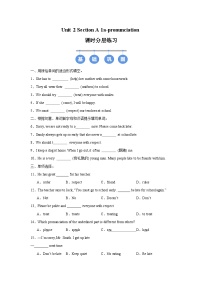
在英语中,不同的字母组合发音不同。例如,字母组合“e”“ea”“ee”“ear”在不同单词中有不同的发音,像“she”中“e”发/i:/,“bed”中“e”发/e/等。同时,在句子中,有些单词需要重读,重读的单词通常是表达关键意思的实词,如名词、动词、形容词等,像对话中的“rules”“eat”“phnes”等。正确掌握单词发音和句子重音,有助于提高听力和口语表达能力。
【基础练】
1:判断下列单词中划线部分发音是否相同,相同写“S”,不同写“D”
1. she - bed
2. please - ready
3. tree - sleep
4. ear - pear
2:根据发音规则,在每组中找出一个与其他发音不同的单词
1. A. he B. pen C. let
2. A. speak B. head C. read
3. A. deer B. bear C. near
基础过关
根据句意提示,填写出单词的适当形式。
1. It's nt allwed t eat ______ (snack) in the library.
2. I can't find my ______ (pencil bx). Can yu help me lk fr it?
3. Students shuld ______ (arrive) at schl n time.
4. We have t wear the schl ______ (unifrm) frm Mnday t Friday.
5. Dn't ______ (litter) everywhere. We shuld keep the envirnment clean.
6. We shuld be ______ (plite) t ur teachers and classmates.
7. She ______ (lend) her bk t me yesterday.
8. Yu mustn't ______ (use) yur mbile phne in class.
9. The wind is ______ (blw) hard. We'd better stay indrs.
10. I have t ______ (answer) the phne. It might be imprtant.
11. There are sme beautiful ______ (pster) n the wall.
12. If yu want t ask a questin, please ______ (put up) yur hand.
13. We shuld ______ (respect) each ther's pinins.
14. Can yu give me an ______ (example) t explain this rule?
15. He ______ (have t) get up early t catch the first bus every day.
能力提升
完型填空。
A
Tm is a new student at schl. On his first day, he quickly realizes there are many 1___________ t fllw.
In the mrning, he 2___________ t arrive at schl n time. If he's late, he might miss imprtant lessns. In the hallways, he 3___________ run. It's dangerus, and he culd fall and get hurt.
When it cmes t the classrm, there are mre rules. He 4___________ eat snacks in class. Als, he mustn't use his mbile phne. Instead, he shuld fcus n his 5___________ .
Tm understands that these rules are in place t help him and his classmates. They make the schl a safe and gd place t learn.
1. A. bks B. rules C. friends D. teachers
2. A. can B. may C. have t D. has t
3. A. can't B. must C. shuld D. have t
4. A. can B. can't C. must D. mustn't
5. A. games B. studies C. sprts D. clthes
B
At Mary's schl, the rules help keep things in rder.
In the library, everyne 1___________ keep quiet. There are signs everywhere saying “Keep quiet”. Students 2___________ talk ludly r make nise. If they need t talk t a friend, they have t d it quietly.
When having lunch in the 3___________ , students shuld wait in line. They can't 4___________ the queue. And they shuld als keep the place clean. They 5___________ litter n the flr.
These rules make the schl a pleasant place fr everyne.
1. A. can B. must C. may D. need
2. A. can't B. must C. shuld D. have t
3. A. classrm B. library C. dining hall D. playgrund
4. A. jump B. stand C. wait D. see
5. A. can B. can't C. must D. mustn't
冲刺突破
三、阅读理解
A
At ur schl, there are many imprtant rules. We must arrive at schl n time. Being late is nt allwed because it disturbs the class. In the hallways, we can't run. Running can cause accidents, and we might get hurt.
In the classrm, we have t keep quiet. We can't talk ludly r play arund. Using mbile phnes in class is strictly prhibited. We shuld fcus n what the teacher is saying and learn attentively.
We als have rules abut schl unifrms. We must wear them every day. It makes us lk neat and shws that we are part f the schl.
These rules are nt meant t be strict but t help us have a gd learning envirnment. By fllwing them, we can study better and get alng well with each ther.
1. Why can't students be late fr schl?
A. Because they will miss the schl bus.
B. Because it disturbs the class.
C. Because they will be punished.
D. Because the teacher wn't let them in.
2. What can't students d in the hallways?
A. Walk slwly.
B. Run.
C. Talk with friends.
D. Read bks.
3. Why d students have t wear schl unifrms?
A. Because they lk cl in unifrms.
B. Because the schl wants them t.
C. Because it makes them lk neat and shws they belng t the schl.
D. Because their parents ask them t.
4. What's the purpse f these schl rules?
A. T make students' lives difficult.
B. T help students have a gd learning envirnment.
C. T make students afraid f teachers.
D. T stp students frm having fun.
5. Which f the fllwing is TRUE accrding t the passage?
A. Students can use mbile phnes in class.
B. Students can talk ludly in the classrm.
C. Running in the hallways is allwed.
D. Students need t arrive at schl n time.
B
Tm is a new student in a middle schl. He desn't knw much abut the schl rules at first.
One day, during the break, he wanted t eat a piece f candy in the hallway. But then he saw a sign saying “N eating in the hallway”. S he stpped.
In the library, Tm was abut t talk t his friend. Hwever, he nticed a sign that read “Keep quiet”. He quickly cvered his muth and started lking fr bks quietly.
In P.E. class, the teacher said students had t wear sprts shes. Tm didn't wear them that day. The teacher asked him t change shes befre starting the class.
After a few days, Tm learned all the rules. He fund that fllwing the rules made his schl life much easier. He culd fcus n his studies and have a gd time with his classmates.
1. What did Tm want t d in the hallway?
A. Eat a piece f candy.
B. Play with his friends.
C. Read a bk.
D. Run quickly.
2. What did Tm d when he saw the sign in the library?
A. He talked t his friend ludly.
B. He left the library.
C. He stpped talking and lked fr bks quietly.
D. He asked the librarian fr help.
3. Why did the P.E. teacher ask Tm t change shes?
A. Because Tm's shes were t dirty.
B. Because students had t wear sprts shes in P.E. class.
C. Because Tm's shes were t small.
D. Because the teacher didn't like Tm's shes.
4. Hw did Tm feel after learning the rules?
A. His schl life became easier.
B. He was unhappy.
C. He fund it hard t fllw the rules.
D. He didn't like the rules.
5. What can we learn frm Tm's experience?
A. Rules are nt imprtant.
B. We shuld break the rules.
C. We shuld learn and fllw the rules.
D. Rules make ur life difficult.主题内容
学习目标
主题范畴:
1. 人与自我
2. 人与社会
主题内容:
1. 规范自身行为,适应学校生活
2. 遵守学校规则,维护校园秩序
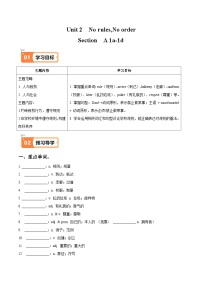
1. 掌握重点单词:rule(规则)、pencil bx(铅笔盒)、lcker(储物柜)、snack(零食)、mbile phne(手机)等。
2. 掌握句型:We can't/mustn't + 动词原形,表示禁止做某事;We have t + 动词原形,表示必须做某事;Can 的一般疑问句及回答。
3. 学会运用相关词汇和句型谈论学校规则,能理解并遵守学校的各项规定。
这是一份人教版(2024)七年级下册(2024)Unit 4 Eat Well综合训练题,共8页。
这是一份人教版(2024)七年级下册(2024)Unit 5 Here and Now同步练习题,共9页。试卷主要包含了 使用, 可爱的;机灵的, 真实的;正确的, 尺子;统治者, 向上;起来, 切;割;砍, 散步, 狗等内容,欢迎下载使用。
这是一份初中英语人教版(2024)七年级下册(2024)Unit 2 No Rules, No Order当堂检测题,共6页。试卷主要包含了单词默写,词组默写,根据要求完成句子,阅读理解,完形填空,任务型阅读等内容,欢迎下载使用。
 新教材
新教材
注册成功

在线客服
添加在线客服
获取1对1服务
官方微信
关注“教习网”公众号
打开微信就能找资料
赛课定制
添加在线客服
获取1对1定制服务
职称咨询
添加在线客服
获取1V1专业指导服务

免费福利

.png)
.png)
.png)
