免费领取教师福利
若您为此资料的原创作者,认为该资料内容侵犯了您的知识产权,请扫码添加我们的相关工作人员,我们尽可能的保护您的合法权益。

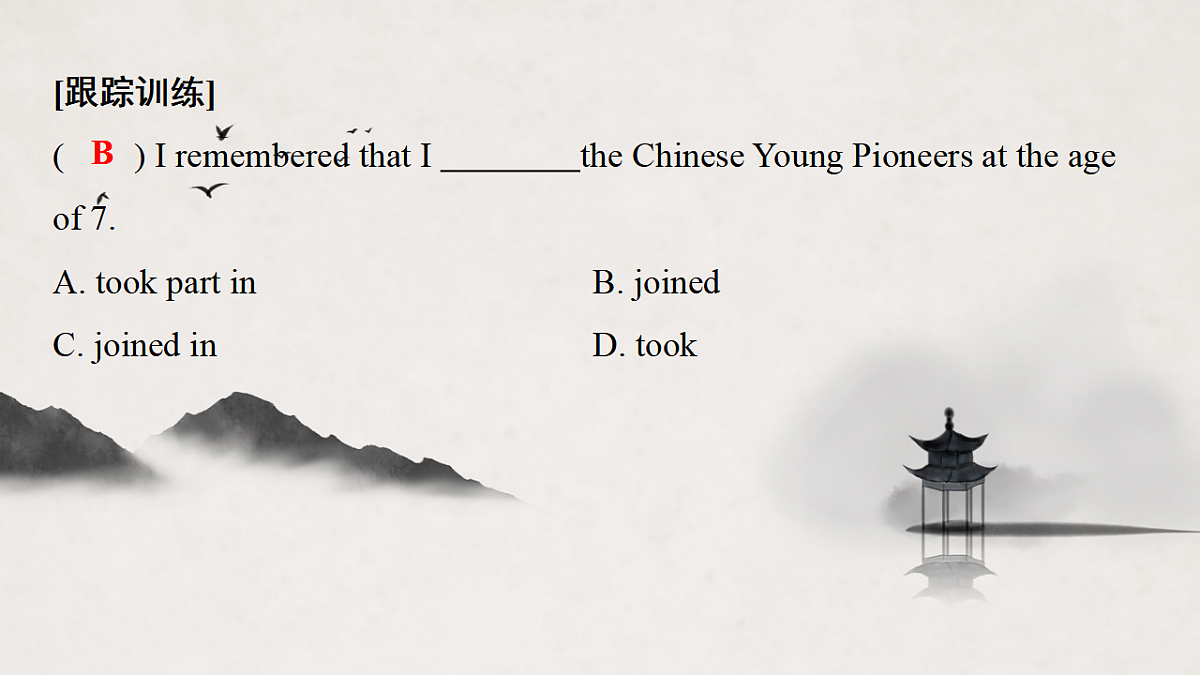
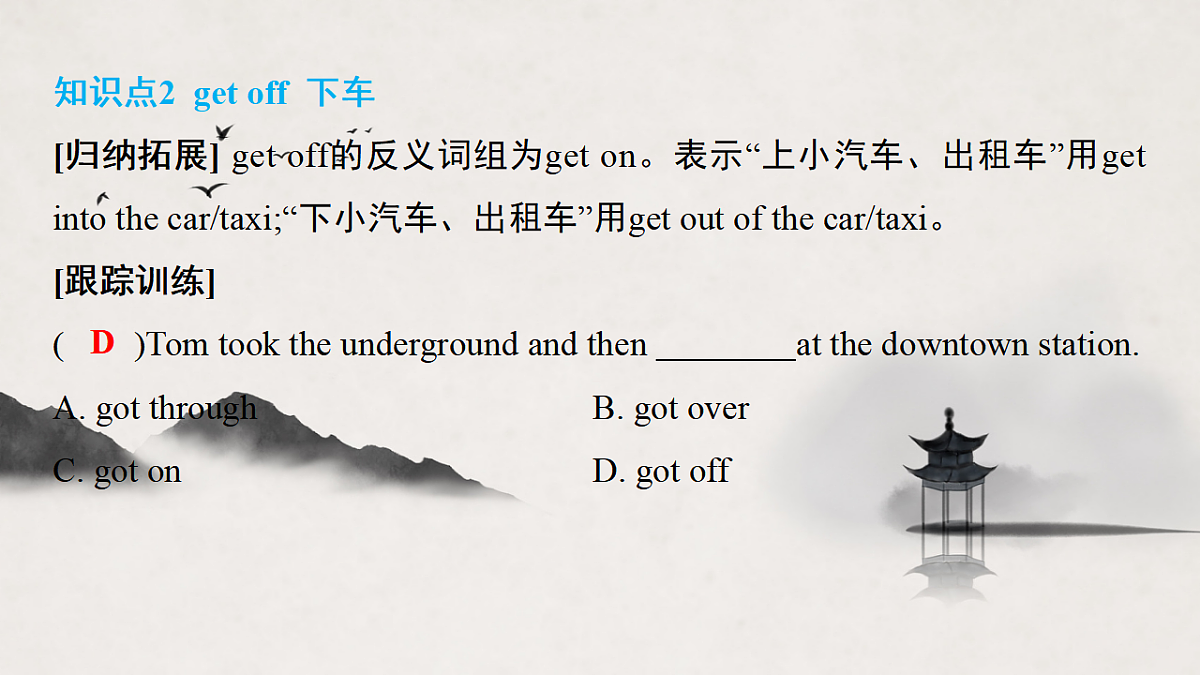
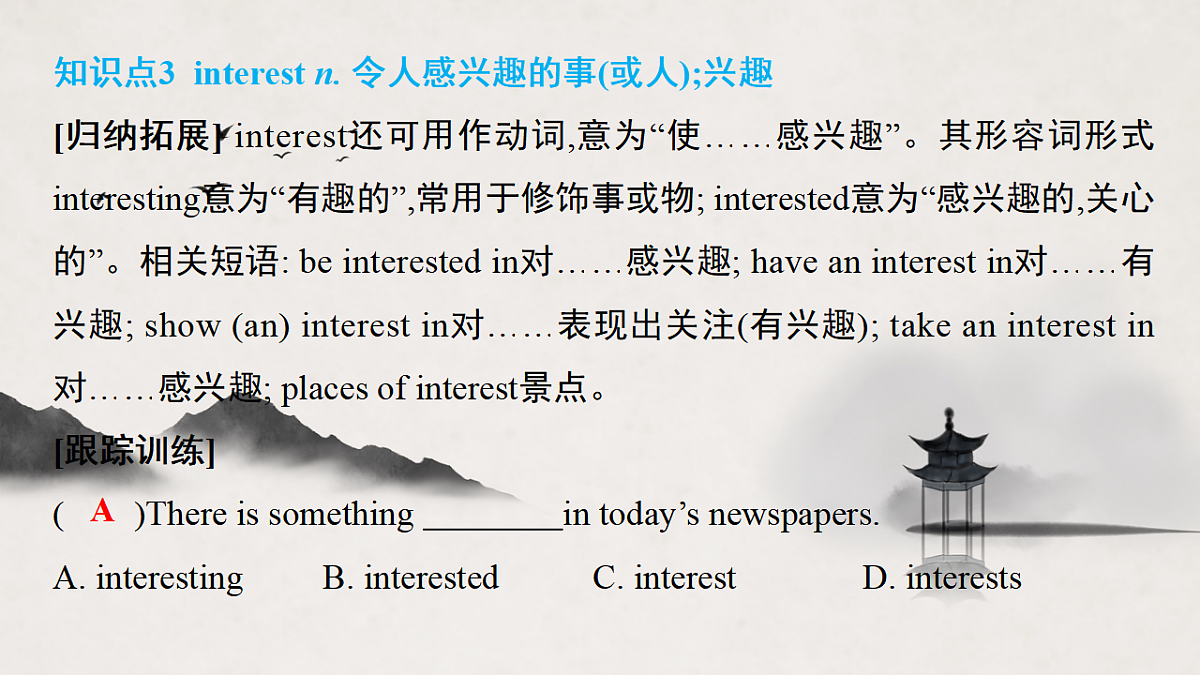
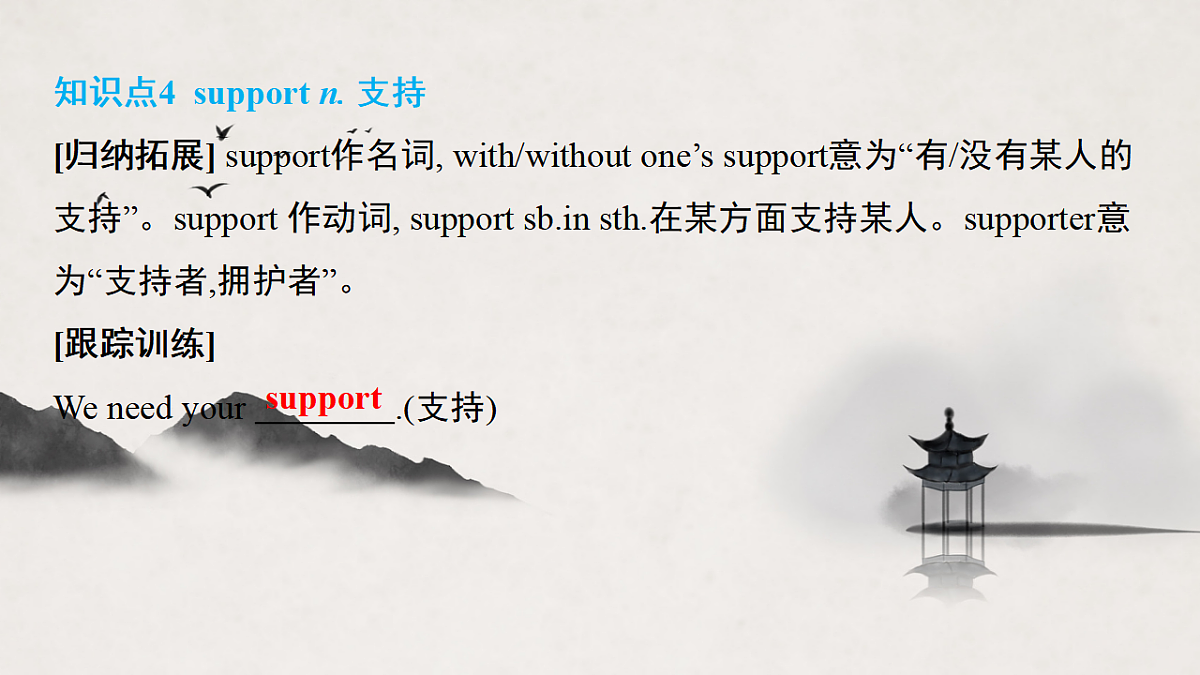
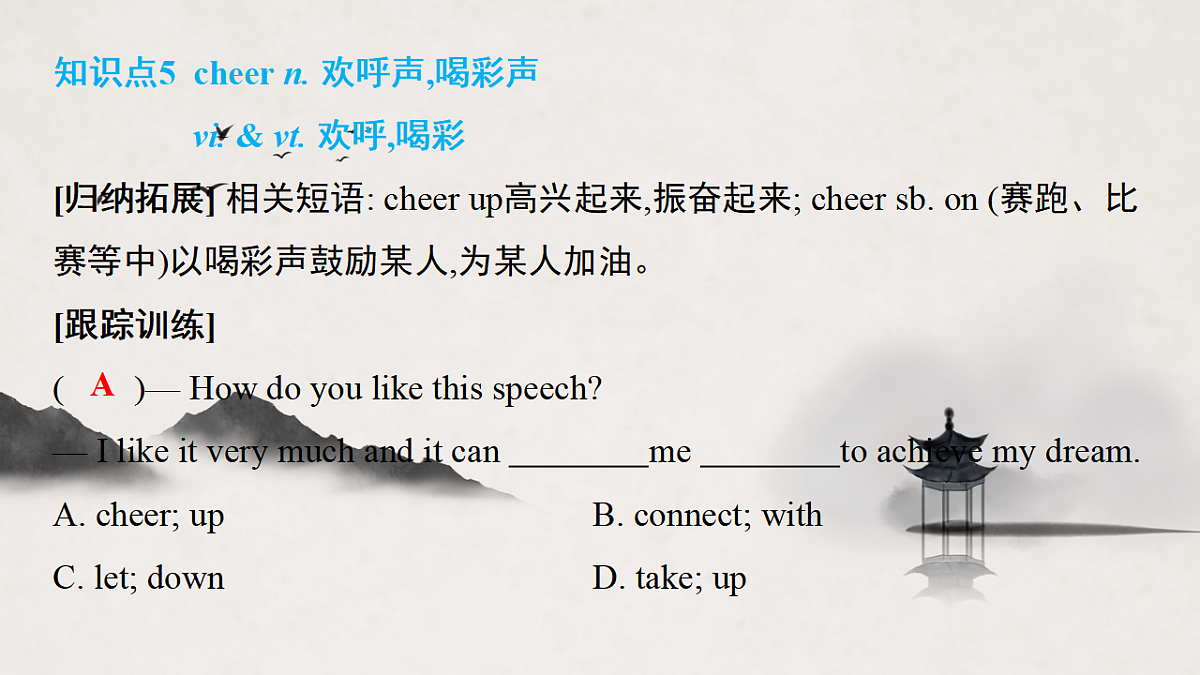
中考一轮复习八年级上册Unit 31. 学会制订一个出游计划。 2. 掌握“as ...as”的用法。3. 掌握反身代词myself、yourself、himself、herself、itself、ourselves、 yourselves和themselves的用法。重点词汇知识点1 join vt. & vi. 加入,参加[归纳拓展] 辨析: join、 join in与take part in1. join多指参加某组织并成为其中的一名成员。2. take part in指参加讨论、会议、劳动、庆祝等,参加者往往持积极的态度并起一定的作用,有时可与join in互换。3. join in通常指参加某种活动,尤其指和其他人一起参加某项活动。[跟踪训练]( ) I remembered that I the Chinese Young Pioneers at the age of 7. A. took part inB. joinedC. joined inD. tookB知识点2 get off 下车[归纳拓展] get off的反义词组为get on。表示“上小汽车、出租车”用get into the car/taxi;“下小汽车、出租车”用get out of the car/taxi。[跟踪训练]( )Tom took the underground and then at the downtown station.A. got throughB. got overC. got onD. got offD知识点3 interest n. 令人感兴趣的事(或人);兴趣[归纳拓展] interest还可用作动词,意为“使……感兴趣”。其形容词形式interesting意为“有趣的”,常用于修饰事或物; interested意为“感兴趣的,关心的”。相关短语: be interested in对……感兴趣; have an interest in对……有兴趣; show (an) interest in对……表现出关注(有兴趣); take an interest in对……感兴趣; places of interest景点。[跟踪训练]( )There is something in today’s newspapers. A. interestingB. interestedC. interestD. interestsA知识点4 support n. 支持[归纳拓展] support作名词, with/without one’s support意为“有/没有某人的支持”。support 作动词, support sb.in sth.在某方面支持某人。supporter意为“支持者,拥护者”。[跟踪训练]We need your .(支持) support知识点5 cheer n. 欢呼声,喝彩声 vi. & vt. 欢呼,喝彩 [归纳拓展] 相关短语: cheer up高兴起来,振奋起来; cheer sb. on (赛跑、比赛等中)以喝彩声鼓励某人,为某人加油。[跟踪训练]( )— How do you like this speech?— I like it very much and it can me to achieve my dream.A. cheer; upB. connect; withC. let; downD. take; upA知识点6 useful adj. 有用的,有益的[归纳拓展] 1. useful前不定冠词只能用a,而不能用an,因其以辅音音素开头。2. useful后的介词对于人用to,对于目的用for。 useful是形容词,是由名词use变来的。名词变为形容词有以下三种常见形式:(1) 加后缀-ful,如: care→careful、 wonder→wonderful等。(2) 加后缀-y,如: wind→windy、 rain→rainy等。(3) 其他形式,如: friend→friendly、 interest→interesting等。3. useful的反义词是useless,意为“无用的”。在英语中,有些名词在词尾加后缀-less,构成表示否定意义的形容词。如: hope→hopeless、 help→helpless。另外,有些形容词还可以加前缀un-、in-、im-,构成表示否定意义的形容词。如: important→unimportant、 active→inactive、 polite→impolite。[跟踪训练]A little Japanese can be really .(use) useful知识点7 taste n. 味道;品味[归纳拓展] 1. taste作名词,意为“味道;品味”。如: The soup has very little taste. 这汤没什么味道。2. taste 还可用作及物动词,意为“尝……的味道”。如: Taste it and see if you think there is enough salt in it. 你尝尝看这够不够咸。3. taste 还可用作连系动词,意为“有……的味道”。如: The food tastes better than it looks. 这食物吃起来比看上去要好。[跟踪训练]( )— The oranges sweet. — Of course. They’re from Yongxing, Chenzhou.A. tasteB. eatC. drinkD. soundA重点句型知识点8 It’s 90 feet wide. 它有90英尺宽。[归纳拓展]1. foot在此作“英尺”讲,其复数形式为feet或foot。2. 长、宽、高表示法:数词+量词+ long/wide/tall。3. 用how long/wide/tall分别对长、宽和高提问。[跟踪训练]( )The room is . A. 3.3 metre-longB. 3.3 metres-longC. 3.3 metre longD. 3.3 metres longD知识点9 We finally arrived at the park. 我们最终到达了公园。[归纳拓展] 辨析: arrive in/at、 get to与reach1. arrive为不及物动词,后面跟介词in或at,到达大城市或国家等大地方,常用介词in,到达小地方常用介词at。2. get为不及物动词,后跟宾语时,需要用介词to连接;与地点副词连用时,无需用介词to。3. reach为及物动词,后面直接跟表示地点的名词或副词。[跟踪训练]( ) — Why do you look so excited, Lily?— One of my favourite actresses will arrive our city the morning of this Saturday. A. in; inB. at; onC. at; inD. in; onD语法专题知识点10 “as ...as”的用法[归纳拓展] 1. 在同级比较的否定句中,也可用“not so ...as”结构。2. 当“as ...as”中间有名词时,采用以下结构:“as +形容词+ a(n) +单数名词+ as” “as + many/much +名词+ as”。3. 有表示倍数的词或其他程度副词作修饰语时,放在as的前面。[跟踪训练]( )(2023·扬州模拟)If you don’t take the navigation system with you, you will be a blind man in the rainforest. A. as good asB. as well asC. as silly asD. as long asA知识点11 反身代词[归纳拓展]1. 单数: myself、 yourself、 himself、 herself、 itself复数: ourselves、 yourselves、 themselves2. by oneself = on one’s own独立地,独自; for oneself亲自,为自己; enjoy oneself = have a good time = have fun玩得开心; help oneself to随便取用,擅自拿走。3. 反身代词的常见用法:(1) 用作同位语(加强被修饰词的语气,紧跟在被修饰名词后或位于句末)。(2) 用作宾语(动词或介词的宾语),常见的可以跟反身代词的动词和动词短语有teach、 buy、 look after、 lose、 dress、 hurt等。(3) 用作表语。注意:反身代词和它所指代的对象在人称、性别、数上必须保持一致。[跟踪训练]( )1. (2023·无锡)Think about it and ask : Have you really done everything right? A. youB. yourselfC. meD. myself( )2. (2023·河北)— Where did you get the toy car?— From Betty. She made it . A. myselfB. himselfC. herselfD. yourselfBC一、 词汇。A. 根据句意和汉语提示写出单词,完成句子。1. The train from Hangzhou to Shanghai takes about 60 minutes.(旅行)2. Thirteen Chinese researchers the top of Mt. Qomolangma on May 23, 2023.(到达) 3. The idea of the article is to tell us the importance of saving water.(主要的) 4. No one is willing to help Tom, so he feels .(无助的) 5. I have two . Let’s go to see the film.(票) journeyreachedmainhelplessticketsB. 根据句意用所给单词的适当形式填空。1. It’s to cry when in trouble. We’d better find a way out as soon as possible.(use) 2. One of the from Jiangsu lost his life in the earthquake on 25th April.(climb) 3. (2023·镇江)In the folk story, the amazing white snake is saved by a young man.(lucky) 4. Some day Changde will become as as Shenzhen.(busy) 5. The boy always says to when he feels nervous.(he) uselessclimbersluckilybusyhimself二、 单项选择。( )1. Our home town is a beautiful city hundreds of lakes. A. atB. onC. withD. by( )2. (2023·齐齐哈尔改编)Teachers often say that teenagers should learn to look after . A. ourselvesB. yourselvesC. themselvesD. yourself( )3. — I hate rain. It never ends.— Dear, don’t think of it. Try to be and enjoy things. A. carefulB. cheerfulC. usefulD. faithfulCCB( )4. — I often go to the science museum on the weekend.— I guess we have different . I love novels. A. troublesB. interestsC. promisesD. standards( )5. Taizhou has a very long history and many beautiful . A. sightsB. situationsC. locationsD. positionsBA( )6. The price of new energy vehicles(新能源车) is not that of last year, so some more people are going to buy them. A. as expensive asB. so cheap asC. as low asD. so high as( )7. — is the bridge? — It’s 60 feet wide.A. How soonB. How wideC. How farD. How longDB( )8. — The boat race is too hard for me. I don’t think I can be the winner.— You should never say no before you try. A. Pardon me?B. Forget it!C. I’m sorry.D. Come on!D
注册成功

在线客服
添加在线客服
获取1对1服务
官方微信
关注“教习网”公众号
打开微信就能找资料
赛课定制
添加在线客服
获取1对1定制服务
职称咨询
添加在线客服
获取1V1专业指导服务

免费福利


.png)