免费领取教师福利



若您为此资料的原创作者,认为该资料内容侵犯了您的知识产权,请扫码添加我们的相关工作人员,我们尽可能的保护您的合法权益。

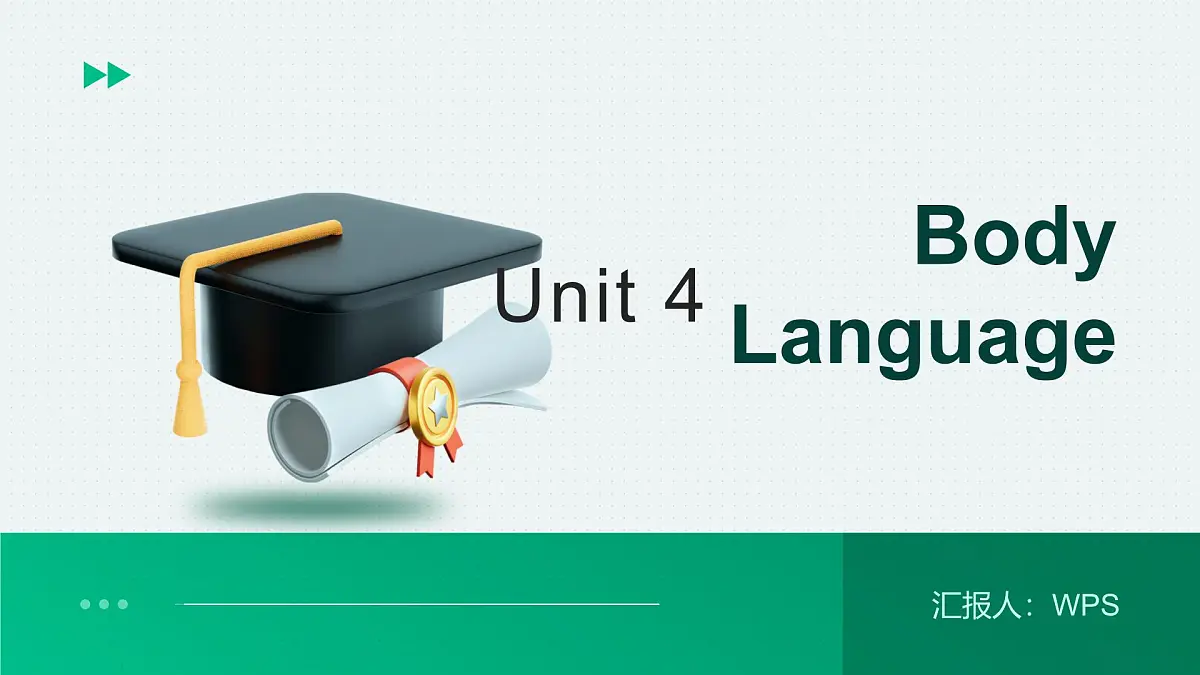
这是一份人教版 (2019)Unit 4 Body Language图文课件ppt,共27页。PPT课件主要包含了本单元学习目标,合适的,相同的,不同于,汉译英口头说出来,varies,witness,employing,identical,interpret等内容,欢迎下载使用。
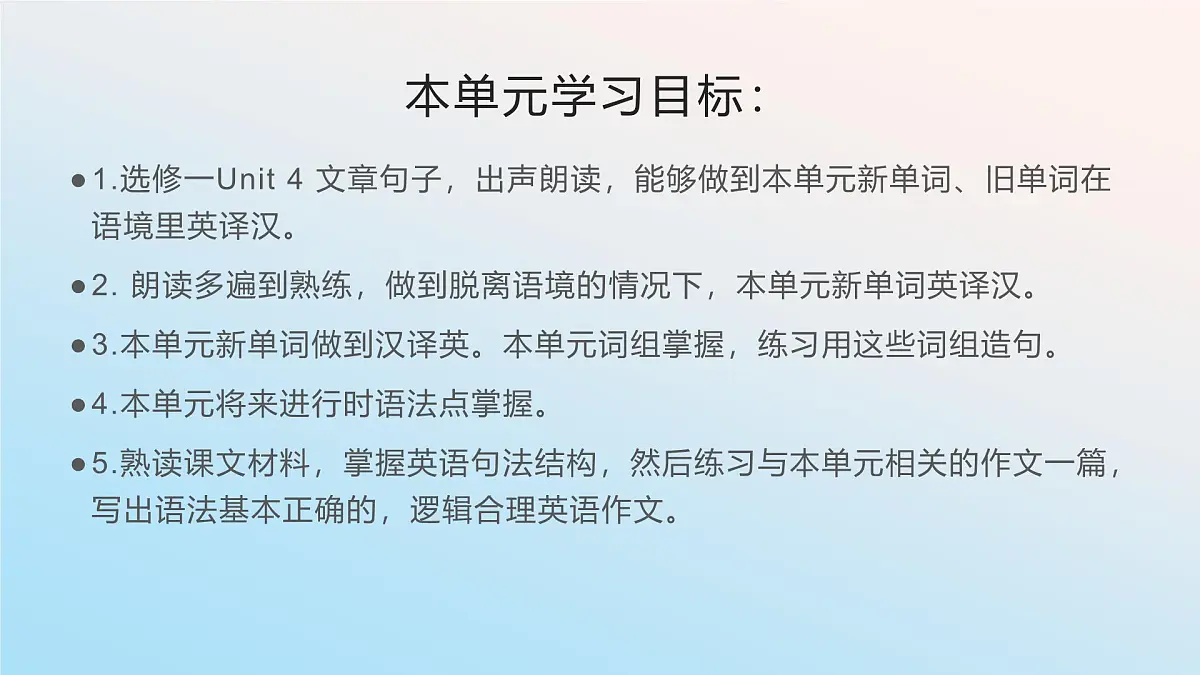
1.选修一Unit 4 文章句子,出声朗读,能够做到本单元新单词、旧单词在语境里英译汉。2. 朗读多遍到熟练,做到脱离语境的情况下,本单元新单词英译汉。3.本单元新单词做到汉译英。本单元词组掌握,练习用这些词组造句。4.本单元将来进行时语法点掌握。5.熟读课文材料,掌握英语句法结构,然后练习与本单元相关的作文一篇,写出语法基本正确的,逻辑合理英语作文。
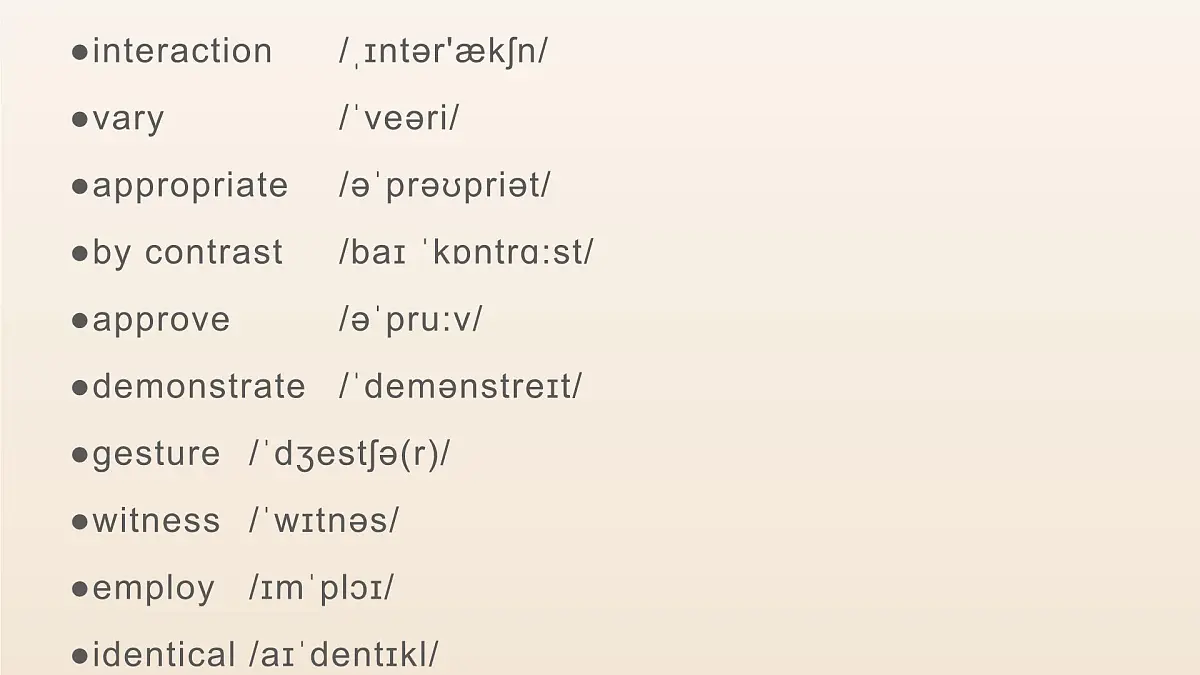
interactin/ˌɪntər'ækʃn/vary /ˈveəri/apprpriate/əˈprəʊpriət/by cntrast/baɪ ˈkɒntrɑ:st/apprve /əˈpru:v/demnstrate/ˈdemənstreɪt/gesture/ˈdʒestʃə(r)/witness/ˈwɪtnəs/emply/ɪmˈplɔɪ/identical/aɪˈdentɪkl/
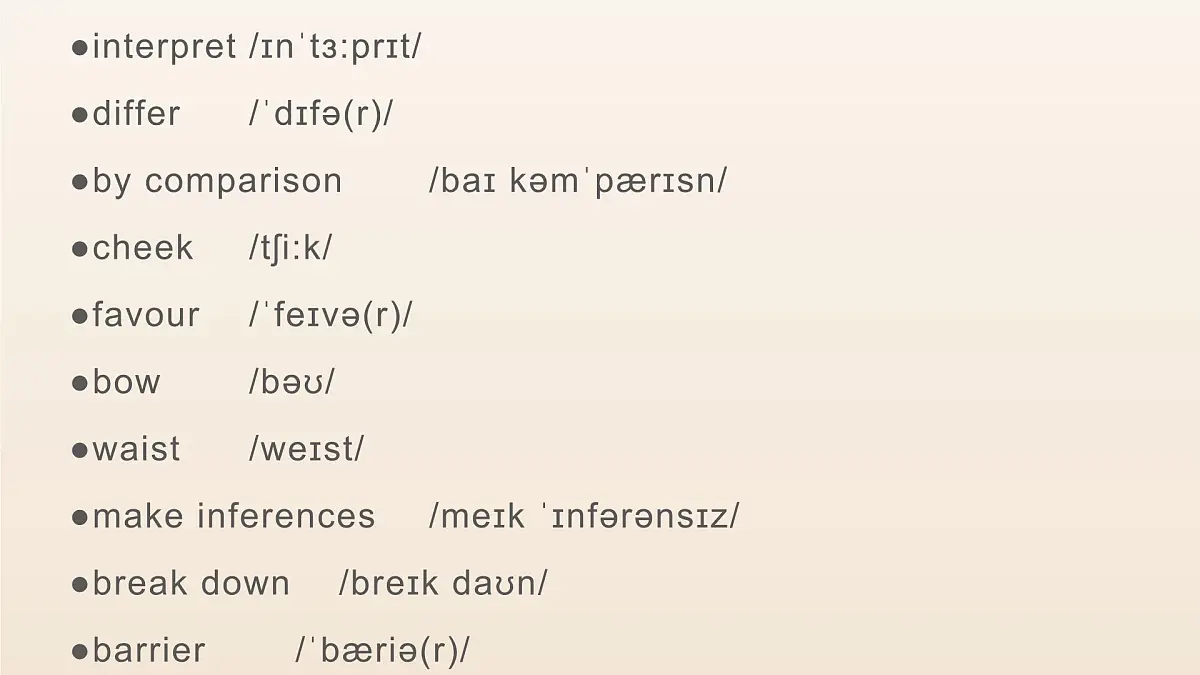
interpret/ɪnˈtɜ:prɪt/differ/ˈdɪfə(r)/by cmparisn/baɪ kəmˈpærɪsn/cheek/tʃi:k/favur/ˈfeɪvə(r)/bw /bəʊ/waist/weɪst/make inferences/meɪk ˈɪnfərənsɪz/break dwn/breɪk daʊn/barrier /ˈbæriə(r)/
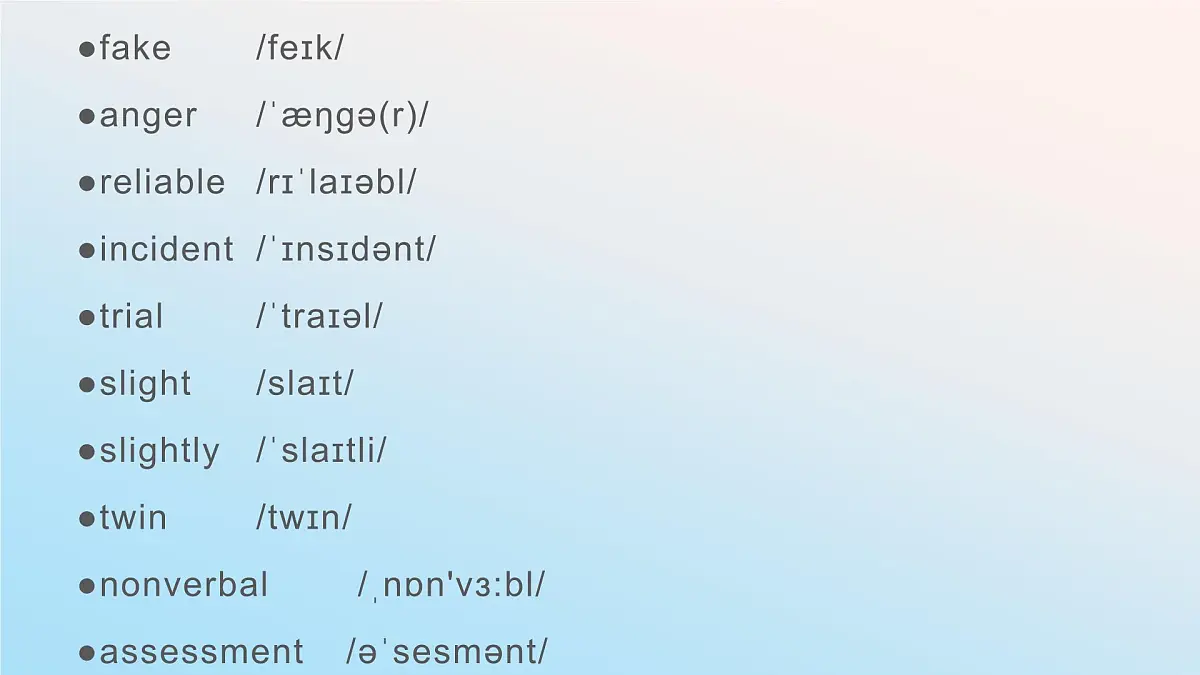
fake /feɪk/anger/ˈæŋgə(r)/reliable/rɪˈlaɪəbl/incident/ˈɪnsɪdənt/trial /ˈtraɪəl/slight/slaɪt/slightly/ˈslaɪtli/twin /twɪn/nnverbal /ˌnɒn'vɜ:bl/assessment/əˈsesmənt/
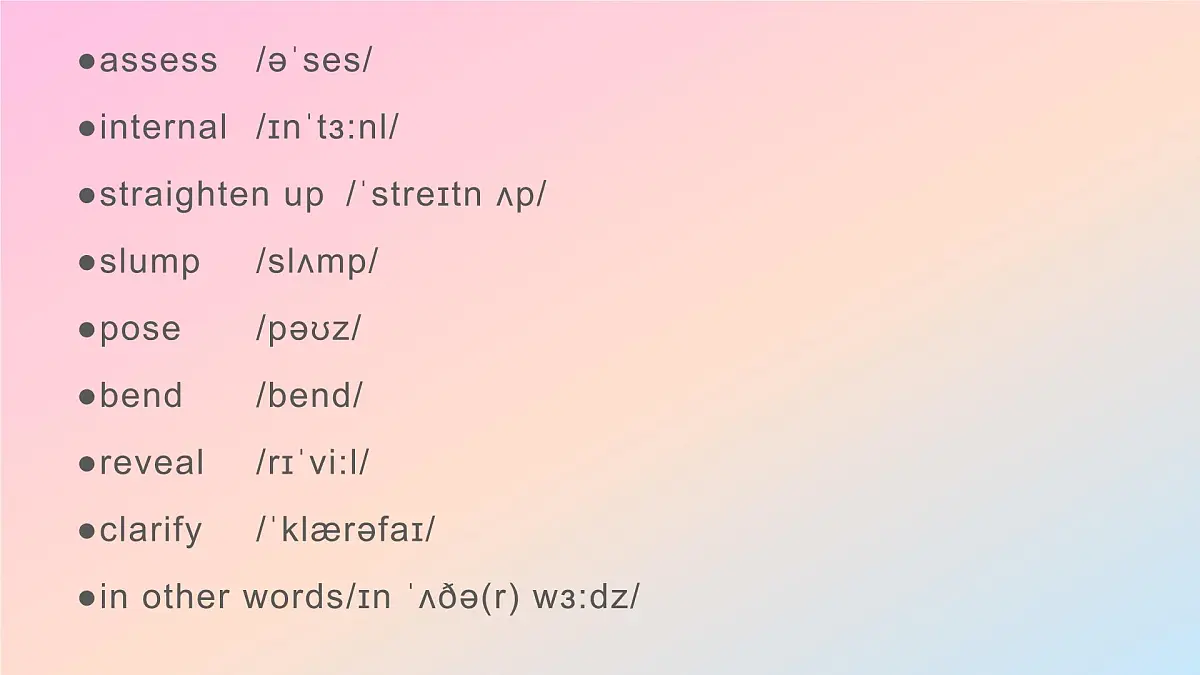
assess/əˈses/internal/ɪnˈtɜ:nl/straighten up/ˈstreɪtn ʌp/slump/slʌmp/pse/pəʊz/bend/bend/reveal/rɪˈvi:l/clarify/ˈklærəfaɪ/in ther wrds/ɪn ˈʌðə(r) wɜ:dz/
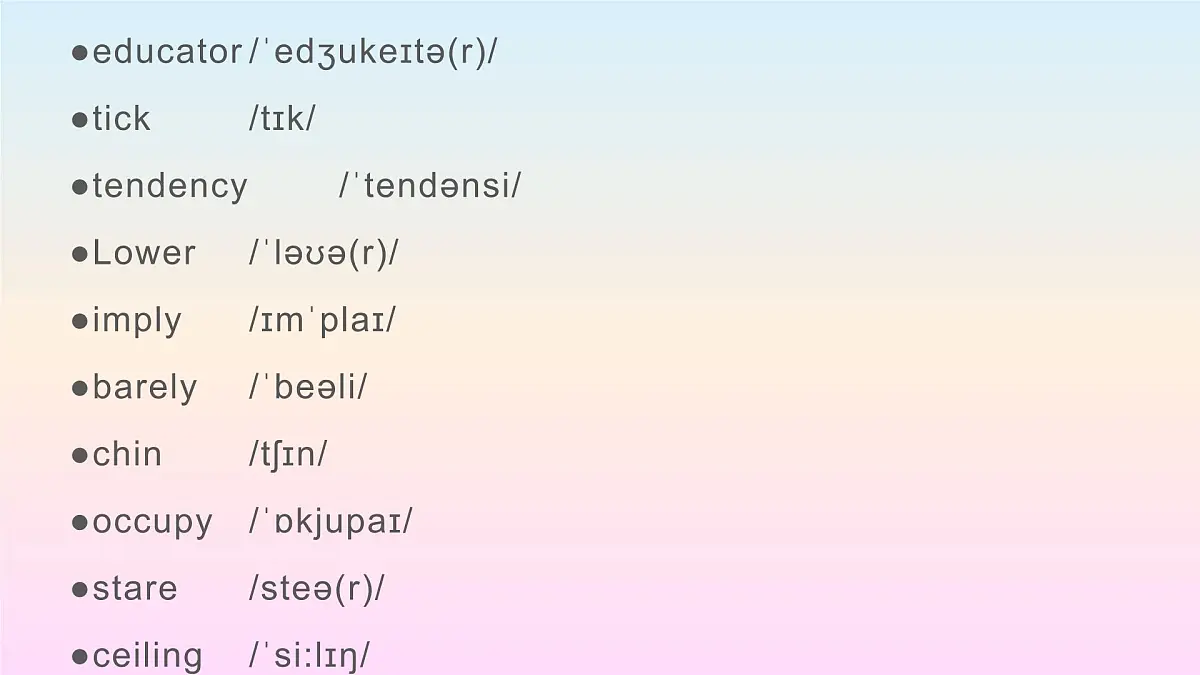
educatr/ˈedʒukeɪtə(r)/tick /tɪk/tendency/ˈtendənsi/Lwer/ˈləʊə(r)/imply/ɪmˈplaɪ/barely/ˈbeəli/chin/tʃɪn/ccupy/ˈɒkjupaɪ/stare/steə(r)/ceiling/ˈsi:lɪŋ/
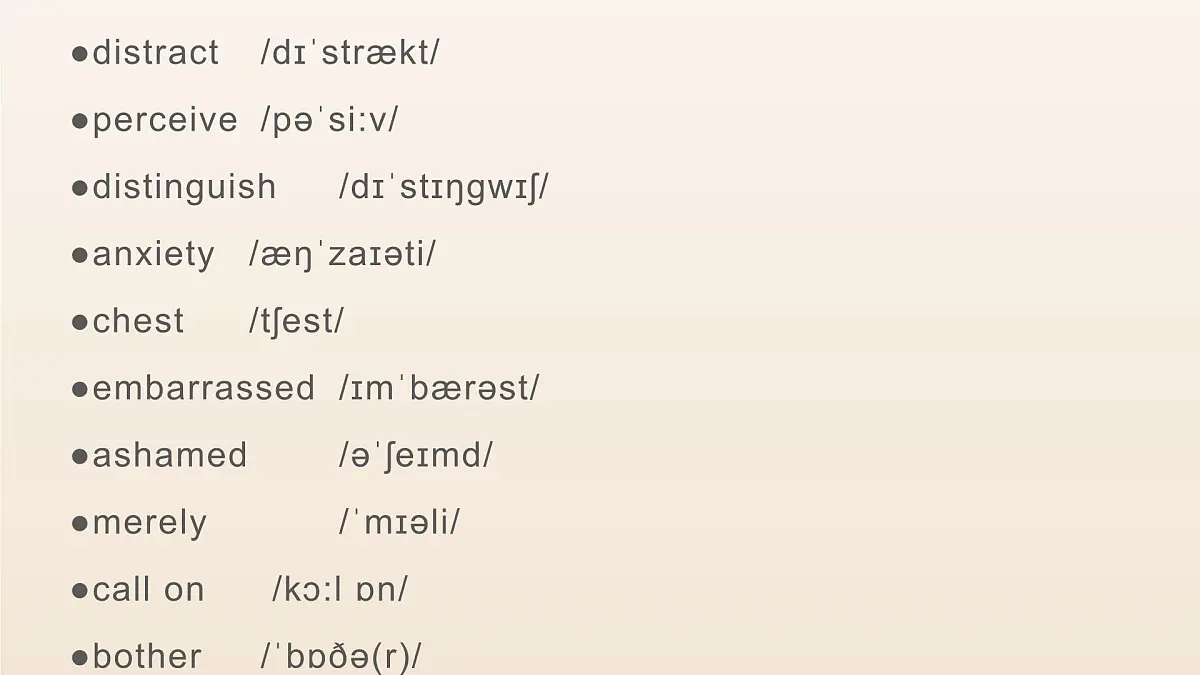
distract /dɪˈstrækt/perceive /pəˈsi:v/distinguish/dɪˈstɪŋgwɪʃ/anxiety/æŋˈzaɪəti/chest/tʃest/embarrassed/ɪmˈbærəst/ashamed /əˈʃeɪmd/merely /ˈmɪəli/call n /kɔ:l ɒn/bther /ˈbɒðə(r)/
weep/wi:p/at wrk/ət wɜ:k/cnflict/ˈkɒnflɪkt/inquire/ɪn'kwaɪə(r)/ultimately/ˈʌltɪmətli/adjust/əˈdʒʌst/intervene/ˌɪntəˈvi:n/react/riˈækt/cmpnent /kəmˈpəʊnənt/tne /təʊn/
Part 1 出声朗读文章,掌握新旧单词和句法结构。
我们在与他人的互动中也会使用肢体语言。就像口头语言一样,肢体语言在不同文化中也有所不同。关键在于如何恰当地运用肢体语言。例如,在一些国家,眼神交流是表达兴趣的一种方式。而在其他一些国家,作为对比,比如中东地区,眼神交流并不总是被接受。在日本,与长辈交谈时低头是一种表示尊重的方式。
出声朗读文章,掌握新旧单词和句法结构。
“OK”手势在不同的文化中有着不同的含义。在日本,看到别人使用这个手势的“OK”手势在不同的文化中有着不同的含义。在日本,看到别人使用这个手势的人可能会认为它意味着钱。在法国,遇到相同手势的人可能会将其解释为零。人可能会将其解释为零。
即使是“是”和“否”的手势,在世界各地也有所不同。在很多国家,摇头表示“不”,点头则表示“是”。相比之下,在其他国家,手势的意义则相反。在法国和俄罗斯,人们见面时可能会亲吻朋友的脸颊。而在其他地方,人们更倾向于鞠躬或点头致意。无论如何,微笑能够打破隔阂。
朗读并熟读此单元文章,测试一下是否掌握本单元新旧单词。
We als use bdy language in ur interactins( ) with ther peple. Just like spken language, bdy language varies( ) frm culture t culture. The crucial thing is using bdy language in a apprpriate( ) way. Fr example, making eye cntact in sme cuntries is a way t display interest. In ther cuntries, by cntrast( ), eye cntact is nt always apprved f ( ) in many Middle Eastern cuntries. In Japan, it may demnstrate ( ) respect t lk dwn when talking t an lder persn.
The gesture fr “OK” has different meanings in different cultures. In Japan, smene wh witnesses ( )anther persn emplying( ) the gesture might think it means mney. In France, a persn encuntering an identical( ) gesture may interpret it as meaning zer.
Even the gestures we use fr “yes” and “n” differ( ) arund the wrld. In many cuntries, shaking ne’s head means “n”, and ndding means “yes”. By cmparisn( ), in ther cuntries, the gestures have the ppsite meaning. In France and Russia, peple may kiss their friends n the cheek( ) when they meet. Elsewhere, peple favur bwing( ) frm the waist ( )r ndding the head. Anyway, a smile can break dwn( ) barriers( ).
We als use bdy language in ur ____________ (交流) with ther peple. Just like spken language, bdy language ____________ (变化)frm culture t culture. The crucial thing is using bdy language in a ____________ (合适的) way. Fr example, making eye cntact in sme cuntries is a way t display interest. In ther cuntries, ____________ (相比之下), eye cntact is nt always ____________ (批准) in many Middle Eastern cuntries. In Japan, it may ____________ (表现) respect t lk dwn when talking t an lder persn.
The gesture fr “OK” has different meanings in different cultures. In Japan, smene wh ____________ (见到) anther persn ____________ (运用)the gesture might think it means mney. In France, a persn encuntering an ____________ (相同的) gesture may ____________ (理解成) it as meaning zer.
Even the gestures we use fr “yes” and “n” ____________ (不同于) arund the wrld. In many cuntries, shaking ne’s head means “n”, and ndding means “yes”. ____________ (相比较), in ther cuntries, the gestures have the ppsite meaning. In France and Russia, peple may kiss their friends n the ____________ (脸颊) when they meet. Elsewhere, peple favur ____________ (鞠躬) frm the ____________ (腰部) r ndding the head. Anyway, a smile can ____________ (打破) ____________ (障碍).
By cmparisn
Part 2:出声朗读文章,掌握新旧单词和句法结构。
作为一名教育工作者,人们经常问我是什么让每个学生都这么想?我观察他们的肢体语言。人们倾向于向自己感兴趣的东西倾斜。所以如果一个学生低着头看手表,这意味着他很无聊。他们的眼睛几乎不动。
As an educatr( ), peple ften ask me what makes each student tick ( ). I lk at their bdy language.Peple have a tendency( ) t lean twards whatever they are interested in. S if a student has his head lwered( ) t lk at his watch, it implies( ) he is bred.Their eyes barely( ) mve. With their chins( ) n their hands, they ccupy( ) themselves by staring ut f the windw r up at the ceiling( ). They are certainly interested in smething, but wh knws what. The main thing is reminding distracted ( )students that they need t pay attentin in class.
While it is easy t perceive( ) when students are interested r distracted, it is much harder t distinguish( ) when students are trubled. Students wh are experiencing anxiety( ) may have their arms crssed in frnt f their chests( ), like they are guarding their bdies. They may als hide their faces in their hands like they are embarrassed( ) r ashamed( ). Sme students act this way merely ( )because they are afraid f being called n by the teacher.
Hwever,if a student des nt bther( ) t brush her hair and her eyes are red frm weeping( ), then I can infer that there are deeper issues at wrk( ). It culd be that she is having serius cnflicts ( )with ther students r at hme. Whatever it is, I knw I need t inquire( ) and assess what is ging n.Ultimately( ), my duty is helping every student t learn. Their bdy language lets me knw when t adjust class activities and when t intervene( ). Reacting( ) t bdy language is an imprtant cmpnent( ) f being a teacher.
As an ____________ (教育者), peple ften ask me what makes each student ____________ (发出嘀嗒声). I lk at their bdy language.Peple have a ____________ (趋势) t lean twards whatever they are interested in. S if a student has his head ____________ (低下来) t lk at his watch, it ____________ (暗示) he is bred.Their eyes ____________ (几乎不) mve.
With their ____________ (下巴) n their hands, they ____________ (占用) themselves by (盯着)ut f the windw r up at the ____________ (天花板). They are certainly interested in smething, but wh knws what. The main thing is reminding ____________ (分心的) students that they need t pay attentin in class.
While it is easy t ____________ (观察)when students are interested r distracted, it is much harder t ____________ (辨别)when students are trubled. Students wh are experiencing ____________ (焦虑) may have their arms crssed in frnt f their ____________ (胸膛), like they are guarding their bdies. They may als hide their faces in their hands like they are ____________ (尴尬的) r ____________ (可耻的). Sme students act this way ____________ (仅仅) because they are afraid f being called n by the teacher.
distinguish
embarrassed
Hwever,if a student des nt ____________ (费心) t brush her hair and her eyes are red frm ____________ (哭泣), then I can infer that there are deeper issues ____________ (在工作). It culd be that she is having serius ____________ (冲突)with ther students r at hme. Whatever it is, I knw I need t ____________ (咨询) and assess what is ging n. ____________ (最后), my duty is helping every student t learn. Their bdy language lets me knw when t adjust class activities and when t ____________ (干预). ____________ (回应) t bdy language is an imprtant ____________ (组成部分) f being a teacher.
Part 3:出声朗读文章,掌握新旧单词和句法结构。
During a heated incident( ), peple ften use nnverbal ( )cues like fake( ) smiles r anger( ) in their tne( ) t hide true feelings. A reliable( ) way t assess ( )emtins is thrugh bdy pse( )—fr example, a slump( )may reveal( ) sadness, while straightening up( ) shws cnfidence. In a trial( ), even a slight bend f the head can clarify( ) dubt. In ther wrds( ), internal( ) feelings ften mirrr physical reactins. Experts use this assessment( ) t understand unspken messages.
During a heated ____________ (事故), peple ften use ____________ (非言语的) cues like ____________ (假装的) smiles r ____________ (愤怒) in their ____________ (语气) t hide true feelings. A way t ____________ (评估)emtins is thrugh bdy ____________ (姿势)—fr example, a ____________ (低头走路) may ____________ (显示) sadness, while ____________ (直起来) shws cnfidence. In a ____________ (测试), even a ____________ (轻微的) ____________ (弯腰) f the head can ____________ (阐明) dubt. ____________ (换句话说), ____________ (内在的)feelings ften mirrr physical reactins. Experts use this ____________ (评估)t understand unspken messages.
straightening up
In ther wrds
01in ne’s interactin with sb. 与某人的交往互动中02vary frm culture t culture因文化而不同03a variety f/varieties f各种各样的04avid ding sth. 避免做某事05be apprpriate t\fr适用于06by cmparisn相比之下07witness sb. ding目击某人做…08demnstrate respect表达尊重09a witness t... 的目击者10emply the gesture 使用姿势
11be identical t 与…相同12emply sb. /sth. t d雇佣/利用…做13interpret…as把…解释为14differ frm… in…在...与…不同15favr ding 喜爱做16in favr f支持17internal thughts and feelings内在想法和感受18bw t sb. 向…鞠躬19get thrugh difficult situatins度过难关20break dwn 打破,消除,出故障
21by cntrast相比之下22by cmparisn相比较23apprve f赞成24end up ding sth. 结束做某事25n ne’s trip t去...的旅途26be successful in ding sth. 在某方面很成功27There is nthing better than ding 最美好的事情莫过于28cnsider the whle picture考虑整体情况29be cnfident abut ding sth. 对…很自信30at the same time同时
31ne-n-ne cnversatin一对一谈话32bend ne’s head低头33rely n sb. t d指望某人做34n trial在试验中35trial and errr反复试验36pse a threat t构成威胁 37have a tendency t d sth. 有做…的倾向38tend t d倾向于做…39be ccupied with/in忙于40stare at盯着
41be amused by 对…感兴趣42be anxius abut 对... 焦虑43be ashamed f对…羞愧44adjust/adpt t适应45react t对…有反应46straighten up挺直;整理47in ther wrds换就话说48at wrk有某种影响;在工作49call n (短暂地)访问;要求(某人讲话等);正式邀请50have cnflicts with sb. 与某人发生冲突
51make inferences推理52amuse sb. 使某人开心53face-t-face cmmunicatin面对面沟通54put her back int 竭尽全力…
ding 作宾语和表语
ding 作宾语时,通常是动名词(强调动作的名词属性),表示抽象、习惯性的动作,常跟在某些及物动词或介词后。1. 跟在及物动词后作宾语常见动词有: - 只能接动名词作宾语的动词:enjy, finish, avid, mind, practice, suggest, keep, miss, cnsider, admit 等。 - 既可接动名词也可接不定式(含义不同)的动词:remember, frget, regret, stp, try 等。
例句:- She enjys singing in the shwer.(她喜欢在淋浴时唱歌。) - He finished writing the reprt yesterday.(他昨天写完了报告。) - Yu shuld avid making the same mistake.(你应该避免犯同样的错。) - I regret tellinghim the secret.(我后悔告诉他这个秘密。)(regret ding 表示“后悔做过某事”) - Remember lcking the dr when yu leave.(离开时记得锁门。)(remember ding 表示“记得做过某事”)
2. 跟在介词后作宾语介词(如 in, n, at, f, abut, withut, by 等)后必须接动名词作宾语。例句: - He is gd at playing basketball.(他擅长打篮球。) - She insisted n ging there alne.(她坚持独自去那里。) - Withut knwing the truth, we can’t judge.(不知道真相,我们无法判断。) - They talked abut traveling t Japan.(他们讨论去日本旅行。)
二、ding 作表语ding 作表语时,可能是动名词(说明主语的内容或性质,相当于名词),也可能是**现在分词(描述主语的特征或状态,相当于形容词)。1. 动名词作表语(主语通常是名词或动名词,表语与主语可互换)表示主语的具体内容,强调“是什么动作”。例句: - Her hbby is painting.(她的爱好是画画。)(= Painting is her hbby.) - What I hate mst is waiting.(我最讨厌的是等待。)(= Waiting is what I hate mst.) - His jb is repairing cars.(他的工作是修汽车。)(= Repairing cars is his jb.)
2. 现在分词作表语(主语通常是物,表语描述主语的特征)表示主语具有“令人……的”特征,此时 ding 相当于形容词(如 interesting, exciting, bring 等)。例句: - The mvie is interesting.(这部电影很有趣。) - The bk seems bring.(这本书看起来很无聊。) - Her stry is tuching.(她的故事很感人。)
2.动名词与现在分词作表语的区别动名词作表语 ,名词属性,多为抽象名词或动名词。表语与主语可互换(内容对等) Her jb is teaching.(= Teaching is her jb.) 现在分词作表语 ,形容词属性 ,多为具体人或物 。表语描述主语的特征 。 The lessn is bring.(不能互换,bring 描述 lessn 的特征)。
1. ding 作宾语时,若有逻辑主语,通常用“形容词性物主代词/名词所有格 + ding”的形式(口语中可用宾格/名词普通格)。 例句:I dn’t mind his/him cming late.(我不介意他迟到。) 2. 现在分词作表语时,主语一般是物;若主语是人,常用过去分词(如 interested, excited),表示“感到……的”。 例句:He is interested in the bk.(他对这本书感兴趣。)(人作主语,用过去分词)
[即学即练1]——单句语法填空
①I'm lking frward t __________ (hear) frm yu.②He devtes himself t __________ (lk) int the matter.③She likes spending much mney __________ (buy) clthes fr herself.
[即学即练2]——单句语法填空
①I remember _________ (see) her befre,but I can't remember when it was.②Yu must remember _________ (tell) Jacksn the news tnight.③I didn't mean _________ (visit) him yesterday afternn.④Giving up yur plan means _________ (lse) a large amunt f mney.⑤All f us stpped _________(talk) when we saw ur teacher cme in.⑥She felt thirsty, s she stpped _________ (get) a drink f water.
[即学即练3]——单句语法填空①One f the gd exercises is __________ (swim).②The real prblem is __________ (get) t knw the needs f the custmers.③The imprtant thing nw is __________ (save) lives.
[即学即练4]——单句语法填空①The situatin bth at hme and abrad is very _________(inspire).②The bk is _________(interest) and I'm _________ in it.③He remembered ur names frm ten years ag—isn't that just _________(amaze)?
interesting
1.Pems which had seemed dull and _________ (bre) suddenly came t life.2.The bird narrwly escaped being _________ (sht) by the hunter.3.She lked small and gentle and altgether _________(charm).4.D yu feel like _________ (have) a walk with me after supper?5.My father suggested _________ (read) mre bks in my spare time.
6.T avid being _________ (see) by the teacher, Tny stle int the classrm by the back dr.7.Have yu cnsidered _________ (build) a huse in the cuntryside?8.Sme f the children are shy and they have sme difficulty in _________ (make) friends.9.We regret t _________ (infrm) yu that yu will have t give up this chance.10.We agreed t _________ (meet) here,but s far she hasn't turned up yet.
1.目前形势令人惊恐。2.这个问题正在会上讨论。3.当这个人看完信后,他看着他的朋友。4.李明一直梦想着将来可以开始他自己的生意。5.尽管我是一个残疾人,但我在生活中总是喜欢帮助别人。
第一节:满分15分。假设你是红星中学高一学生李华,你的美国朋友Jim得知你对探月感兴趣,发来邮件和你讨论该话题,请你给她回复邮件,内容包括:1.月亮自中国文化中的寓意2.你对人类探月活动的看法3.字数为100左右,文章的开头和结尾已经给出,不计入词数Dear Jim_____________________________________________________________________
这是一份人教版 (2019)Unit 4 Body Language图文课件ppt,共27页。PPT课件主要包含了本单元学习目标,合适的,相同的,不同于,汉译英口头说出来,varies,witness,employing,identical,interpret等内容,欢迎下载使用。
这是一份高中英语人教版 (2019)选择性必修 第一册Unit 3 Fascinating Parks课堂教学课件ppt,共27页。PPT课件主要包含了本单元目标,广阔的,可见的,buffetting,cloth,edge,valley,vast,glaciers,territory等内容,欢迎下载使用。
这是一份高中英语人教版 (2019)选择性必修 第一册Unit 5 Working the Land教学演示ppt课件,共27页。PPT课件主要包含了杂交水稻,平常的,不懈的,国内的,内心深处,含盐的,hybridrice,devoted,shortage,tackle等内容,欢迎下载使用。
注册成功

在线客服
添加在线客服
获取1对1服务
官方微信
关注“教习网”公众号
打开微信就能找资料
赛课定制
添加在线客服
获取1对1定制服务
职称咨询
添加在线客服
获取1V1专业指导服务

免费福利

.png)