免费领取教师福利


若您为此资料的原创作者,认为该资料内容侵犯了您的知识产权,请扫码添加我们的相关工作人员,我们尽可能的保护您的合法权益。

这是一份初中英语外研版(2024)八年级上册(2024)Unit 5 Play by the rules?Understanding ideas图片ppt课件,共19页。
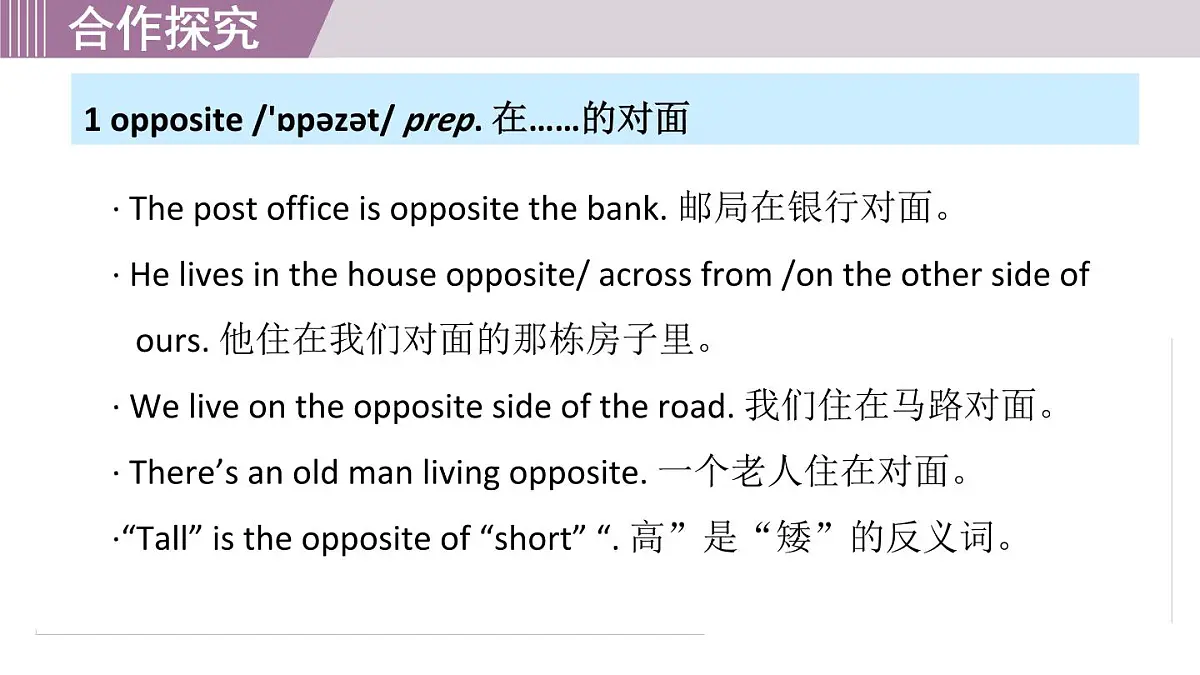
1 ppsite /'ɒpəzət/ prep. 在……的对面
· The pst ffice is ppsite the bank. 邮局在银行对面。· He lives in the huse ppsite/ acrss frm /n the ther side f urs. 他住在我们对面的那栋房子里。· We live n the ppsite side f the rad. 我们住在马路对面。· There’s an ld man living ppsite. 一个老人住在对面。·“Tall” is the ppsite f “shrt” “. 高”是“矮”的反义词。
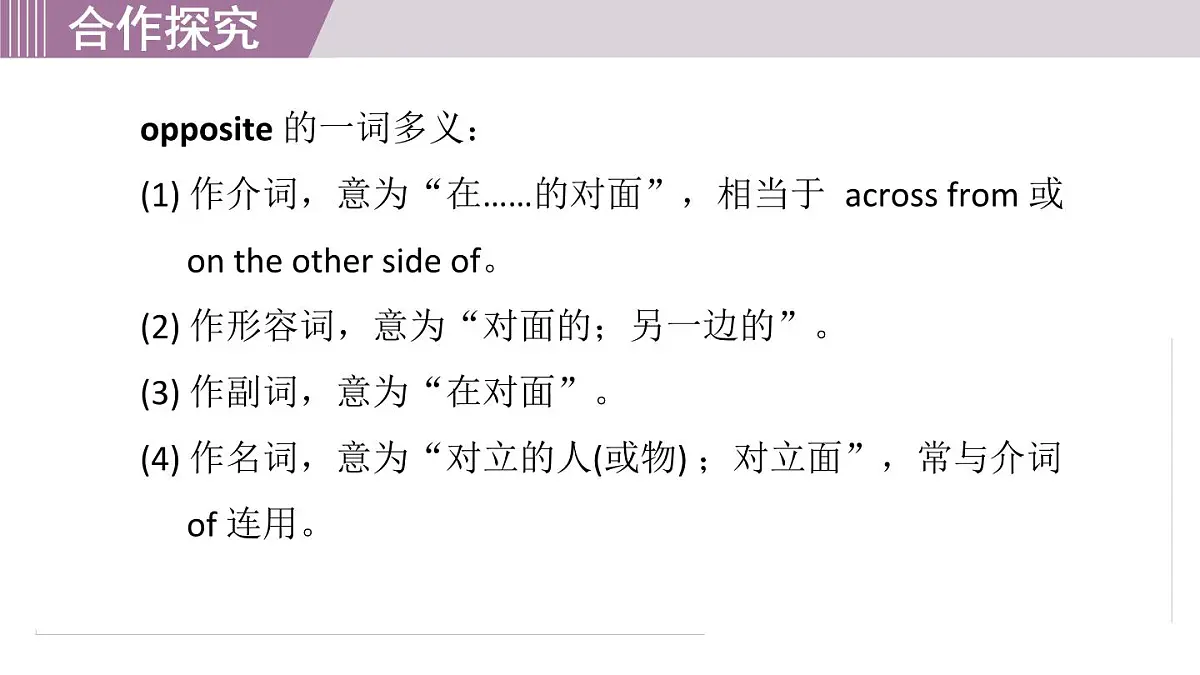
ppsite 的一词多义:(1) 作介词,意为“在……的对面”,相当于 acrss frm 或n the ther side f。(2) 作形容词,意为“对面的;另一边的”。(3) 作副词,意为“在对面”。(4) 作名词,意为“对立的人(或物) ;对立面”,常与介词f 连用。
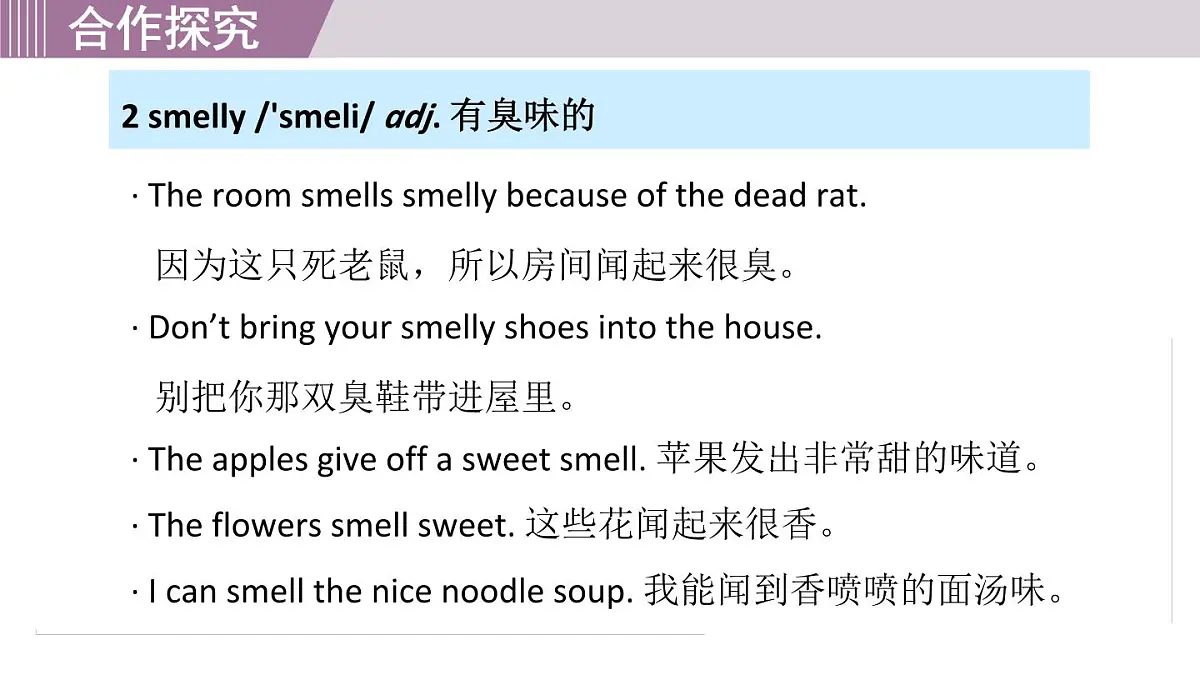
2 smelly /'smeli/ adj. 有臭味的
· The rm smells smelly because f the dead rat.因为这只死老鼠,所以房间闻起来很臭。· Dn’t bring yur smelly shes int the huse.别把你那双臭鞋带进屋里。· The apples give ff a sweet smell. 苹果发出非常甜的味道。· The flwers smell sweet. 这些花闻起来很香。· I can smell the nice ndle sup. 我能闻到香喷喷的面汤味。
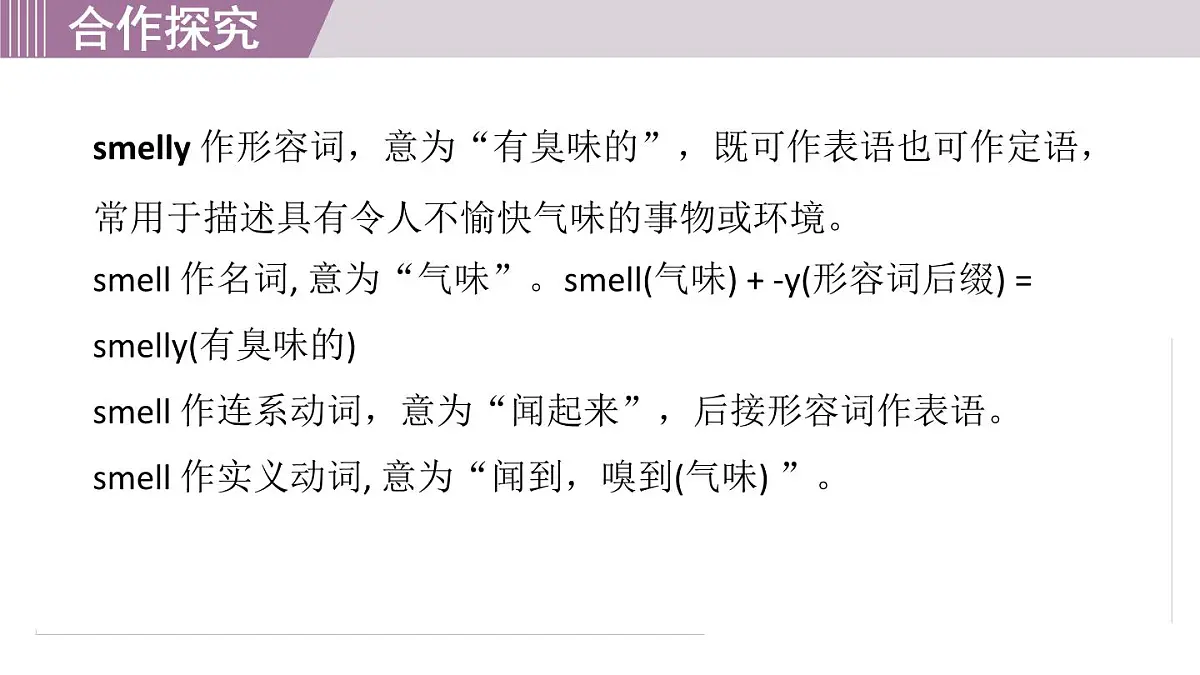
smelly 作形容词,意为“有臭味的”,既可作表语也可作定语,常用于描述具有令人不愉快气味的事物或环境。smell 作名词, 意为“气味”。smell(气味) + -y(形容词后缀) = smelly(有臭味的) smell 作连系动词,意为“闻起来”,后接形容词作表语。smell 作实义动词, 意为“闻到,嗅到(气味) ”。
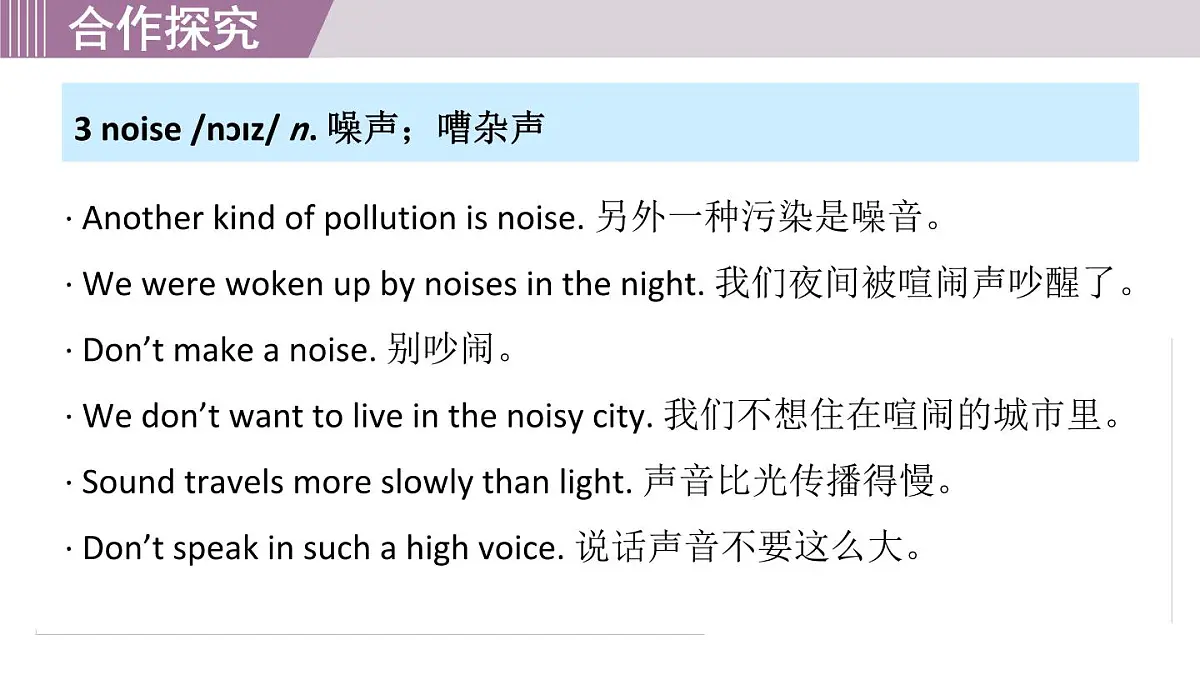
3 nise /nɔɪz/ n. 噪声;嘈杂声
· Anther kind f pllutin is nise. 另外一种污染是噪音。· We were wken up by nises in the night. 我们夜间被喧闹声吵醒了。· Dn’t make a nise. 别吵闹。· We dn’t want t live in the nisy city. 我们不想住在喧闹的城市里。· Sund travels mre slwly than light. 声音比光传播得慢。· Dn’t speak in such a high vice. 说话声音不要这么大。
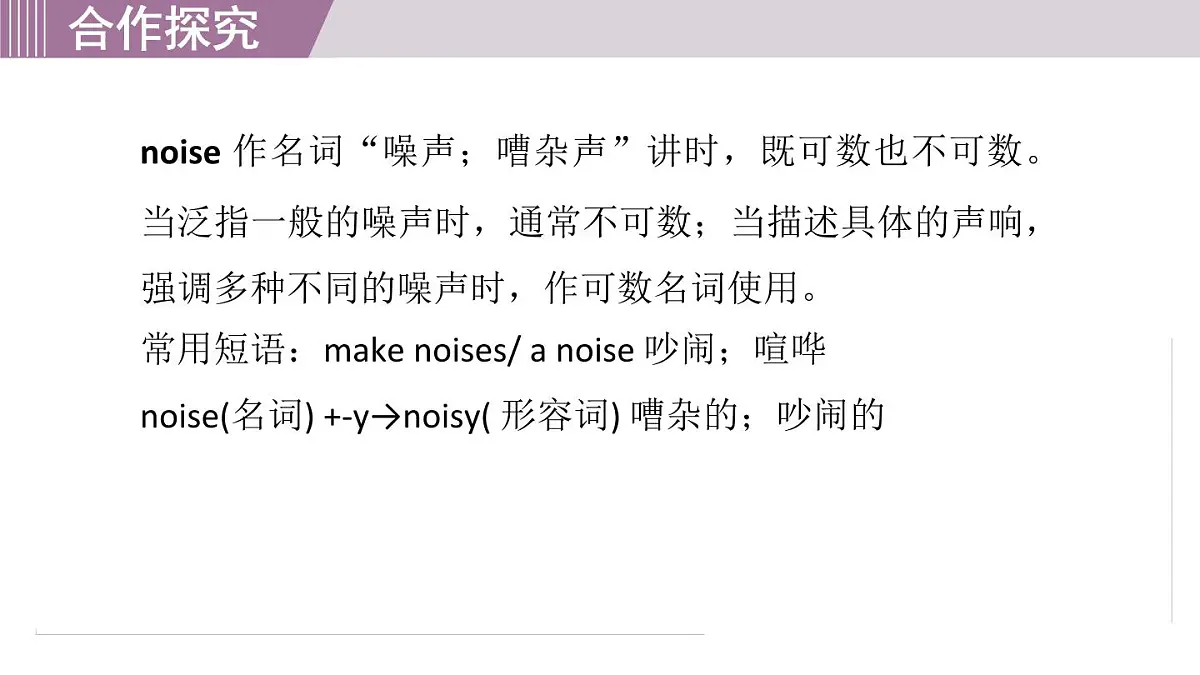
nise 作名词“噪声;嘈杂声”讲时,既可数也不可数。当泛指一般的噪声时,通常不可数;当描述具体的声响,强调多种不同的噪声时,作可数名词使用。常用短语:make nises/ a nise 吵闹;喧哗nise(名词) +-y→nisy( 形容词) 嘈杂的;吵闹的
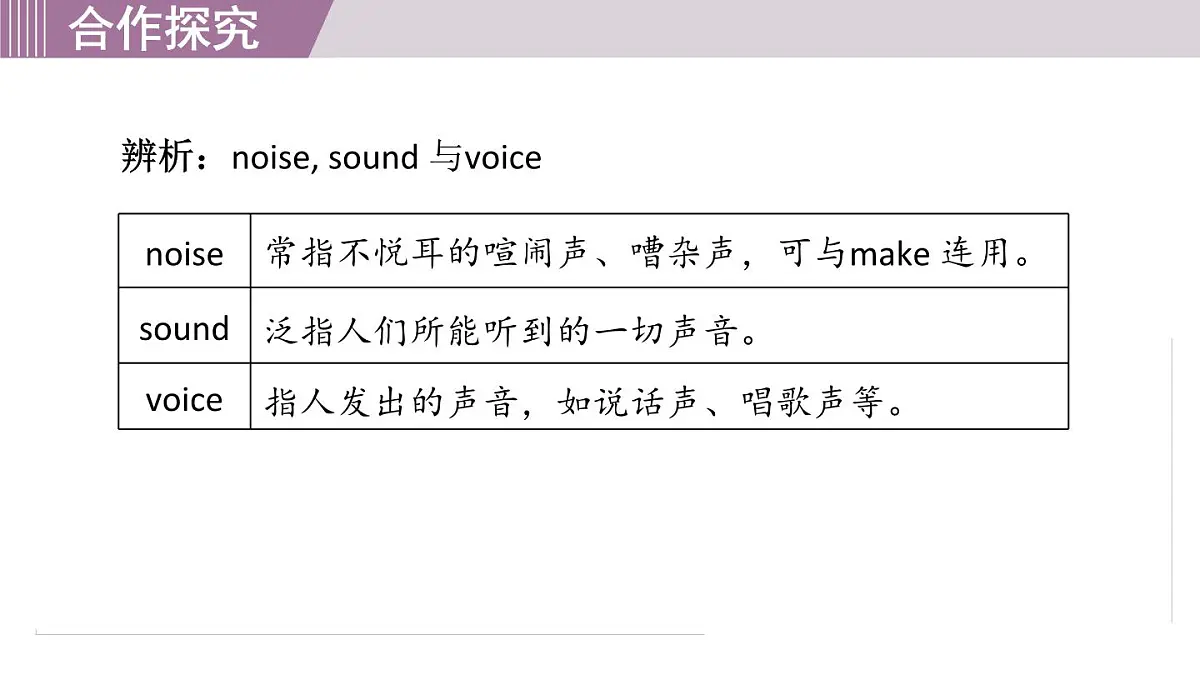
辨析:nise, sund 与vice
4 reduce /rɪ'djuːs/ v. 缩小;减少;降低
· Yu shuld reduce the size f this picture s that it can fit int the frame.你应该缩小这张图片的尺寸,这样它才能放进相框里。· The number f emplyees was reduced frm 40 t 25.雇员人数从40 人减少到了25 人。· The price was reduced by 10 percent. 价格降低了10%。· I will buy the cat if it is reduced t 120 yuan.如果那件外套降到120 元,我就买。
reduce v. 缩小;减少;降低(尺寸、数量、价格等) 。reduce 的相关用法:(1) reduce frm... t... 从……减少到……(2) reduce by 下降了……(3) reduce t下降到……
5 kick /kɪk/ v. 踢
· The baby was kicking and crying. 那婴儿又踢又哭。· He gave the ball a kick. 他朝那个球踢了一脚。· Tim made a huge mistake, and the manager kicked him ut f the cmpany.蒂姆犯了一个很大的错误, 经理把他从公司开除了。· Yung peple ften kick against the rules. 年轻人常常违反规定。
kick 作动词,意为“踢;踹”,常见用法:kick sb. ut (f sth.) 意为“开除某人”。还可作名词,意为“踢;踢脚”。常见短语:kick against 反抗kick back 回踢;放松 kick dwn 踢倒
6 seat /siːt/ n. 座,座位
· He was ff his seat. 他离开他的位子。· Take a seat, if yu please. 请坐吧。· Was she wearing a seat belt? 她系着座椅安全带吗?· He seated himself behind the desk. 他在书桌后面坐下。seat 作名词,意为“座,座位”。相关搭配:(1) take a seat 坐下,就座 (2) a seat belt 安全带seat 还可作动词,意为“(使) 就座;坐”
辨析:seat 与sit
一语辨异:Let’s g and sit n the seat in the garden.让我们去坐在花园里的座位上。After I was seated at the back f the classrm, I saw sme villagers sitting there, t. 我在教室后面坐下后,看见一些村民也坐在那儿。
7 anything /'eniθɪŋ/ prn. 任何事物都
· Yu can buy anything yu want. 你可以买任何你想要的。· Anything is better than nthing, isn’t it?有总比没有好,不是吗?· Is there anything interesting in the bk?这本书中有什么有趣的内容吗?· Wuld yu like smething t drink? 你想喝点什么吗?
anything prn. 任何事物都(没有) 。用作主语时,谓语动词用单数形式。形容词修饰不定代词anything 时,形容词要后置。anything 常用于否定句和疑问句中,在表示请求、建议或征求意见的疑问句中,希望得到肯定回答时常用smething。
8 fl /fuːl/ n. 蠢人,傻子,笨蛋
· I felt a fl when I realized my mistake. 当我意识到自己的错误的时候,我觉得自己是个傻瓜。·Dn’t make a fl f her. 不要愚弄她。· He has fled a lt f peple int believing he is a rich man. 他骗了许多人,让人相信他是个富翁。· Yu are flish t miss such a chance. 你真蠢,错过这么一个机会。
fl 作名词时,意为“蠢人,傻子,笨蛋”。常见用法:make a fl f sb. 愚弄某人作动词时,意为“愚弄;欺骗”。flish adj. 傻的;愚蠢的
9 sign /saɪn/ n. 标记;指示牌,标牌
· The sign by the rad warns drivers f a sharp turn ahead. 路边的指示牌警告司机前方有急转弯。· There is a warning sign at the crner f the street.街角那儿有一块警示牌。· Dn’t yu see the sign “Keep ff the grass”?你没瞧见这个“请勿践踏草坪”的牌子吗?· In the picture, the tree is the symbl f life.在这幅画中,树是生命的象征。
辨析:sign 与symbl
10 cause /kɔːz/ n. 起因,原因
· What’s the cause f the air crash? 这次飞机失事的原因是什么?· What causes the pain n earth, Dr Bill?比尔大夫,究竟是什么引起这种疼痛?· The accident didn’t cause him t change his mind.这次意外并没有使他改变主意。· T much wrk is nt the excuse fr absence.工作太多不是缺席的借口。· There are many reasns fr animals’ dying ut.动物的灭绝有许多原因。
cause 作名词, 意为“起因,原因”, 其后常接介词 f, the cause f 意为“……的原因”。cause 还可用作及物动词,意为“造成;引起”。常用搭配:cause sb. t d sth. 导致某人做某事。
辨析:cause, excuse 与reasn
11 mess /mes/ n. 脏乱,凌乱
· “What a mess!” she said after the party.聚会后她说:“真是一片狼藉!”· He fund his rm in a mess. 他发现他的房间乱七八糟。· The kids made a mess in the living rm.孩子们把客厅搞得一塌糊涂。mess 作名词,意为“脏乱,凌乱”。常见用法:in a mess 乱七八糟 make a mess 弄脏;搞成一团糟
12 hnesty /'ɒnəsti/ n. 诚实,正直;坦诚
· His parents were happy with his hnesty.他的父母为他的诚实感到非常高兴。· The secret f success is hnesty and fair dealing.成功的秘诀是诚实和公平交易。· My brther is an hnest by. 我哥哥是一个诚实的男孩。· T be hnest, it is ne f the best bks that I’ve ever read. 说实话,这是我读过的最好的书之一。
hnesty 作不可数名词,意为“诚实,正直;坦诚”。t be hnest 是不定式短语作插入语, 意为“老实说, 说实在的”。相关词形:(1) hnest 形容词,意为“诚实的;老实的”,hnest 是以元音音素开头的单词,故前面要用不定冠词an。(2) dishnest 形容词,意为“不诚实的”。
13 respect /rɪ'spekt/ v. 尊重
· She prmised t respect ur wishes. 她保证尊重我们的愿望。· I respect yu fr yur hnesty.我因为你的诚实而尊重你。· He has n respect fr her feelings. 他根本不尊重她的感受。respect v. “尊重”,常构成短语:respect neself 自重。respect n. 尊敬;重视;方面。常构成短语:have respect fr 尊重…… with respect t sth. 关于某事in respect that 由于,鉴于 in this respect 在这方面
14 spread /spred/ v. 传播
· The news spread thrugh the schl very quickly.那消息很快就传遍了整个学校。· I spread my arms t give her a big hug.我张开双臂给了她一个大大的拥抱。· He spread the map n the flr. 他把地图铺在了地上。· The spread f the disease frightened the villagers.这种疾病的蔓延吓坏了村民们。
这是一份初中英语外研版(2024)八年级上册(2024)Unit 5 Play by the rules?Understanding ideas图片ppt课件,共19页。
这是一份外研版(2024)八年级上册(2024)Developing ideas课文内容课件ppt,共19页。
这是一份外研版(2024)八年级上册(2024)Unit 5 Play by the rules?Understanding ideas备课课件ppt,共19页。
 新教材
新教材注册成功

在线客服
添加在线客服
获取1对1服务
官方微信
关注“教习网”公众号
打开微信就能找资料
赛课定制
添加在线客服
获取1对1定制服务
职称咨询
添加在线客服
获取1V1专业指导服务

免费福利


.png)