 免费领取教师福利
若您为此资料的原创作者,认为该资料内容侵犯了您的知识产权,请扫码添加我们的相关工作人员,我们尽可能的保护您的合法权益。


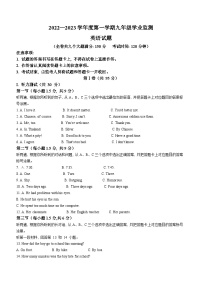
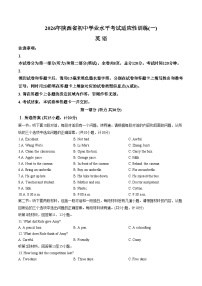
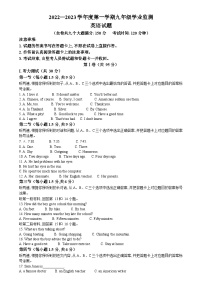
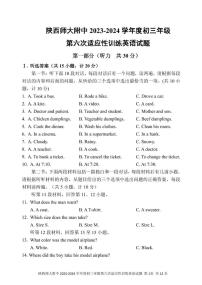
这是一份2026年陕西省宝鸡市扶风县九年级第二次适应性训练英语试卷(含解析)中考模拟,共20页。试卷主要包含了 本试卷分为第一部分, 领到试卷和答题卡后,请用0, A等内容,欢迎下载使用。
注意事项:
1. 本试卷分为第一部分(听力)和第二部分(笔试)。全卷共8页,总分120分。考试时间120分钟。
2. 领到试卷和答题卡后,请用0.5毫米黑色墨水签字笔,分别在试卷和答题卡上填写姓名和准考证号,同时用2B铅笔在答题卡上填涂对应的试卷类型信息点(A或B)。
3. 请在答题卡上各题的指定区域内作答,否则作答无效。
4. 考试结束,本试卷和答题卡一并交回。
第一部分(听力共30分)
Ⅰ. 听选答案(共15小题,计20分)
第一节:听下面10段对话,每段对话后有一个问题,读两遍。请根据每段对话的内容和后面的问题,从所给的三个选项中选出问题的正确答案。(共10小题,计10分)
1. A. Sme chicken. B. Sme beef. C. Sme ndles.
2. A. In a library. B. In a museum. C. In a hspital.
3. A. Linda. B. Mike. C. Martin.
4. A. A dg. B. A cat. C. A rabbit.
5. A. He has a fever. B. He has a cld. C. He has a stmachache.
6. A. Writing. B. Sleeping. C. Making a phne call.
7. A. She was thin. B. She was shrt. C. She had lng hair.
8. A. Mther and sn. B. Teacher and student. C. Teacher and parent.
9. A. Once a week. B. Twice a week. C. Three times a week.
10. A. The match was bad. B. He dislikes ftball. C. He didn’t see the match.
第二节:听下面两段材料,包括一段对话和一段独白,每段材料后有几道小题。请根据材料的内容,从题目所给的三个选项中选出问题的正确答案。每段材料读两遍。(共5小题,计10分)
听材料,回答以下各小题。
11. When is the art festival in Alice’s schl?
A. In July. B. In June. C. In May.
12. What’s Alice’s favrite activity in the art festival?
A. Singing. B. Watching mvies. C. Drawing pictures.
听材料,回答以下各小题。
13. Why shuld we drink water after getting up?
A. It helps clean ur stmachs.
B. It gives us energy.
C. It helps us wake up.
14. Hw many pieces f advice are mentined in this passage?
A. Three. B. Fur. C. Five.
15. What des the speaker want t tell us?
A. Hw t lse weight.
B. Hw t take exercise.
C. What t eat and hw.
Ⅱ. 听填信息(共5小题,计10分)
本题你将听到一段对话,读两遍。请根据对话内容,用所听到的信息完成下列各题。(每空不超过三个单词。)
16. Henry lks ___________________.
17. Henry missed his ___________________ class this mrning.
18. Henry missed the bus, s he went t schl ___________________.
19. Tina was late last ___________________.
20. Tina’s teacher tld her t be ___________________ next time.
第二部分(笔试共90分)
Ⅲ. 完形填空(共15小题,计15分)
阅读下面短文,理解大意,然后从各小题的四个选项中选出一个最佳答案,使短文连贯完整。
Lucy fund a small bird’s nest in the garden. Inside were three tiny ____1____. She was s happy that she ran t tell her mther. Every day after schl, Lucy went t check n them. She saw the mther bird sit n the eggs t keep them ____2____.
But ne day, Lucy gt sick and had t stay at hme fr a while. She culdn’t g t the garden t check the nest. When she finally gt ____3____, the first thing she did was run t the garden. When she lked inside the nest, she culdn’t believe her eyes. The nest was ____4____. The eggs were gne. Tears ran dwn her face. She thught a cat must have ____5____ the eggs. She ran int the huse and cried. Her mther asked, “What happened?”
“The eggs are gne,” Lucy said. “A cat prbably tk ____6____.”
Her mther smiled and wiped (擦) away her tears. “Cme with me.” She tk Lucy’s hand and walked t the garden. Then, she pinted t the sky.
“Lk ____7____ there,” Mm said.
In the sky, three little birds were ____8____. Behind them, the mther bird fllwed clsely.
Mm said ____9____, “While yu were sick, the eggs hatched (孵化) and the baby birds grew strng. Nw they are learning t fly with their mther.”
Lucy stpped crying. “S they are ____10____?”
“Yes. Right nw, they are seeing the wrld frm the sky fr the ____11____ time.”
Lucy thught fr a while. “But I will miss them.”
Mm put her arm arund Lucy and said, “Hney, ____12____ they stayed in the nest frever, they wuld never learn t fly.”
Lucy lked at the sky again. The birds flew farther and farther away, until she culd n lnger see them. She smiled and waved.
“____13____, little birds,” she said, “Have a gd life.”
Smetimes letting g is ____14____, but it is part f grwing up. What lks like a (n) ____15____ is just a new beginning.
1. A. eggsB. stnesC. birdsD. babies
2. A. cleanB. warmC. cldD. quiet
3. A. wrseB. lderC. betterD. farther
4. A. nisyB. similarC. sftD. empty
5. A. eatenB. frgttenC. givenD. drunk
6. A. himB. themC. yuD. her
7. A. backB. arundC. upD. dwn
8. A. flyingB. swimmingC. runningD. jumping
9. A. plitelyB. angrilyC. gentlyD. suddenly
10. A. richB. prC. alneD. alive
11. A. firstB. secndC. thirdD. last
12. A. unlessB. althughC. ifD. until
13. A. HellB. GdbyeC. YesD. N
14. A. crazyB. flishC. cheapD. hard
15. A. awardB. endC. chanceD. gal
【答案】1. A 2. B 3. C 4. D 5. A 6. B 7. C 8. A 9. C 10. D 11. A 12. C 13. B 14. D 15. B
【解析】
【导语】本文讲述露西发现鸟蛋,病愈后发现巢空了,以为蛋被猫吃了,妈妈指引她看天空,让她明白小鸟已飞走,放手是成长的一部分。
【1题详解】
句意:里面有三个小小的蛋。
根据后文“the eggs were gne”,可知鸟巢里是鸟蛋,eggs表示“蛋”,符合语境。stnes石头,birds鸟,babies婴儿,均不符合。
【2题详解】
句意:她看到鸟妈妈坐在蛋上保暖。
根据常识,鸟妈妈孵蛋是为了保持蛋的温度,warm表示“温暖的”,符合语境。clean干净的,cld寒冷的,quiet安静的,均不符合。
【3题详解】
句意:当她终于康复后,她做的第一件事就是跑到花园里。
根据前文“Lucy gt sick and had t stay at hme fr a while”,可知这里指她身体好转,better表示“好转的”,符合语境。wrse更糟的,lder更老的,farther更远的,均不符合。
【4题详解】
句意:鸟巢是空的。
根据后文“The eggs were gne”,可知鸟巢里没有蛋了,empty表示“空的”,符合语境。nisy吵闹的,similar相似的,sft柔软的,均不符合。
【5题详解】
句意:她以为一定是猫吃了蛋。
根据前文Lucy以为蛋不见了,猜测是被猫吃掉了,eaten表示“吃掉”,符合语境。frgtten忘记,given给,drunk喝,均不符合。
【6题详解】
句意:可能是猫把它们拿走了。
这里指代的是the eggs,复数,用them表示“它们”,符合语境。him他,yu你,her她,均不符合。
【7题详解】
句意:“抬头看那里,”妈妈说。
根据后文“In the sky”,可知妈妈让Lucy抬头看,up表示“向上”,符合语境。back向后,arund周围,dwn向下,均不符合。
【8题详解】
句意:天空中,三只小鸟正在飞翔。
根据后文“they are learning t fly with their mther”,可知小鸟在飞翔,flying表示“飞翔”,符合语境。swimming游泳,running跑步,jumping跳,均不符合。
【9题详解】
句意:妈妈温柔地说:“你生病的时候,蛋孵化了,小鸟们长得很强壮。现在它们正跟着妈妈学习飞翔。”
根据语境,妈妈在温柔地安慰Lucy,gently表示“温柔地”,符合语境。plitely礼貌地,angrily生气地,suddenly突然地,均不符合。
【10题详解】
句意:所以它们还活着?
根据前文Lucy以为蛋被吃掉了,现在看到小鸟,所以问它们是不是还活着,alive表示“活着的”,符合语境。rich富有的,pr贫穷的,alne独自的,均不符合。
【11题详解】
句意:是的。现在,它们正第一次从天空看世界。
根据语境,小鸟刚学会飞翔,是第一次从天空看世界,first表示“第一次”,符合语境。secnd第二次,third第三次,last最后的,均不符合。
【12题详解】
句意:妈妈搂着Lucy说:“宝贝,如果它们永远待在鸟巢里,就永远学不会飞翔。”
根据语境,这里表示假设,if表示“如果”,符合逻辑。unless除非,althugh虽然,until直到,均不符合。
【13题详解】
句意:再见,小鸟们。
根据后文“the birds flew farther and farther away”,Lucy在和小鸟告别,Gdbye表示“再见”,符合语境。Hell你好,Yes是的,N不,均不符合。
【14题详解】
句意:有时候放手很难,但这是成长的一部分。
根据前文Lucy不舍小鸟离开,可知放手是一件很难的事,hard表示“困难的”,符合语境。crazy疯狂的,flish愚蠢的,cheap便宜的,均不符合。
【15题详解】
句意:看似结束的事情,其实只是一个新的开始。
根据前文小鸟离开鸟巢,Lucy以为是结束,但其实是它们新生活的开始,end表示“结束”,符合语境。award奖励,chance机会,gal目标,均不符合。
Ⅳ. 阅读理解(共15小题,计20分)
第一节:阅读下面A、B、C三篇材料,从所给的四个选项中选出能回答所提问题或完成所给句子的一个最佳答案。(共10小题,计15分)
A
Have yu ever seen a penguin? Peple wh see penguins fr the first time are ften surprised. Penguins are nt afraid f humans. They d nt run away like ther wild animals. Instead, they walk slwly tward yu with great curisity (好奇). Why d penguins act like this?
An interesting idea says that in penguins’ wrld, they are the nly animals that walk n tw legs in Antarctica (南极洲). S when they see a large animal walking n tw legs, they just think yu are anther penguin—just bigger and a little strange.
Because they have n fear f us, there are strict rules t prtect them. Visitrs shuld stay at least five meters away frm penguins. But if a penguin walks t yu, stand still r mve back slwly. Never tuch them r give them fd.
Why are these rules s strict? First, humans may carry germs (病菌) that can make penguins sick. Secnd, if penguins get used t humans, they may walk up t ther peple wh are nt s kind. This culd put them in danger.
S next time yu see a penguin walking tward yu, remember: in its eyes, yu are just a big, strange penguin. But yu are a guest with an imprtant jb—t prtect them.
16. Accrding t the passage, what d penguins think humans are?
A. Dangerus animals.B. Big birds.C. Gd friends.D. Strange penguins.
17. What shuld yu d if a penguin walks tward yu?
A. Run away quickly.B. Tuch it gently.
C. Stand still r mve back.D. Give it sme fd.
18. Which paragraph(s) answer(s) the questin raised at the end f the first paragraph?
A. Paragraph 2.B. Paragraph 5.C. Paragraphs 2~4.D. Paragraphs 2~5.
【答案】16. D 17. C 18. A
【解析】
【导语】本文是一篇科普说明文,介绍企鹅不怕人类、主动靠近人的原因,同时讲解了游览时保护企鹅的相关规定以及制定规则的缘由。
【16题详解】
第二段指出:“they just think yu are anther penguin—just bigger and a little strange”,这直接说明企鹅会把人类当成体型更大、样子有些奇怪的同类企鹅。
【17题详解】
第三段说明规则:“if a penguin walks t yu, stand still r mve back slwly”,明确了当企鹅走向你时,应保持静止或缓慢后退,不能触碰、投喂或快速跑开。
【18题详解】
第一段末尾提出问题“Why d penguins act like this?”,第二段给出直接原因,回答了该疑问,因此对应段落为Paragraph 2。
B
Recently, a new Chinese rse variety (品种) with the cde name 4379 — 4 became ppular nline because f its very dwn-t-earth (接地气的) name — “Bahua”. The name came frm a netizen’s (网民的) uncle. Hw did such a cmmn name cnnect with agricultural research? Let’s lk int the stry behind it.
At the Yunnan Academy f Agricultural Sciences, researcher Cai Yanfei and her team faced a “sweet burden”. They have develped thusands f new rses. Hwever, naming these “scientific babies” with meaningful names became harder than breeding (培育). Last December, the team asked a science blgger t start a naming activity nline.
At first, netizens suggested many petic names. But ne netizen said, “Name it ‘Bahua Rse’, because my uncle is called Liu Bahua. He lks like a flwer.” This suggestin, full f family warmth, quickly lit up the cmment sectin. In the end, “Bahua” gt the mst likes frm netizens.
Researcher Cai said, “The netizens cnvinced us. We changed ur minds because f what they said. It wasn’t just because f the netizen’s uncle, but because the meaning f ’Bahua’ fits ur traditinal culture very well. Netizens explained it as ‘a land endwed with abundant treasures and talented peple (物华天宝,人杰地灵)’.” In the end, the team decided t respect the public’s chice and chse “Bahua” as the fficial name.
19. What is the passage mainly abut?
A. Hw t grw new rses.B. Hw a rse gt its name.
C. Why peple like planting.D. Where t find gd names.
20. Why did the netizen suggest the name “Bahua”?
A. It sunds very petic.B. It was his uncle’s name.
C. It means rich resurces.D. It fits the rse well.
21. The underlined wrd “cnvinced” prbably means “________”.
A. made peple agreeB. made peple dubt
C. made peple cnfusedD. made peple wnder
22. Which f the fllwing is TRUE?
A. Netizens vted fr petic names nly.
B. The naming activity started last Nvember.
C. The team has develped thusands f new rses.
D. The team chse the name because the netizen’s uncle was famus.
【答案】19. B 20. B 21. A 22. C
【解析】
【导语】本文主要介绍了一种名为“Bahua”的新月季品种如何通过网络征名活动获得名字的经过。
【19题详解】
文章第一段引出话题“Bahua”这个名字的来源,第二段讲述科研团队面临命名难题并发起网络征名活动,第三段描述网友建议“Bahua”的过程,第四段说明团队最终接受该名字的原因。全文围绕一种玫瑰如何获得名字展开,因此选项B“Hw a rse gt its name”正确。
【20题详解】
根据第三段“Name it ‘Bahua Rse’, because my uncle is called Liu Bahua.”可知,网友是因为自己叔叔的名字叫刘宝华而提出这个建议。选项B“It was his uncle’s name.”符合文意。
【21题详解】
根据第四段“We changed ur minds because f what they said.”可知,网友们的意见让科研团队改变了初衷,即“说服”了团队,“cnvinced”意为“使……同意、说服”。
【22题详解】
根据第二段“They have develped thusands f new rses.”可知,该团队已经培育了数千种新月季品种。
C
Chinese Kung Fu is an imprtant part f Chinese culture with a lng histry. It is nt just abut fighting; it teaches peple t use their bdies and minds tgether.
There are many styles f Kung Fu. Sme cpy animals, like the strng Tiger Style and fast Mnkey Style. Tai Chi is anther ppular style with slw, sft mves. Shalin Kung Fu cmes frm Shalin Temple, where mnks (僧侣) practise hard every day.
Kung Fu is mre than being strng. It teaches students t respect teachers and be patient. The mst imprtant thing is t becme a better persn, nt t beat thers.
Peple practise Kung Fu fr different reasns. Sme d it t stay healthy. Sme learn t prtect themselves. Others enjy watching it as a beautiful art.
Peple arund the wrld enjy Chinese Kung Fu thrugh mvies and TV shws. Hwever, Kung Fu is mre than a sprt; it is a way f life that shws Chinese wisdm. This wisdm means:
(1) Balance (平衡) is imprtant, like in Yin and Yang.
(2) Being sft can beat being hard, like water wearing dwn the stne.
(3) The best fight is the ne yu avid.
23. Why des the writer mentin Tiger Style and Mnkey Style?
A. T shw they are the strngest styles.
B. T give examples f animal styles.
C. T explain hw t fight animals.
D. T cmpare them with Tai Chi.
24. What des the underlined sentence “Being sft can beat being hard” mean in Chinese?
A. 不战而胜B. 阴阳平衡C. 以柔克刚D. 上善若水
25. What is the best title fr the passage?
A. Chinese Kung Fu: Mre Than FightingB. The Histry f Kung Fu Mvies
C. Hw t Learn Kung Fu at HmeD. Shalin Temple and Its Mnks
【答案】23. B 24. C 25. A
【解析】
【导语】本文是一篇说明文,介绍了中国功夫的历史、流派、文化内涵与价值,强调它不只是格斗技巧,更是蕴含中国智慧的生活方式。
【23题详解】
第二段提到“There are many styles f Kung Fu. Sme cpy animals, like the strng Tiger Style and fast Mnkey Style.”,说明作者提到虎拳和猴拳,是为了举例说明模仿动物的功夫流派。
【24题详解】
后文提到“like water wearing dwn the stne.”,这句话用“水滴石穿”的现象类比说明:水的质地柔和,却能穿透坚硬的石头,由此可推断“Being sft can beat being hard”的含义是柔和的力量能够战胜坚硬的事物,对应“以柔克刚”。
【25题详解】
全文从功夫的流派、文化内涵、精神价值等方面展开,核心观点是“Kung Fu is mre than a sprt; it is a way f life that shws Chinese wisdm”,说明功夫不只是格斗,更蕴含着深刻的文化与智慧。选项A“Chinese Kung Fu: Mre Than Fighting”能全面概括文章主旨。
第二节:(共5小题,计5分)
根据短文内容,从短文后的选项中选出能填入空白处的最佳选项。选项中有一项为多余选项。
Many f us want t keep thin and healthy. But d yu really knw hw? ___26___ They shw that sleeping may help lse weight, but eating less may nt.
Less sleep, fatter legs and arms
Peple withut enugh sleep are fatter, accrding t a new study frm Nutrients. Scientists divided sleep time int three types: shrt sleep (less than 7 hurs a day), nrmal sleep (7 t 9 hurs), and lng sleep (mre than 9 hurs). ___27___ Results shw that, cmpared with nrmal sleepers, shrt sleepers have mre fat n their legs and arms!
Dinner is imprtant
Many peple dn’t eat dinner t lse weight. ___28___ They did a study with 200,000 university students. Then they fund that if peple dn’t eat dinner, it’s easier fr them t put n weight. One reasn, scientists said, might be that peple withut dinner are hungry. ___29___
Mukbang (吃播) makes yu eat mre
___30___ In a new study, scientists asked peple t watch a cking r nature televisin shw. They fund that thse wh watched the cking prgram ate mre chclate, cmpared t the nature prgram. Scientists said that by lking at delicius fd, peple will get mre ghrelin (胃饥饿素) in their bld. This gives peple a strnger appetite (胃口) and they will then eat mre.
A. If yu want t lse weight, stp watching mukbang.
B. The first step t lsing weight is t get sme exercise.
C. Then they studied 9,413 peple frm the US.
D. S they eat mre during the day.
E. But scientists said this might nt help.
F. Here are sme new studies.
【答案】26. F 27. C 28. E 29. D 30. A
【解析】
【导语】本文主要介绍了关于保持苗条和健康的几项新研究,说明睡眠、晚餐、看吃播对体重的影响。
【26题详解】
上文提出如何保持苗条健康的问题,下文开始介绍相关研究结果。F项“Here are sme new studies.”起到总起下文的作用,引出后文各项研究内容,衔接自然。
【27题详解】
上文介绍科学家对睡眠时间的分类,下文给出研究结果。C项“Then they studied 9,413 peple frm the US.”说明具体研究对象,承接上文研究设计,引出结果,逻辑通顺。
【28题详解】
上文提到很多人不吃晚餐减肥,下文介绍相关研究发现不吃晚餐更容易长胖。E项“But scientists said this might nt help.”对这种做法进行否定,与下文研究结论一致。
【29题详解】
上文解释不吃晚餐长胖的原因是会饿,D项“S they eat mre during the day.”说明饥饿导致白天吃得更多,完整解释原因,衔接合理。
【30题详解】
本段主题为吃播会让人吃得更多,A项“If yu want t lse weight, stp watching mukbang.”针对本段内容给出建议,符合段落总结逻辑,与上下文匹配。
Ⅴ. 完成句子
根据所给汉语意思,用单词或短语完成下列英文句子。(共5小题,计10分)
31. 在除夕夜,所有家庭成员聚在一起享用丰盛的年夜饭。
On New Year’s ______________, all family members get tgether t enjy a big reunin dinner.
【答案】
Eve
【解析】
【详解】根据中文“在除夕夜”可知,英文句子中缺失的部分应表达“除夕夜”的含义,英语中“除夕夜”的固定短语是New Year’s Eve,该词组属于节日专有名词,因此Eve的首字母需要大写。
32. 餐桌上总是摆满美味的菜肴,比如鱼、鸡肉等等。
The dinner table is always ______________ delicius dishes, such as fish, chicken and s n.
【答案】
full f##filled with
【解析】
【详解】原句中“摆满”是关键词。表示“充满……”,“摆满……”的常用固定短语是be full f… 和be filled with…;句中已有be动词is,因此可直接填入full f或filled with,二者均可与is构成固定搭配,表达“餐桌上摆满美味菜肴”的含义。
33. 在中国文化中,鱼象征着好运和年年有余。
Fish is ______________ gd luck and surplus in Chinese culture.
【答案】
a symbl f
【解析】
【详解】原句中“象征着”是关键词,英文中a symbl f表示“……的象征”,其中symbl为可数名词,前加不定冠词a。故填a symbl f。
34. 晚饭后,人们通常一边看春节联欢晚会,一边等待新年的到来。
After dinner, peple usually watch the Spring Festival Gala while waiting fr the ______________ f the new year.
【答案】arrival
【解析】
【详解】原句中“到来”是关键词,对应的英文表达是arrival。“the arrival f...”是固定搭配,表示“……的到来”。
35. 过去人们常常放鞭炮,但现在为了保护环境,许多人选择安静地庆祝。
Peple used t set ff firecrackers, but nw many chse t ______________ t prtect the envirnment.
【答案】
celebrate quietly
【解析】
【详解】原句中“安静地庆祝”是关键词,对应英文短语“celebrate quietly”。句子是一般现在时,“chse t”后需接动词原形,故填celebrate quietly。
Ⅵ. 语篇填空(共15小题,计15分)
第一节:(共5小题,计5分)
阅读下面材料,按照句子结构的语法性和语意连贯的要求在各题横线上填入一个适当的单词,使之通顺、完整。
AI is becming a big part f ur lives. We use it fr studying, getting news, ___36___ chatting with friends. Many teenagers dn’t see AI ___37___ just a tl. Instead, they regard it as ___38___ true friend. When facing prblems at schl r in life, they prefer ___39___ turn t AI fr advice. This shws that AI is playing a mre imprtant rle ___40___ yung peple’s daily lives.
【答案】36. and
37. as 38. a
39. t 40. in
【解析】
【导语】本文介绍人工智能正在成为年轻人生活中的重要部分。
【36题详解】
句意:我们用它学习、获取新闻以及和朋友聊天。studying、getting news和chatting with friends为并列关系,应用and连接,故填and。
【37题详解】
句意:许多青少年不把人工智能仅仅看作一种工具。固定搭配see…as…意为“把……看作……”,故填as。
【38题详解】
句意:相反,他们把它当作一个真正的朋友。friend为可数名词单数,且true以辅音音素开头,应用不定冠词a,故填a。
【39题详解】
句意:当在学校或生活中遇到问题时,他们更喜欢向人工智能寻求建议。固定搭配prefer t d sth.意为“更喜欢做某事”,故填t。
【40题详解】
句意:这表明人工智能在年轻人的日常生活中正发挥着越来越重要的作用。固定搭配play a rle in…意为“在……中发挥作用”,故填in。
第二节:(共10小题,计10分)
用方框中所给单词的适当形式填空,使短文完整正确。(每个单词限用一次。每空限填一个单词。)
Kayla Chege is a 15-year-ld teenager. She asks AI fr help with ___41___ things, like hmewrk, what t wear, r party ideas! She says it feels like ___42___ t a real friend.
Kayla is nt alne. A recent study ___43___ that ver 70% f teenagers use AI in this way. They turn t AI fr everyday prblems and fun ___44___. What’s mre, abut 33% f ___45___ discuss serius r imprtant tpics with AI instead f talking t real peple. These tpics may include schl stress, friendship trubles, r future plans.
S why d s many teenagers chse AI ver humans? Sme say they prefer AI because it listens ___46___ and never gets tired f them. Others enjy hw it gives quick answers withut judging them. Unlike real peple, AI is always available (可用的) day r night.
Hwever, experts are ___47___ abut this situatin. “Using AI t much can be bad,” said Michael Smith, a teenage health expert. “Teenagers need t ___48___ time with real peple. If they nly talk t AI, they might nt ___49___ hw t deal with real-life prblems.”
S AI can be helpful, but real friendships are still imprtant. Parents and teachers shuld help teenagers find a ____50____ balance (平衡) between using AI and building real relatinships.
【答案】41. many
42. talking
43. shws 44. ideas
45. them 46. patiently
47. wrried
48. spend 49. learn
50. healthy
【解析】
【导语】本文介绍了青少年使用AI寻求帮助的现象,分析了青少年偏爱AI的原因,并引用健康专家的观点指出过度依赖AI的弊端,呼吁家长和老师帮助青少年在使用AI与建立真实人际关系之间找到健康的平衡。
【41题详解】
句意:Kayla Chege是一名15岁的青少年,她在很多事情上向AI求助,比如作业、穿什么衣服,或者派对创意!空格后为复数名词“things”需用形容词修饰。方框中“many”为形容词,表示“许多的”修饰可数名词复数,符合语境。
【42题详解】
句意:她说这感觉就像是在和一个真正的朋友交谈。“feel like ding sth.”表示“感觉像在做某事”或“想要做某事”。方框中“talk”为动词原形,需变为动名词形式“talking”作介词“like”的宾语。
【43题详解】
句意:最近的一项研究表明,超过70%的青少年以这种方式使用AI。空格处需填谓语动词,主语“A recent study”为第三人称单数,且全文主体时态为一般现在时,动词需用第三人称单数形式。方框中“shw”表示“表明、显示”其第三人称单数形式“shws”符合语法和句意。
【44题详解】
句意:他们向AI求助日常问题和有趣的创意。空格前为形容词“fun”需填名词。结合上文“party ideas”的复现,方框中“idea”需变为复数形式“ideas”表示“想法、创意”与“everyday prblems” 并列。
【45题详解】
句意:更重要的是,大约33%的青少年与AI讨论严肃或重要的话题,而不是与真人交谈。“33% f”后需接宾格代词作介词宾语,指代前文提到的“teenagers”。方框中“they”为人称代词主格,需变为宾格“them”。
【46题详解】
句意:有人说他们更喜欢AI,因为它耐心地倾听,并且从不厌倦他们。空格处修饰动词“listens”需用副词形式。方框中“patient”为形容词,需变为副词patiently“耐心地”作方式状语。
【47题详解】
句意:然而,专家们对这种情况感到担忧。“be wrried abut”表示“对……感到担忧”。方框中“wrry 为动词或名词,需变为形容词“wrried”作表语。
【48题详解】
句意:青少年需要花时间和真人在一起。“need t d sth.”表示“需要做某事”,“t”后接动词原形。“spend time with sb.”表示“与某人共度时光”。方框中“spend”为动词原形,符合语法要求。
【49题详解】
句意:如果他们只和AI交谈,他们可能不会学习如何处理现实生活中的问题“might nt”为情态动词短语,后接动词原形。方框中“learn”为动词原形,“learn hw t d sth.”表示“学习如何做某事”符合句意。
【50题详解】
句意:家长和老师应该帮助青少年在使用AI和建立真实关系之间找到一个健康的平衡。空格处修饰名词“balance”,需用形容词。方框中“health”为名词,需变为形容词healthy“健康的”作定语。
Ⅶ. 任务型阅读:(共5小题,计10分)
阅读下面短文,根据短文内容,完成下列各题。
Des the news have the same influence n everyne? Ideally (理想地) it shuld. News reprters chse the stries we see n TV r in newspapers. But these days, many f us get news frm scial media, and the experience can be very different.
On scial media, the psts we see aren’t chsen by peple. They are cntrlled by algrithms (算法)—cmputer prgrams that run behind the apps. These apps may cllect yur persnal infrmatin, like yur searches and likes. Over time, they knw what yu prefer. With smart algrithms, they nly shw yu what they think yu’ll enjy. If a news stry desn’t interest yu, yu might never see it. As a result, yu nly see a small part f the wrld. This is called a filter bubble (信息茧房). Living in a filter bubble is like wearing ▲ that nly let yu see ne clr. Actually, the real wrld is much mre clrful. Then hw can we break the bubble? Here are three tips:
Use different surces. Dn’t always stick t yur usual websites. Try new nes.
G ffline. Talk with peple in real life. Share what yu’ve read and ask what they’ve seen.
Keep an pen mind. Read psts by peple yu disagree with. It helps yu see the whle picture.
Breaking the bubble helps us see the wrld mre clearly.
51. Where d many peple get news frm these days?
Many peple get news frm __________________________________________________.
52. What are algrithms?
They are __________________________________________________.
53. What is the purpse f the tips mentined in the passage?
T help us __________________________________________________.
54. What wrd (s) can yu put in the “ ▲ ”?
I can put “__________________________________________________” there.
55. Why shuld we read psts by peple we disagree with?
Because it helps us __________________________________________________.
【答案】51. scial media
52. cmputer prgrams that run behind the apps
53. break the bubble/see the wrld mre clearly 54. glasses
55. see the whle picture
【解析】
【导语】本文介绍了“信息茧房”的形成原因以及如何打破信息茧房,更全面地了解世界。
【51题详解】
根据第一段“But these days, many f us get news frm scial media”可知,如今很多人从社交媒体获取新闻,故填scial media。
【52题详解】
根据第二段“They are cntrlled by algrithms (算法) — cmputer prgrams that run behind the apps.”可知,算法是运行在应用程序背后的计算机程序,故填cmputer prgrams that run behind the apps。
【53题详解】
根据第二段“Then hw can we break the bubble? Here are three tips”以及最后一段“Breaking the bubble helps us see the wrld mre clearly.”可知,这些建议的目的是帮助我们打破信息茧房、更清楚地看世界,故填break the bubble/see the wrld mre clearly。
【54题详解】
根据第二段“Living in a filter bubble is like wearing ▲ that nly let yu see ne clr.”可知,信息茧房就像戴着只能看到一种颜色的眼镜,故填glasses。
【55题详解】
根据第五段“Read psts by peple yu disagree with. It helps yu see the whle picture.”可知,阅读不同观点的帖子可以帮助我们看到全貌,故填see the whle picture。
Ⅷ. 交流与表达(共6小题,计20分)
第一节:补全对话。(共5小题,计5分)
根据下面对话中的情境,在每个空白处填入一个适当的语句,使对话恢复完整。
[Larry (A) is talking with his classmate, Tm (B), in their schl.]
A: Hi, Tm. Lng time n see!
B: Hi, Larry. I was n vacatin with my family last week.
A: Really? Where did yu g?
B: ______56______. It is the capital city f Shaanxi Prvince.
A: Xi’an? Ww! ______57______?
B: I went there by plane.
A: ______58______?
B: Well, we visited lts f museums. They were really crwded but very interesting. We als tried sme special and delicius fd such as Rujiam and Biangbiang ndles. They were delicius!
A: ______59______?
B: I think the mst interesting place is the Terra-ctta Warrirs. That’s really amazing.
A: What d yu think f yur travel experience?
B: ______60______.
【答案】56. I went t Xi’an
57. Hw did yu get there
58. What did yu d there
59. What d yu think the mst interesting place there is
60. It was wnderful
【解析】
【导语】本文主要介绍了Larry和同学Tm在学校偶遇,Tm分享了自己的西安之旅,两人就此展开对话。
【56题详解】
Larry询问Tm去了哪里,Tm的回答需要点明地点,同时后文补充说明这是陕西省的省会,故用陈述句“I went t Xi’an.”衔接下文。
【57题详解】
Larry得知Tm去了西安后发出感叹,Tm的回答是“I went there by plane.”,所以此处Larry应询问交通方式,故用特殊疑问句“Hw did yu get there?”衔接下文。
【58题详解】
Tm的回答描述了在西安参观博物馆、品尝美食等活动,所以此处Larry应询问在西安做了什么,故用特殊疑问句“What did yu d there?”衔接下文。
【59题详解】
Tm的回答是“I think the mst interesting place is the Terra-ctta Warrirs.”,所以此处Larry应询问Tm觉得最有趣的地方是什么,故用特殊疑问句“What d yu think the mst interesting place there is?”衔接下文。
【60题详解】
Larry询问Tm对这次旅行的看法,Tm的回答应给出评价,符合对话推进逻辑,故用陈述句“It was wnderful.”(合理的积极评价均可)回应上文。
第二节:书面表达。(共1题,计15分)
61. 从小到大,我们总是被各种各样的规则包围着。小时候觉得规则是束缚,总想挣脱;长大后渐渐明白,正是这些看似约束我们的条条框框,才让我们学会了自律,也学会了如何与他人相处。请以“The Rule That Influences Me Mst”为题,写一篇英文短文,介绍一下对你影响最大的规则。
内容包括:
1. Wh made this rule?
2. What is this rule abut?
3. Hw des this rule influence yu?
参考词汇:mean, realize, value, n lnger, imprve, develp, self-disciplined (自律的), cntinue, in the future,…
要求:
1. 短文内容应包含题目要求所给的全部信息,参考所给词汇,可适当发挥;
2. 语句正确,意思通顺、连贯,书写规范;
3. 短文中不得出现你的任何真实信息(姓名、校名和地名);
4. 词数:不少于70。
The Rule That Influences Me Mst
________________________________________________________________________________________________________________________________________________________________________________________________________________________________________________________________________________________________________________________________________________________________________________________________
【答案】
例文
The Rule That Influences Me Mst
The rule that influences me mst is “Hmewrk cmes first, play cmes later.” My parents made this rule when I was yung.
At first, I thught it was strict and bring. But nw I realize its value. It helps me plan my time well. I finish hmewrk n time and n lnger leave things until the last minute. This rule makes me mre self-disciplined. I als have mre free time t relax r develp my hbbies.
I will cntinue t fllw it in the future because it really imprves my life.
【解析】
【详解】写作步骤
[第一步:审题立意]
确定文体:记叙文(个人成长类),以一般过去时、一般现在时为主
明确要点:说明对自己影响最大的规则的制定者、规则具体内容,以及这条规则对自己产生的积极影响
确定人称:第一人称I
注意事项:覆盖所有提示要点,使用参考词汇,语句通顺,无真实姓名、校名、地名等信息
[第二步:构思布局]
开头段:直接点明对自己影响最大的规则,以及这条规则是由父母在自己小时候制定的
主体段:先讲述自己最初对这条规则的负面看法,再说明现在对规则价值的理解,具体阐述规则在时间管理、自律培养、空闲时间分配方面带来的积极改变
结尾段:表达未来会继续遵守这条规则的决心,点明规则对自己生活的改善作用
[第三步:要点展开]
要点一:规则的制定者与内容
核心短语:Hmewrk cmes first, play cmes later/made by my parents when I was yung/a family rule set by my parents/the rule that requires finishing hmewrk befre playing
要点二:规则带来的积极影响
核心短语:plan my time well/finish hmewrk n time/n lnger leave things until the last minute/mre self-disciplined/mre free time t relax r develp hbbies/manage my time prperly/hand in hmewrk n schedule/avid putting things ff/becme mre self-cntrlled/have mre spare time fr my interests
要点三:未来的打算
核心短语:cntinue t fllw it in the future/really imprves my life/keep beying this rule later n/makes my life better and mre rganizedspend they many patient (adj.) wrry talk shw learn health idea
这是一份2026年陕西省宝鸡市扶风县九年级第二次适应性训练英语试卷(含解析)中考模拟,共14页。试卷主要包含了 本试卷分为第一部分, 领到试卷和答题卡后,请用0, A等内容,欢迎下载使用。
这是一份2026年陕西宝鸡市晁峪初级中学九年级第二次适应性训练英语试题(PDF版,含答案、无听力原文),共7页。
这是一份2026年陕西省西安市曲江第二中学九年级中考适应性训练三英语试题(含答案),共6页。
注册成功

在线客服
添加在线客服
获取1对1服务
官方微信
关注“教习网”公众号
打开微信就能找资料
赛课定制
添加在线客服
获取1对1定制服务
职称咨询
添加在线客服
获取1V1专业指导服务

免费福利

.png)
.png)
