免费领取教师福利
若您为此资料的原创作者,认为该资料内容侵犯了您的知识产权,请扫码添加我们的相关工作人员,我们尽可能的保护您的合法权益。


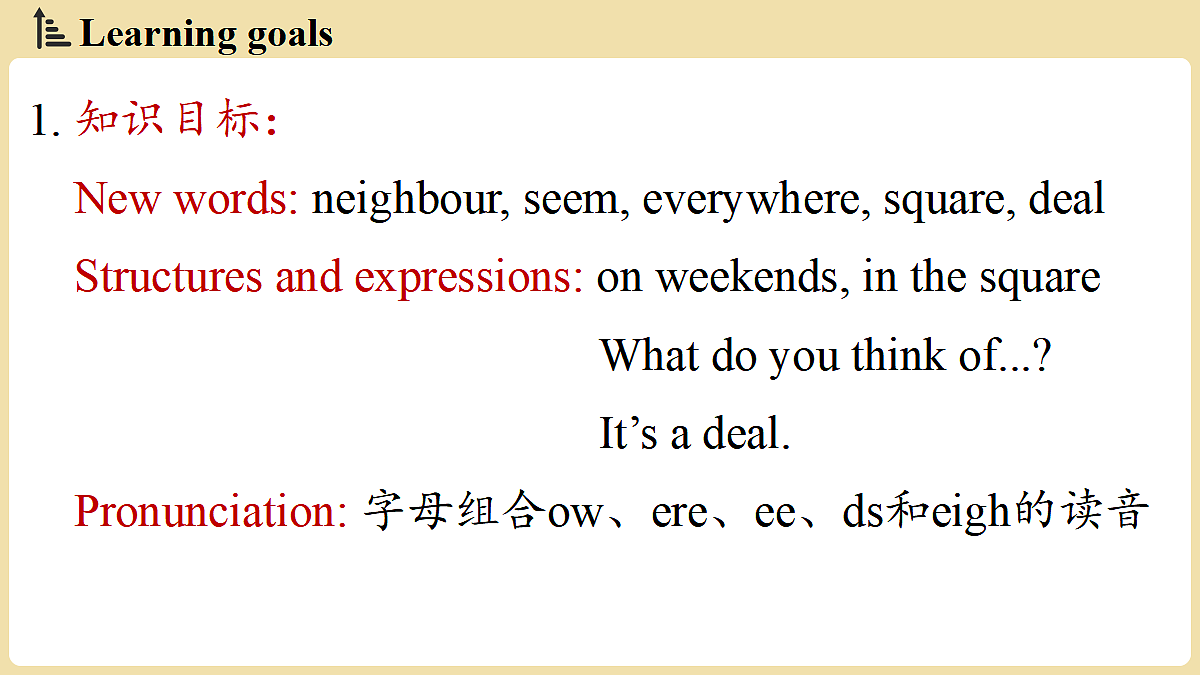
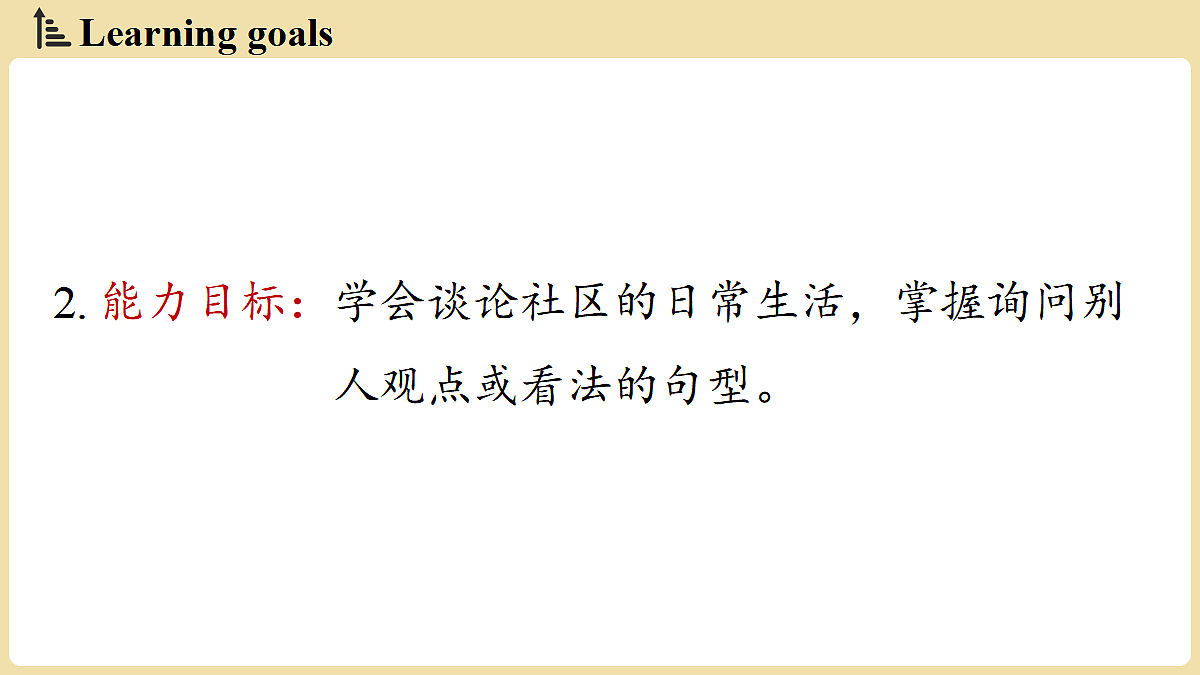
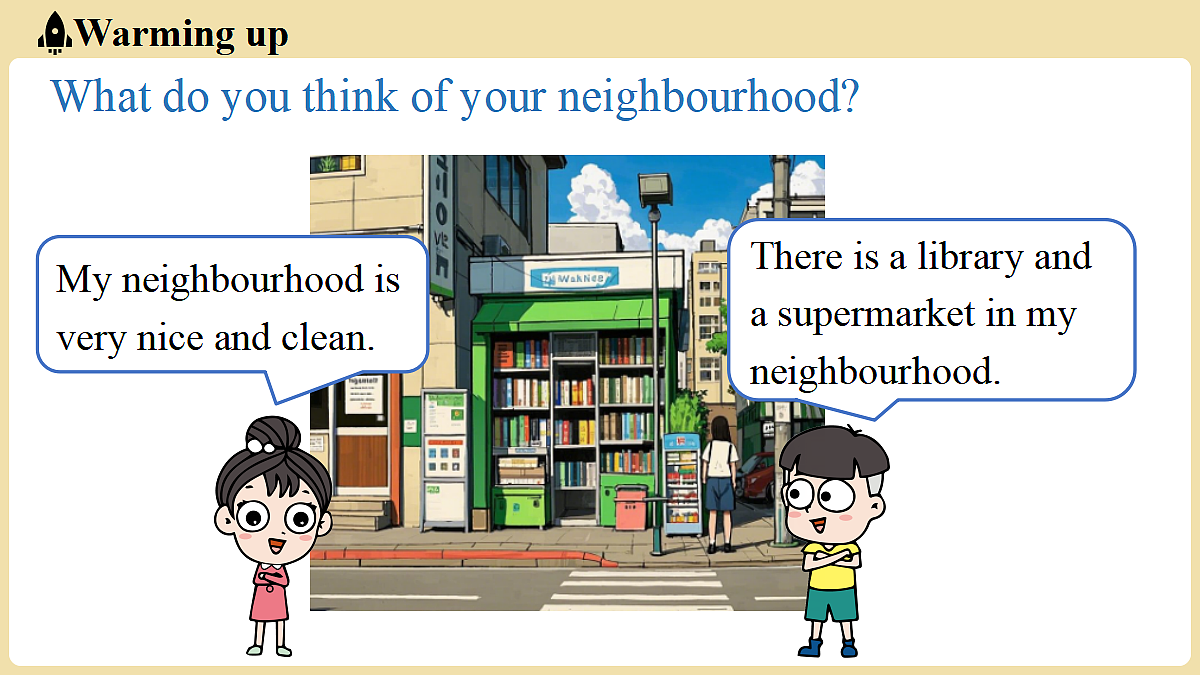
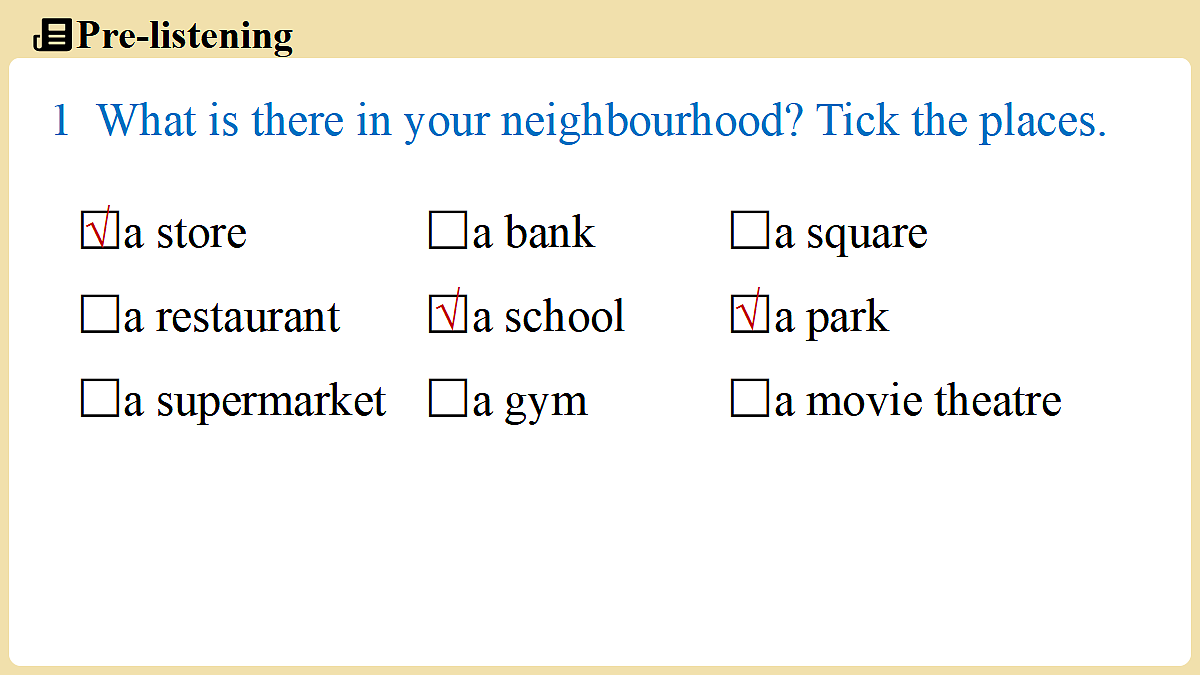
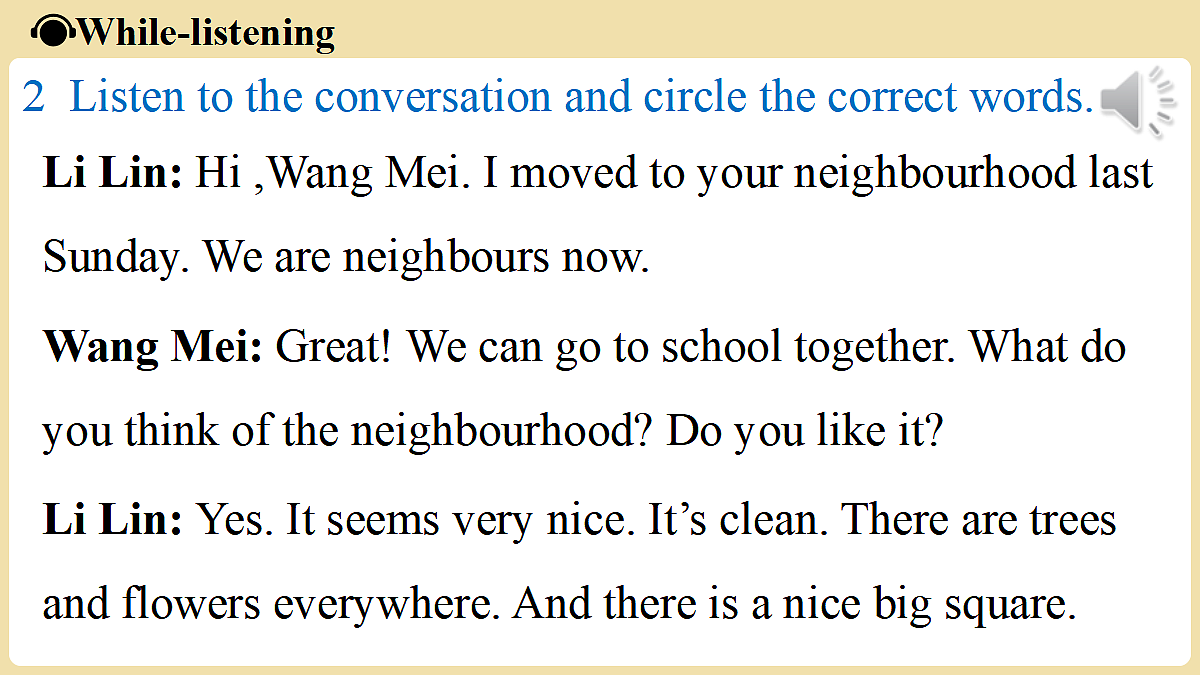
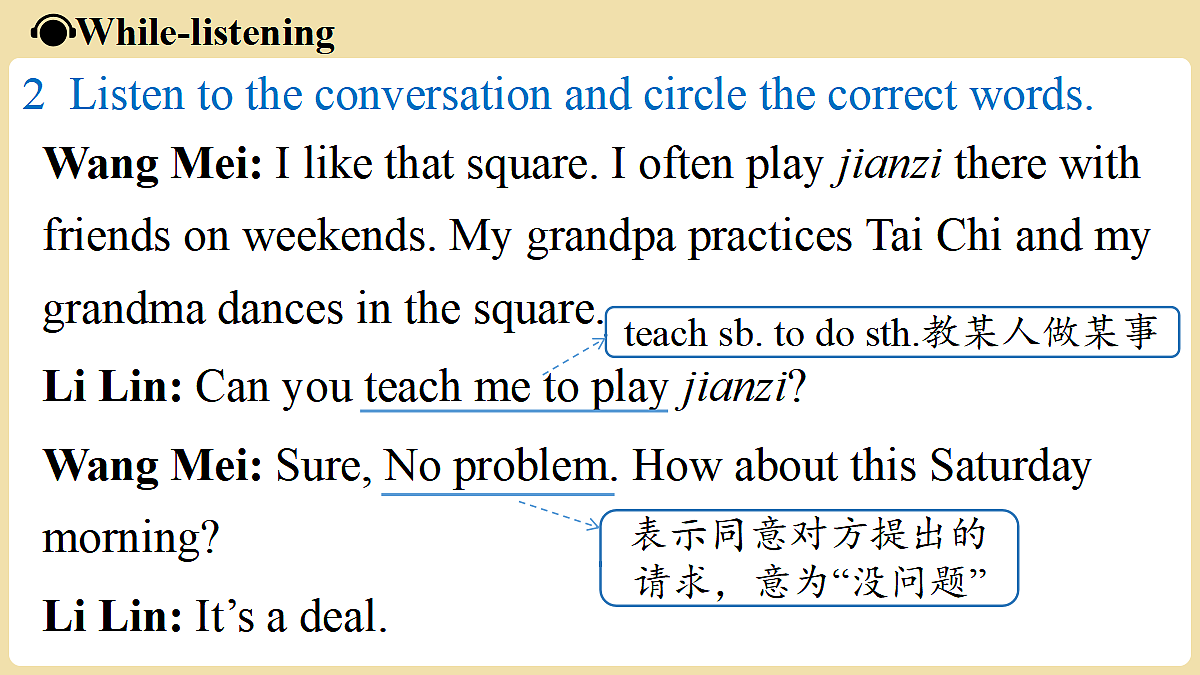
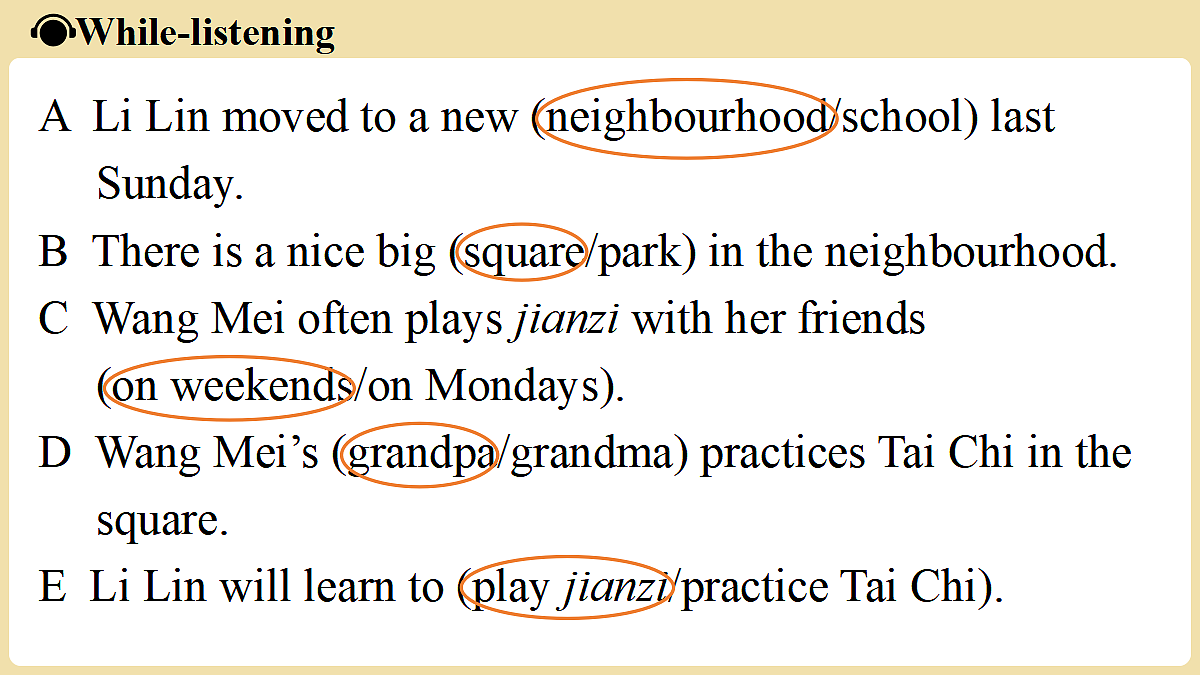
Unit 5 Our neighbourhood七下英语 JJ第1课时Lesson 1 My neighbourhood1. 知识目标: New words: neighbour, seem, everywhere, square, deal Structures and expressions: on weekends, in the square What do you think of...? It’s a deal. Pronunciation: 字母组合ow、ere、ee、ds和eigh的读音Learning goals 2. 能力目标:学会谈论社区的日常生活,掌握询问别 人观点或看法的句型。Learning goals There is a library and a supermarket in my neighbourhood.My neighbourhood is very nice and clean.What do you think of your neighbourhood?Warming up1 What is there in your neighbourhood? Tick the places.□a store□a restaurant □a supermarket□a bank□a school□a gym□a square □a park□a movie theatre√√√Pre-listening2 Listen to the conversation and circle the correct words.Li Lin: Hi ,Wang Mei. I moved to your neighbourhood last Sunday. We are neighbours now.Wang Mei: Great! We can go to school together. What do you think of the neighbourhood? Do you like it?Li Lin: Yes. It seems very nice. It’s clean. There are trees and flowers everywhere. And there is a nice big square.While-listening2 Listen to the conversation and circle the correct words.Wang Mei: I like that square. I often play jianzi there with friends on weekends. My grandpa practices Tai Chi and my grandma dances in the square.Li Lin: Can you teach me to play jianzi?Wang Mei: Sure, No problem. How about this Saturday morning?Li Lin: It’s a deal.While-listening表示同意对方提出的请求,意为“没问题”teach sb. to do sth.教某人做某事A Li Lin moved to a new (neighbourhood/school) last Sunday.B There is a nice big (square/park) in the neighbourhood.C Wang Mei often plays jianzi with her friends (on weekends/on Mondays).D Wang Mei’s (grandpa/grandma) practices Tai Chi in the square.E Li Lin will learn to (play jianzi/practice Tai Chi).While-listening3 Listen to the conversation again and answer the questions.A What does Wang Mei’s grandma do in the square?Wang Mei’s grandma dances in the square.B When will Wang Mei and Li Lin play jianzi in the square?They will play jianzi in the square this Saturday morning.C How can you describe Wang Mei’s neighbourhood?It’s nice and clean. And it’s a good place to live.While-listening1. What do you think of the neighbourhood?(教材P58 2) think of 认为;想象What do you think of Gansu? 你觉得甘肃怎么样? 【拓】(1)think of意为“想出”,相当于come up with。 Who thought of/came up with the idea? 谁想出的这个主意?Language points(2)think of还可意为“考虑到”,相当于think about。She cares about her family very much but seldom thinks of/about herself. 她非常关心她的家人,却很 少考虑到自己。Language points What do you think of. . . ? 该句型常用来询问对某人/事物的看法,意为“你认为······怎么样? ”,其答语常用形容词或表示喜欢/不喜欢的句型。 —What do you think of the book?你认为这本书怎么样? —Very interesting. 非常有趣。Language points2. It seems very nice. It’s clean.(教材P58 2) seem /siːm/ v. 似乎;看来 其常见用法如下:(1) seem (to be)+adj. 好像······He seems (to be) very happy about the news. 他好像对这个消息很满意。(2) seem (to be)+n. 好像是······Linda seems (to be) their monitor.琳达好像是他们的班长。Language points(3) seem like+n. 好像······It seemed like a good idea at the time. 当时这好像是个不错的主意。(4) seem to do sth. 好像做某事Life sometimes seems to be full of impossible problems. 生活有时似乎充满了不可能的问题。(5) It seems +(that)从句 好像······It seems (that) he is ill today.今天他好像生病了 。Language points3. There are trees and flowers everywhere.(教材P58 2) everywhere /ˈevriweə(r)/ adv. & pron. 处处;到处 在句中作状语,其前不能使用in、at、to之类的介词。Life is full of love everywhere. Let’s enjoy it. 生活处处充满爱。让我们享受它。The sky is blue, and the flowers are coming out everywhere.天空是蓝色的,到处都是盛开的花。Language points【拓】Language pointsThey live somewhere or other in France. 他们住在法国的一个什么地方。Did you go anywhere interesting? 你去过什么有趣的地方吗?I can find it nowhere. / I can’t find it anywhere. 我哪儿都找不到它。Language points4. I often play jianzi there with friends on weekends.(教材P58 2) on weekends 在周末 为美式英语,相当于on the weekend。在英式英语中常用at weekends/at the weekend。We could help them with their study online on weekends. 我们可以在周末在线帮助他们学习 。Language points【拓】weekend的对应词为weekday“工作日”。on weekdays/on the weekday意为“在工作日”。I take a bus to work on weekdays. 在工作日我乘公共汽车去上班。Language pointsA: What do you think of your neighbourhood?B: It’s new/nice/... There is a square/supermarket/... in my neighbourhood.A: What do you like to do in your neighbourhood?B: I like to play sports/talk to my neighbours/...5 Work in groups. Describe your neighbourhood.Post-listeningI like running in the morning and having a walk with my parents after dinner.It’s really nice. There is a restaurant in my neighbourhood. The food there is delicious.5 Work in groups. Describe your neighbourhood.Post-listeningListen and repeat. Write more words in each group. cow down somewhere nowherebeef feedbirds words handsneighbourhood eightyow /aʊ/ ere /eə/ ee /iː/ ds /dz/eigh /eɪ/ now howthere everywheretree weekendfriends weekendsneighbour weighPronunciation字母组合ow、ere、ee、ds和eigh的读音 Pronunciation一、选择划线部分读音不一致的选项( )A. followB. belowC. hometown D. grow( )A. teacher B. head C. meet D. seeCBExercisesExercises二、单项选择( )1. —Could you help me carry the equipment, Robin? —________. I’ll do it at once. A. Good jobB. No problem C. Wait a moment D. That’s right( )2. Time seems ________ more quickly when we are having fun. A. pass B. passes C. to pass D. passedBCSummaryKey wordsseem, everywhere, square, dealStructures and expressionsthink of on weekendsno problem It’s a deal.What do you think of...?Pronunciation字母组合ow、ere、ee、ds和eigh的读音1. 复习字母组合ow、ere、ee、ds 和 eigh 的读音。2. 用英语简单地与同学讨论你所在的社区。Homework谢谢聆听!THANKS
 新教材
新教材
注册成功

在线客服
添加在线客服
获取1对1服务
官方微信
关注“教习网”公众号
打开微信就能找资料
赛课定制
添加在线客服
获取1对1定制服务
职称咨询
添加在线客服
获取1V1专业指导服务

免费福利

.png)
.png)