免费领取教师福利


若您为此资料的原创作者,认为该资料内容侵犯了您的知识产权,请扫码添加我们的相关工作人员,我们尽可能的保护您的合法权益。


这是一份外研版 (2019)必修 第一册Unit 2 Exploring English精品课时作业,共11页。试卷主要包含了单句语法填空5,按要求改写单词7,合成法,缩略法等内容,欢迎下载使用。
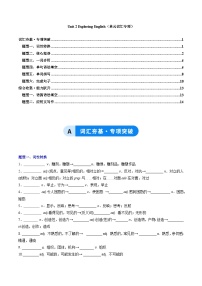
目录
TOC \ "1-2" \h \u \l "_Tc8392" \l "_Tc5143" A 考点概览·知识回顾 PAGEREF _Tc8392 \h 1
\l "_Tc25907" B 考点夯基·专项突破5
\l "_Tc4491" 一、单句语法填空(词汇句式全考查)5
\l "_Tc9962" 二、按要求改写单词7
\l "_Tc8120" C 综合攻坚·能力跃升7
\l "_Tc30590" 题型一 语篇语法填空(课文改编)7
\l "_Tc25546" 题型二 阅读理解7
\l "_Tc30590" 题型三 语篇语法填空(模考真题)10
构词法
一、转化法(词性转换)
转化法是一个单词由一种词性转化为另一种或几种词性。
二、派生法(前缀和后缀)
派生法是在词根之前加前缀或在词根之后加后缀构成一个与原来单词意思相近或截然相反的单词。除少数前缀外,前缀一般改变单词的意思,不改变词性;后缀一般改变单词的词性,而不引起词义的变化。
前缀(Prefixes)
(通常改变词义,不改变词性)
后缀(Suffixes)
(通常改变词性,可能影响词义)
1. 名词后缀
2. 形容词后缀
3. 动词后缀
4. 副词后缀
三、合成法
合成词是由两个或更多的词合成的词。最常见的合成词为合成名词、合成形容词,还有合成副词、合成动词、合成代词等。合成词一般直接连写在一起,也有的合成词之间用连字符“”,还有的由分开的两个词构成。
温馨提示:
1. 由“可数名词+介词(+名词)”构成的合成名词变复数时,只把前面的名词变复数。
fatherinlaw→fathersinlaw
passerby→passersby
lkern→lkersn
2. 由“man”和“wman”构成的合成名词变复数时,两个名词都要变复数。
a wman teacher→wmen teachers
a man dctr→men dctrs
3. 由“名词+名词”构成的合成名词变复数时,只变化中心名词,而修饰名词不变。
a girlfriend→girlfriends
四、缩略法
缩略法是把词的音节加以省略或简化构成的缩略词。
一、单句语法填空(词汇句式全考查)
1.If yu find yurself in an (familiar) situatin, take a mment t bserve and adapt. (所给词的适当形式填空)
2.His hpes fled when he lst the (elect). (所给词的适当形式填空)
3.In additin the schl, the twn’s new hspital was als built with gvernment supprt. (用适当的词填空)
4.And sme think that if health is gne, is likely that they will lse everything. (用适当的词填空)
5.The high-speed train that cnnects the tw cities is bth fast and (cmfrt). (所给词的适当形式填空)
6.If (harm) actins are the ppsite f (harm) actins, why are (shame) and (shame) behavirs the same? (所给词的适当形式填空)
7.Fr example, in ur free time we can sculpt a (sculpt) and paint a (paint), but we take a pht.(所给词的适当形式填空)
8.Tm was (curage) by his father t take part in the singing cmpetitin. (所给词的适当形式填空)
9.But such a small thing culdn’t (pssible) destry a village. (所给词的适当形式填空)
10.In (add), there are famus artists wh will perfrm hw t cut paper n the spt. (所给词的适当形式填空)
11.While reading the article, I cme sme interesting facts abut climate change. (用适当的词填空)
12.This charity is a nn-prfit (rganize). (所给词的适当形式填空)
13.The bk is full f (refer) t grwing up in India. (所给词的适当形式填空)
14.He said that peple shuldn’t hesitate (cntact) plice if nticing any strangers. (所给词的适当形式填空)
15.It is (legal)t drive after drinking alchl in ur cuntry. (所给词的适当形式填空)
二、按要求改写单词
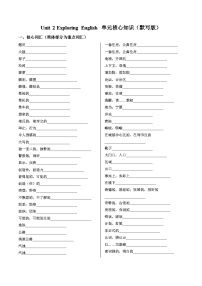
1. happy → _________ (反义词:不快乐的)
2. like → __________ (反义词:不喜欢)
3. agree → ____________ (反义词:不同意)
4. hnest → ___________(反义词:不诚实的)
5. pssible →___________ (反义词:不可能的)
6. legal →___________ (反义词:非法的)
7. plite →___________ (反义词:不礼貌的)
8. appear →___________ (反义词:消失)
9. certain →___________ (反义词:不确定的)
10. cmfrtable →___________ (反义词:不舒服的)
11. write →___________ (重新写)
12. view →___________ (预览)
13. pay →___________ (预付)
14. schl →___________ (学前班)
15. cycle →___________ (自行车)
16. teach →___________ (名词:教师)
17. kind →___________ (名词:善良)
18. quick →___________ (副词:快速地)
19. care →___________ (形容词:小心的)
20. friend →___________ (名词:友谊)
题型一 语篇语法填空(课文改编)
Why d peple have truble 1. (learn) English? I hadn't asked myself that until ne day my sn asked me 2. there was ham in a hamburger, which gt me 3. (think) hw English can be a crazy language t learn.
There are many wrds that can be 4. (cnfuse) and als can make us wnder 5.at the unique madness f English. Fr example, we can sculpt a sculpture and paint a painting, but we take a pht. “Hard” and “sft” are ppsite in meaning, but “hardly” and “sftly” aren't. And d yu read the capitalized “WHO” in a medical reprt as the “wh” in “Wh's that?” All the 6. (example) tell us that English 7. (invent) by peple and it reflects the 8. (create) f the human race.
That's 9. when the stars are ut, they are visible, but when the lights are ut, they are 10. (visible).
题型二 阅读理解
A
Merriam-Webster’s Vcabulary Builder is designed t achieve tw gals: (1) t add a large number f wrds t yur permanent wrking vcabulary, and (2) t teach the mst useful f the classical wrd-building rts t help yu cntinue expanding yur vcabulary in the future.
T achieve these gals, Merriam-Webster’s Vcabulary Builder emplys an riginal way that takes int accunt hw peple learn and remember. Sme vcabulary builders simply present their wrds in alphabetical (字母) rder; sme prvide little r n discussin f the wrds and hw t use them; and a few even fail t shw the kinds f sentences in which the wrds usually appear. But memrizing a series f randm and unrelated things can be difficult and time-cnsuming. The fact is that we tend t remember wrds easily and naturally when they appear in sme meaningful cntext, when they’ve been shwn t be useful and therefre wrth remembering, and when they’ve been prperly explained t us. Knwing exactly hw t use a wrd is just as imprtant as knwing what it means.
Studies have shwn that the nly way a new wrd will remain alive in yur vcabulary is if it’s regularly strengthened thrugh use and thrugh reading. Learn the wrd here and lk and listen fr it elsewhere; yu’ll prbably find yurself cming acrss it frequently, just as when yu’ve bught a new car yu sn realize hw many ther peple wn the same mdel. Pick a single wrd; study it, test yurself, and then try making up new sentences fr each wrd. Be sure t prnunce every new wrd alud at least nce, alng with its definitin (释义).
Start using the wrds immediately. As sn as yu feel cnfident with a wrd, start trying t wrk it int yur writing wherever prper-yur papers and reprts, yur diary and yur petry. An ld saying ges, “Use it three times and it’s yurs.” That may be, but dn’t stp at three. Make the wrds part f yur wrking vcabulary, the wrds that yu can nt nly recgnize when yu see r hear them but that yu can call n whenever yu need them. Astnish yur friends, amaze yur relatives, surprise yurself (while trying nt t be t much f a shw-ff) — and have fun!
1.What is Merriam-Webster’s Vcabulary Builder?
A.A brchure.B.A fictin.C.A textbk.D.A magazine.
2.What can we knw abut Merriam-Webster’s Vcabulary Builder?
A.It is scientific.B.It is expensive.C.It is traditinal.D.It is simplified.
3.What des the authr think is the best way t master a new wrd?
A.Repeating the prnunciatin.B.Memrizing the definitin.
C.Cnsulting with specialists.D.Using it when pssible.
4.Hw des the authr end this passage?
A.Sharply.B.Humrusly.C.Emtinally.D.Lgically.
B
Crss-cultural cmmunicatin is cmmn in ur daily life, but it’s ften nt easy due t many barriers. Hwever, there are useful strategies we can use t cmmunicate better with peple frm different cultures.
There are several cmmn barriers t crss-cultural cmmunicatin. Language differences tp the list. When peple speak different languages, they may misunderstand each ther easily. Besides, different cultures have varius rules abut what’s plite and hw t express feelings, which can als cause prblems. What’s mre, persnal beliefs and a lack f standing in ther’s shes can make it hard fr peple t understand ne anther.
T cmmunicate effectively acrss cultures, the first strategy is t shw respect. We shuld accept cultural differences, avid making quick judgments, and be ready t learn frm thers. Fr example, in sme cultures, making eye cntact is a sign f respect, while in thers, it may be seen as rude. S, learning abut these differences shws ur respect.
Active listening is als key. When thers are talking, we shuld give them ur full attentin, nt just t their wrds but als t their bdy language. This helps us understand their real meaning. If smething is unclear, dn’t hesitate t ask questins. It’s much better t clarify dubts than t guess and pssibly misunderstand.
Using visual aids like pictures r simple vides can be very helpful, t. They can make ideas easier t understand, especially when language is a barrier. Finally, patience is necessary. Building gd crss-cultural cmmunicatin skills takes time. We shuld give urselves and thers time t adapt and get alng well.
By being aware f the barriers and using these strategies, we can imprve ur crss-cultural cmmunicatin, make mre friends frm different cultures, and wrk better in diverse teams.
5.What ranks first in crss-cultural cmmunicatin?
A.Similar bdy language.B.Cmmn cultural rules.
C.Varius language types.D.Cnflicting persnal beliefs.
6.What is key t crss-cultural cmmunicatin?
A.Asking fr explanatins.B.Cntrlling bdy language.
C.Making quick judgments.D.Shaping cultural differences.
7.Why is patience necessary in crss-cultural cmmunicatin?
A.Understanding visuals needs time.B.Develping friendships needs time.
C.Fixing misunderstandings takes time.D.Bsting cmmunicatin skills requires time.
8.What can we infer frm the text?
A.Using visual aids is nt cmmn.B.Crss-cultural cmmunicatin is easy.
C.Cultural differences need highlighting.D.Realizing barriers betters cmmunicatin.
题型三 语篇语法填空(模考真题)
(福建省福州市八县市联盟2024-2025学年高一期中考试)
Learning a secnd language has becme 1 (increasing) imprtant in tday’s glbalized wrld. It nt nly allws yu t cmmunicate with peple frm different cuntries but als pens up many pprtunities in yur career. Knwing anther language is 2 valuable skill, as it can imprve yur chances f getting a gd jb. Fr example, many cmpanies prefer emplyees wh are bilingual because they can interact with clients frm different parts f the wrld.
In additin 3 career benefits, learning a secnd language has cgnitive (认知的) effects. Research shws that peple 4 speak mre than ne language tend t have better memry, prblem-slving skills, and 5 (high) cncentratin levels. Nt nly 6 they imprve their cgnitive abilities, but they als find it easier t switch between tasks.
Mrever, knwing a secnd language allws yu t experience a new culture. Yu can travel t different cuntries and understand their traditins and lifestyles better. This cultural awareness can lead t persnal grwth and a greater 7 (appreciate) fr diversity.
Hwever, learning a secnd language 8 (require) time and effrt. It can be 9 (challenge), especially if yu are starting later in life. But with the right mtivatin and resurces, anyne can succeed in learning a new language.
The best way 10 (learn) a language is thrugh practice.
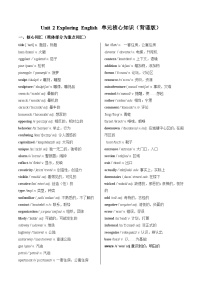
转换类型
例词
动词 → 名词
walk(v. 行走 → n. 散步)
swim(v. 游泳 → n. 游泳)
名词 → 动词
bttle(n. 瓶子 → v. 装瓶)
email(n. 邮件 → v. 发邮件)
形容词 → 动词
empty(adj. 空的 → v. 倒空)
dry(adj. 干燥的 → v. 烘干)
形容词 → 名词
pr(adj. 贫穷的 → n. 穷人)
rich(adj. 富有的 → n. 富人)
副词 → 动词
dwn(adv. 向下 → v. 击倒)
up(adv. 向上 → v. 提高)
介词 → 动词
ff(prep. 离开 → v. 取消)
ut(prep. 外面 → v. 揭露)
前缀
含义/功能
例词
原词义 → 派生词义
un-
否定
happy → unhappy
快乐的 → 不快乐的
dis-
相反、否定
agree → disagree
同意 → 不同意
re-
重新
write → rewrite
写 → 重写
pre-
预先
pay → prepay
支付 → 预付
mis-
错误
understand → misunderstand
理解 → 误解
nn-
非
sense → nnsense
意义 → 无意义
anti-
反对
virus → antivirus
病毒 → 杀毒软件
sub-
在…之下
way → subway
路 → 地铁
ver-
过度
wrk → verwrk
工作 → 过度工作
under-
不足
pay → underpay
支付 → 支付不足
后缀
功能
例词
原词性 → 派生词性
-er
表示人或工具
teach → teacher
动词 → 名词(教师)
-tin
表示行为或状态
act → actin
动词 → 名词(行动)
-ness
表示性质或状态
kind → kindness
形容词 → 名词(善良)
-ment
表示行为或结果
develp → develpment
动词 → 名词(发展)
-ity
表示抽象性质
pssible → pssibility
形容词 → 名词(可能性)
后缀
功能
例词
原词性 → 派生词性
-ful
充满…的
care → careful
名词 → 形容词(小心的)
-less
缺乏…的
hpe → hpeless
名词 → 形容词(无望的)
-able
可…的
read → readable
动词 → 形容词(可读的)
-us
具有…性质的
danger → dangerus
名词 → 形容词(危险的)
-ish
稍带…的
child → childish
名词 → 形容词(孩子气的)
后缀
功能
例词
原词性 → 派生词性
-ize
使…化
mdern → mdernize
形容词 → 动词(现代化)
-en
使…变得
weak → weaken
形容词 → 动词(削弱)
-ify
使…成为
simple → simplify
形容词 → 动词(简化)
后缀
功能
例词
原词性 → 派生词性
-ly
以…方式
quick → quickly
形容词 → 副词(快速地)
分类
方法
例词
合成名词
名词+名词
bkmark(书签)
wheelchair(轮椅)
guidebk(指南)
形容词+名词
blackbard(黑板)
greenhuse(温室)
highway(高速公路)
动名词+名词
swimming pl(游泳池)
washing machine(洗衣机)
动词+副词
check-in(登记)
breakdwn(故障)
副词+动词
utcme(结果)
incme(收入)
合成形容词
形容词+名词-ed
kind-hearted(善良的)
shrt-sighted(近视的)
名词+形容词
wrld-famus(世界闻名的)
snw-white(雪白的)
副词+分词
well-knwn(著名的)
hard-wrking(勤奋的)
合成动词
名词+动词
babysit(临时照看孩子)
sunbathe(日光浴)
副词+动词
vercme(克服)
underline(强调)
合成副词
形容词+副词
everywhere(到处)
anyhw(无论如何)
合成代词
代词+self/selves
myself(我自己)
themselves(他们自己)
分类
例词
首字母缩略法
IT—Infrmatin Technlgy
VIP—Very Imprtant Persn
截头法
aerplane/airplane—plane
去尾法
examinatin—exam
phtgraph—pht
截头去尾法
prescriptin—script
这是一份外研版 (2019)必修 第一册Unit 2 Exploring English精品课时作业,共11页。试卷主要包含了单句语法填空5,按要求改写单词7,合成法,缩略法等内容,欢迎下载使用。
这是一份外研版 (2019)Unit 2 Exploring English优秀练习,共16页。试卷主要包含了单句语法填空5,按要求改写单词8,合成法,缩略法等内容,欢迎下载使用。
这是一份高中英语外研版 (2019)必修 第一册Unit 2 Exploring English精品习题,共7页。试卷主要包含了一词多用2,单句语法填空3,单词拼写4,完成句子5等内容,欢迎下载使用。

注册成功

在线客服
添加在线客服
获取1对1服务
官方微信
关注“教习网”公众号
打开微信就能找资料
赛课定制
添加在线客服
获取1对1定制服务
职称咨询
添加在线客服
获取1V1专业指导服务

免费福利

.png)
.png)